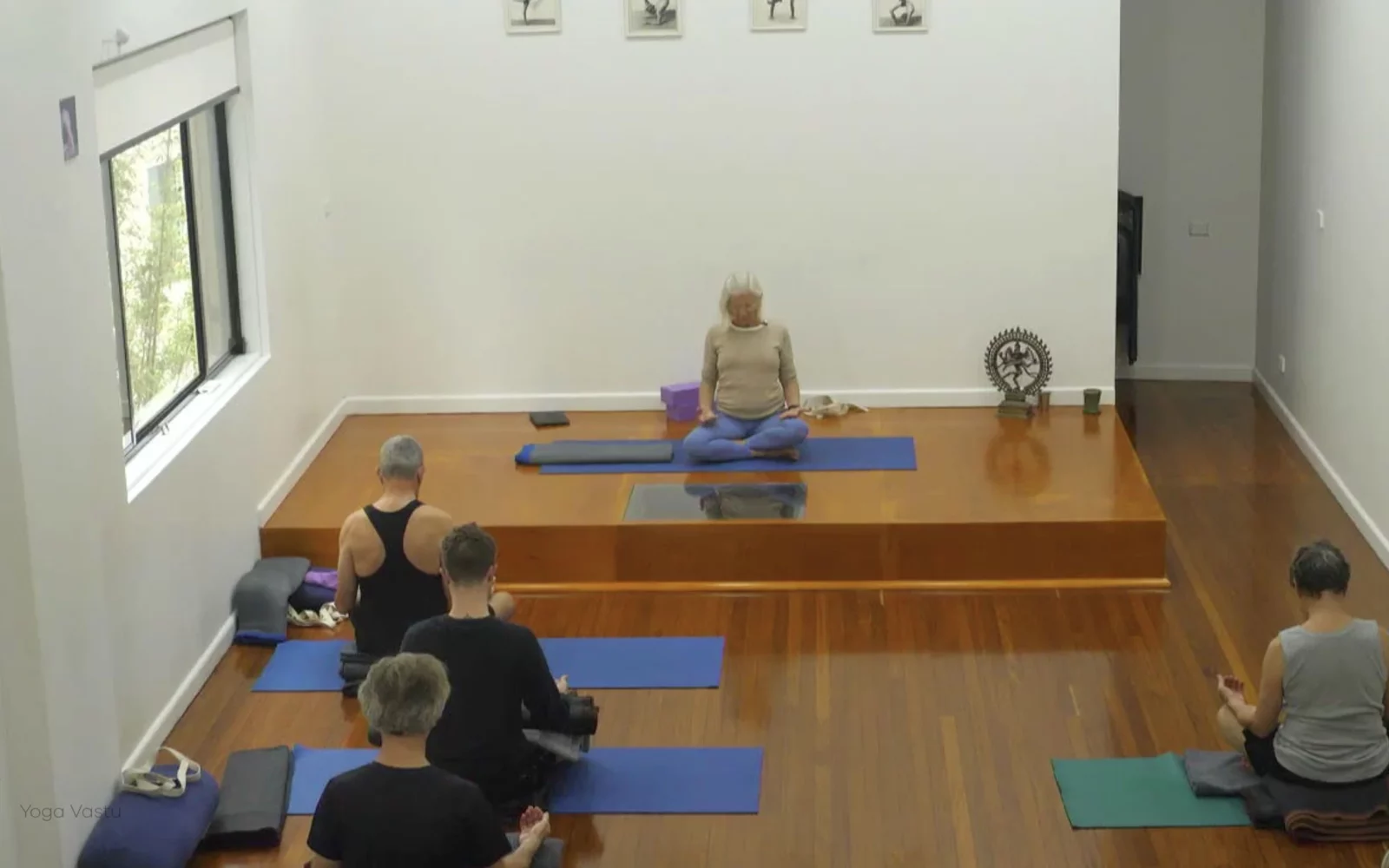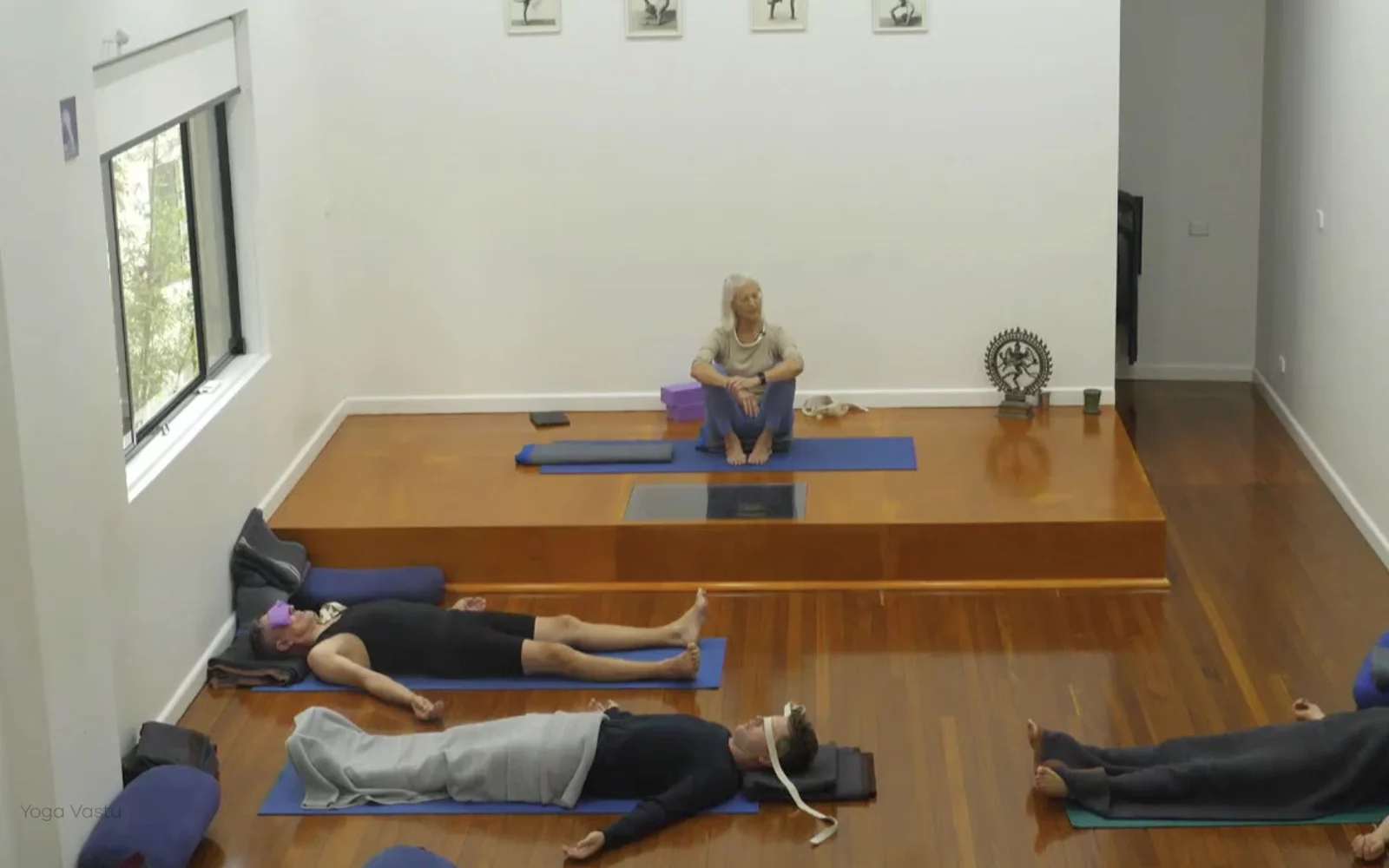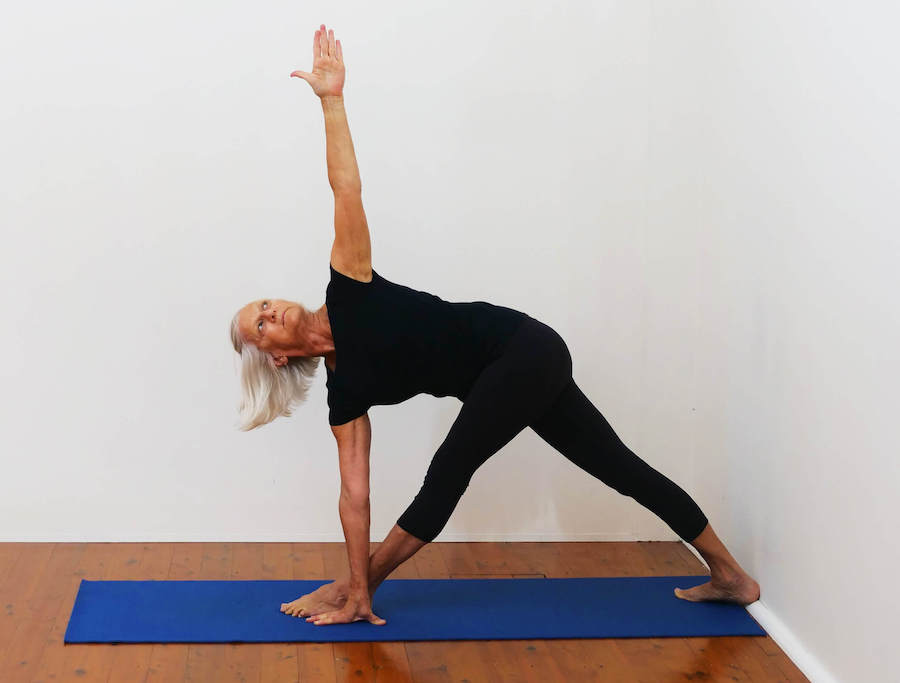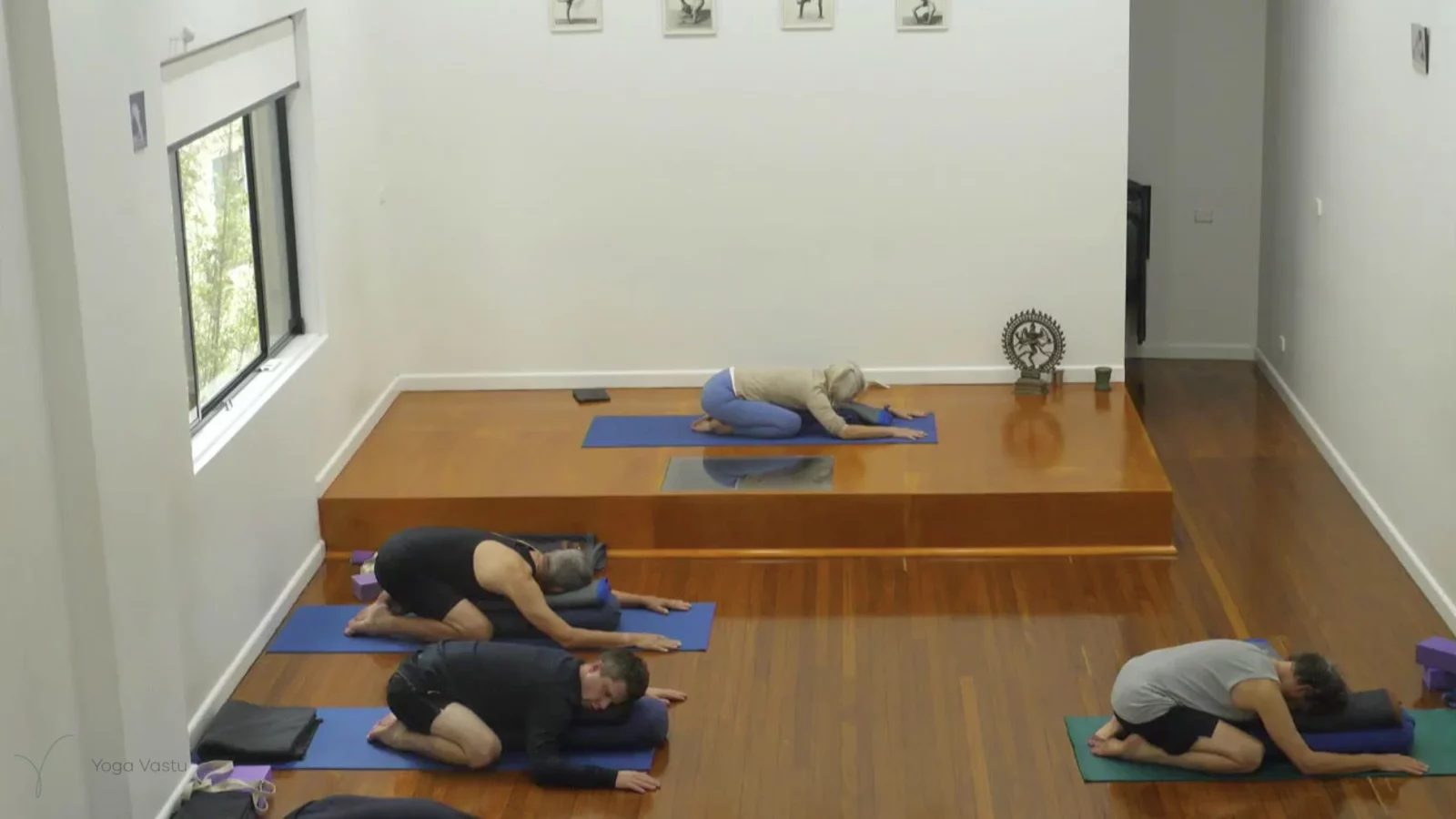
In this pranayama session we will be paying attention to our breath and the spaces between action. The stillness that we tend to ignore — that will be our focal point. Guruji once said, “Don’t try to dictate the breath but observe what each pose gives to the breath.” Keep that in mind during this session and note that he meant every pose, not just the more dynamic ones. He also meant restorative poses. In fact, a pranayama session is the perfect place to explore such a concept. That’s what pranayama sessions are for: to reflect on, assimilate, and apply the information one has acquired in their practice so far.
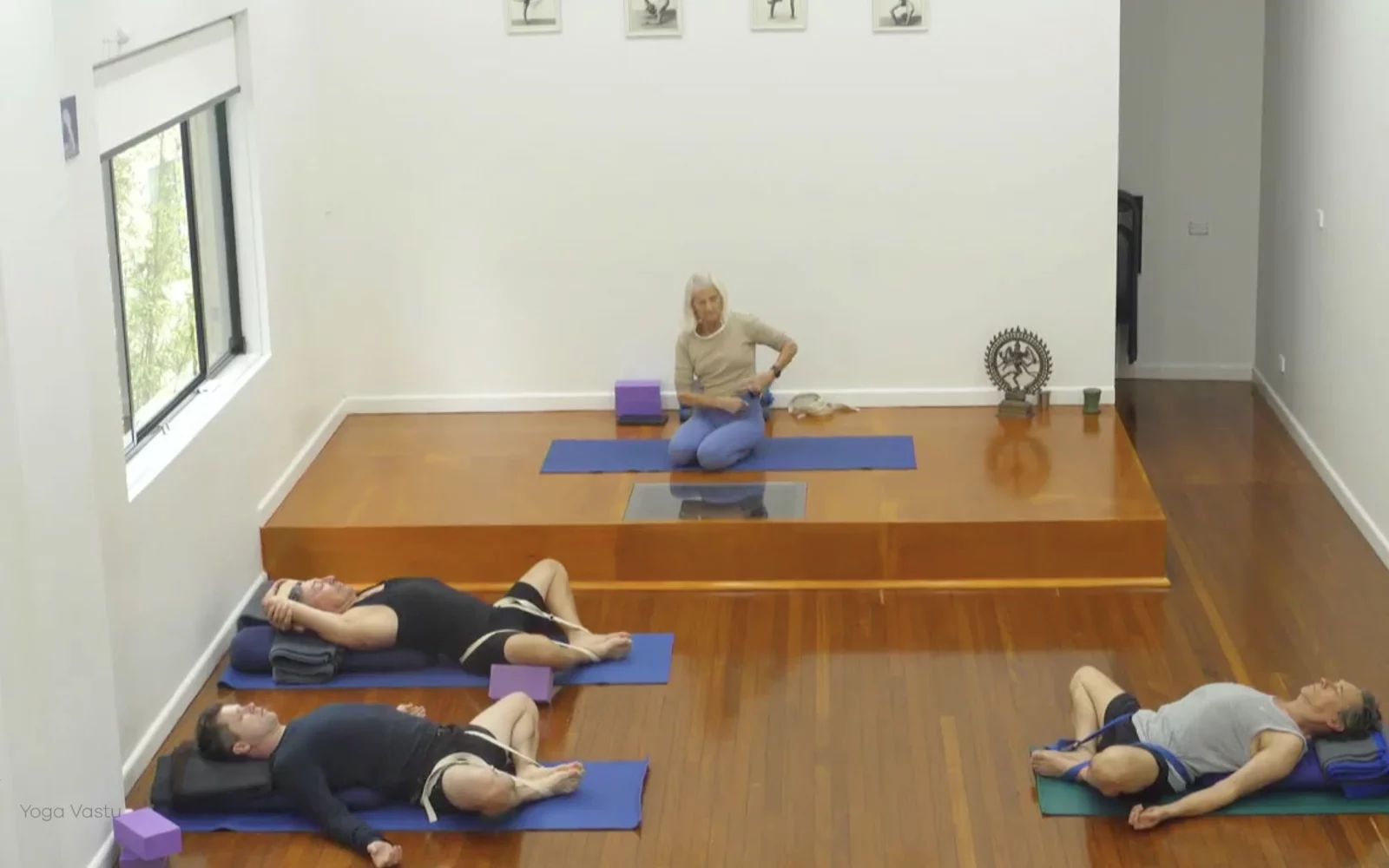
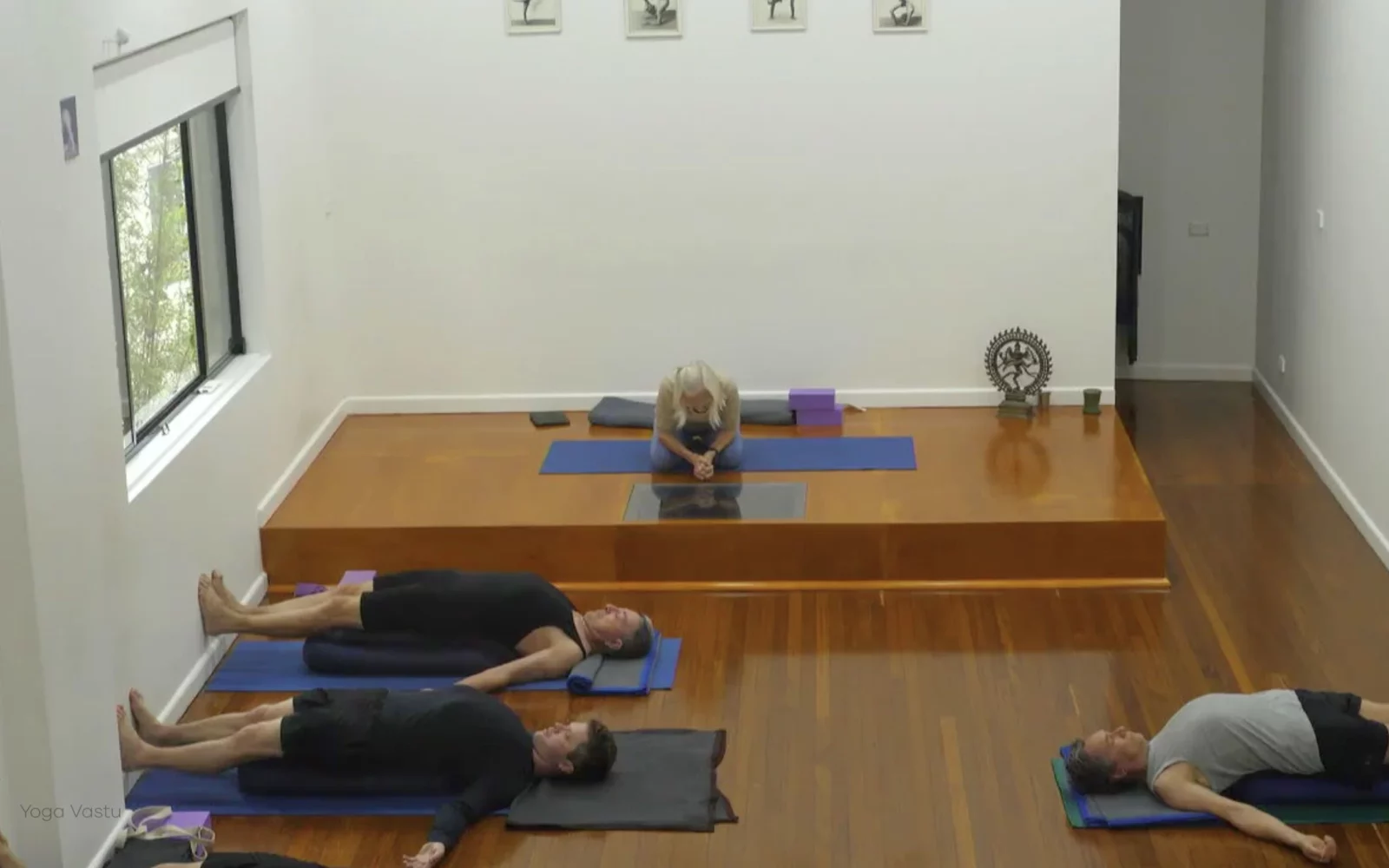
Begin in Supta Baddha Konasana. Starting the session this way helps make space in the chest, hips, sternum, and side ribs. It also gives you a chance to settle the nerves, quieten, and observe. Take a moment here to release the jaws, neck, eyeballs. Then, Adho Mukha Sukhasana to gently lengthen the spine.
Pranayama classes are good because they give us a chance to observe ourselves in more detail without the distraction of extra movement. There is not a lot of outer motion so we can shift our perspective and instead see where the breath takes us. Let the breath guide you; work together with it instead of imposing yourself on it.
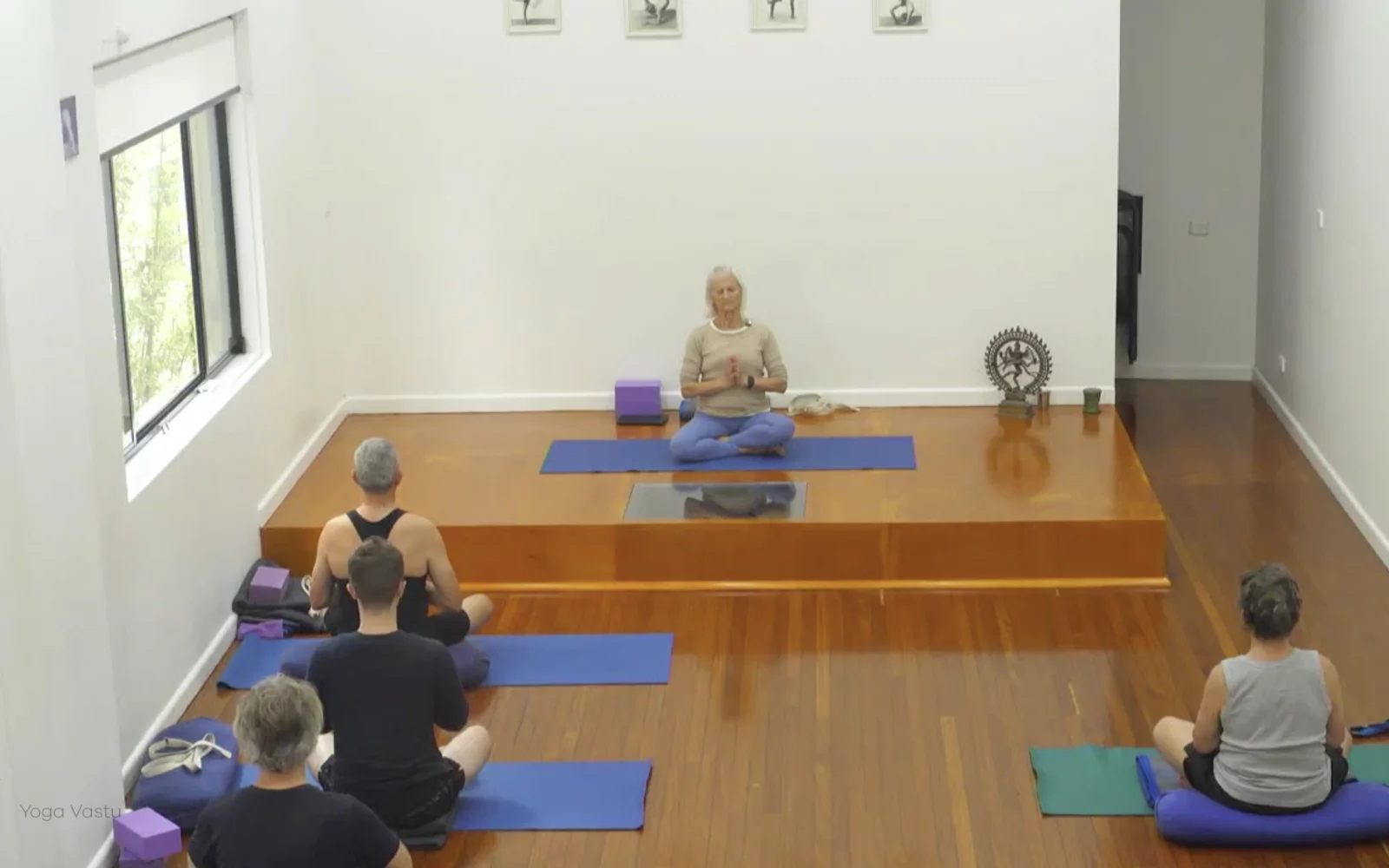
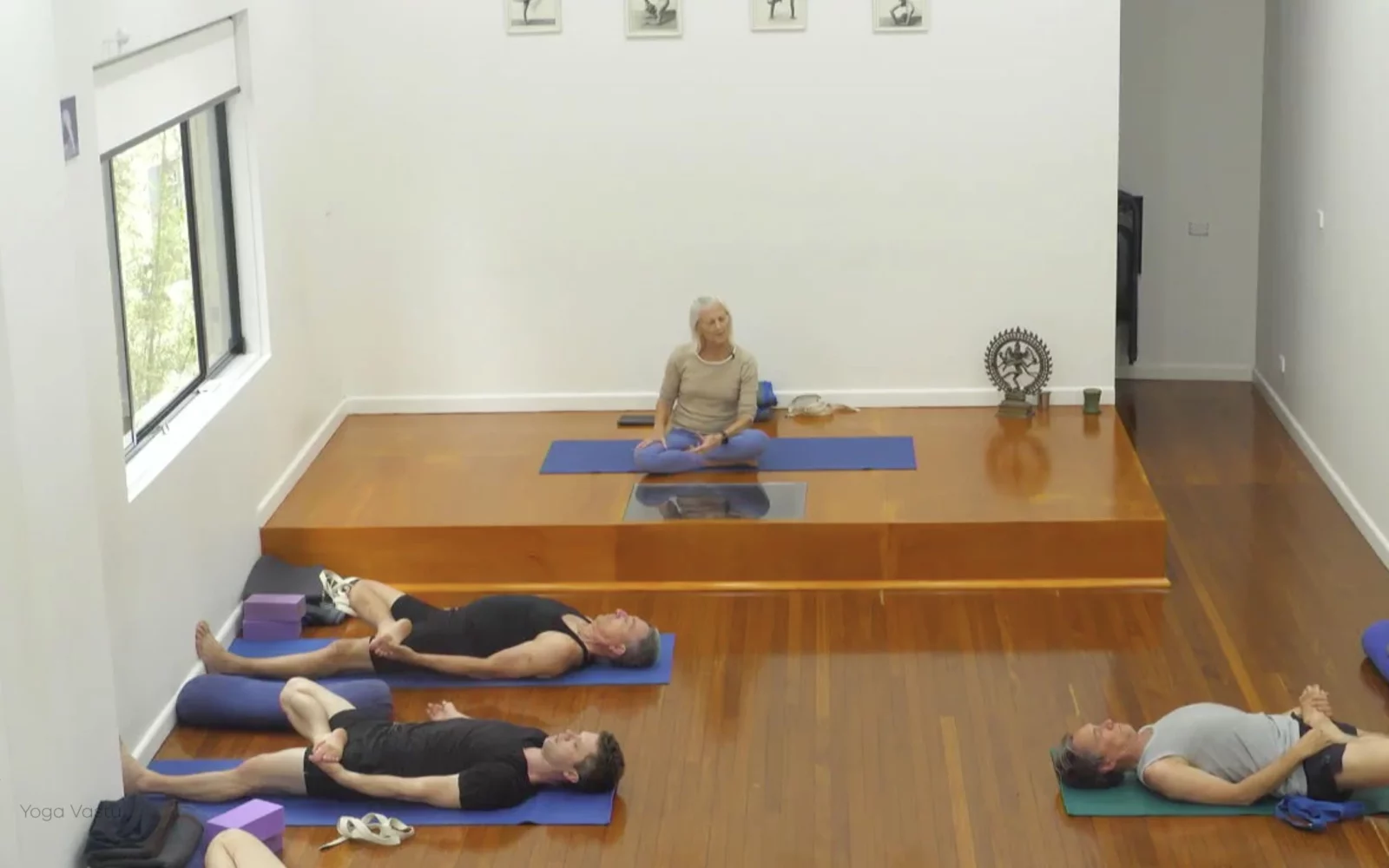
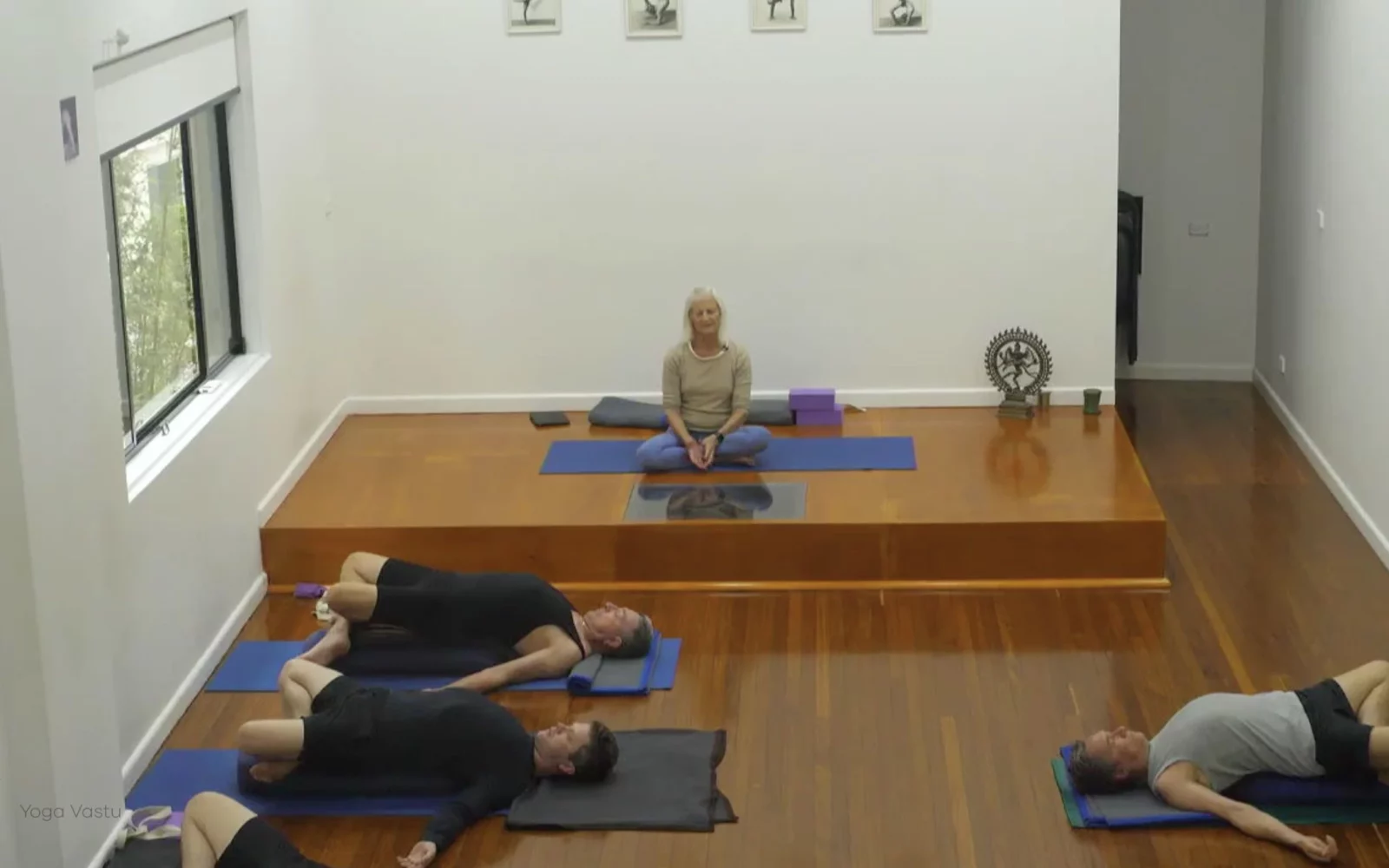
Sit up for the invocation.
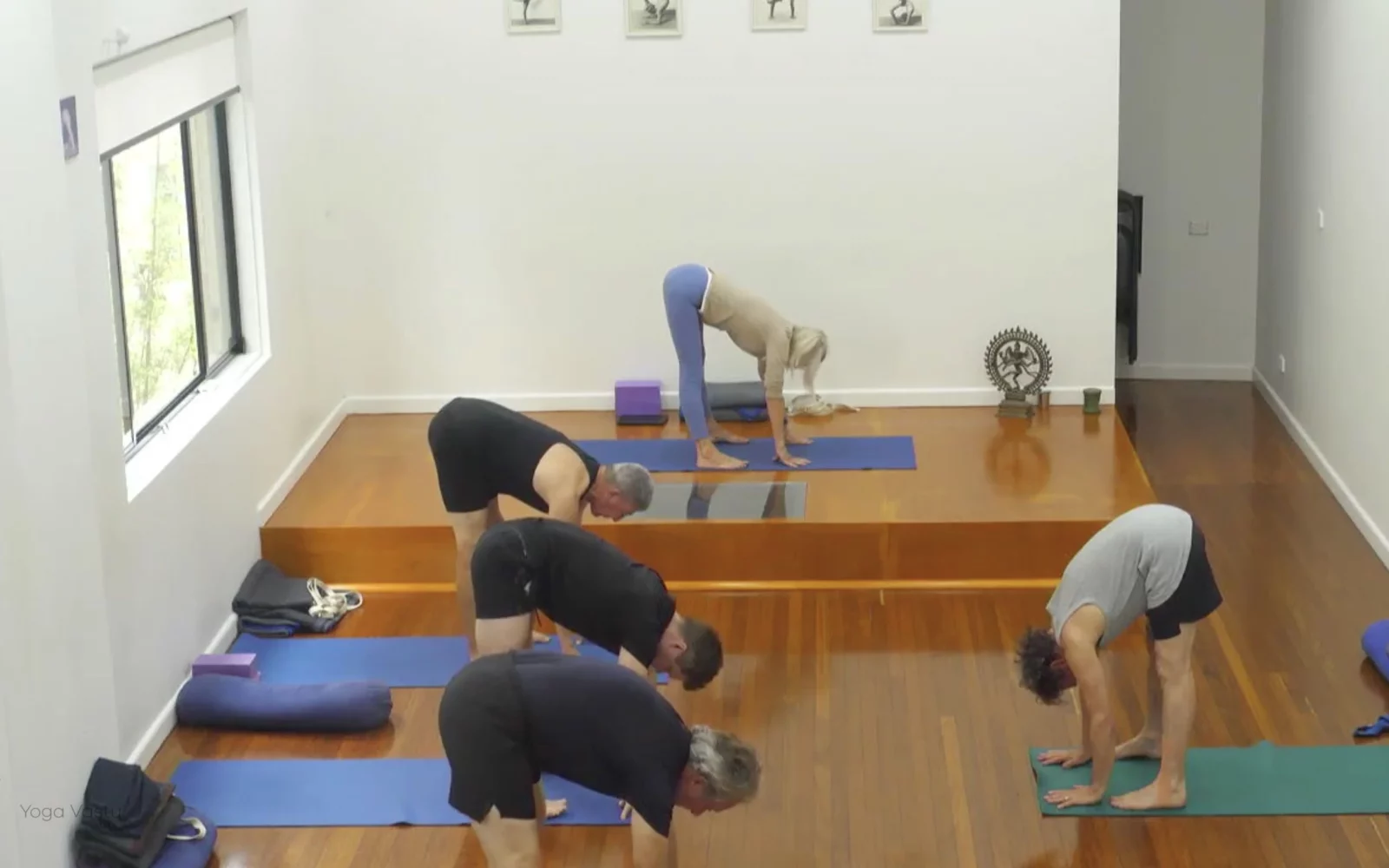
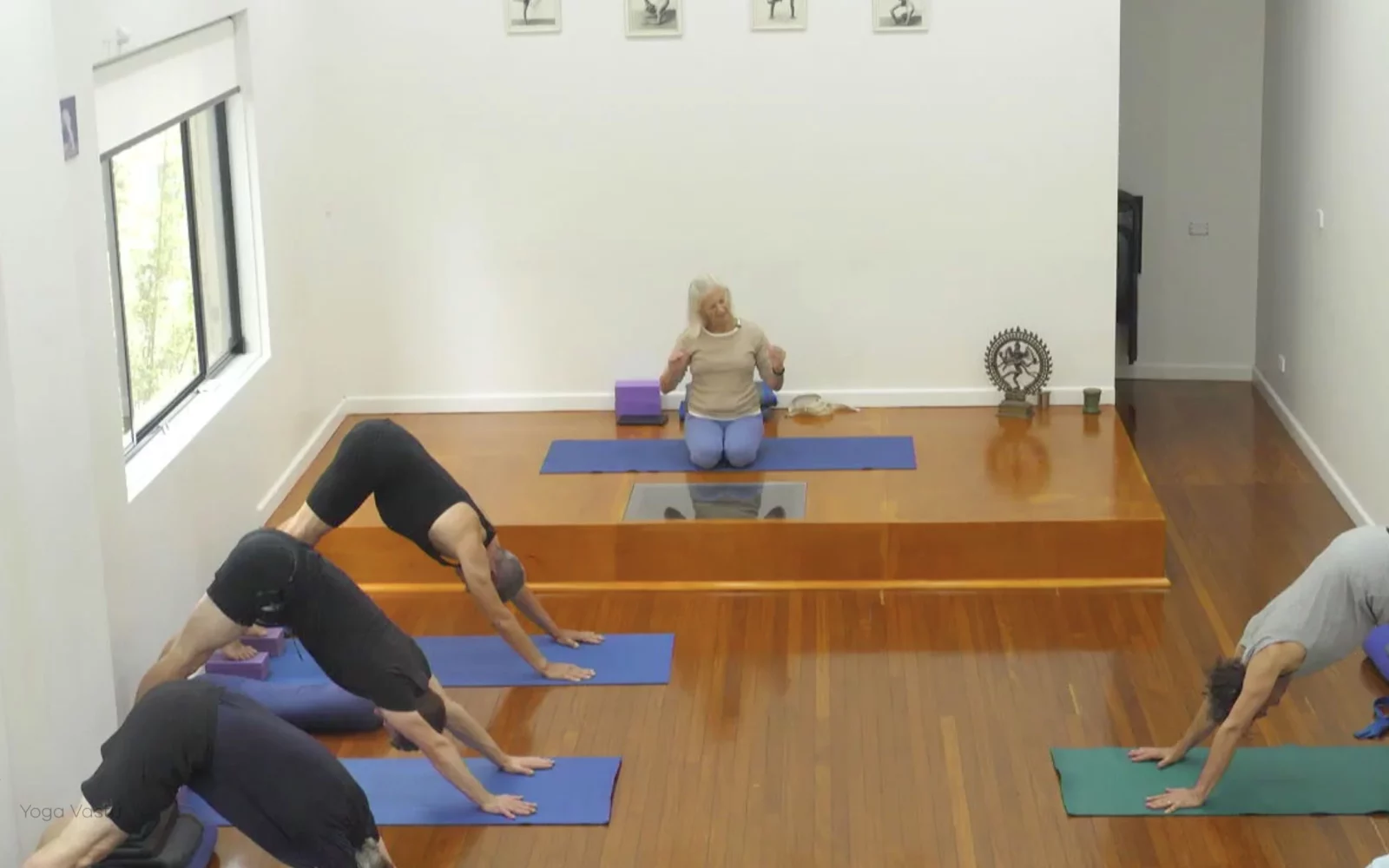
Next, stand up and fold forward into Uttanasana. Then, walk out into Adho Mukha Svanasana. In this series of classes, we’ve been working on spreading the collarbones. Do so now. This slow, quiet session acts as the perfect place to apply the lessons.
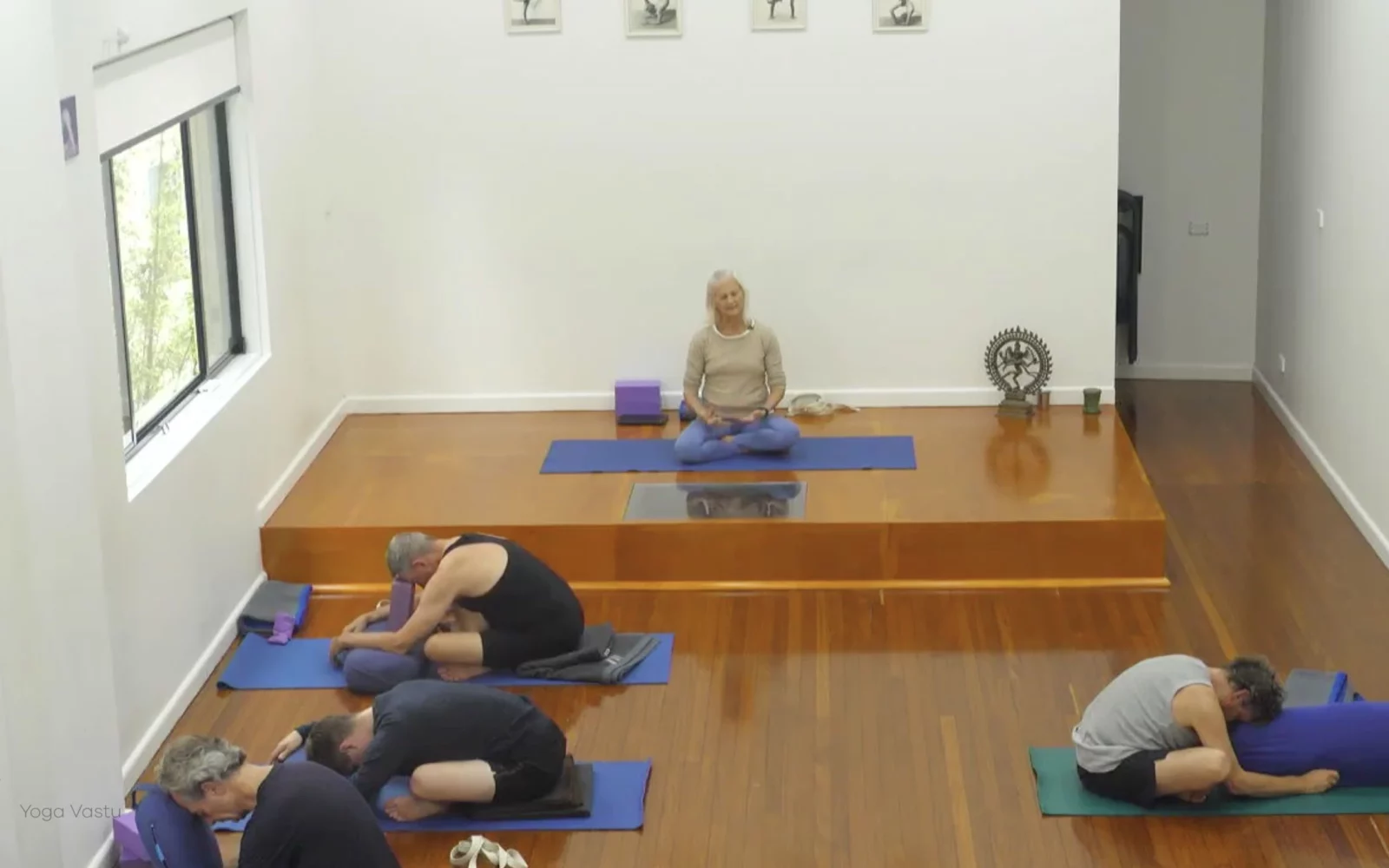
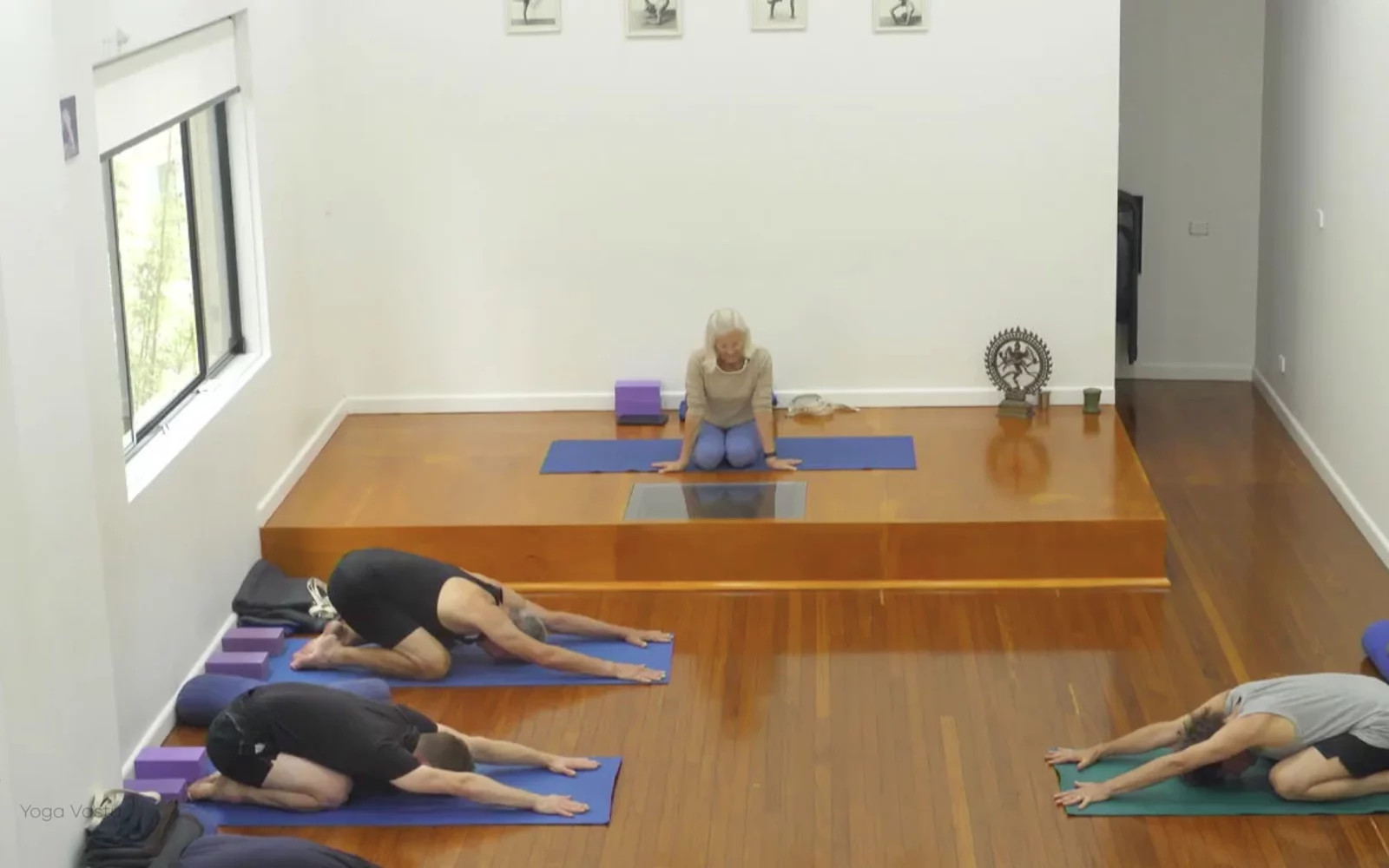
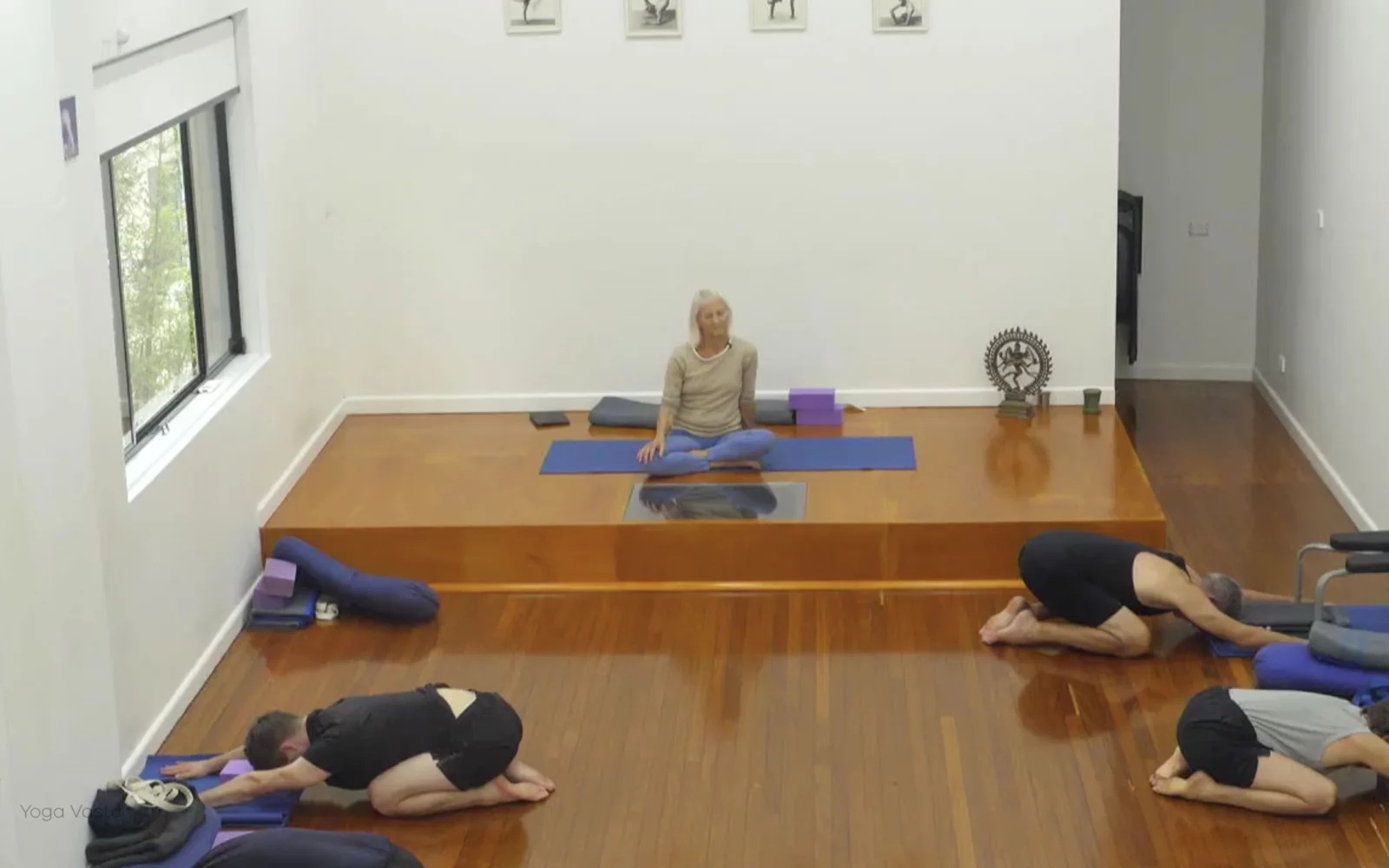
Shift back into Virasana Forward, stay here for a few breaths, then move back into Adho Mukha Svanasana.
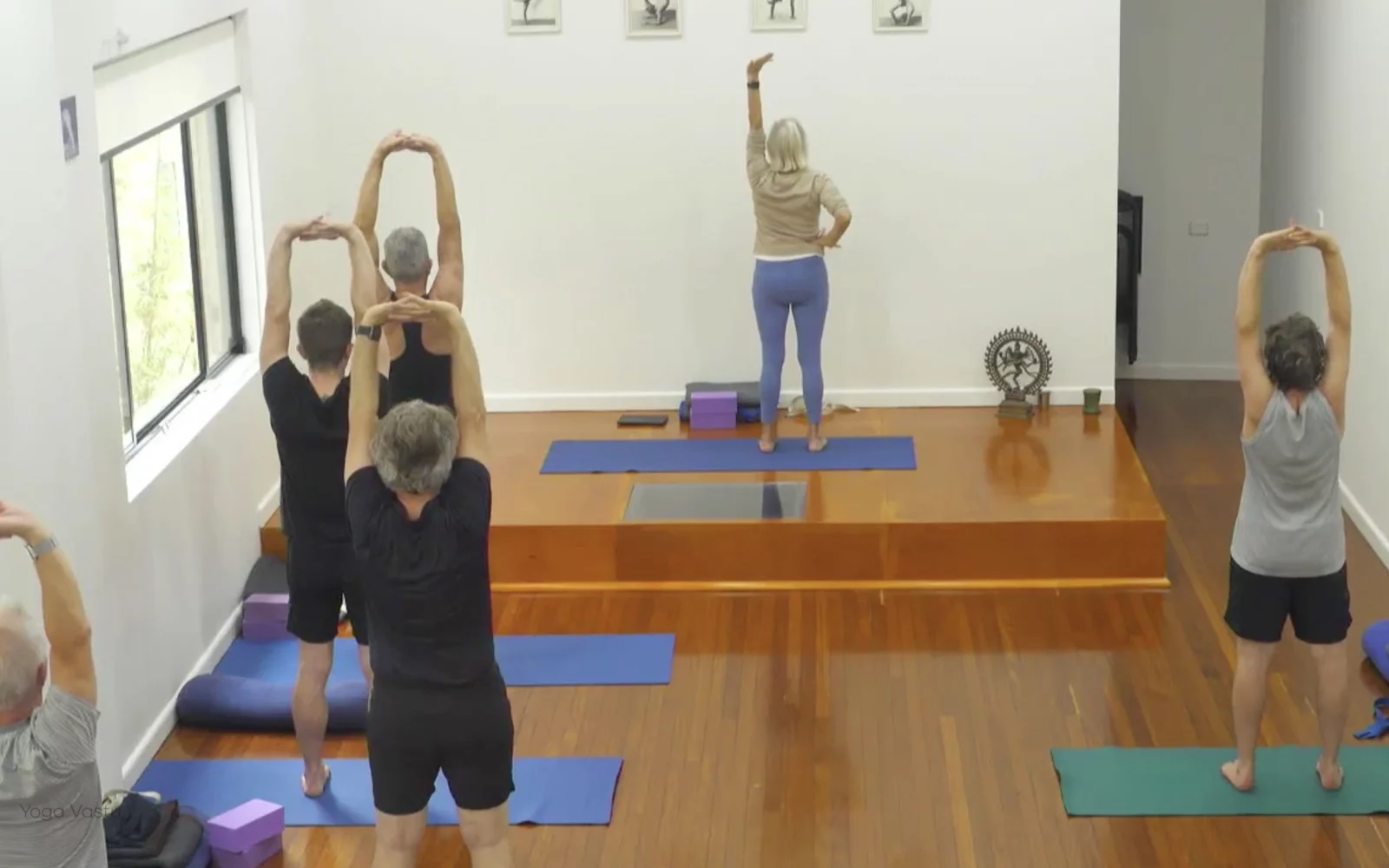
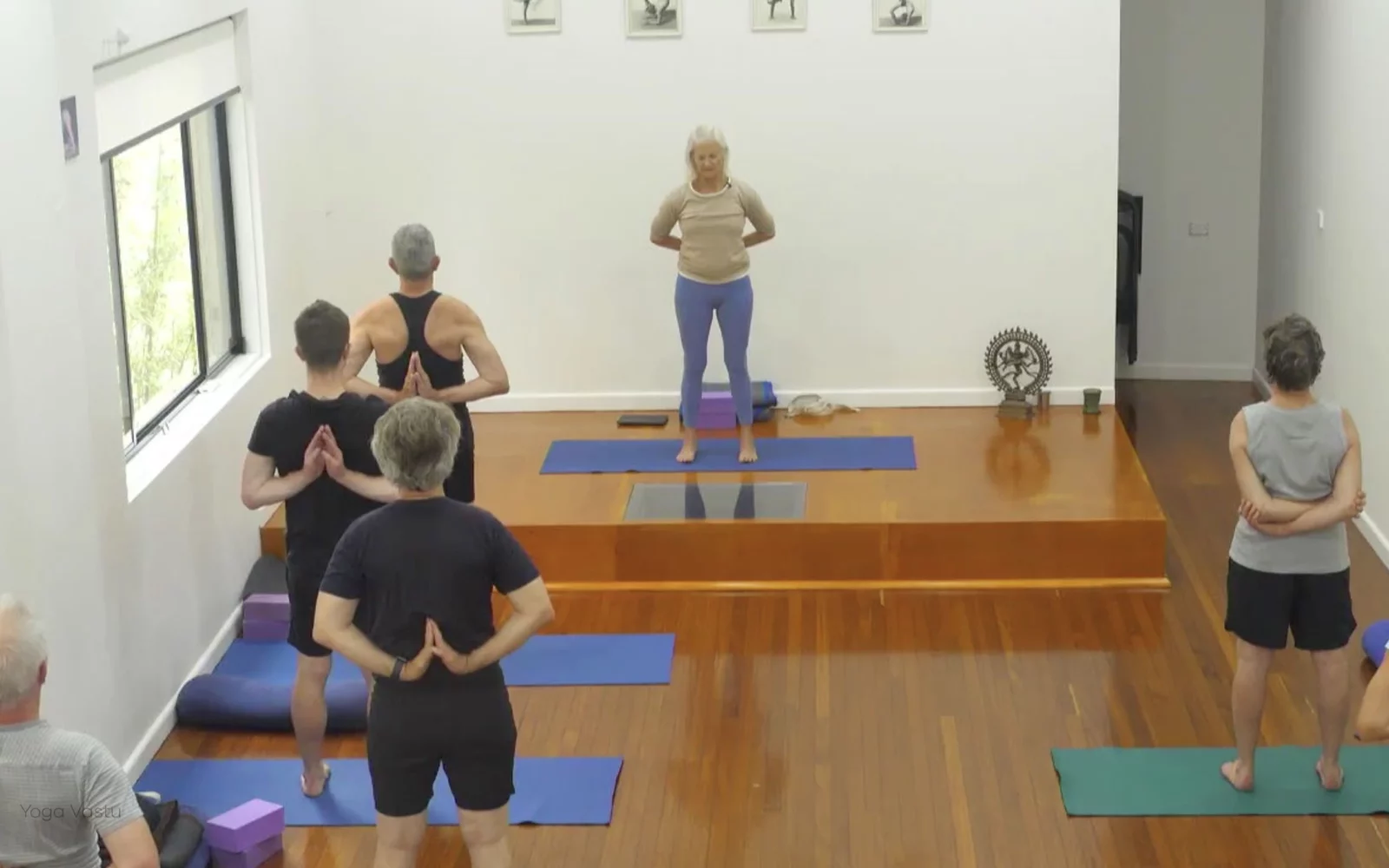
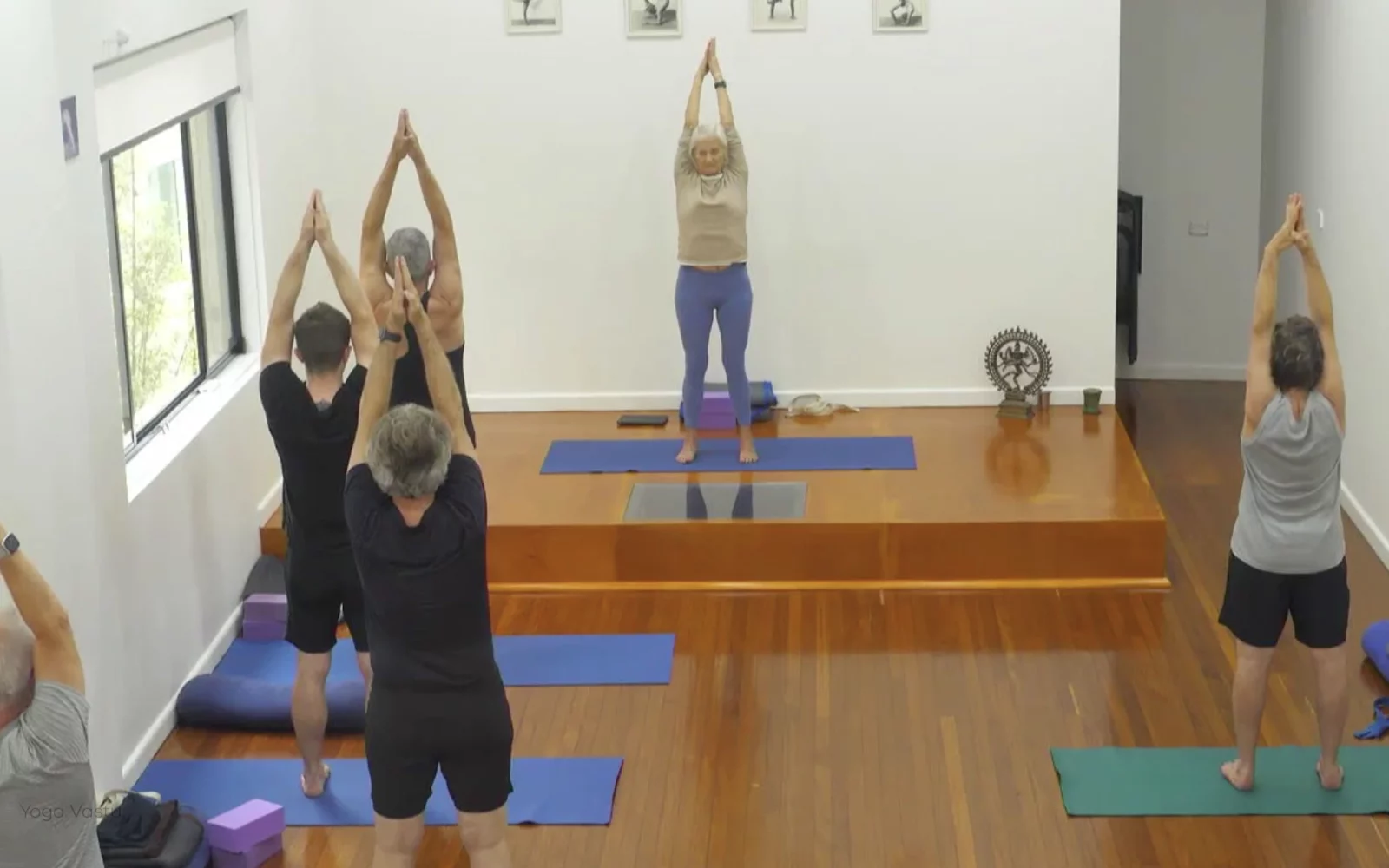
Then, stand up for a brief standing shoulder and collarbone sequence. Tadasana. Raise your arms up in Urdhva Hastasana. Bring them down and join them behind your back in Paschima Namaskar. Then, lift the arms up overhead in Urdhva Namaskarasana.
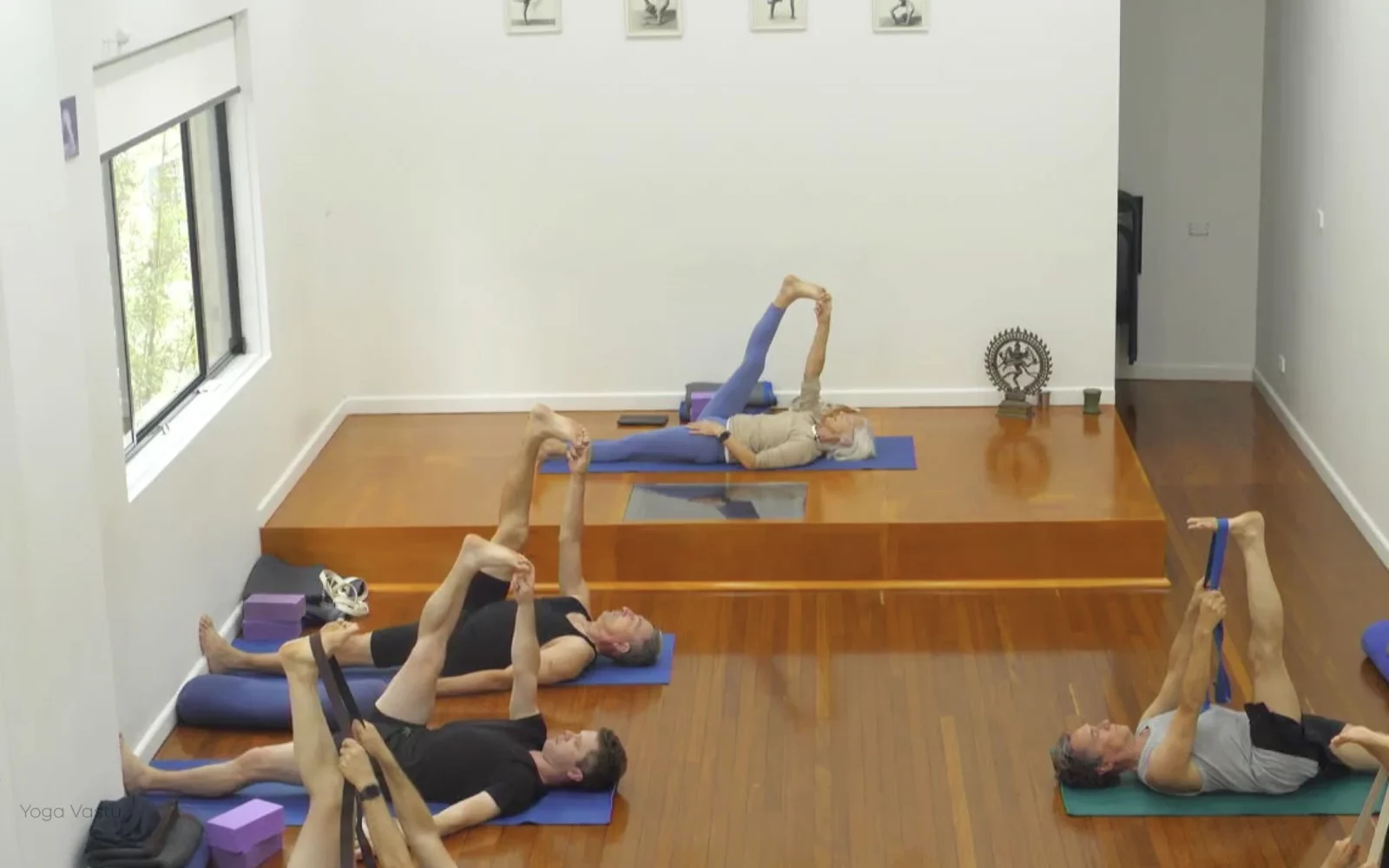
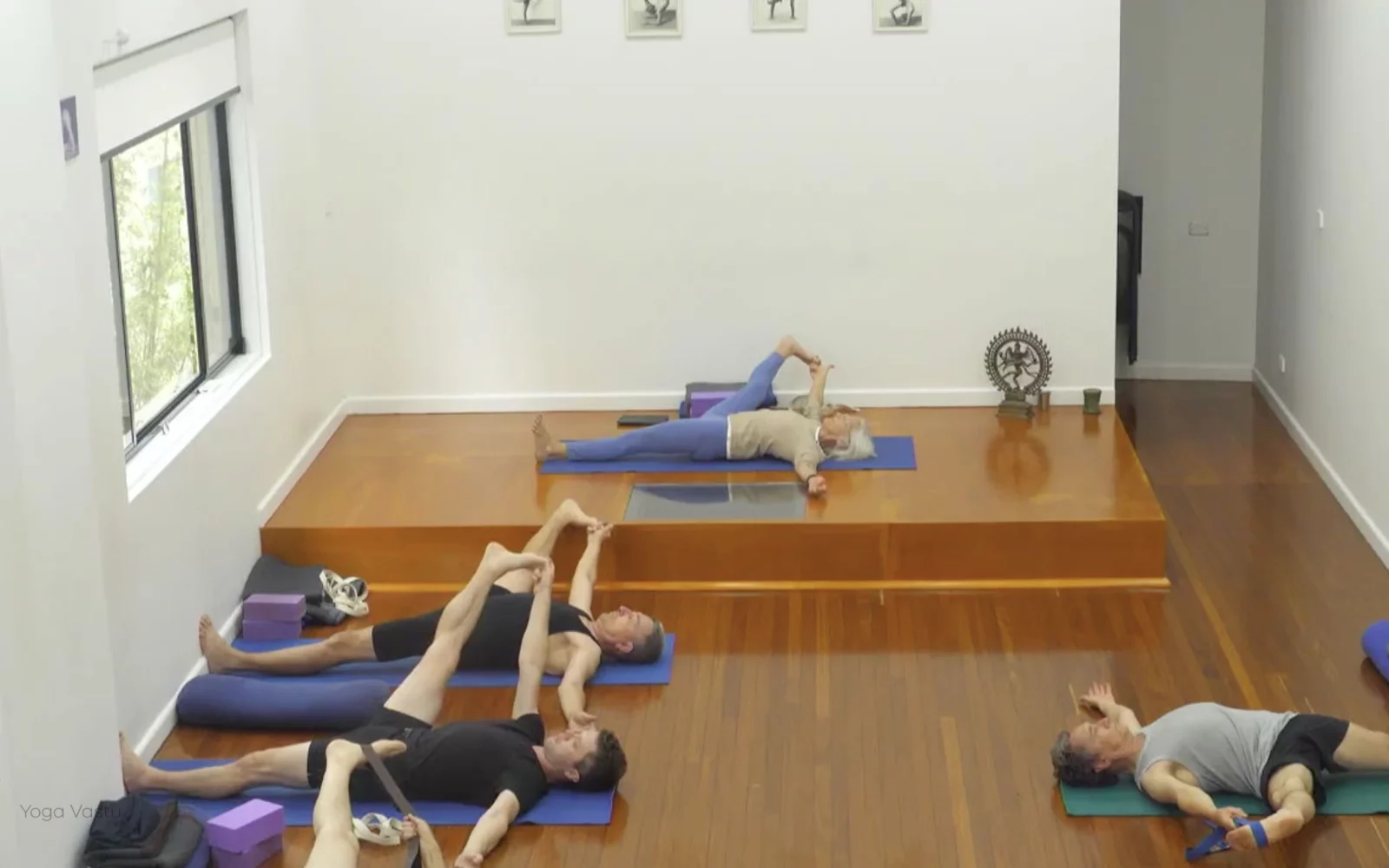
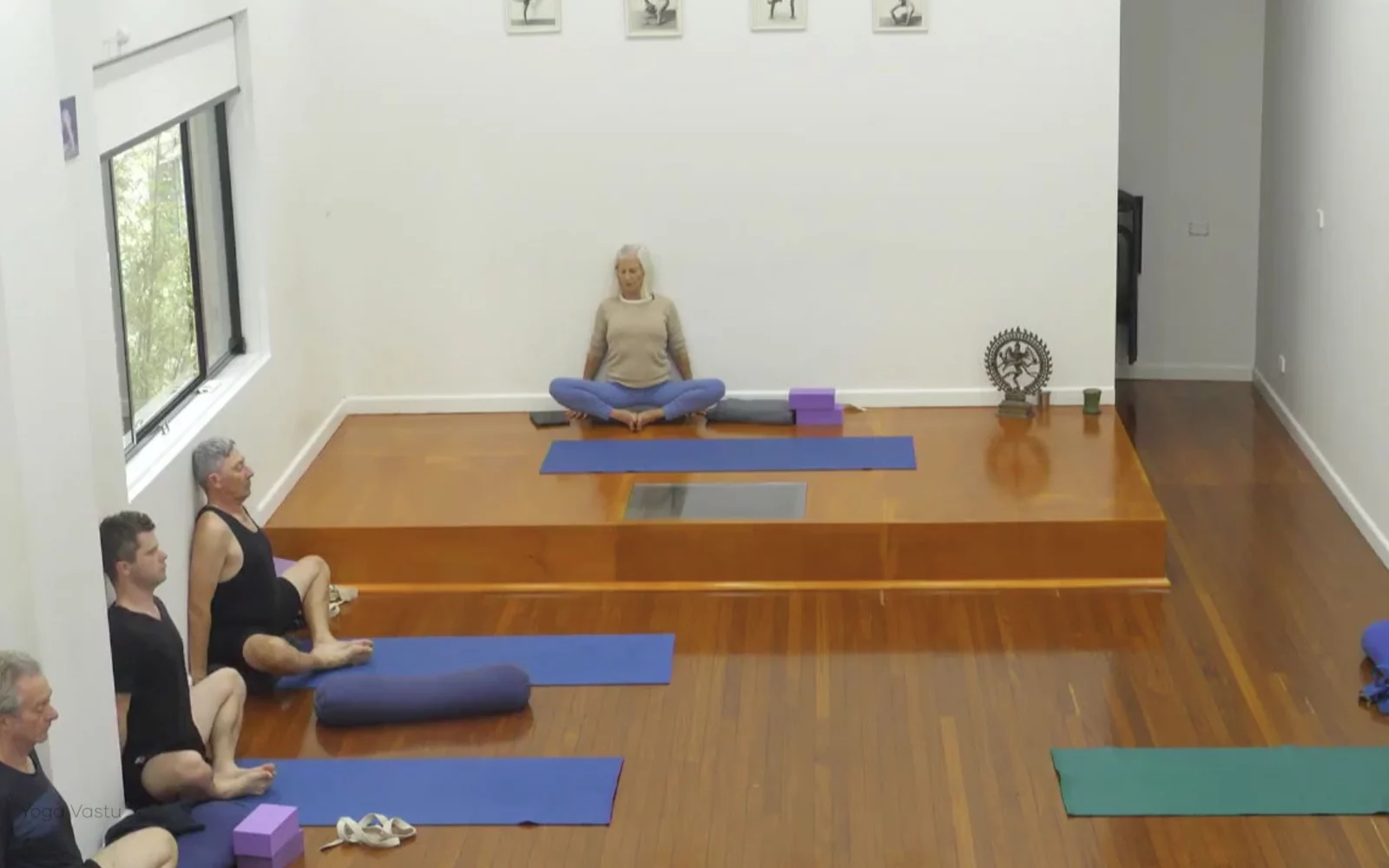
Get down into Supta Padangusthasana 1, 2, and 3. Then, sit up in Baddha Konasana with the back against the wall.
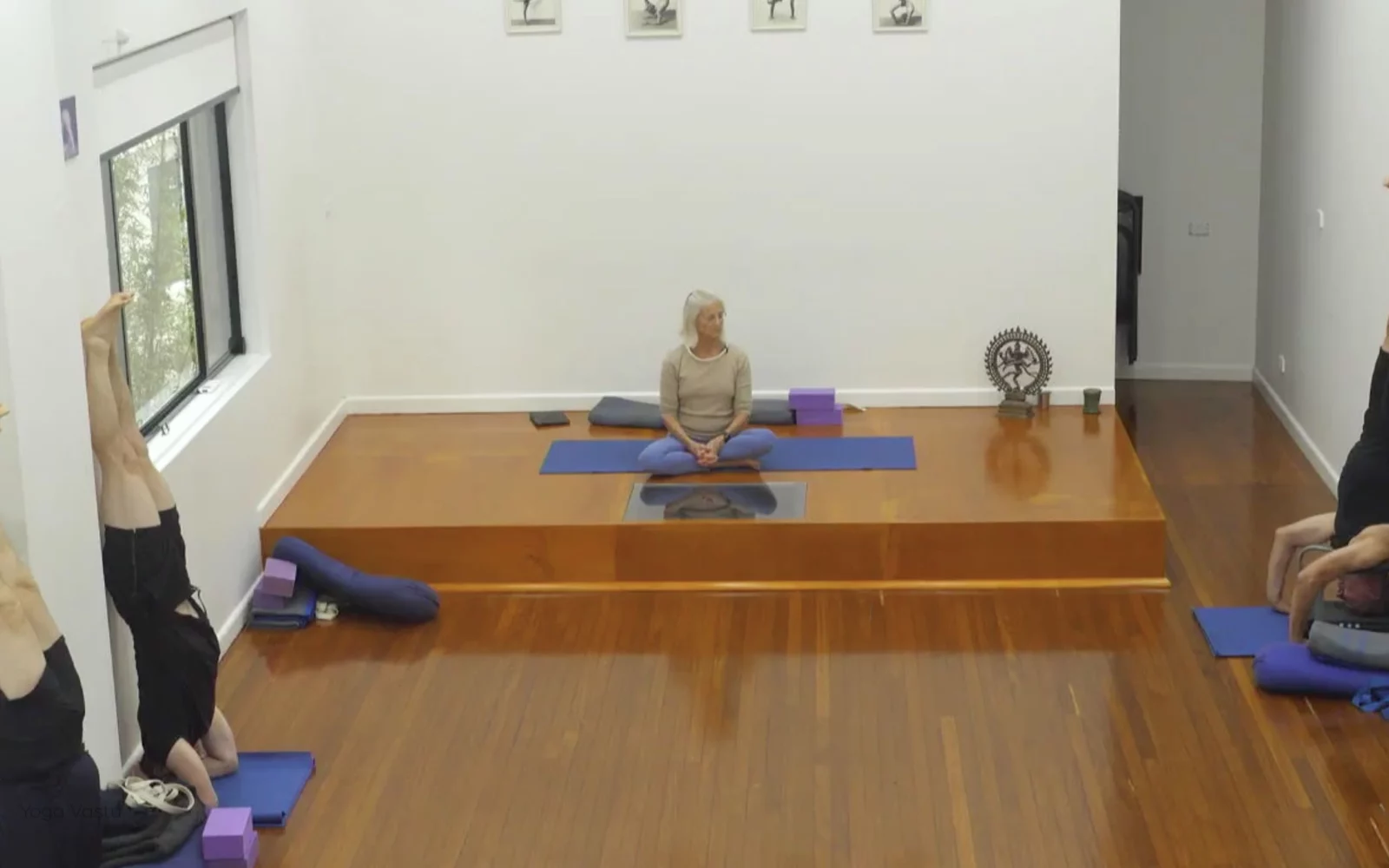
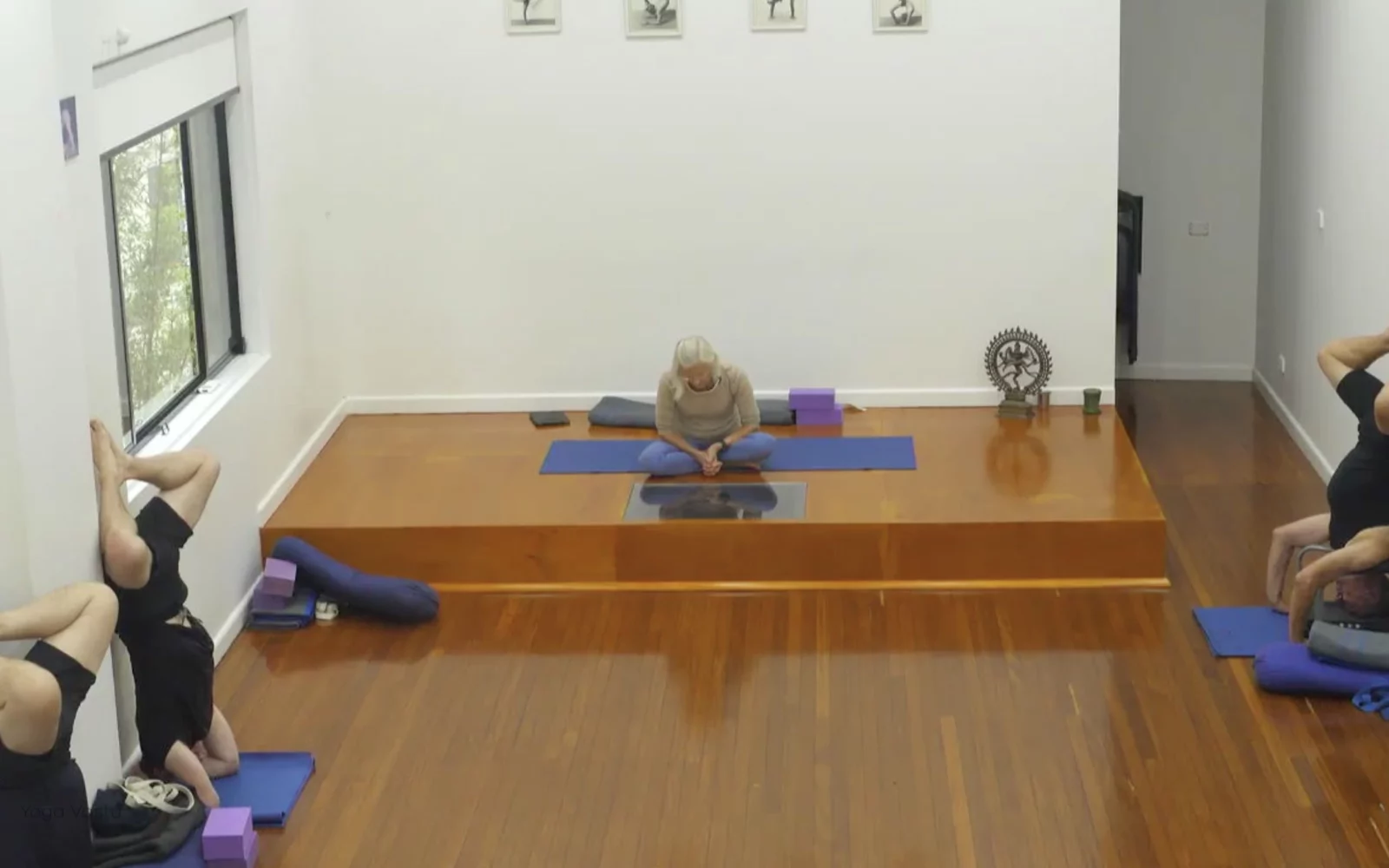
Sirsasana, adding on the Baddha Konasana legs variation, coming down into Virasana Forward to rebalance after the pose.
Come into Supported Setu Bandha Sarvangasana and stay here for a few minutes. This is your time to reflect and observe. Remember: Guruji learned most of what we now know about Iyengar Yoga by following his interest, constantly returning to the same actions, and observing. He learned by going deeper and deeper. We begin to see things very differently as we continue to practice. Some observations may be universal and some may be relevant only to us.
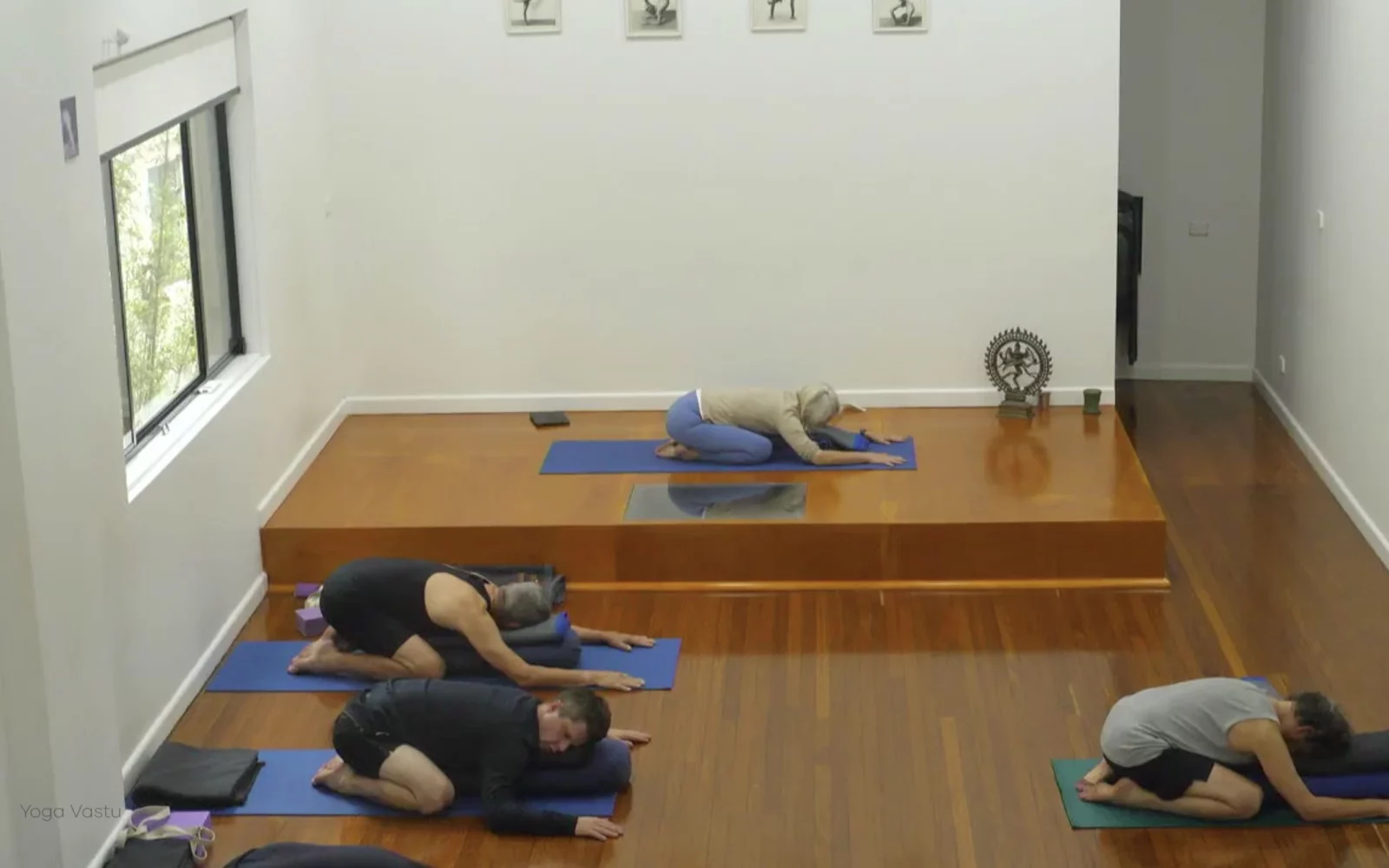
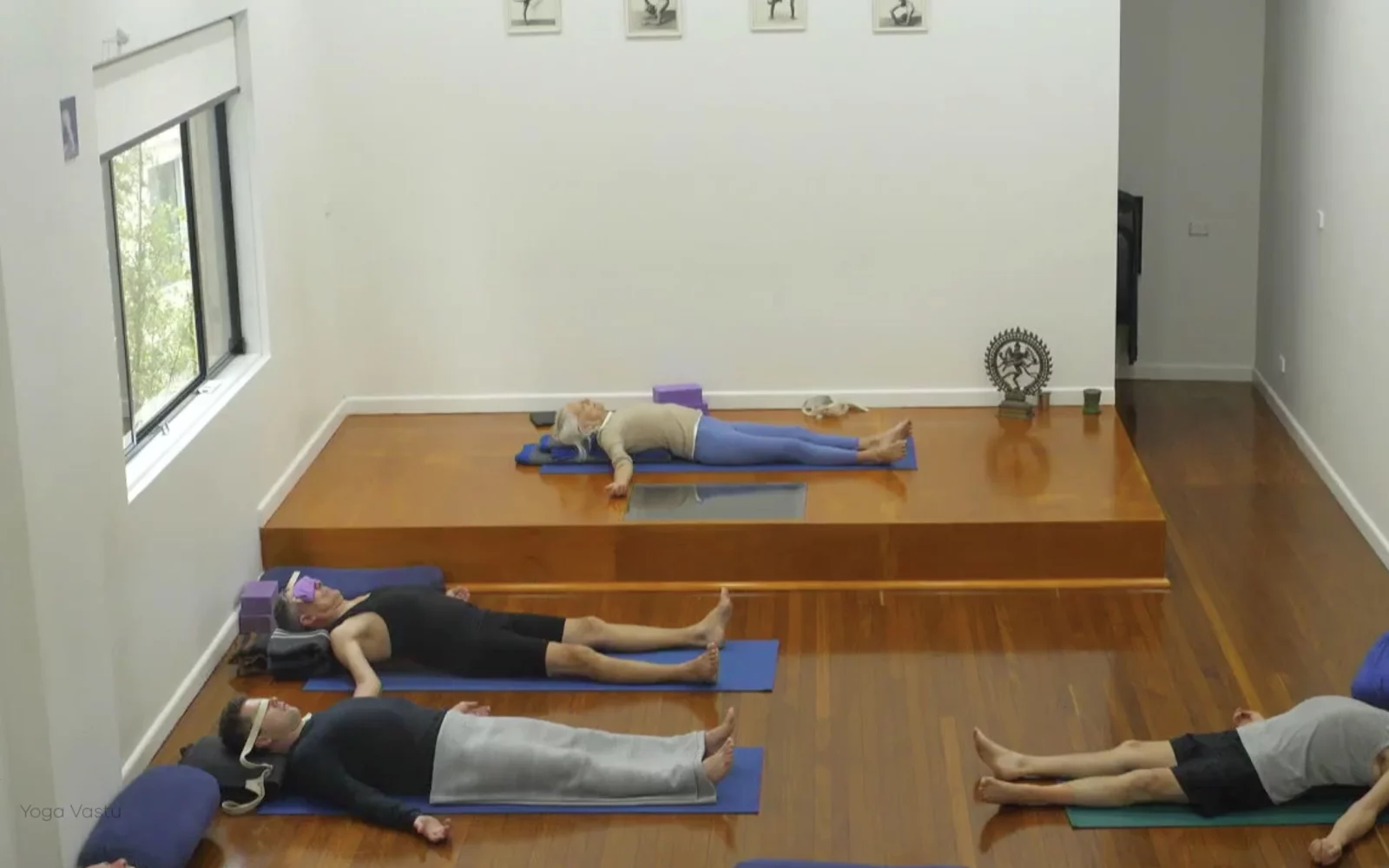
Shift into Virasana Forward over a bolster and blanket. Then, to release the back some more, go through the 3 variations of lying supine over a folded blanket. Finally, lie down flat on the floor in Savasana. Perhaps, in this session, with attention and observation, you will see how stillness can become quite tangible and clear, almost like a physical entity.
Video stills from this sequence