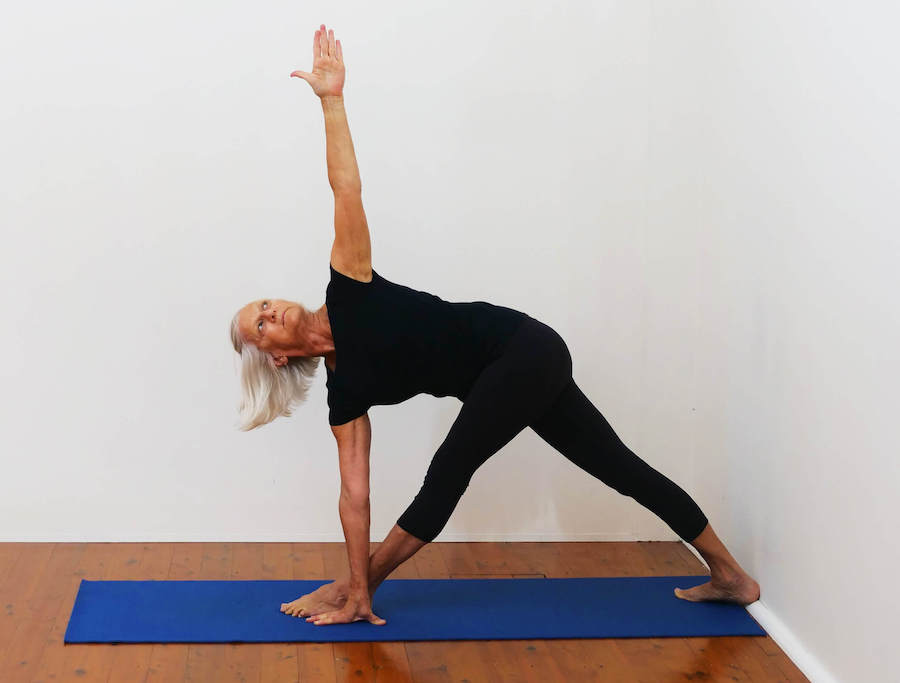
Last class, we went through a series of standing and seated forward bends, while focusing on keeping the sternum up and shoulders open. In this class, we’ll continue focusing on the shoulders but will also pay attention to the collarbones. Our main focus will be backbends. We will begin with some standing poses and inversions and gradually build up to the backbends, including such advanced ones as Urdhva Dhanurasana and Ustrasana closer to the end of the session when we’ve had the chance to maximally activate and open our collarbones.
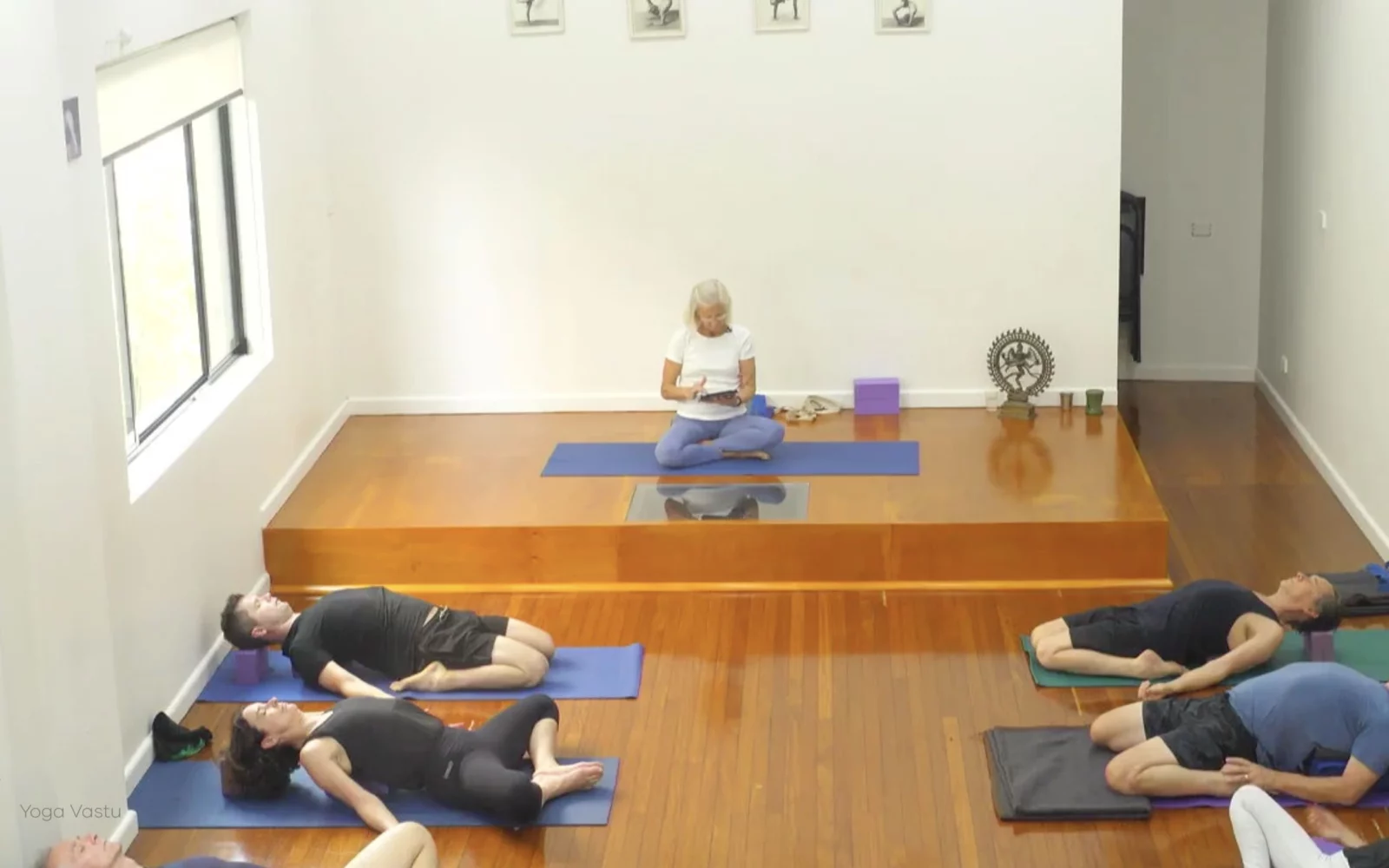
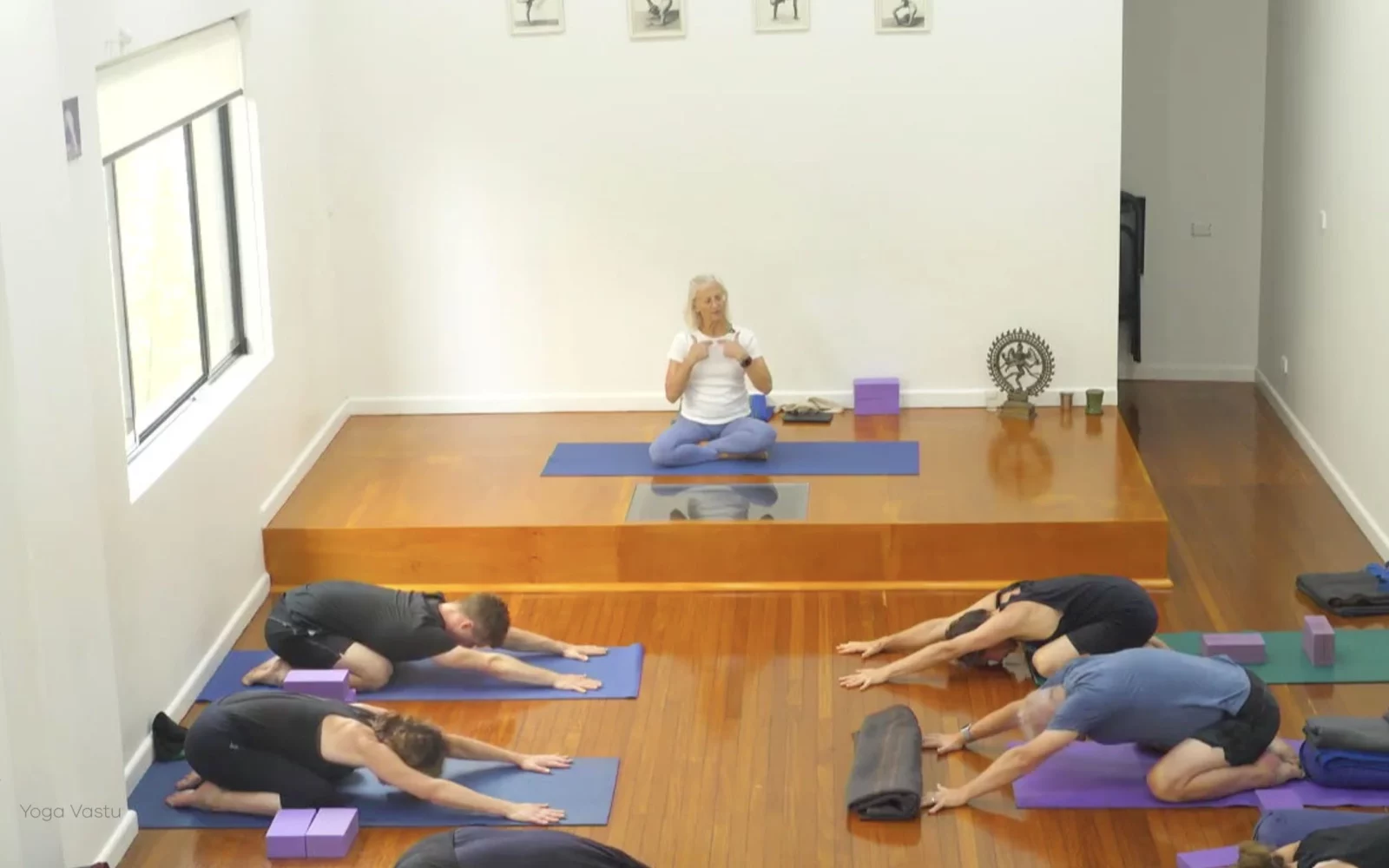
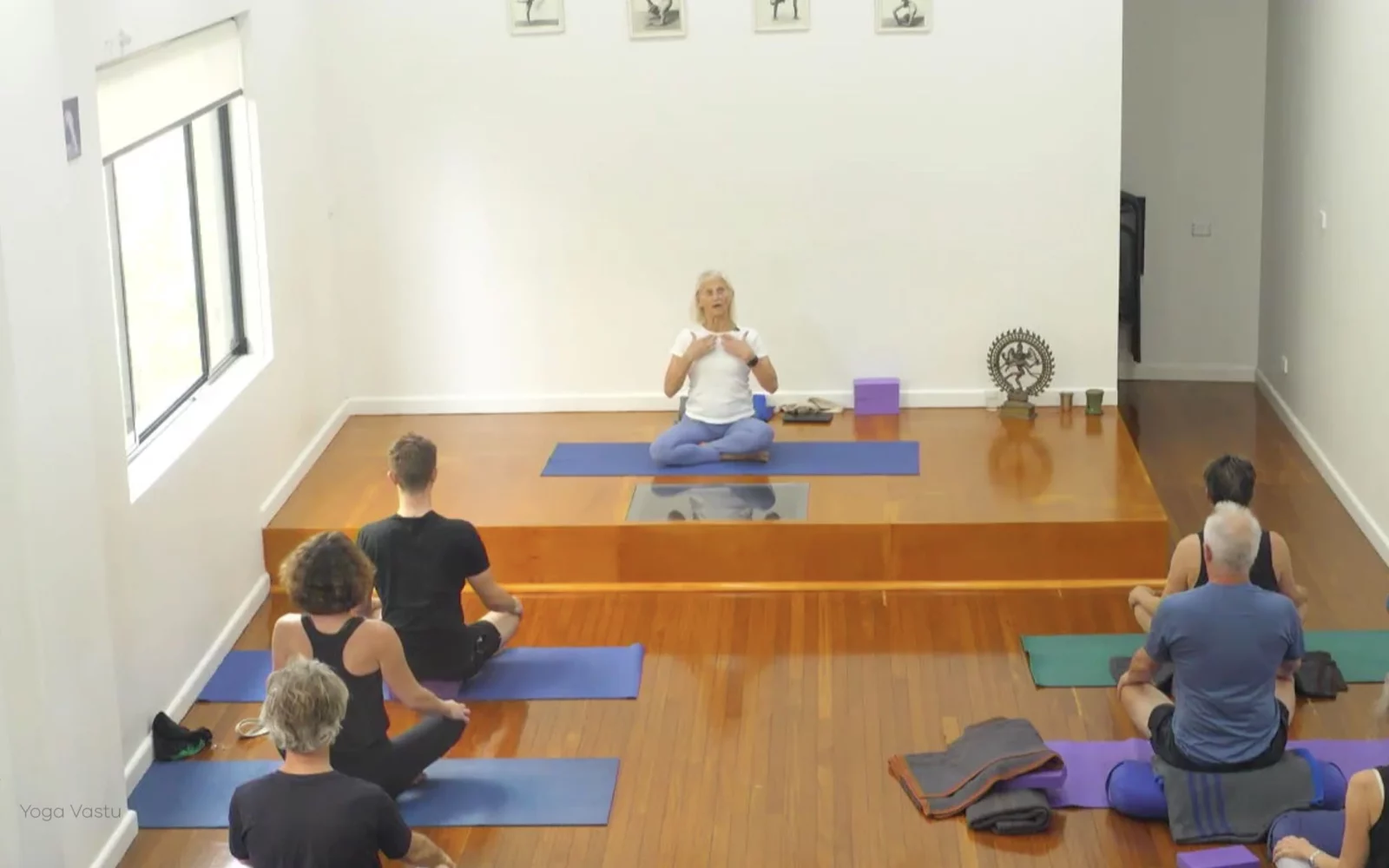
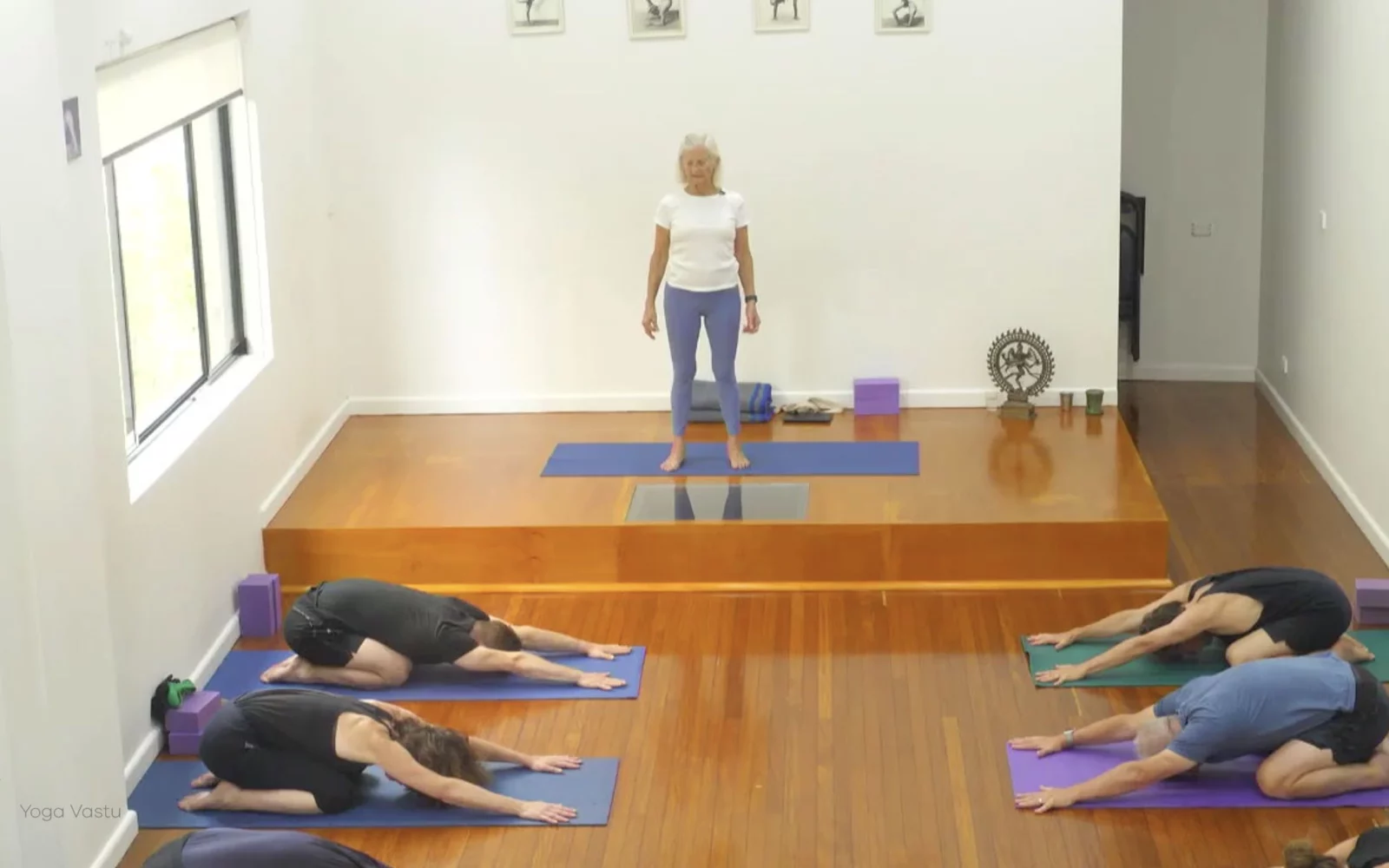
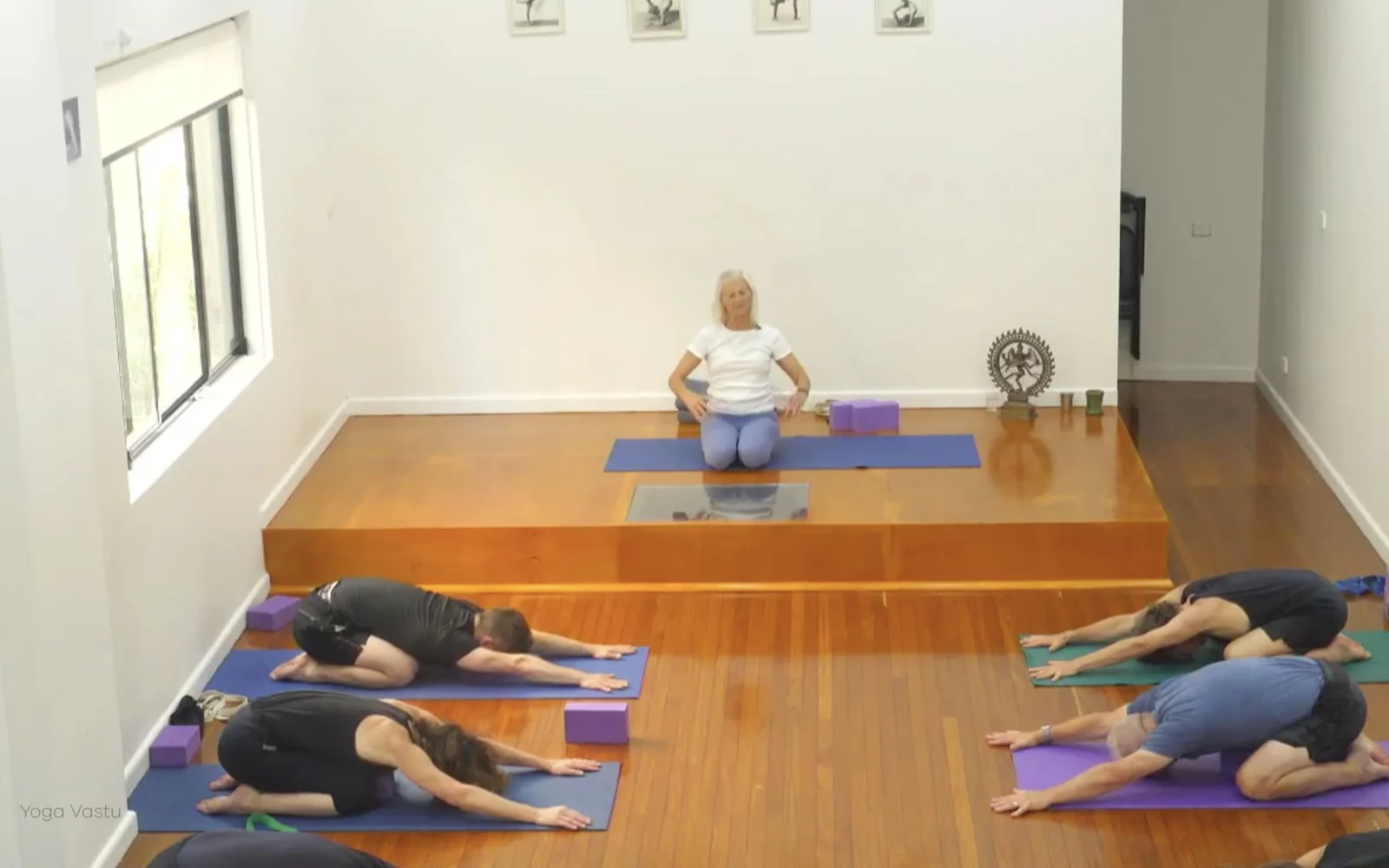
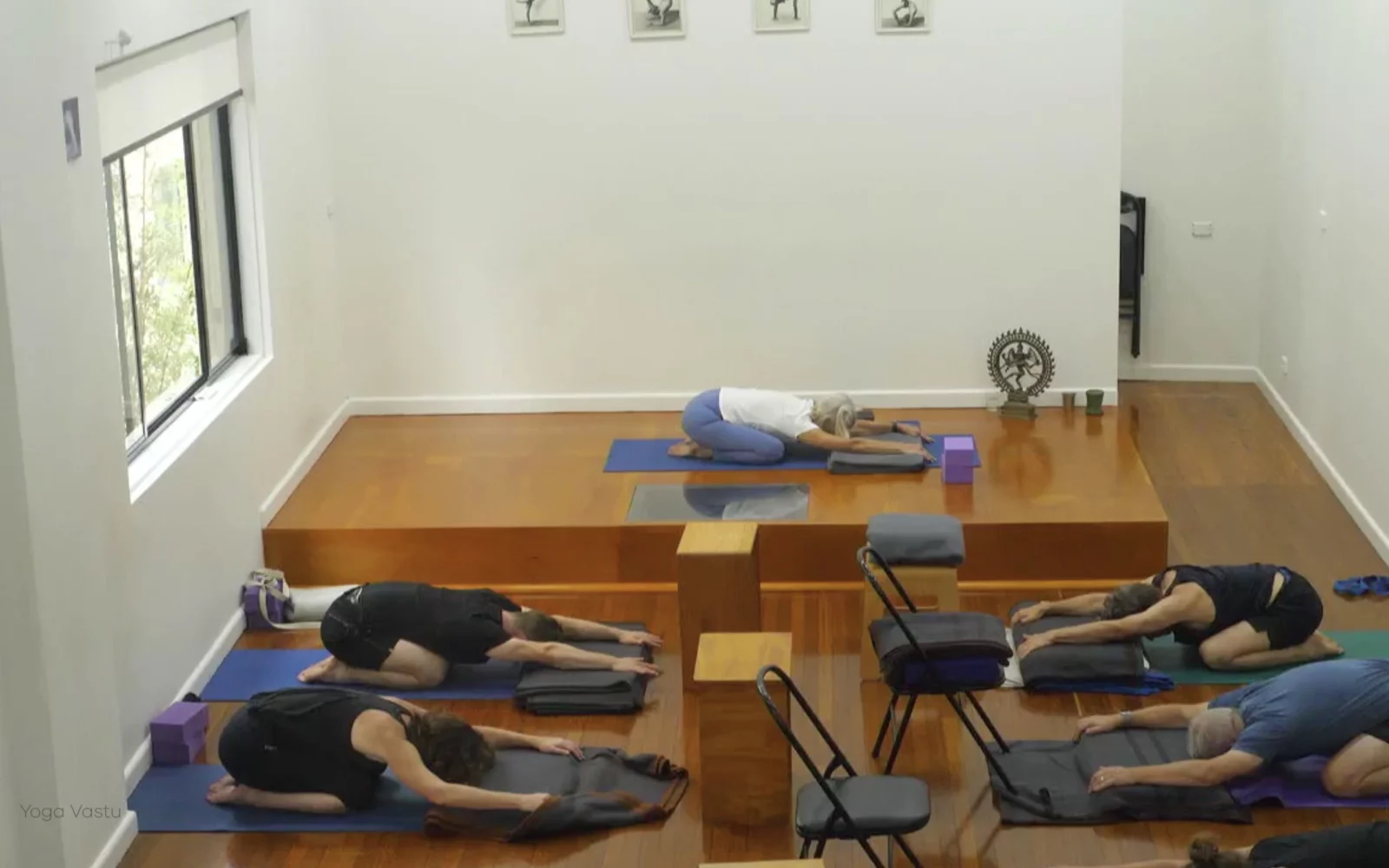
We begin in Supta Virasana, shifting into Virasana Forward to spread the collarbones as in previous lesson. Focus on spreading from the middle of the chest out to the edges, where the collarbones meet the shoulders. As you sit up for the invocation, once again focus on the collarbones and shoulder blades. This will be the focal point of the entire session.
You will only need 2 blocks and a belt for most of the session.
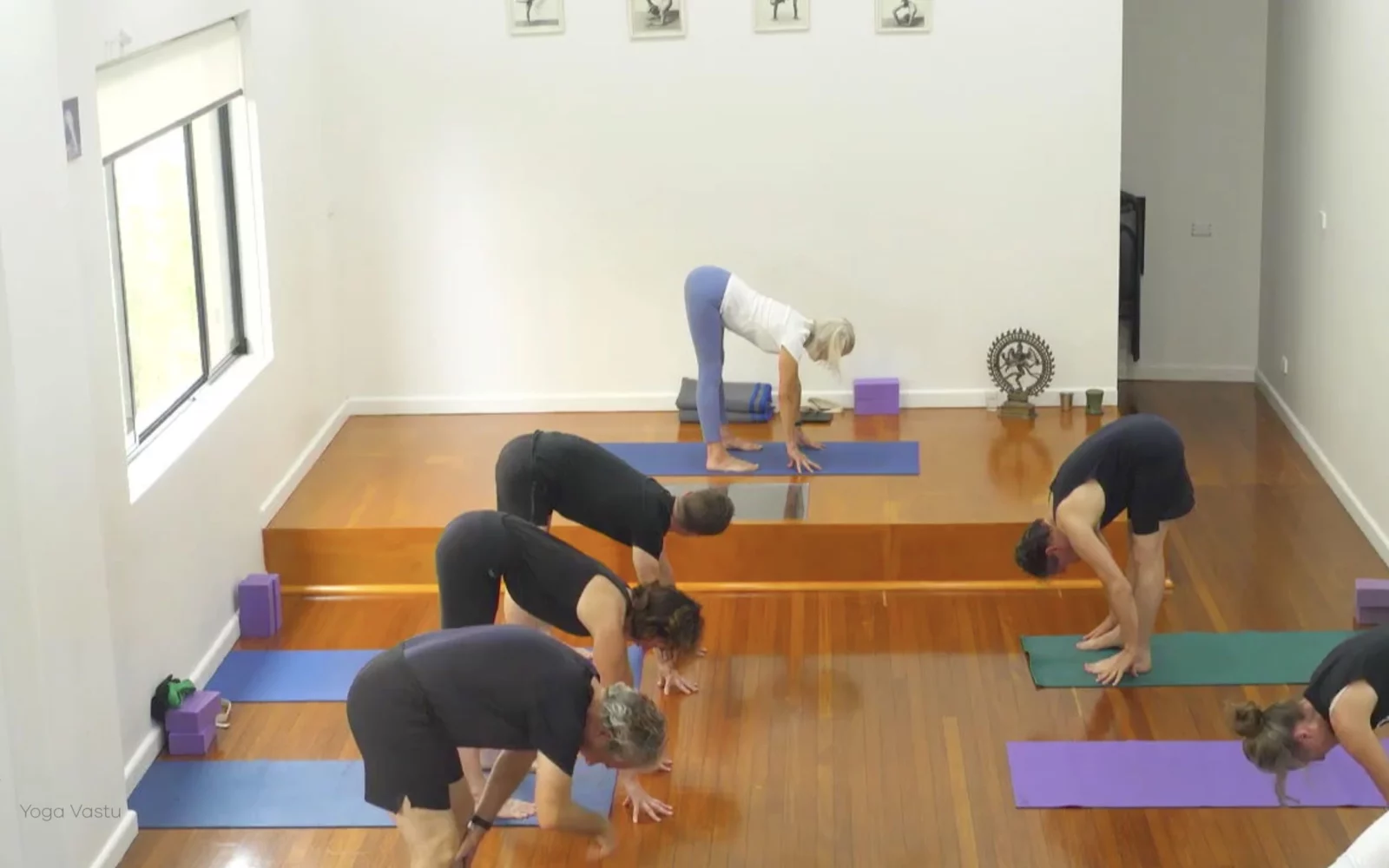
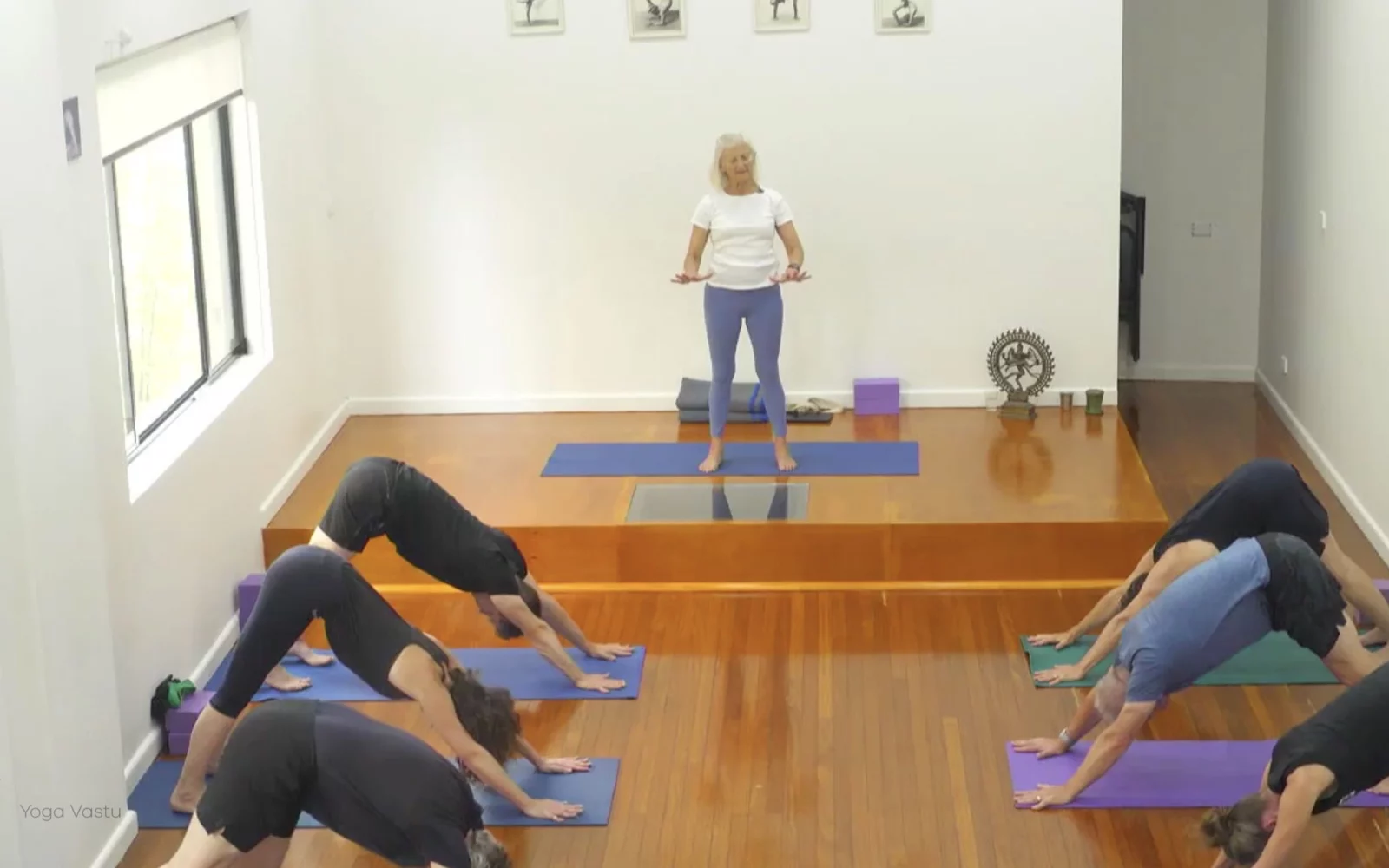
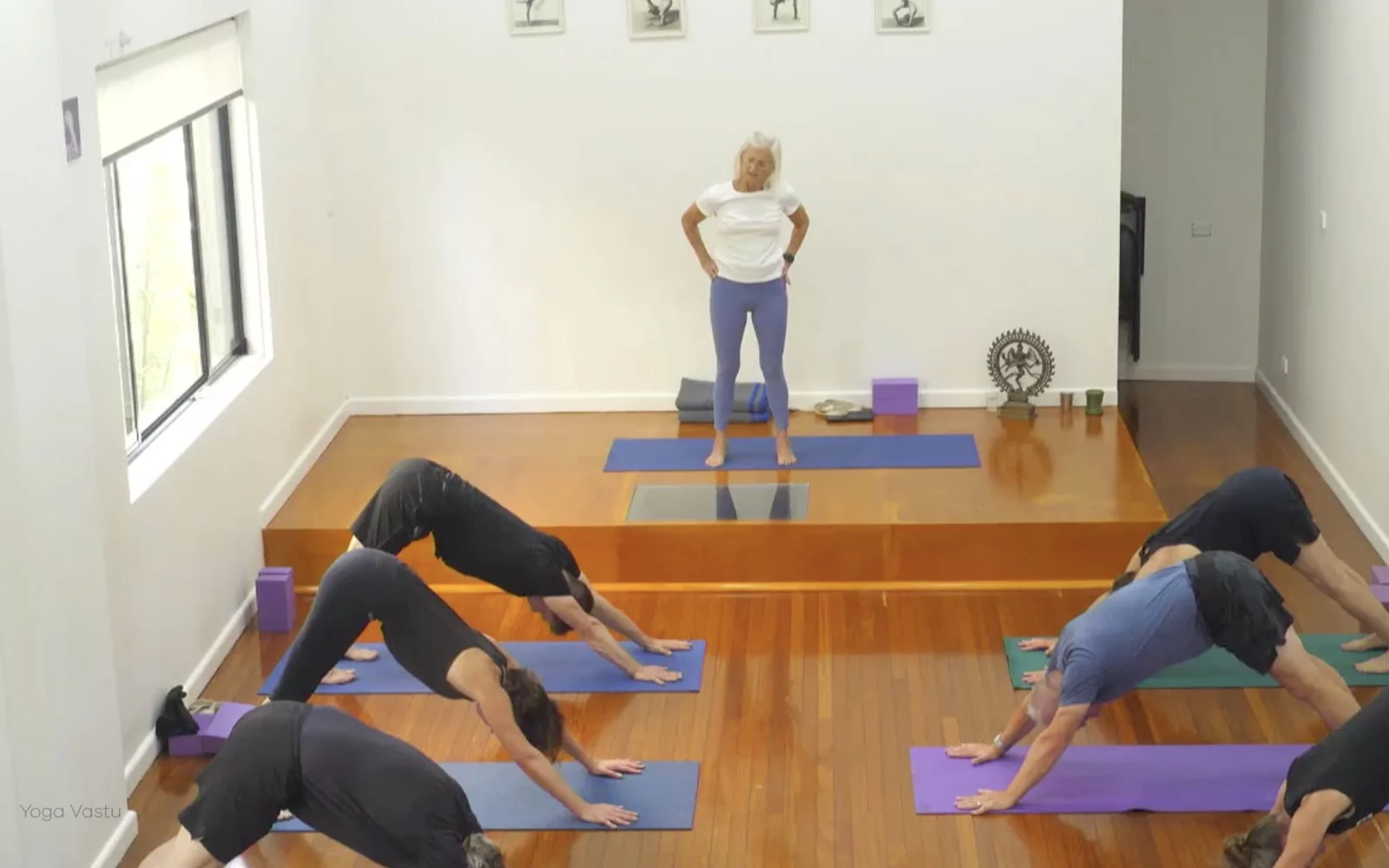
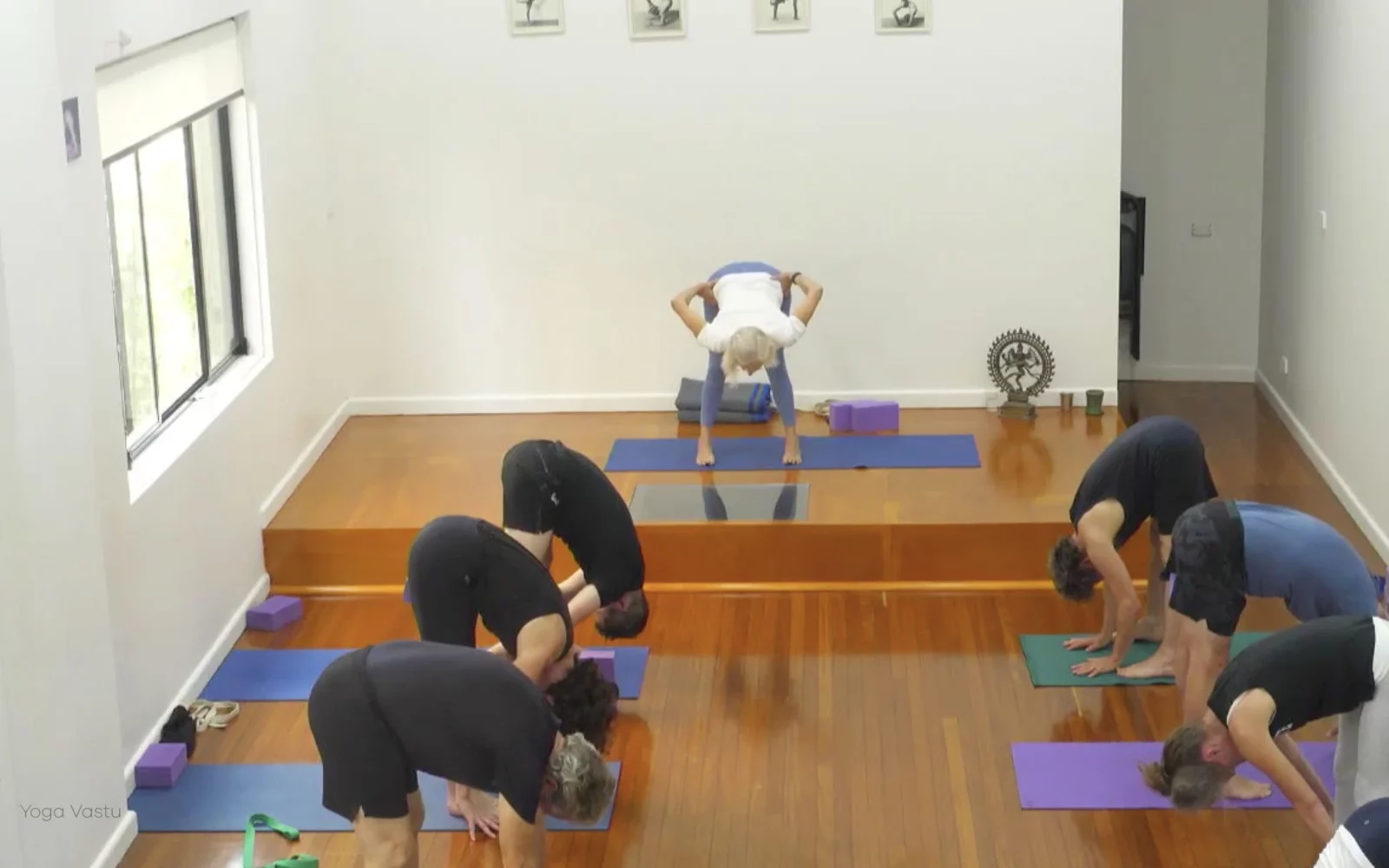
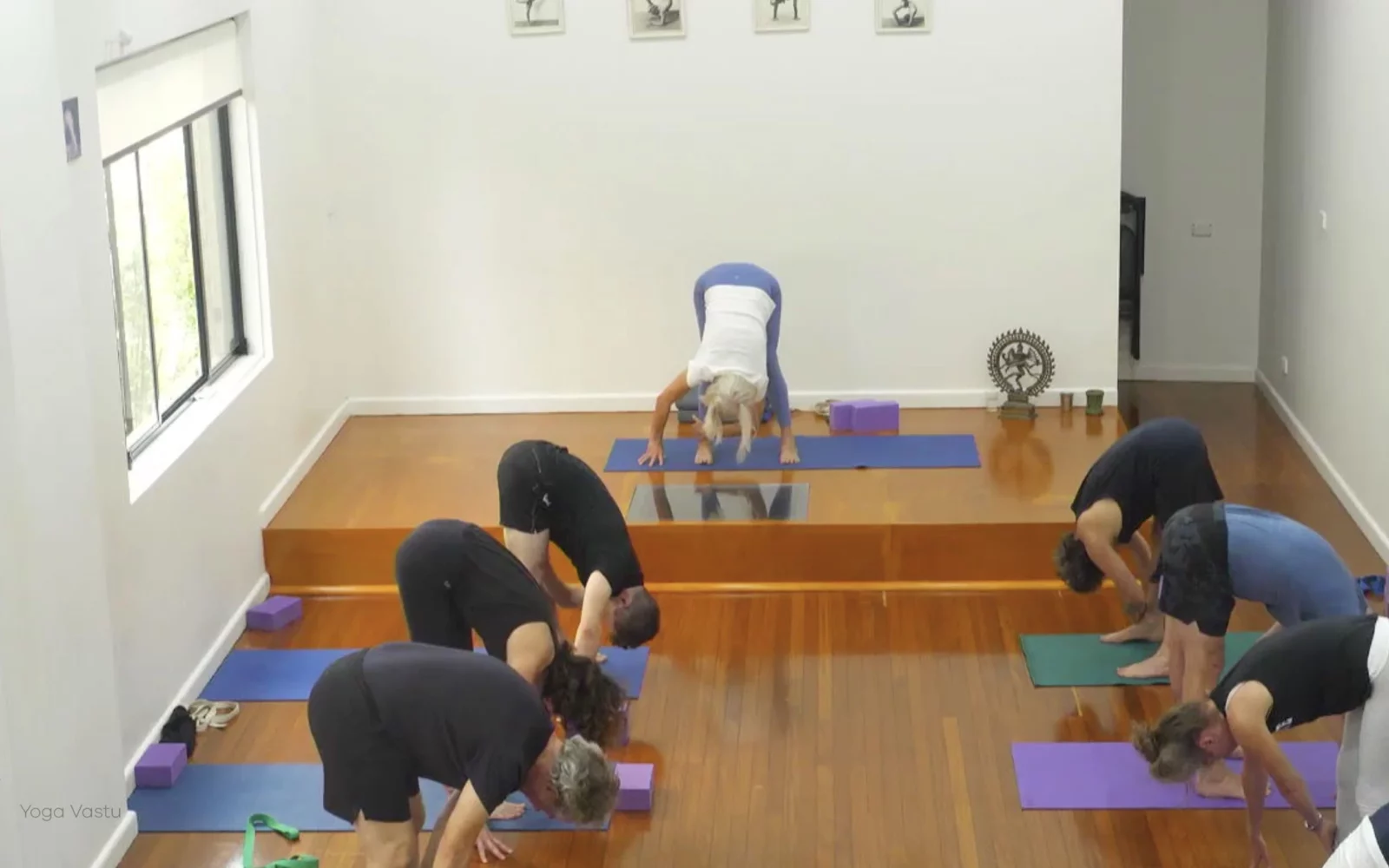
Fold forward into Uttanasana. Here, even as you walk your hands deeper and deeper into the bend, make sure to keep your collarbones broad. From Uttanasana, move into Adho Mukha Svanasana. Shift into Virasana Forward, then back into Adho Mukha Svanasana.
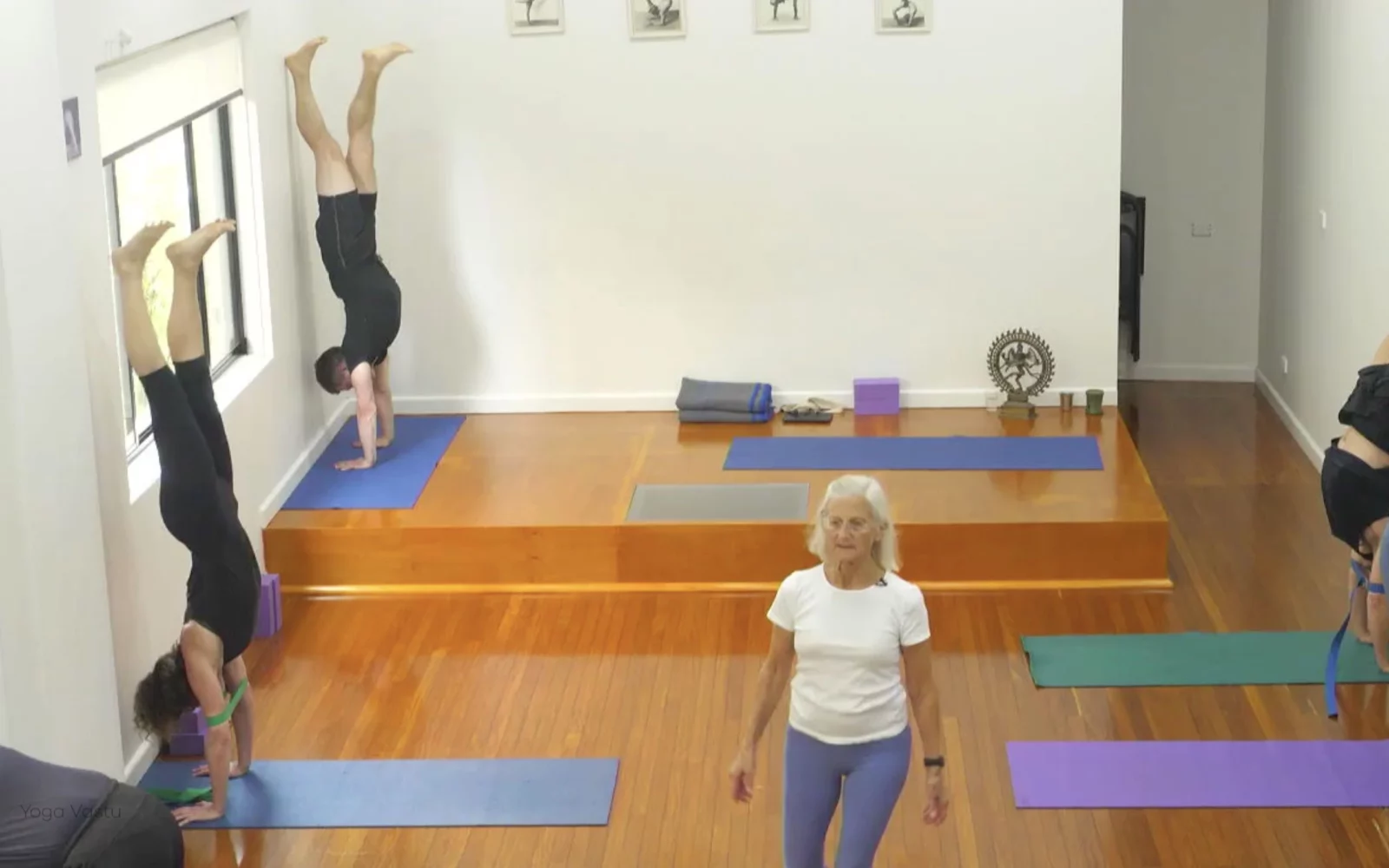
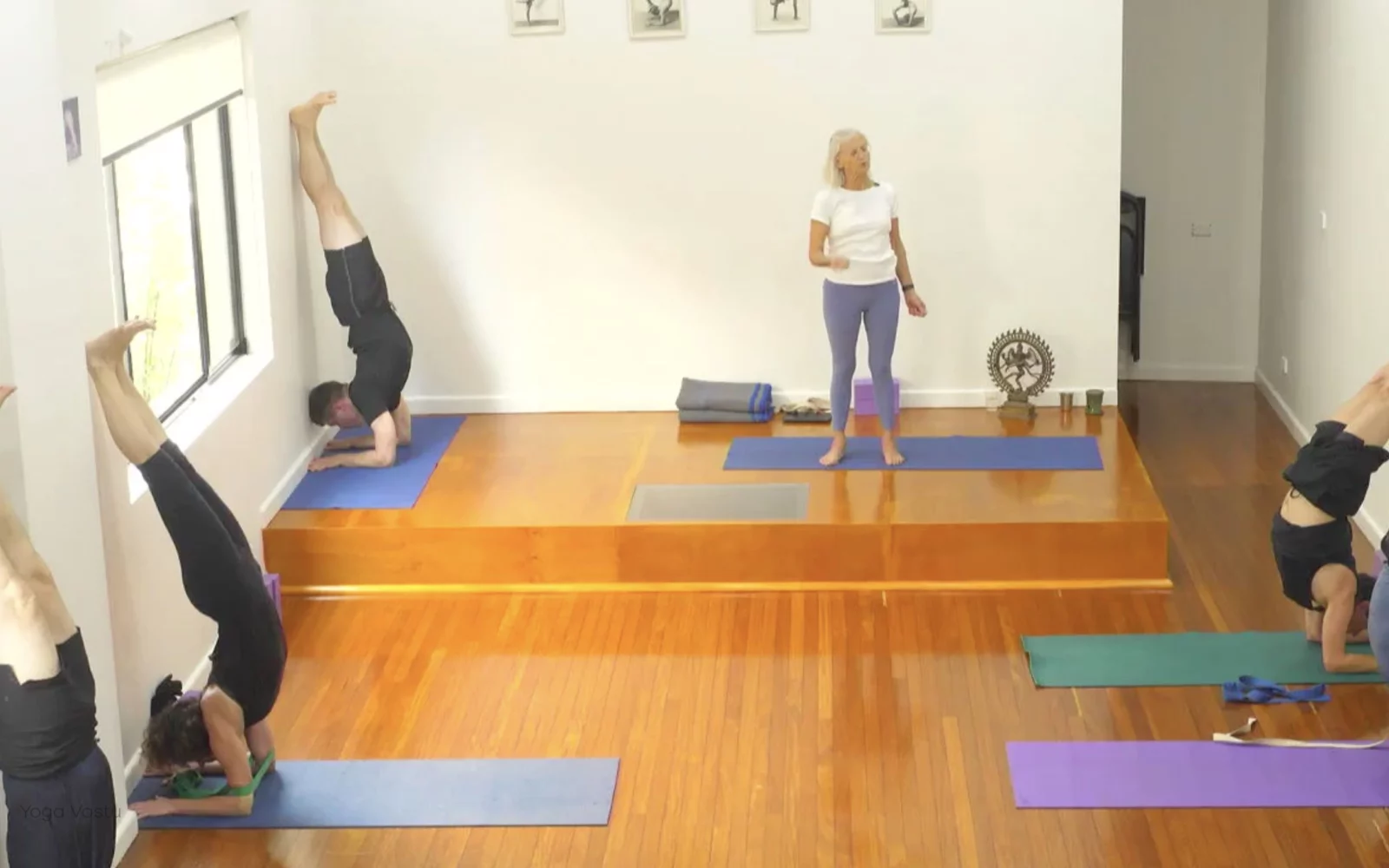
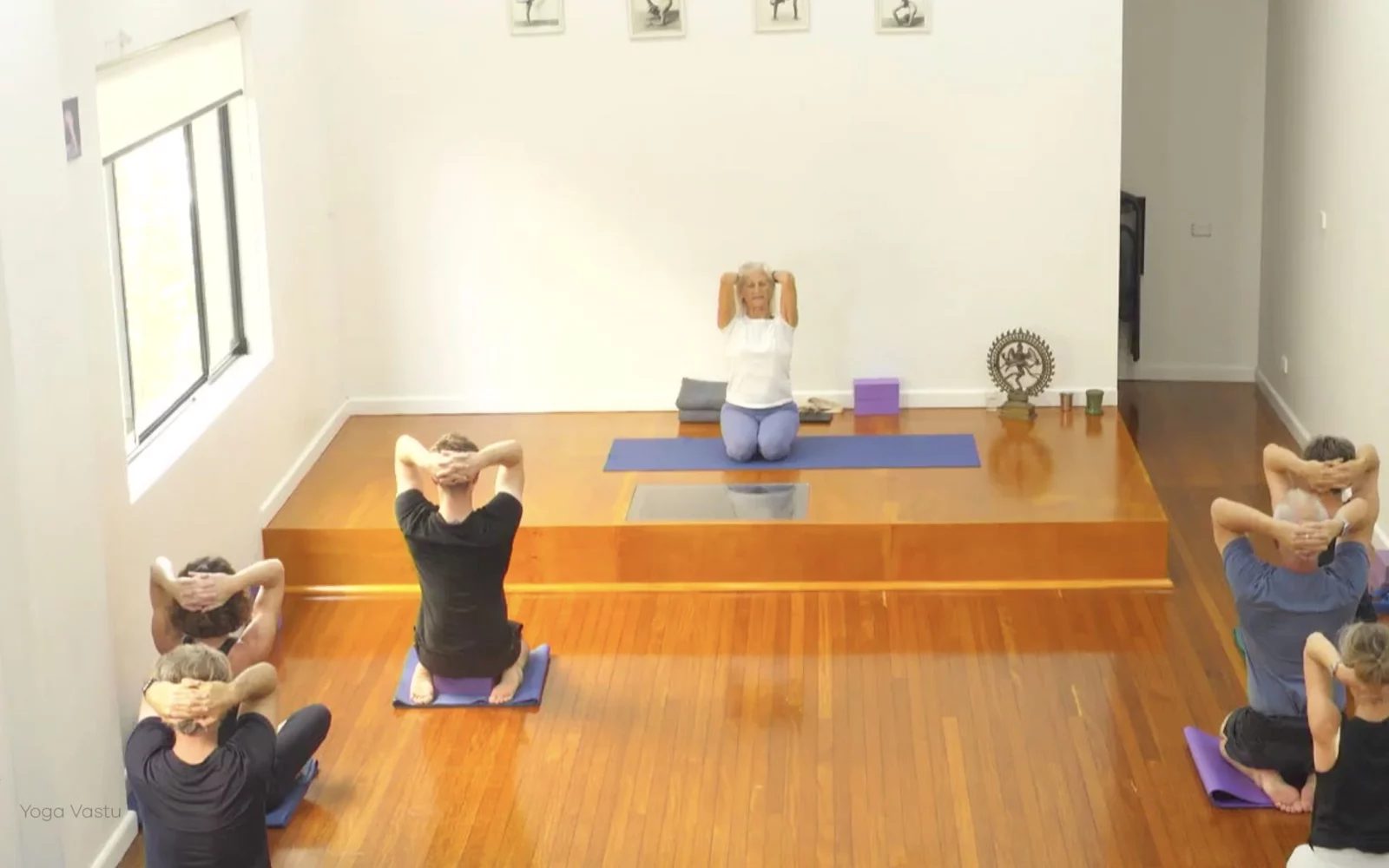
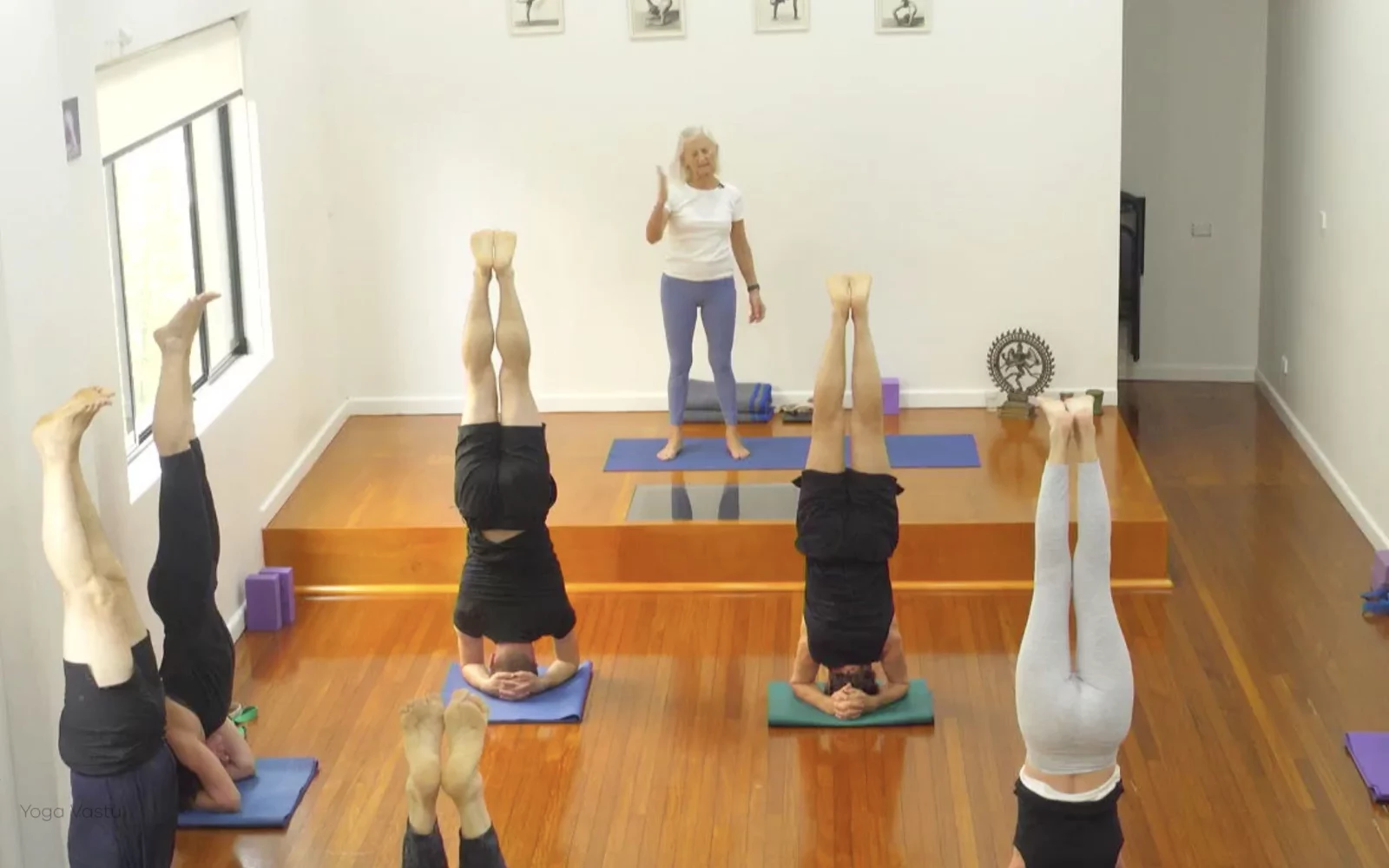
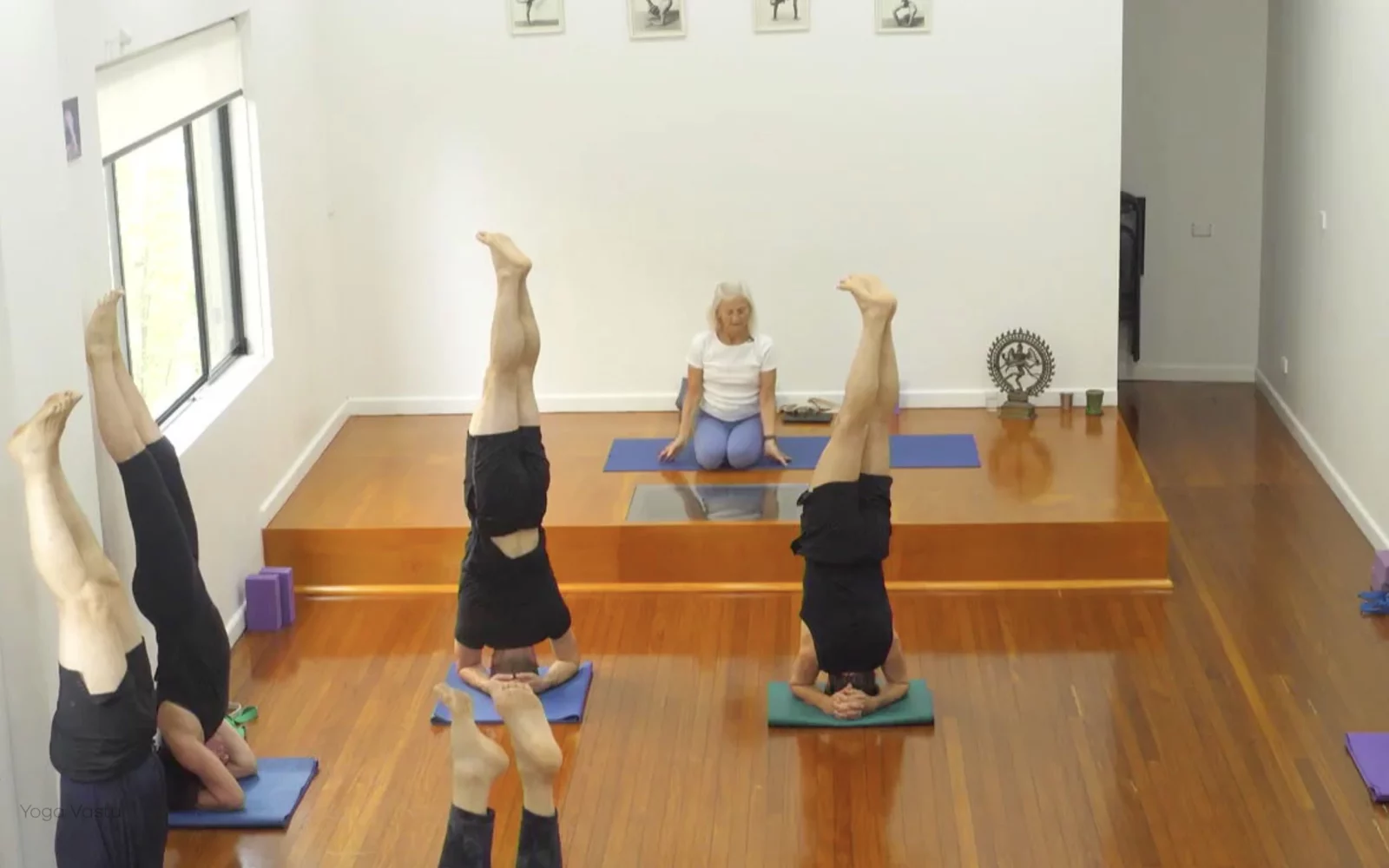
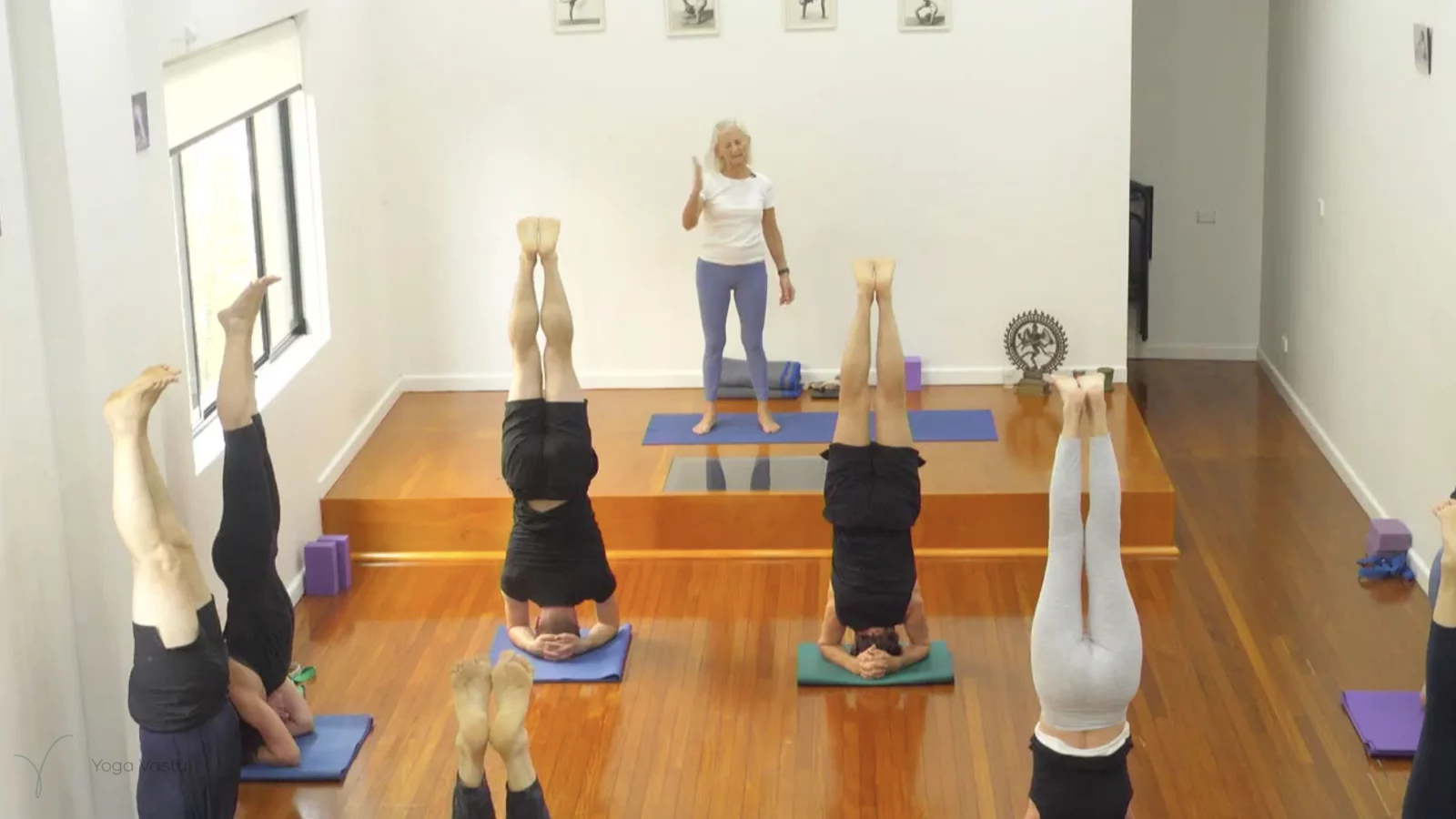
Now for the heating inversions. The collarbones are front and center in the next few poses. First, lift yourself up into Adho Mukha Vrksasana (Handstand). Keep the shoulders broad. Come down and fold into Uttanasana. Observe how the nature of this latter pose has changed after the inversion. Now, go into Pincha Mayurasana, paying attention to the same points. Come down. Sit in Virasana with the hands interlocked behind the head as in Sirsasana. See how the opening in the collarbones affects the opening in the shoulder blades. Observe. Sit like this for a few breaths before going up into Sirsasana. Hold steady in the pose, find and maintain a strong base, then twist from your midsection into Parsva Sirsasana. Come down into Virasana Forward.
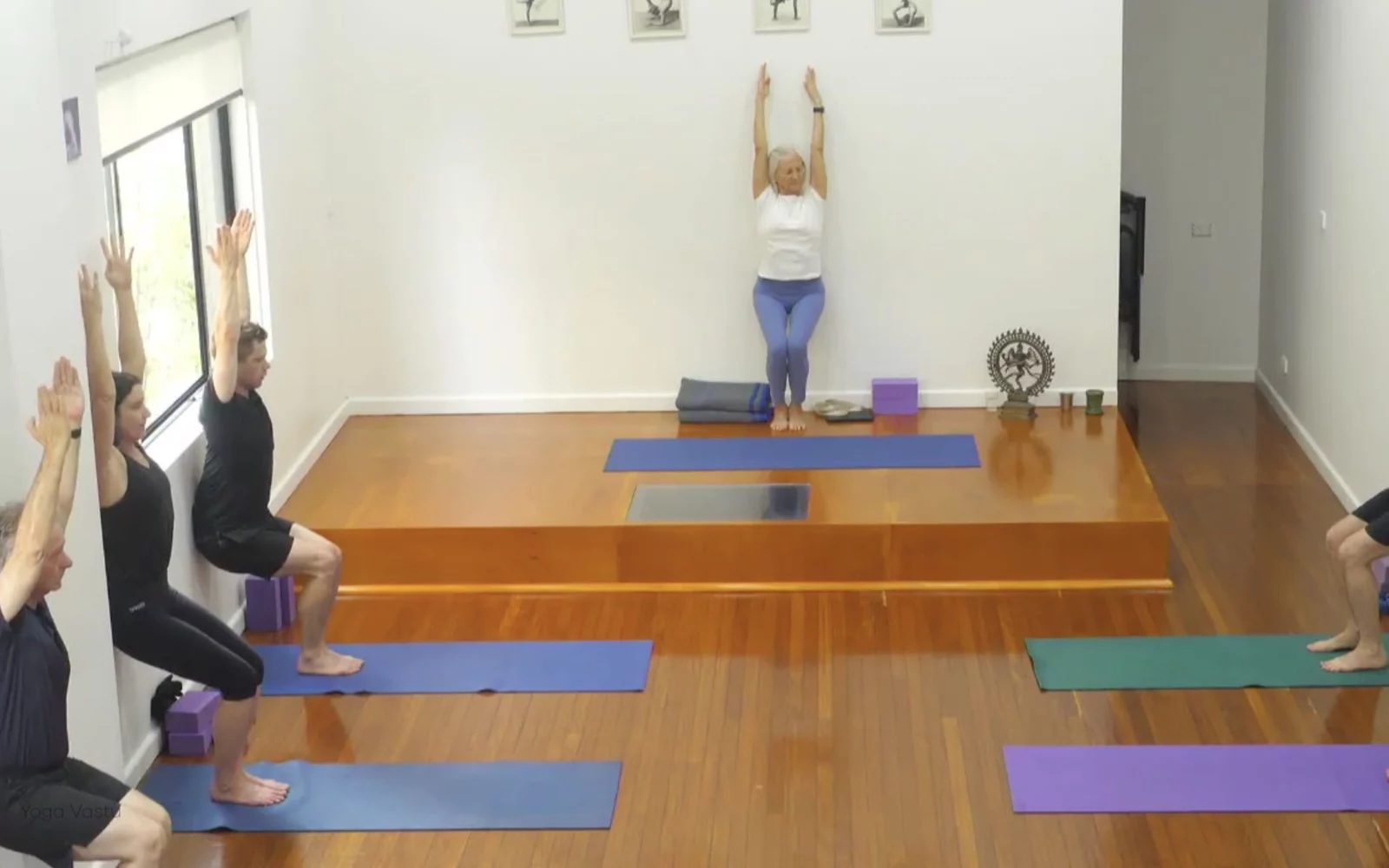
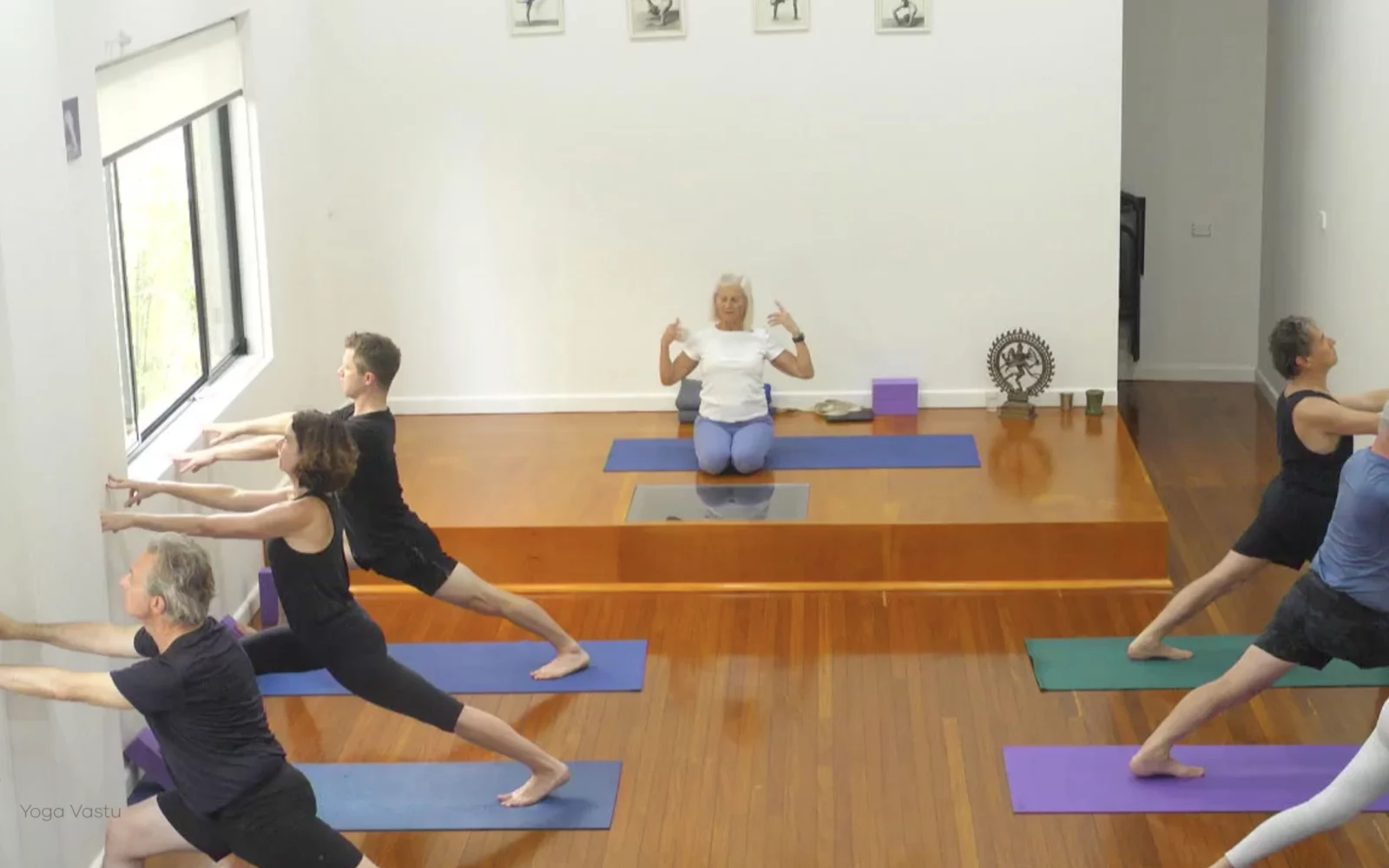
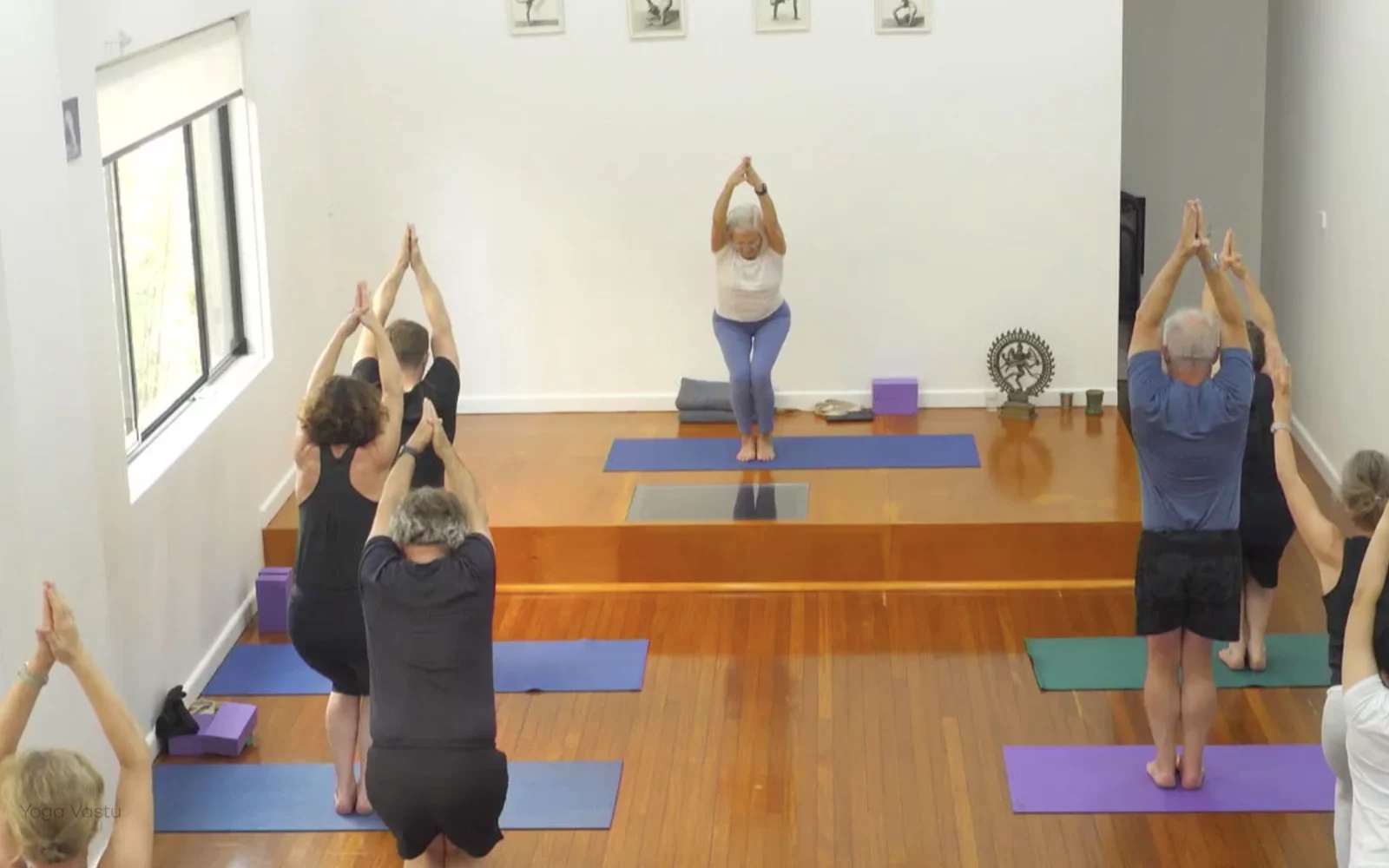
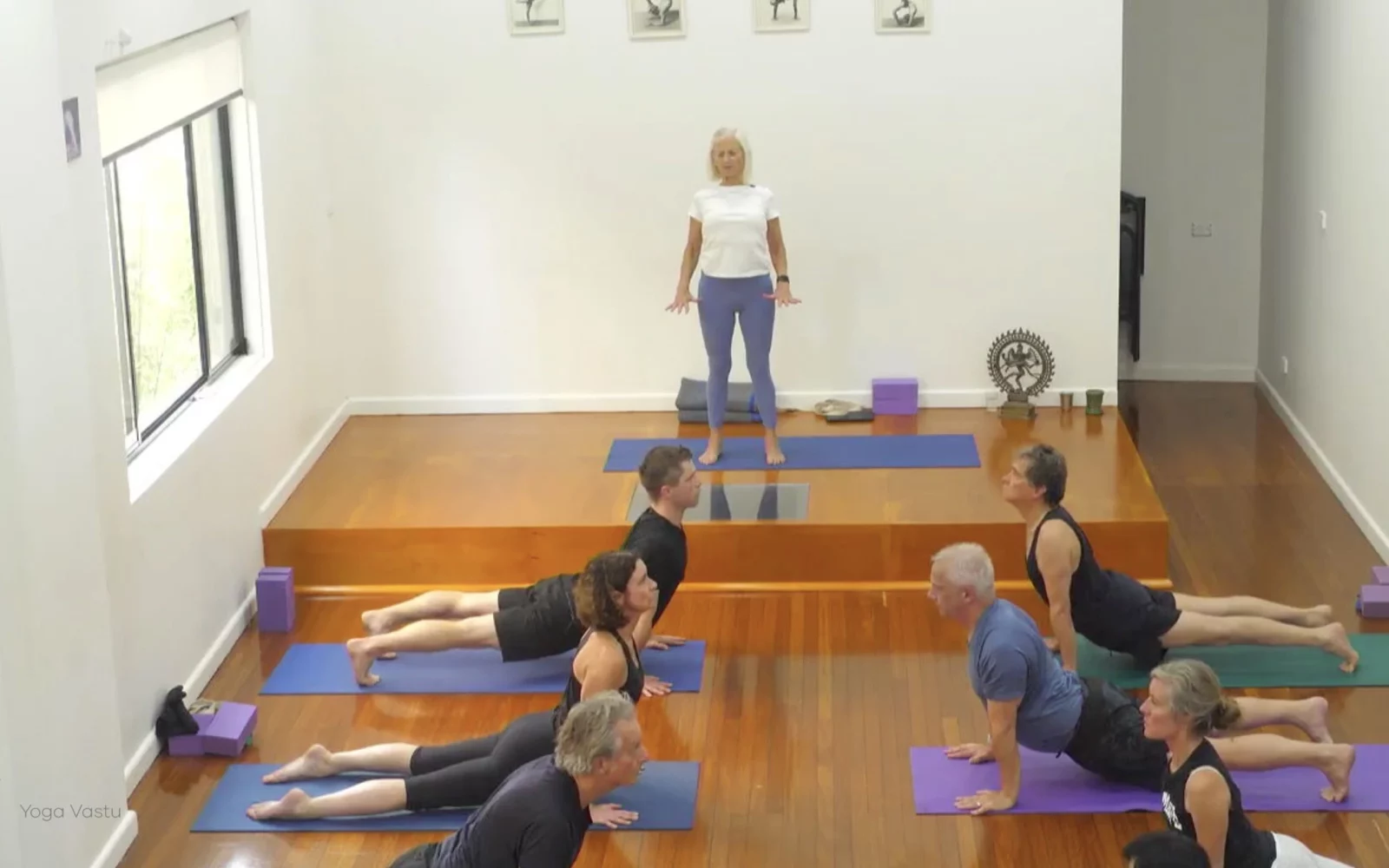
Get up now for Utkatasana against the wall. Find your tailbone, center yourself. Come into Virabhadrasana 1 with your hands and front foot against the wall. Back up to Utkatasana. Fold forward, walk your hands out for Adho Mukha Svanasana, then shift into Urdhva Mukha Svanasana. Repeat the latter transition one more time. Then, set up some blocks under your hands and lift yourself up into Urdhva Mukha Svanasana once again. Notice how the extra lift achieved through the blocks also helps your open your shoulders more.
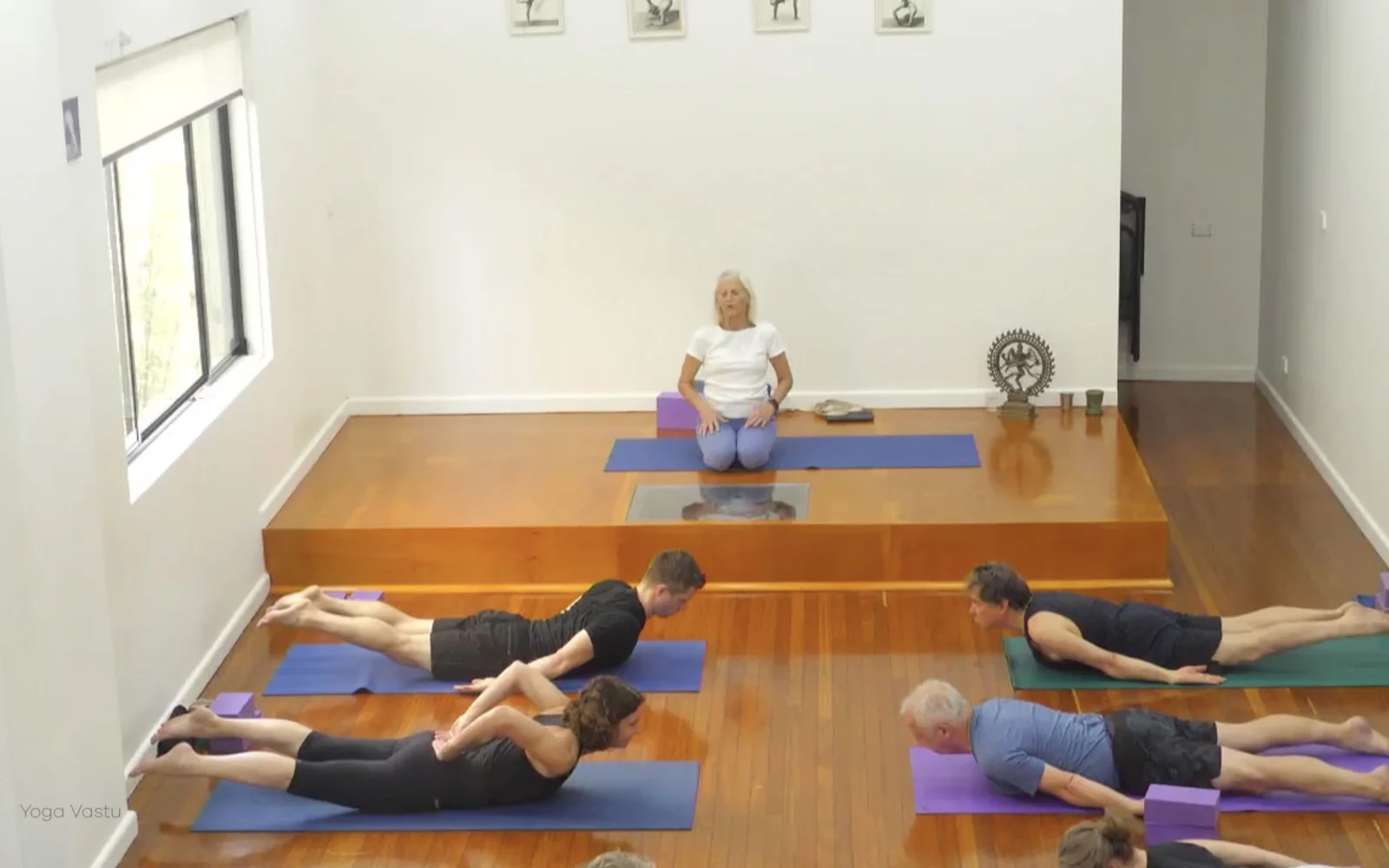
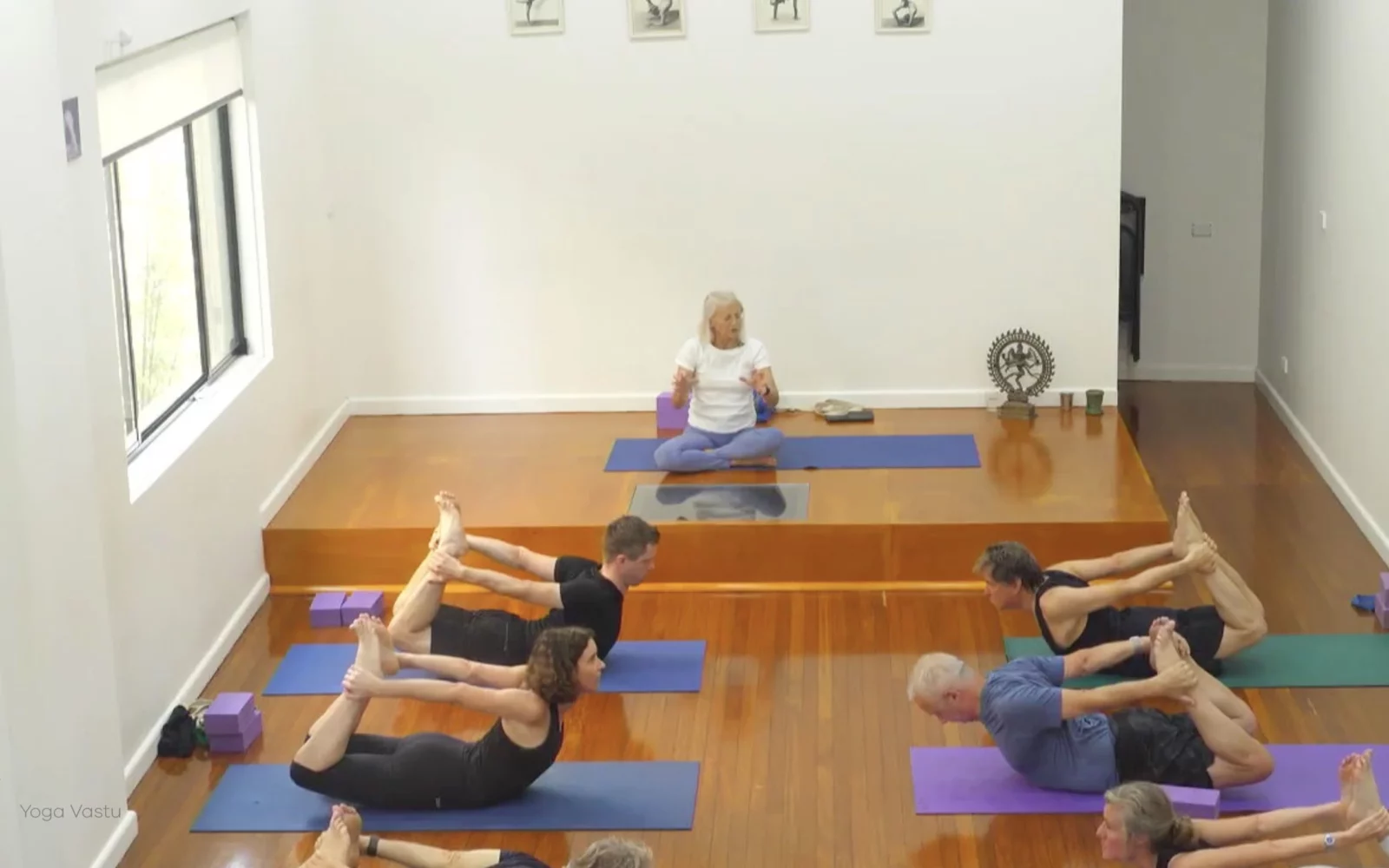
Put the blocks to the side and lie down on your belly, your cheek against the mat. Then, activate the core and lift yourself up into Salabhasana. From there, open up your collarbones and reach your arms backwards until your hands grab a hold of your feet: Dhanurasana. Repeat this transition one more time.
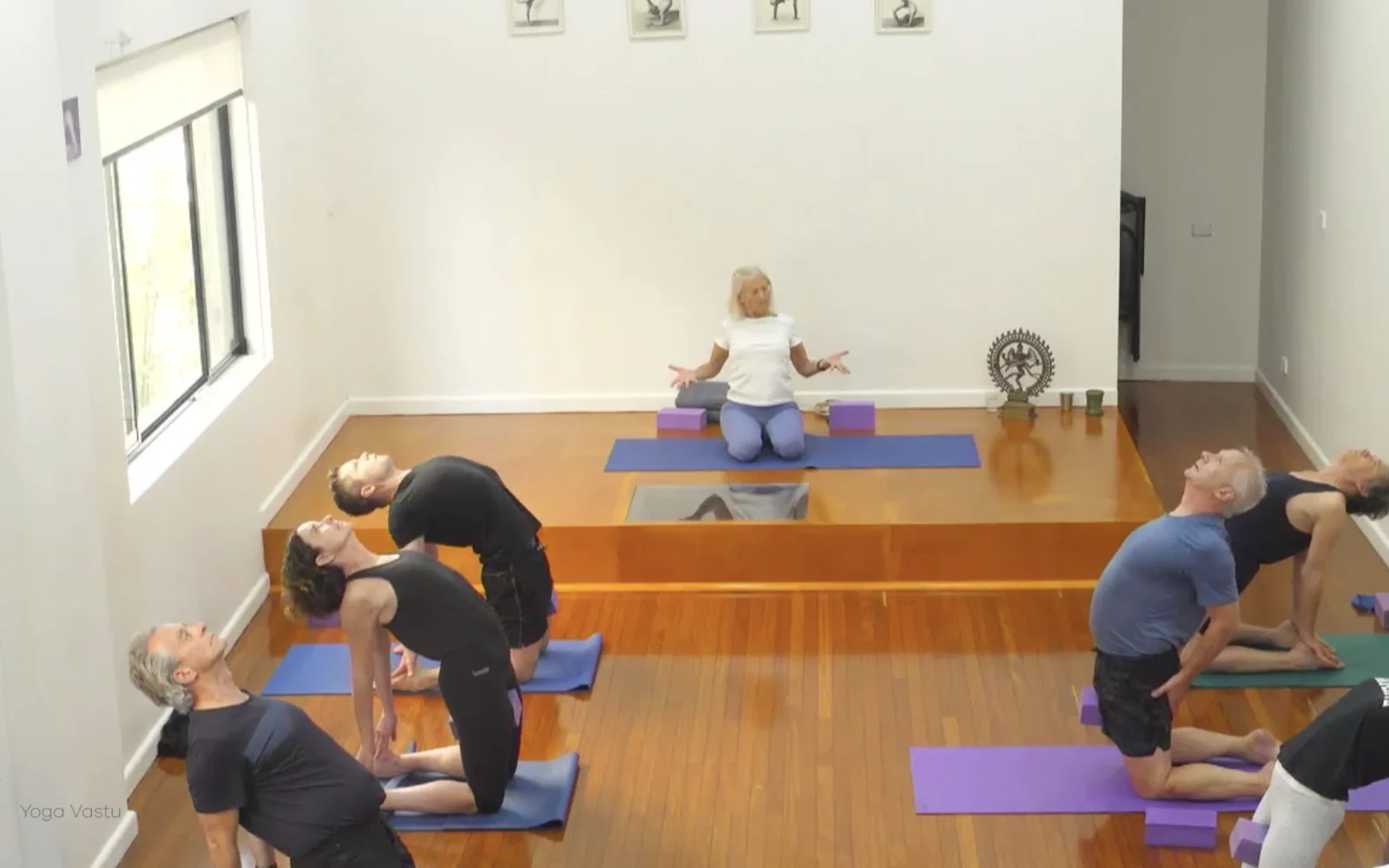
Get up into a kneeling position. Slowly, making sure not to push past your limits, bend back into Ustrasana. As you do this, experiment with shoulder and collarbone opening: if you shift focus towards releasing tension in that part of the body, what changes does it bring to the ease with which you go deeper into the backbend?
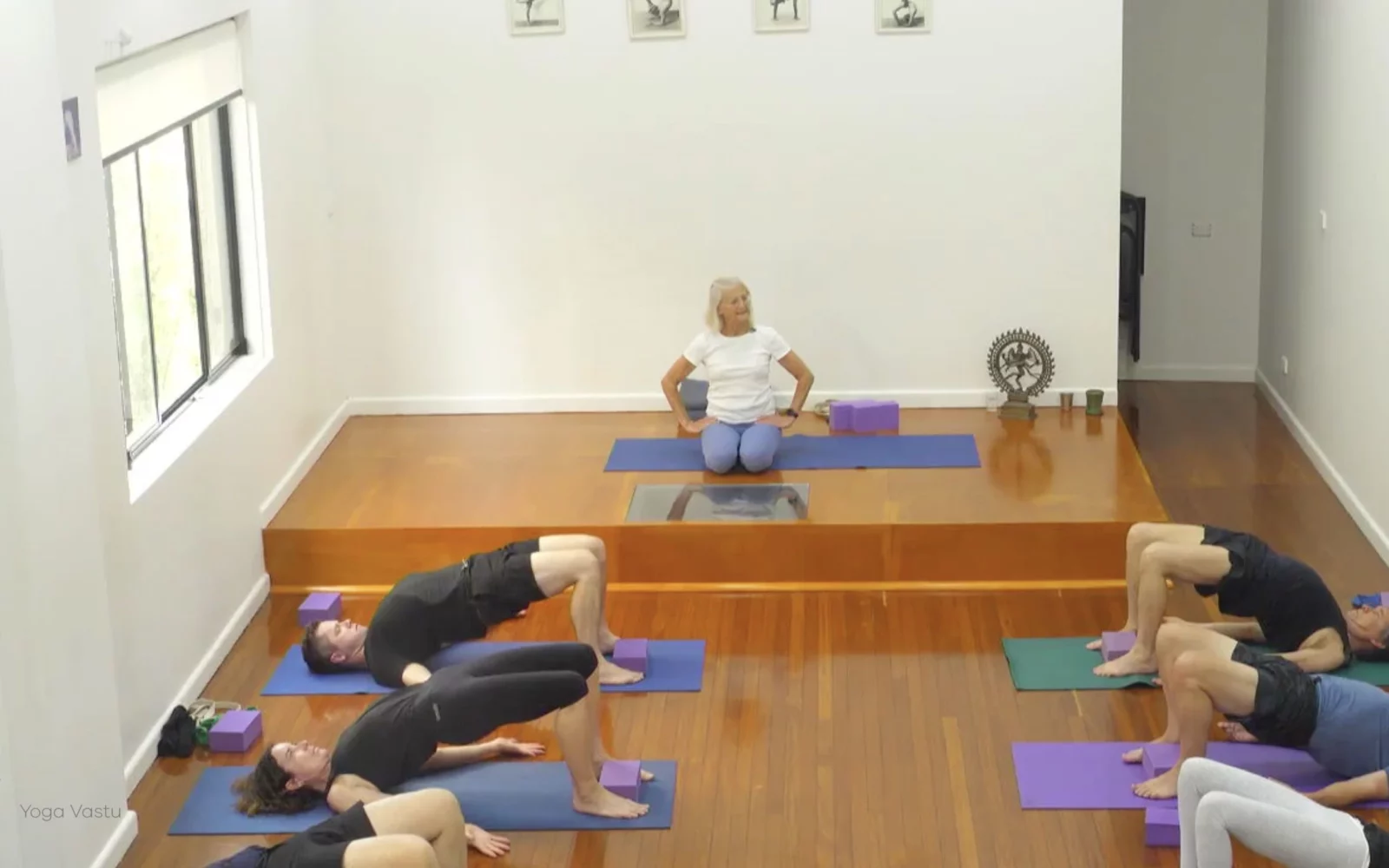
Lie down now. Place a block between your feet and lift yourself up into Bridge Pose. Repeat this four times, going deeper with each repetition. Again, don’t push yourself. Aim for small changes and modifications for they’re the ones that might prove the most effective.
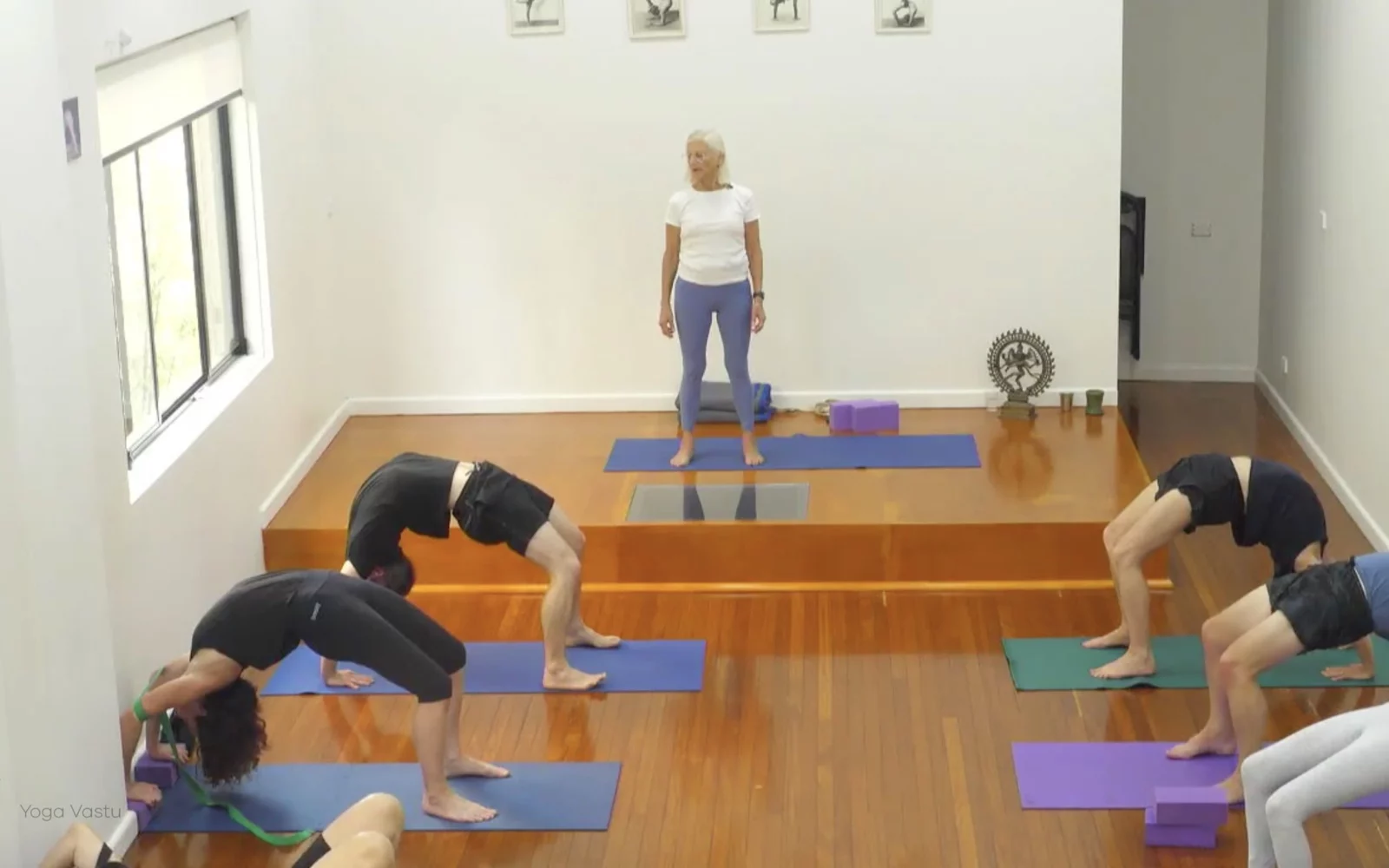
Now for the heart of this backbend session: Urdhva Dhanurasana. This is one of the most classic backbending poses in Iyengar yoga and it stands to be repeated. It’s an expansive pose, meaning that it stretches out the whole body; it’s a full-body pose. With poses like these it’s all the more important to have a focal point. Today, we’re tackling it through the collarbones and shoulder blades. Repeat this pose 8 times.
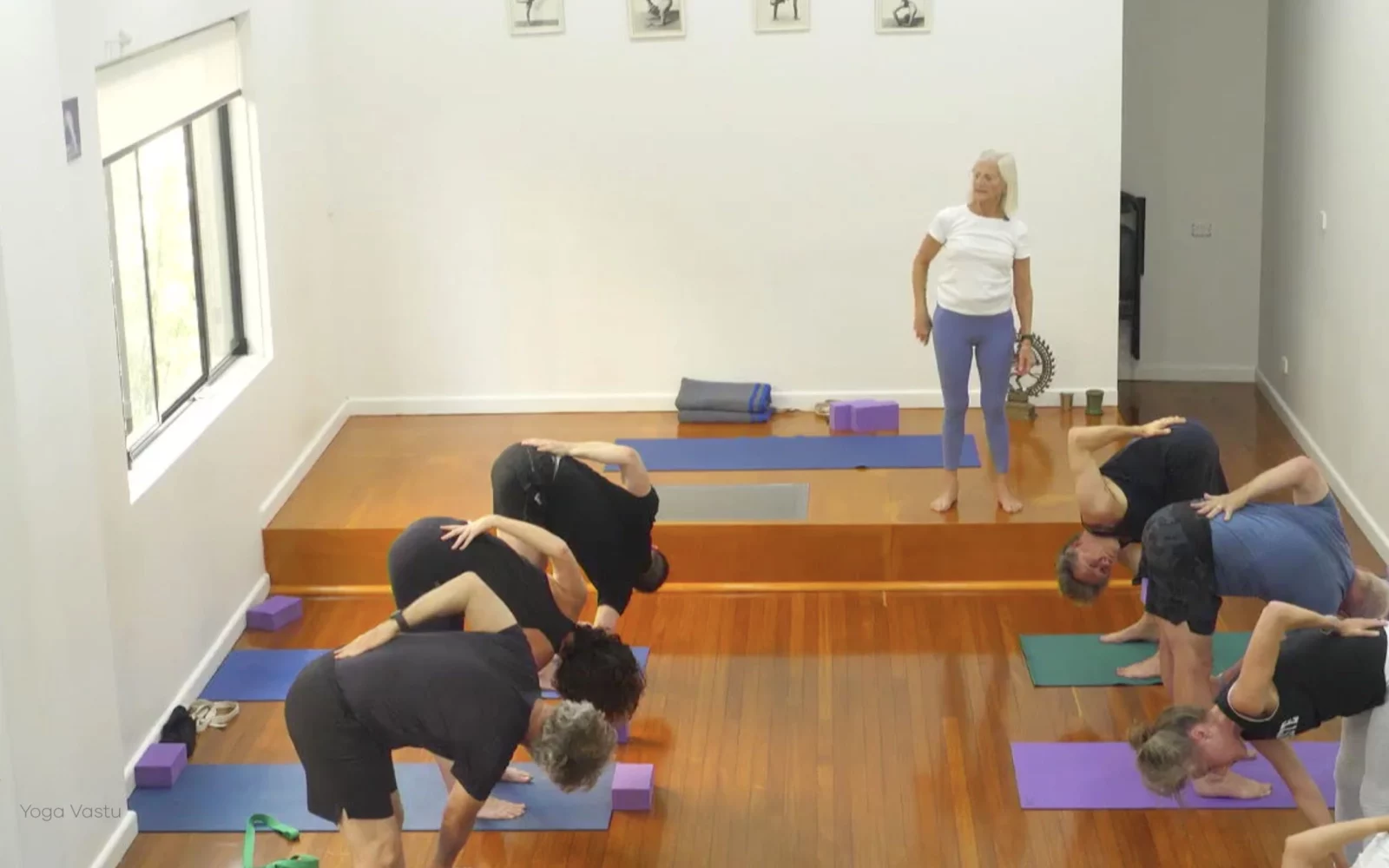
Then, stand up. Fold forward into Uttanasana but this time fold your arms over your head and observe as gravity pulls your head down towards the ground. Watch what your body tells you and go along with it. Don’t fight gravity, let it pull you gently and see where the tension is stored, where it melts away easily and where it refuses to let go. Then, reach sideways into Parsva Uttanasana. Switch sides.
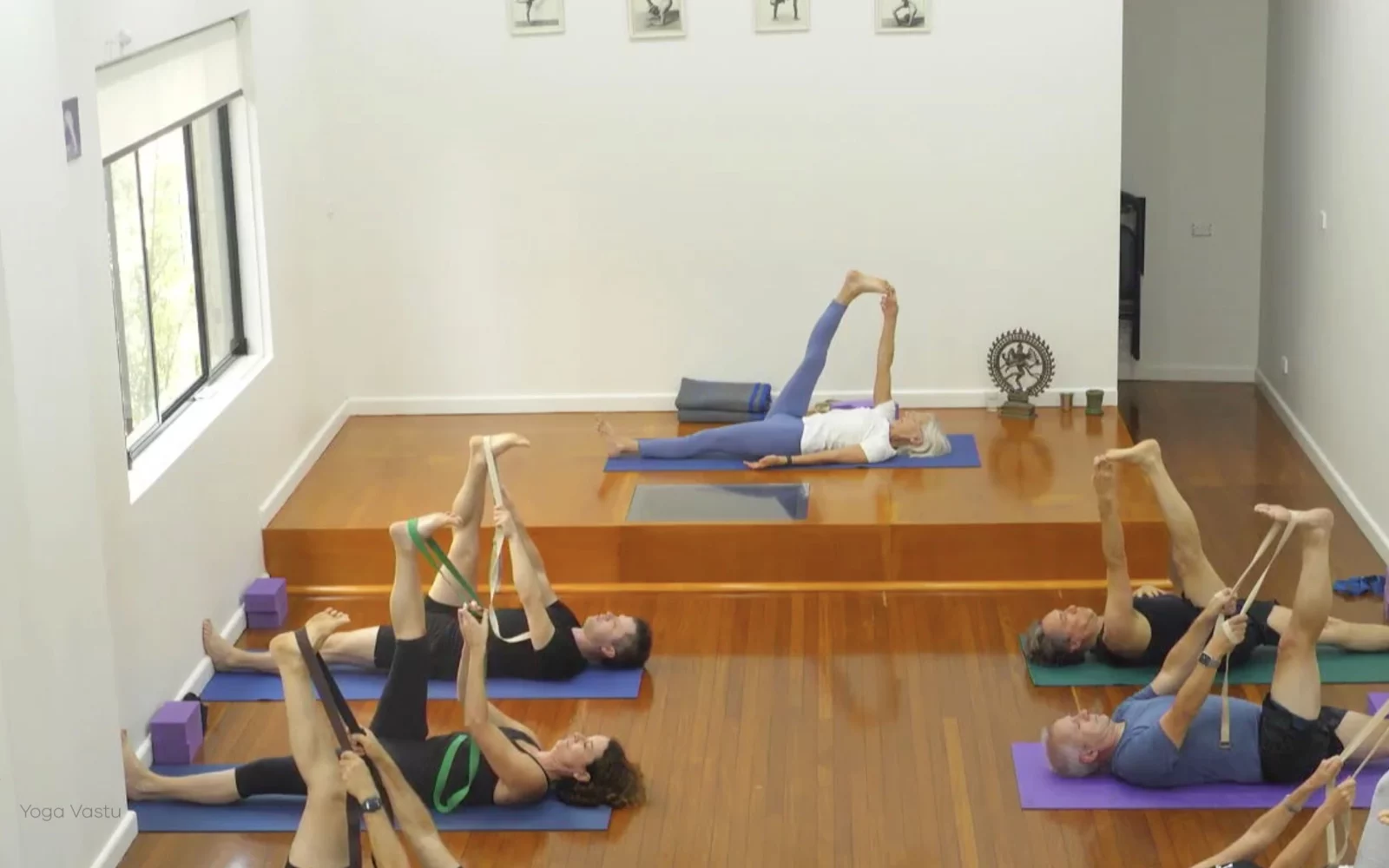
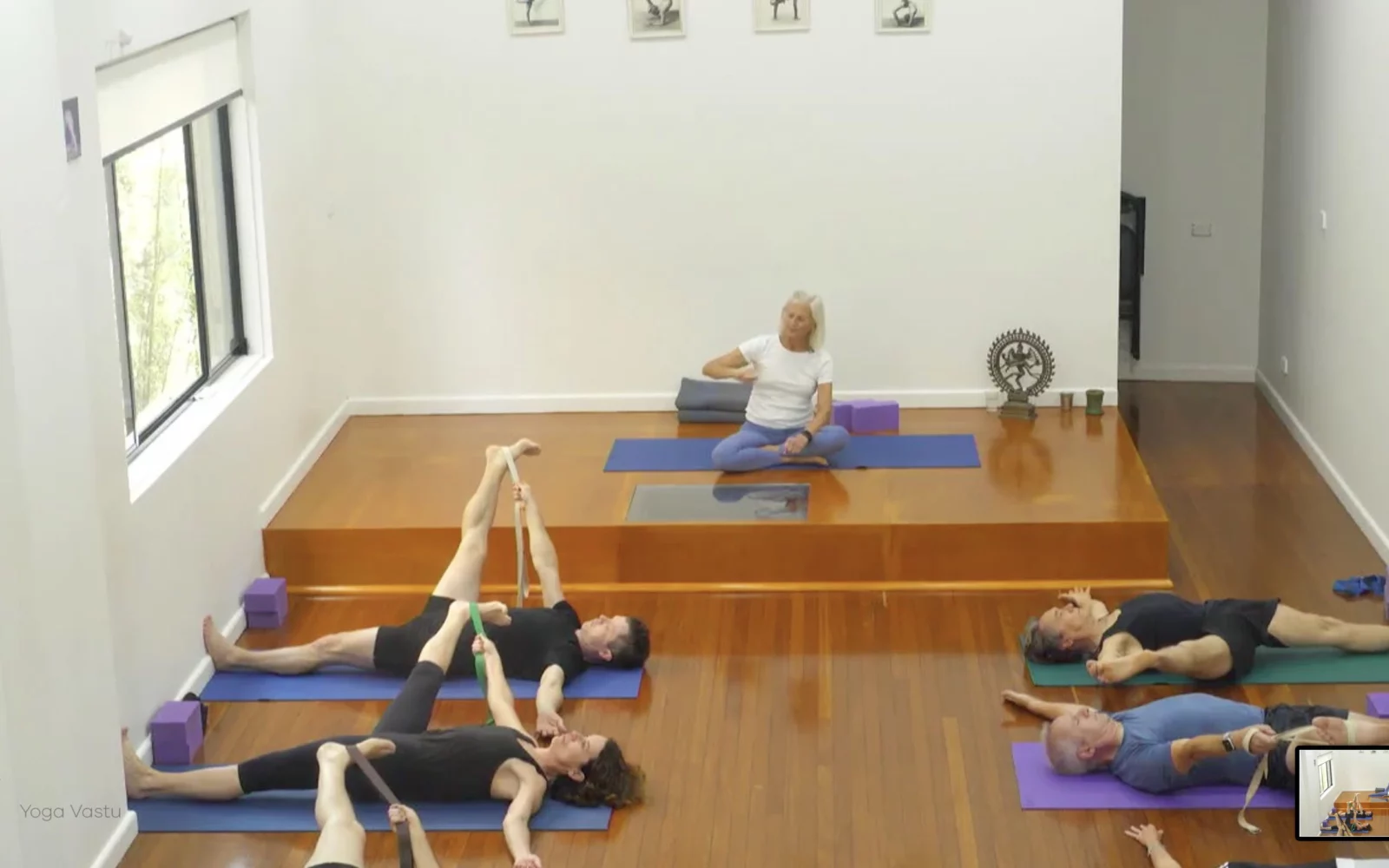
Since in this session we placed so much emphasis on the shoulders and collarbones, as part of the cooldown, we will go through a few rounds of Adho Mukha Svanasana to Virasana Forward. Then, lie down on your back and lift up your leg into Supta Padangusthasana 1. Lower it sideways into Supta Padangusthasana 2.
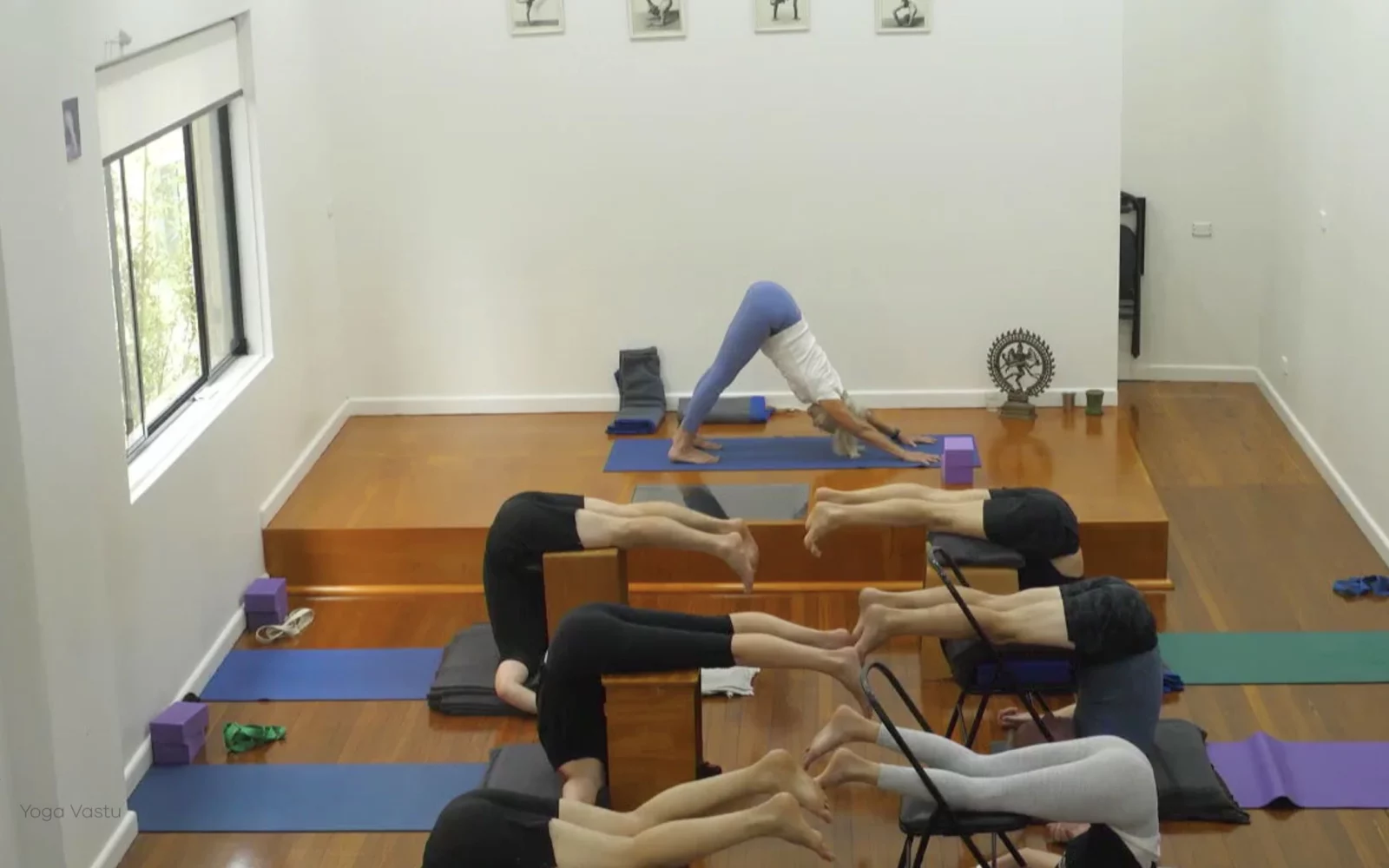
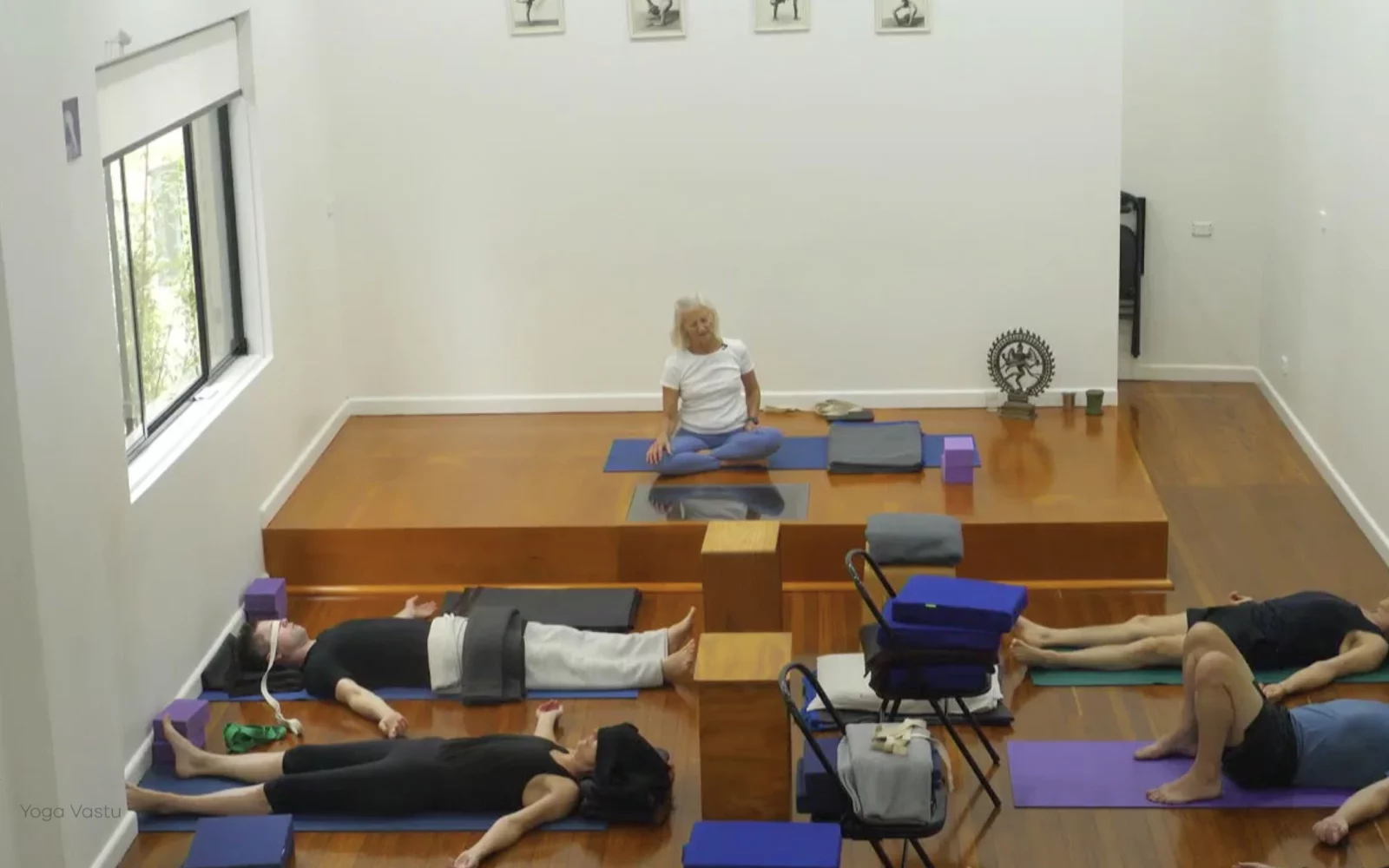
We will skip full inversions at the end of this session, seeing as we did several rounds of Urdhva Dhanurasana, which can function as an inversion and can be quite hard on your shoulders. After Supta Padangusthasana, go straight into Ardha Halasana with the legs on a bench. Then, Virasana Forward and final relaxation in Savasana. As you breathe and let go of any residual tension, scan your body for changes. Compare the feeling of it now to how it was at the start of the session, during the invocation.
Video stills from this sequence