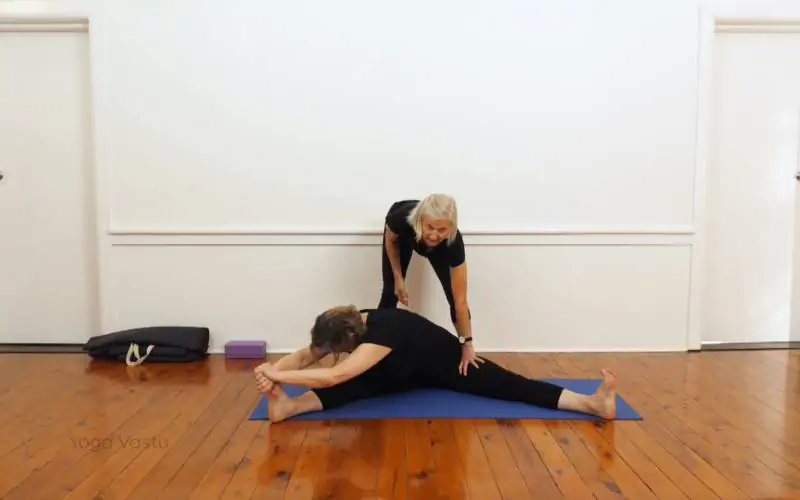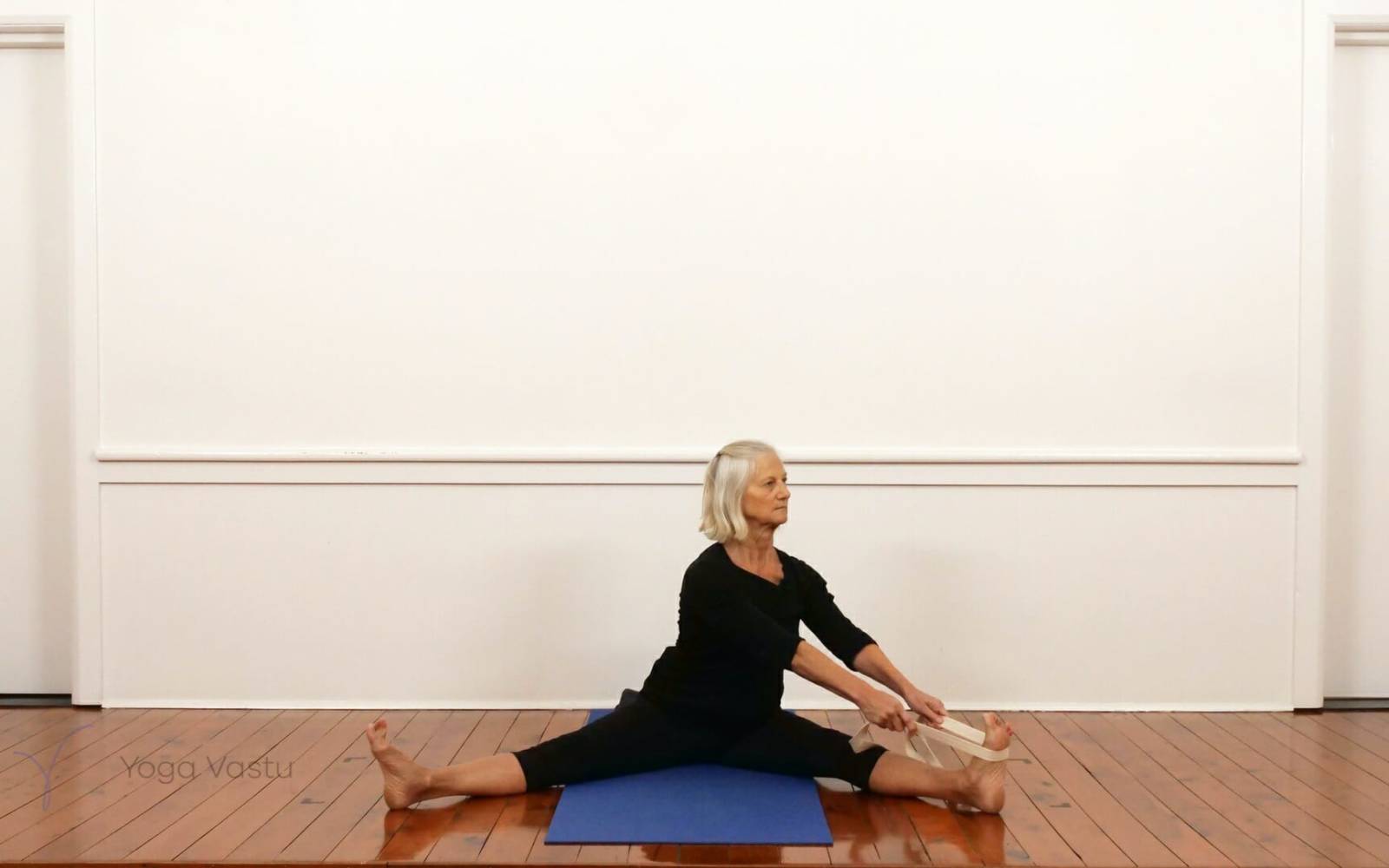
How to do it
The twist starts from the base pose, so set that up first. You need a belt and a folded blanket.
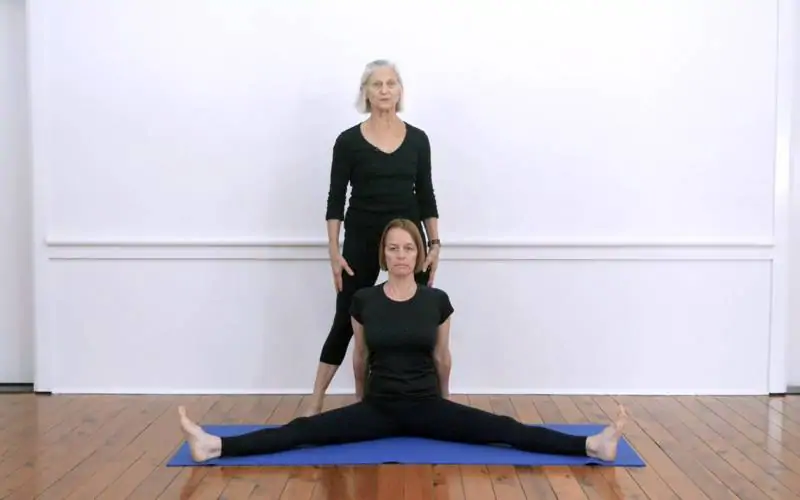
Upavistha Konasana (base pose)
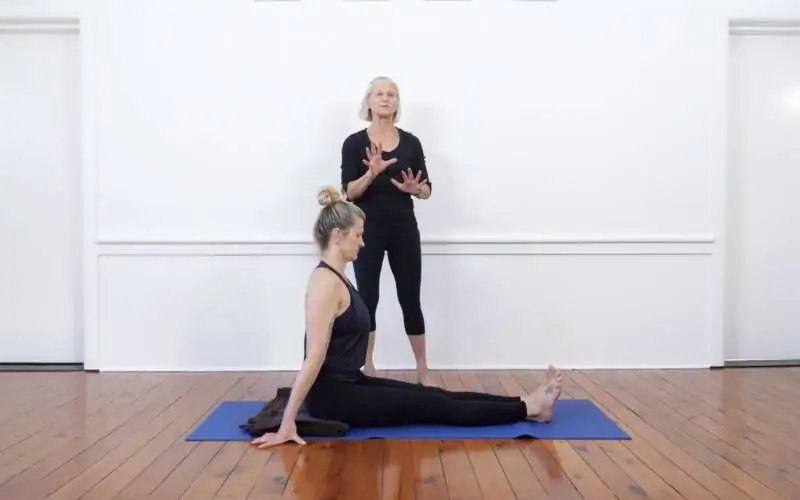
- Sit in Dandasana. If your lower back rounds, sit on the front edge of a folded blanket.
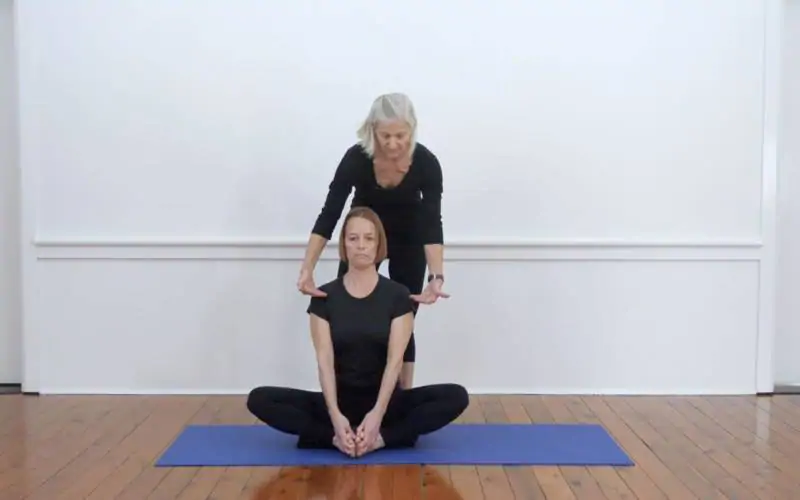
- Spread your legs wide apart, as wide as you can while the kneecaps and toes point straight up.
- With your hands, move the flesh of the buttocks back and out, so you sit on the front of the sitting bones.
- Press the backs of the thighs and calves into the floor and extend through the heels.
- Place your fingertips on the floor or the blanket behind your hips and press down to lift the spine. Stay here for a few breaths, up to a minute.
The twist
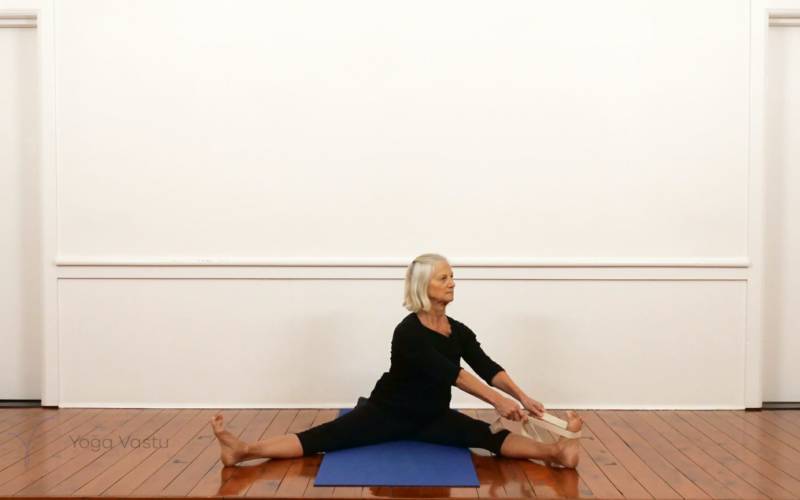
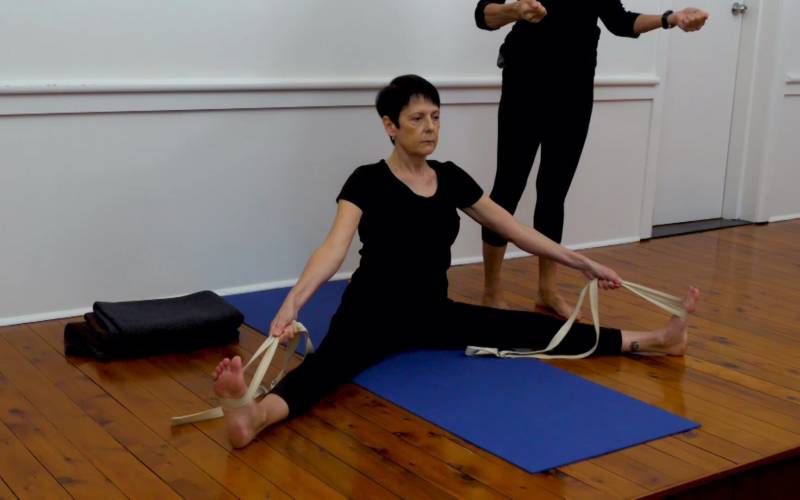
- Loop a belt around the ball of your right foot.
- Turn your trunk to face your right leg. Bring the left side of the trunk forward towards the right leg and take the right side of the trunk back.
- Hold the belt with both hands and draw yourself up, with the arms straight and the chest lifting. You can also keep one hand on the belt and the other fingertips on the floor behind you.
- Keep the left leg pressed down with the left kneecap facing up. It will try to roll in as you turn.
- Make the back concave: move the back ribs in and lift the chest. Do not round forward over the leg.
- Stay for 20 to 30 seconds. Come back to the centre and repeat to the left.
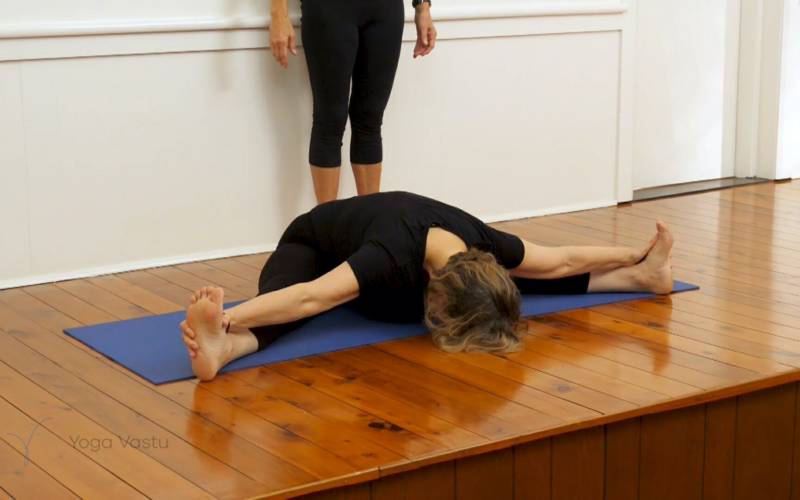
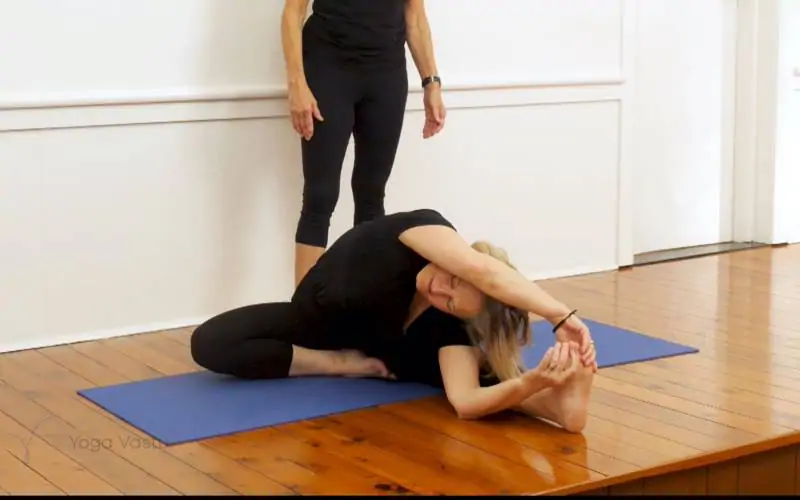
In our classes this concave stage is worked before any forward bend over the leg. When the spine stays long and the legs stay down, you can go on to fold over the leg into Parsva Upavistha Konasana.
Key actions
- Legs – the legs are the foundation. Press the thighs down, extend the heels away and keep the kneecaps pointing up. Press the thighs down, not the knees back, if your knees hyperextend.
- Sitting bones – keep both sitting bones on the blanket as you turn. If the opposite buttock lifts, you have turned further than the hips allow.
- Turn from the trunk – turn from the abdomen and the back ribs, not by pulling the shoulders around. The left side of the waist moves forward, the right side back.
- Spine – lift evenly from the sacrum to the crown of the head. An even lift through the spine matters more than how far you turn.
- Chest and shoulders – broaden the collarbones and keep the shoulders level, without hunching towards the ears.
- Head – let the head follow the turn of the spine. Keep the neck long and the eyes soft.
Props and variations
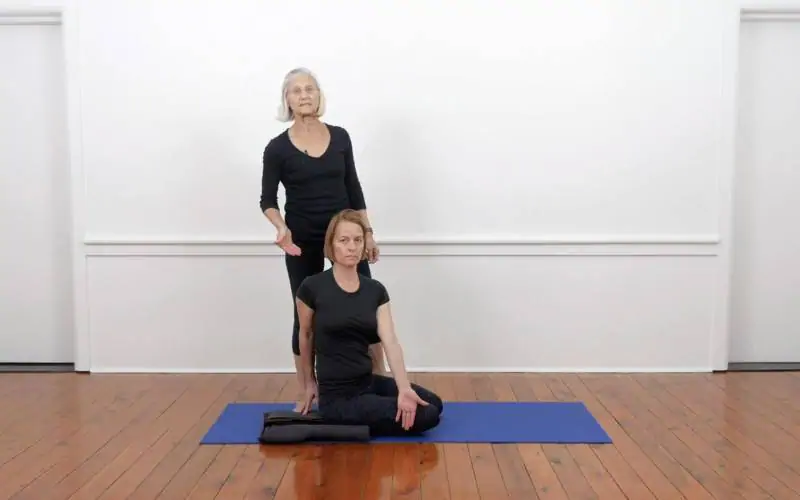
- Blanket – one or two folded blankets under the buttocks tilt the pelvis forward so the spine can lift.
- Belt – around the foot in the twist, it lets you hold on with straight arms and keep the back concave.
- Blocks behind the hips – if your fingertips do not reach the floor with the spine lifted, press them into blocks.
- Wall – sit with your back against a wall in the base pose to learn how the spine lifts.
- Head up – hold both big toes, lift the chest and look slightly up. See Upavistha Konasana (Head Up).
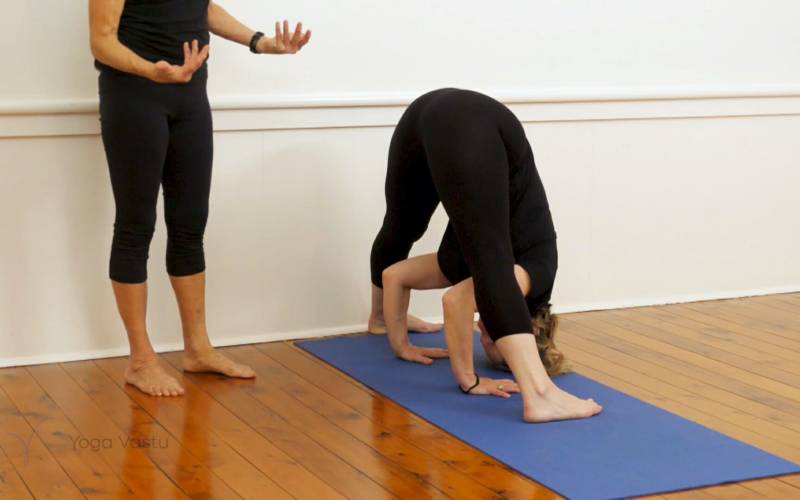
- Parsva Upavistha Konasana – bend forward over the leg once the concave twist is steady.
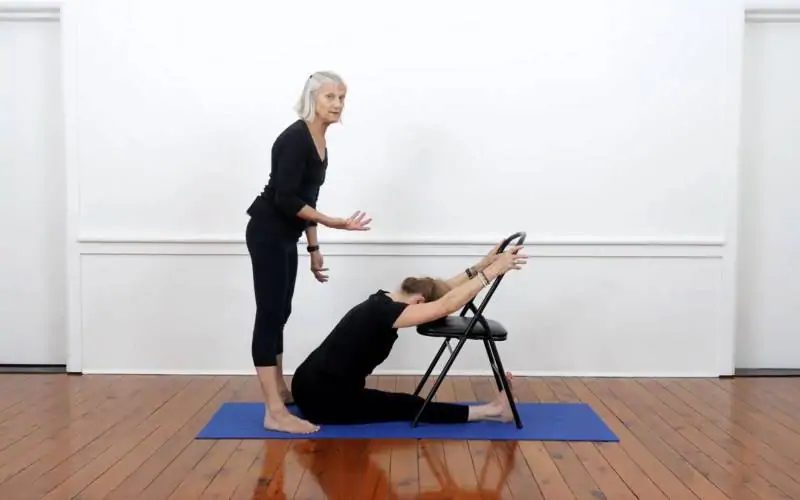
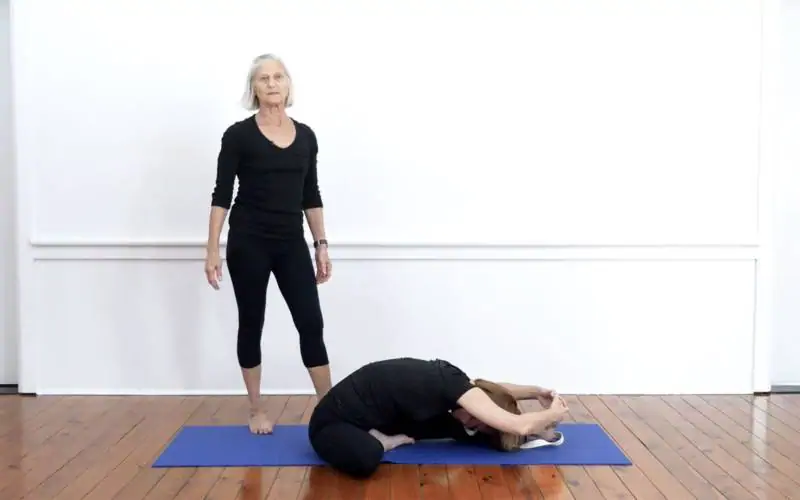
- Forward bend between the legs – with the forehead on a bolster or chair seat, this becomes a quiet, restorative pose. I use it near the end of class.
Cautions
- Hamstrings and inner groins – if you feel a sharp pull behind the knee or high in the inner thigh, bring the legs closer together and sit higher. Avoid strong stretching while a hamstring or groin strain heals.
- Lower back – sit higher, keep the back concave and leave out the forward fold if you have a disc problem. Stop if you feel pain in the lower back.
- Sacroiliac joint – twisting with the legs wide can aggravate a sore sacroiliac joint. Keep the turn small and ask a teacher.
- Knees – if your knees hyperextend, keep a slight lift in the backs of the knees rather than pushing them into the floor.
- Pregnancy – the upright base pose is often practised in pregnancy. If you twist, turn from the upper back and keep the abdomen free.
Benefits
Upavistha Konasana lengthens the inner thighs, hamstrings and calves. The twist adds a turn of the spine and a stretch along the sides of the trunk, while the legs keep it anchored.
Working with the back concave builds the strength to hold the spine up, which you need for every seated forward bend. Students often find the inner groins release with regular practice, so the forward bends become easier and the pelvis sits more evenly.
Common questions
What does upavistha konasana mean?
Upavistha means seated and kona means angle. The name describes sitting with the legs spread to form a wide angle.
How wide should your legs be in upavistha konasana?
As wide as you can go while the kneecaps and toes still point straight up and the spine stays upright. If the knees roll in or the lower back rounds, bring the legs a little closer together.
What are the variations of upavistha konasana?
The base pose sits upright with the hands behind the hips. From there you can hold the big toes with the chest lifted (head up), turn to face one leg as on this page, bend forward over one leg (Parsva Upavistha Konasana), or bend forward between the legs (Adho Mukha Upavistha Konasana).
What if I can't sit up straight in upavistha konasana?
Sit on one or two folded blankets, bring the legs closer together and press your fingertips into the floor or onto blocks behind you. A belt around the foot in the twist lets you lift without rounding.
How long should you hold the upavistha konasana twist?
About 20 to 30 seconds to each side, returning to the centre in between. Stay longer in the upright base pose if you are working on the lift of the spine.
About the teacher
Pixie Lillas: Pixie Lillas first went to the Ramamani Iyengar Memorial Yoga Institute in Pune, India in 1977. She co-founded the Balmain Iyengar Yoga Studio in 1980 and has been director and principal teacher there ever since.