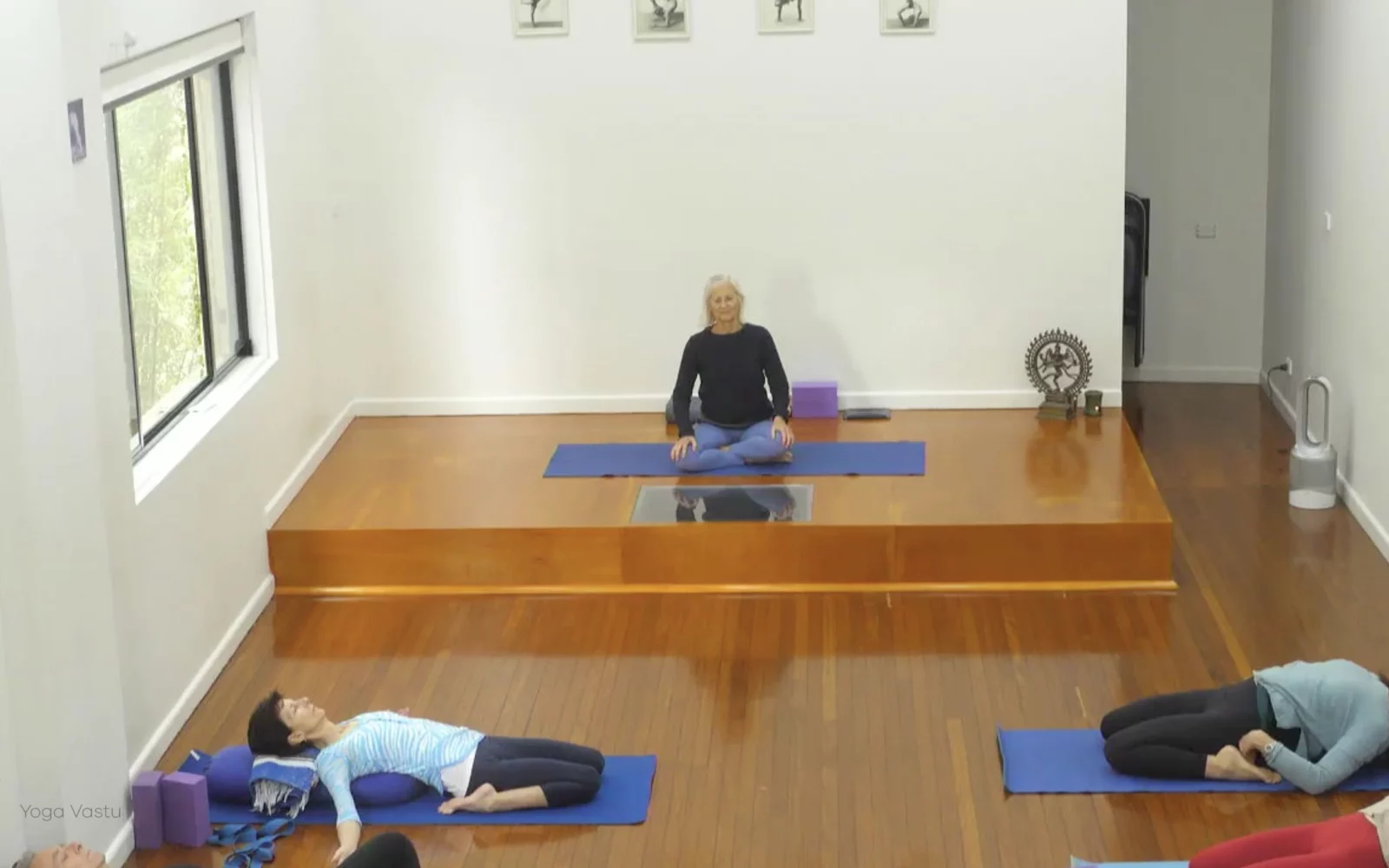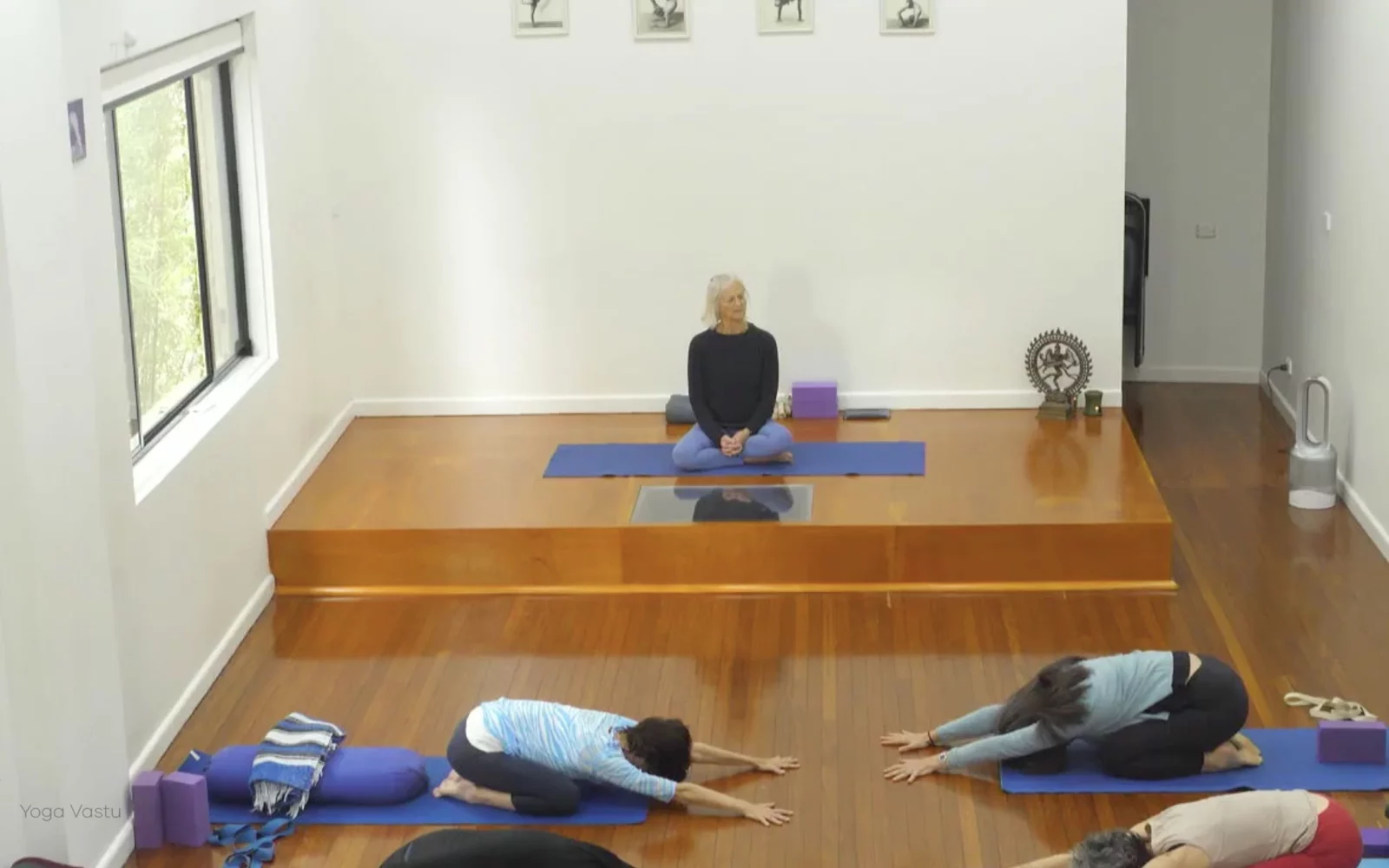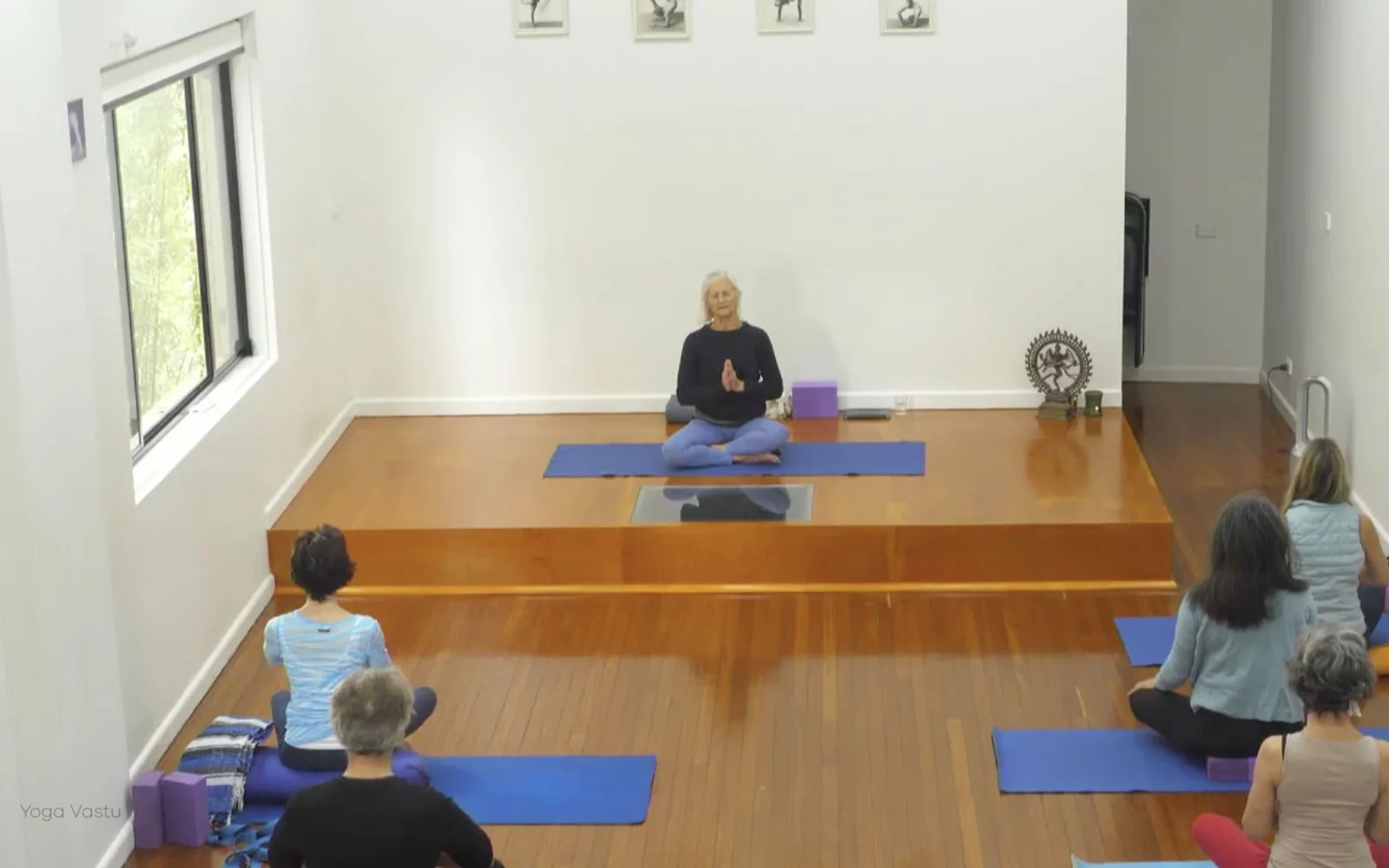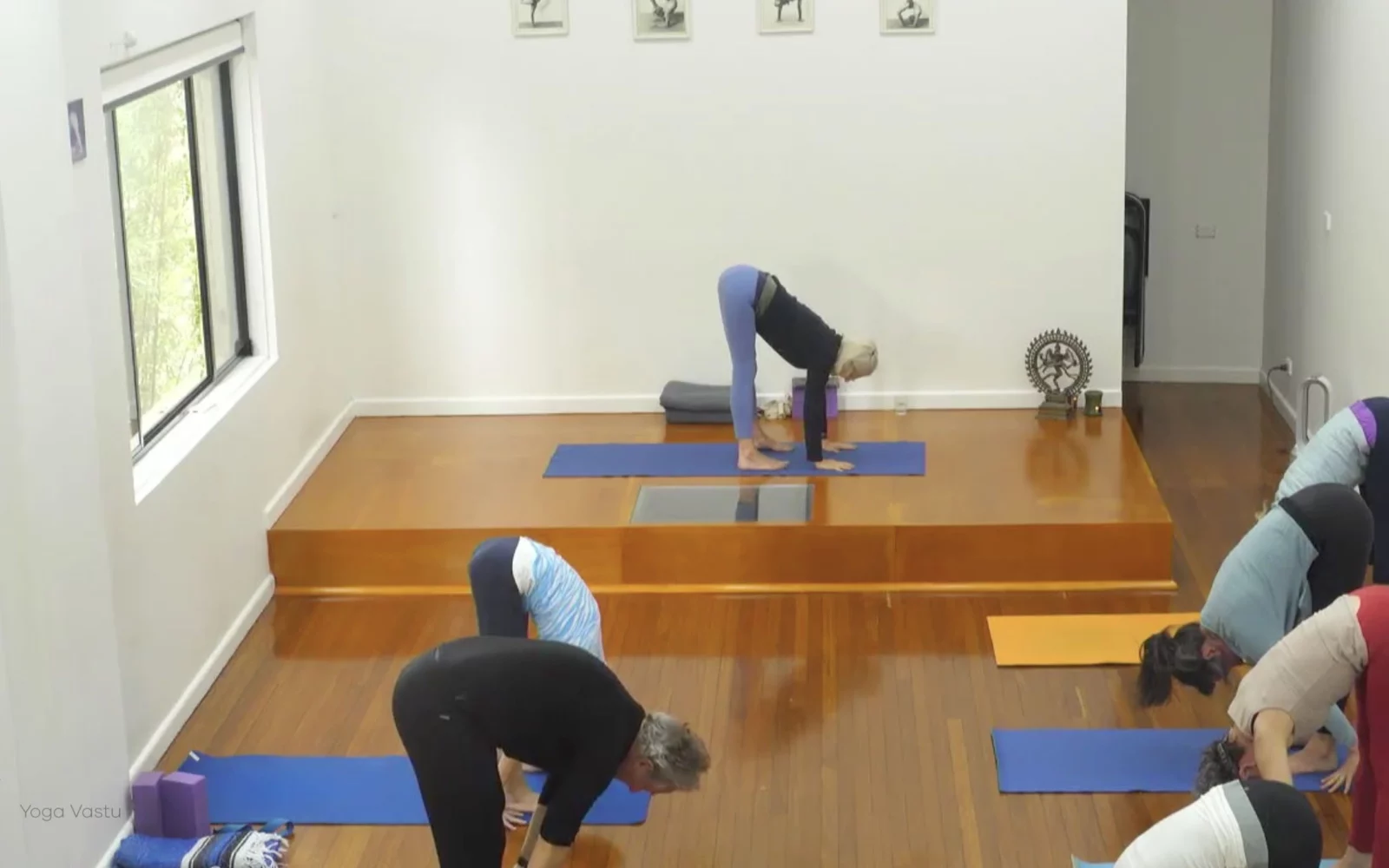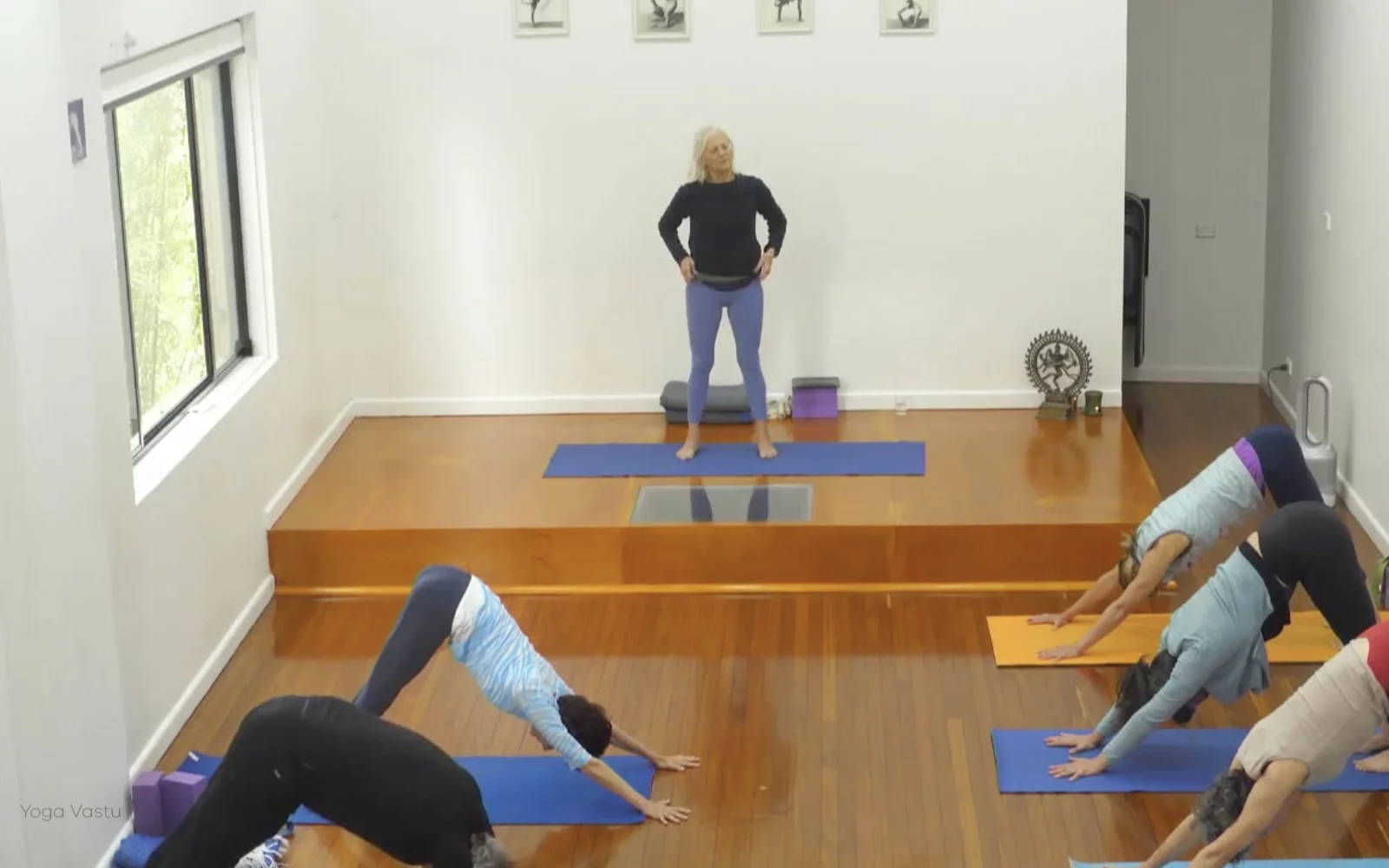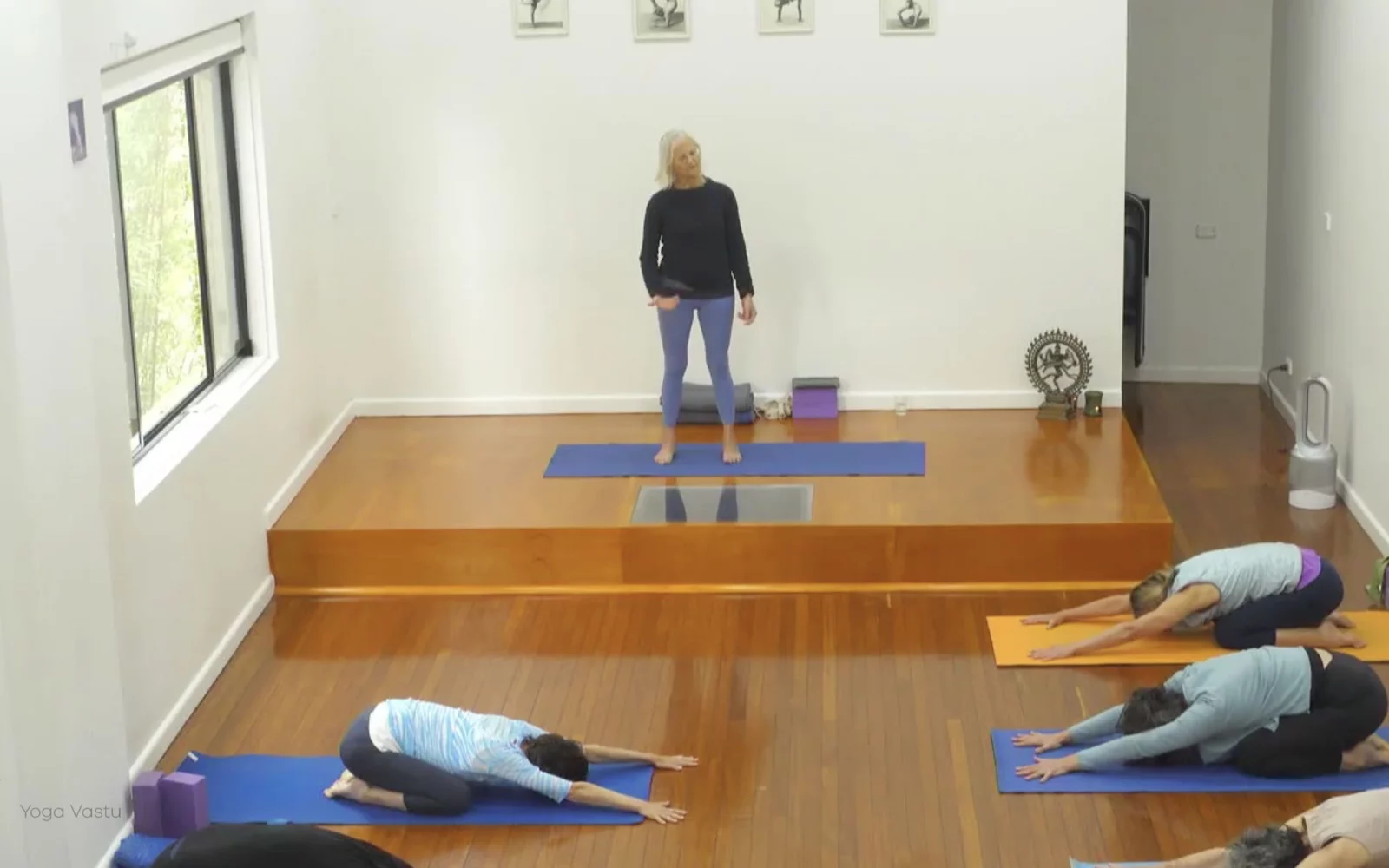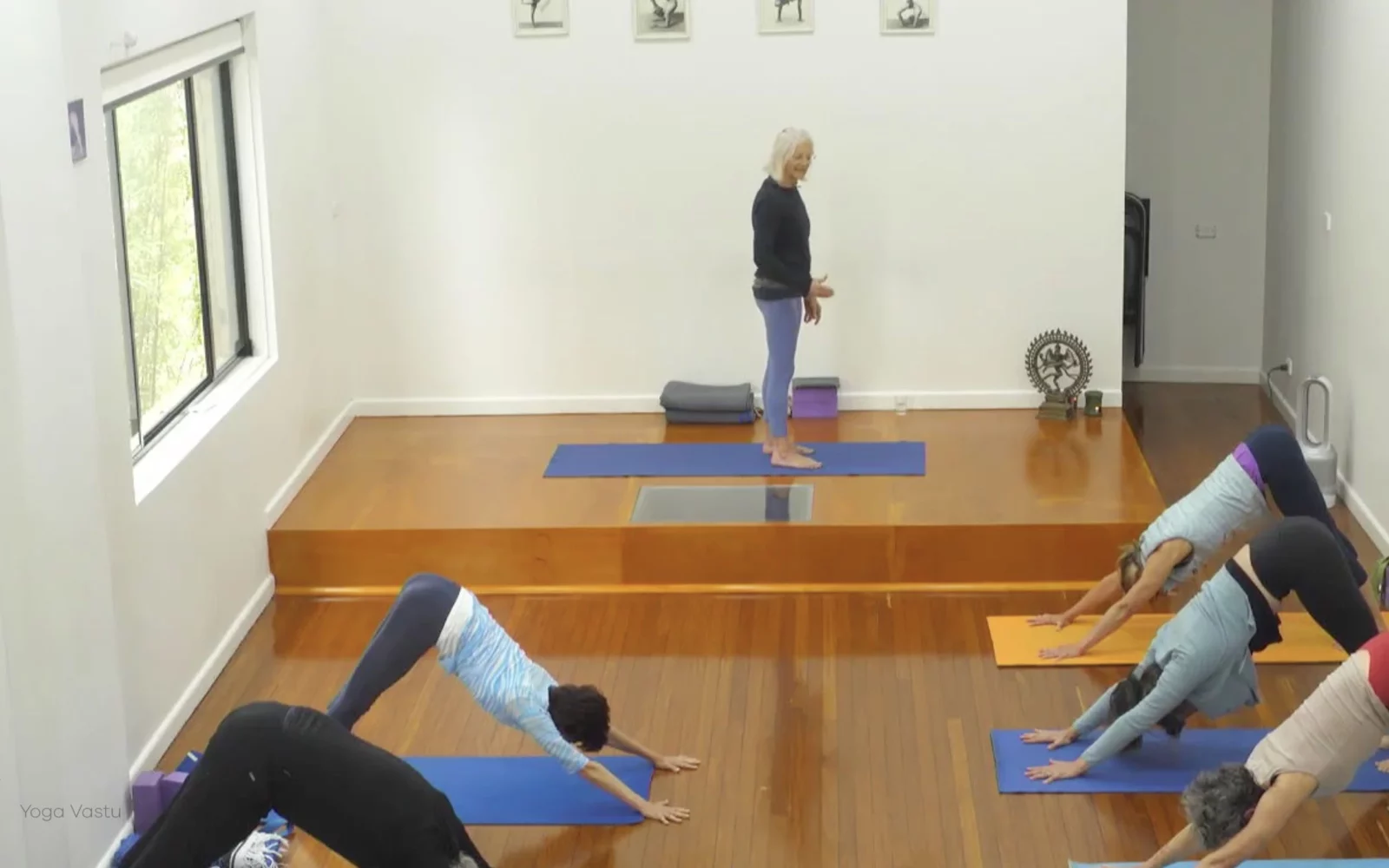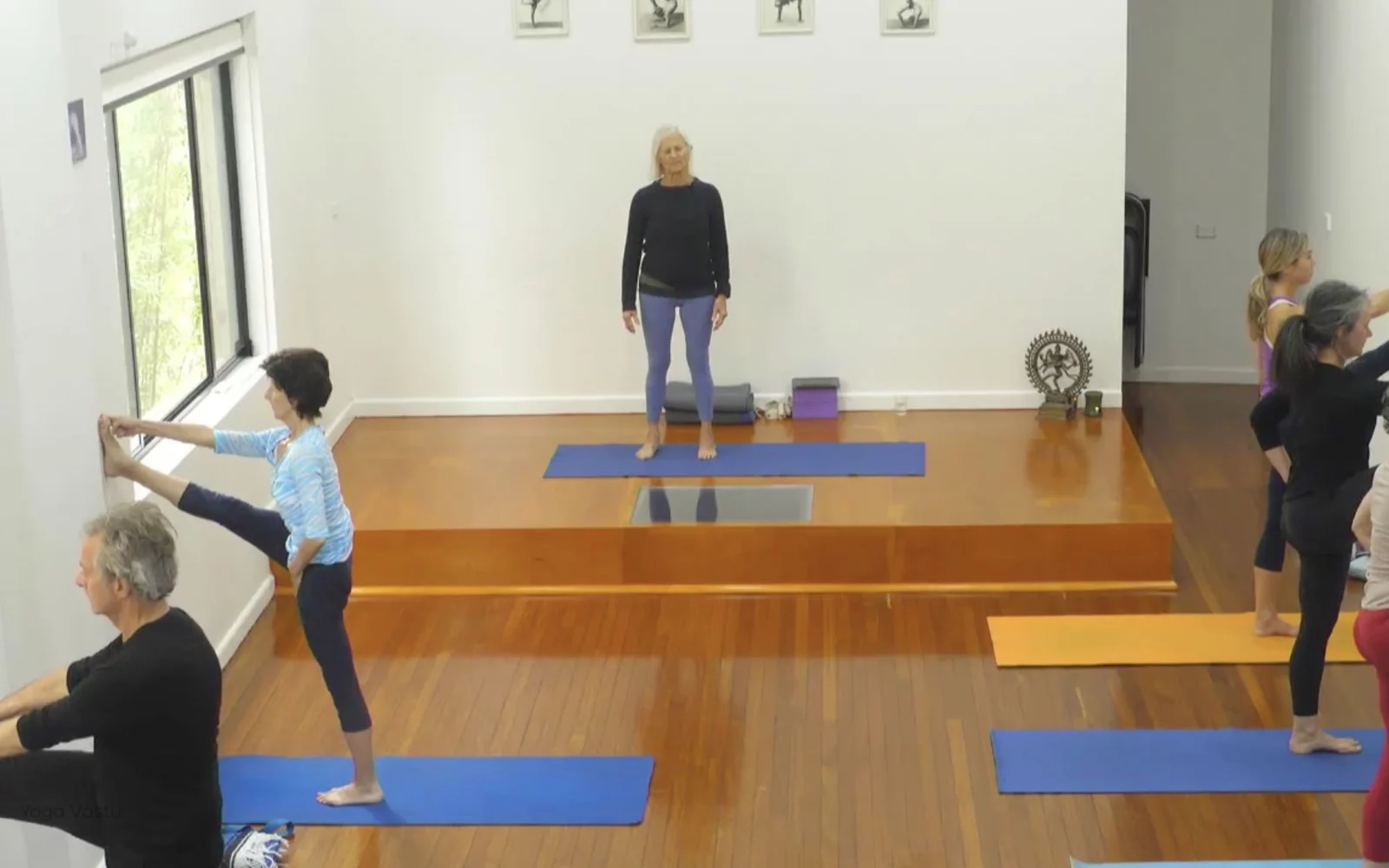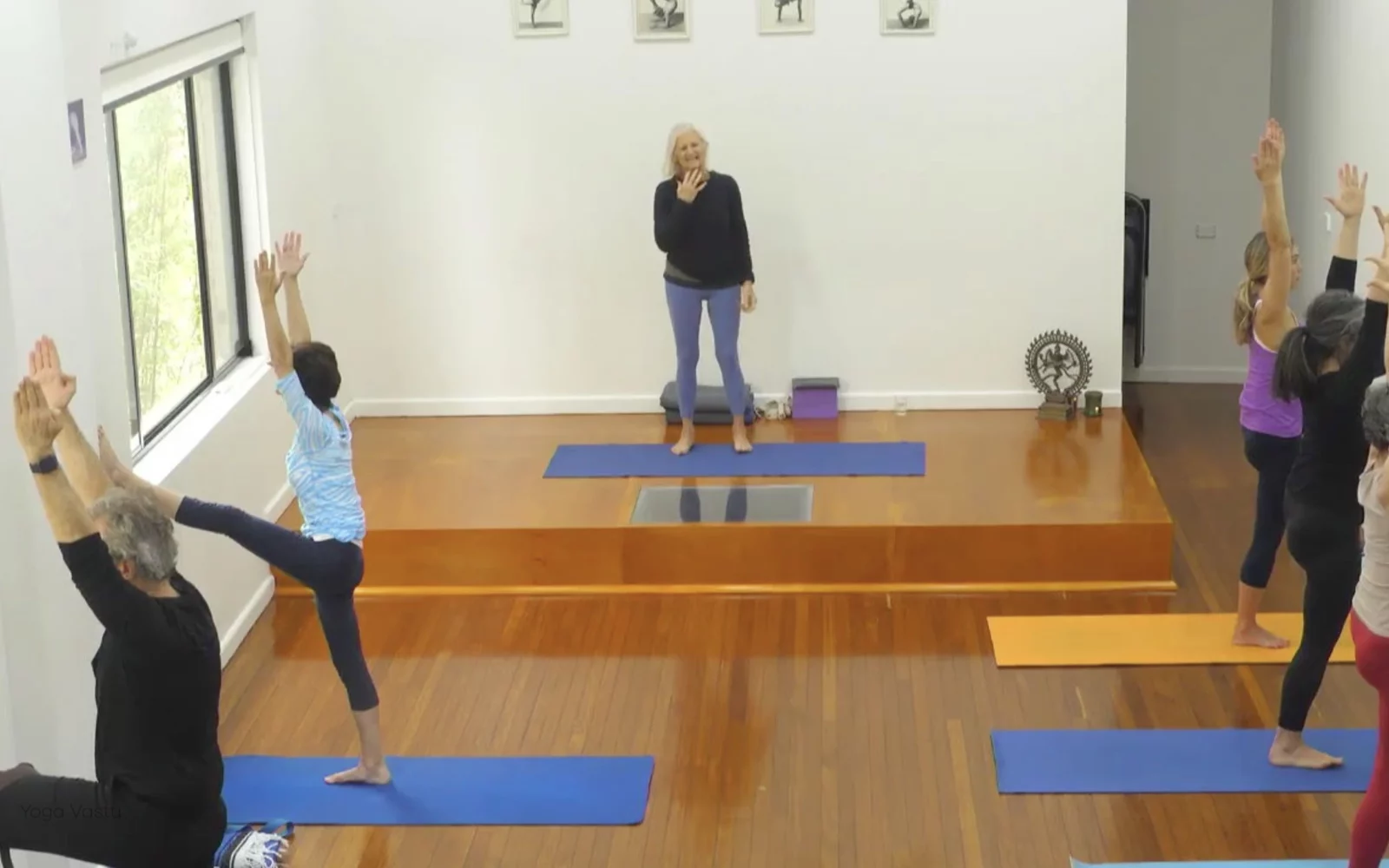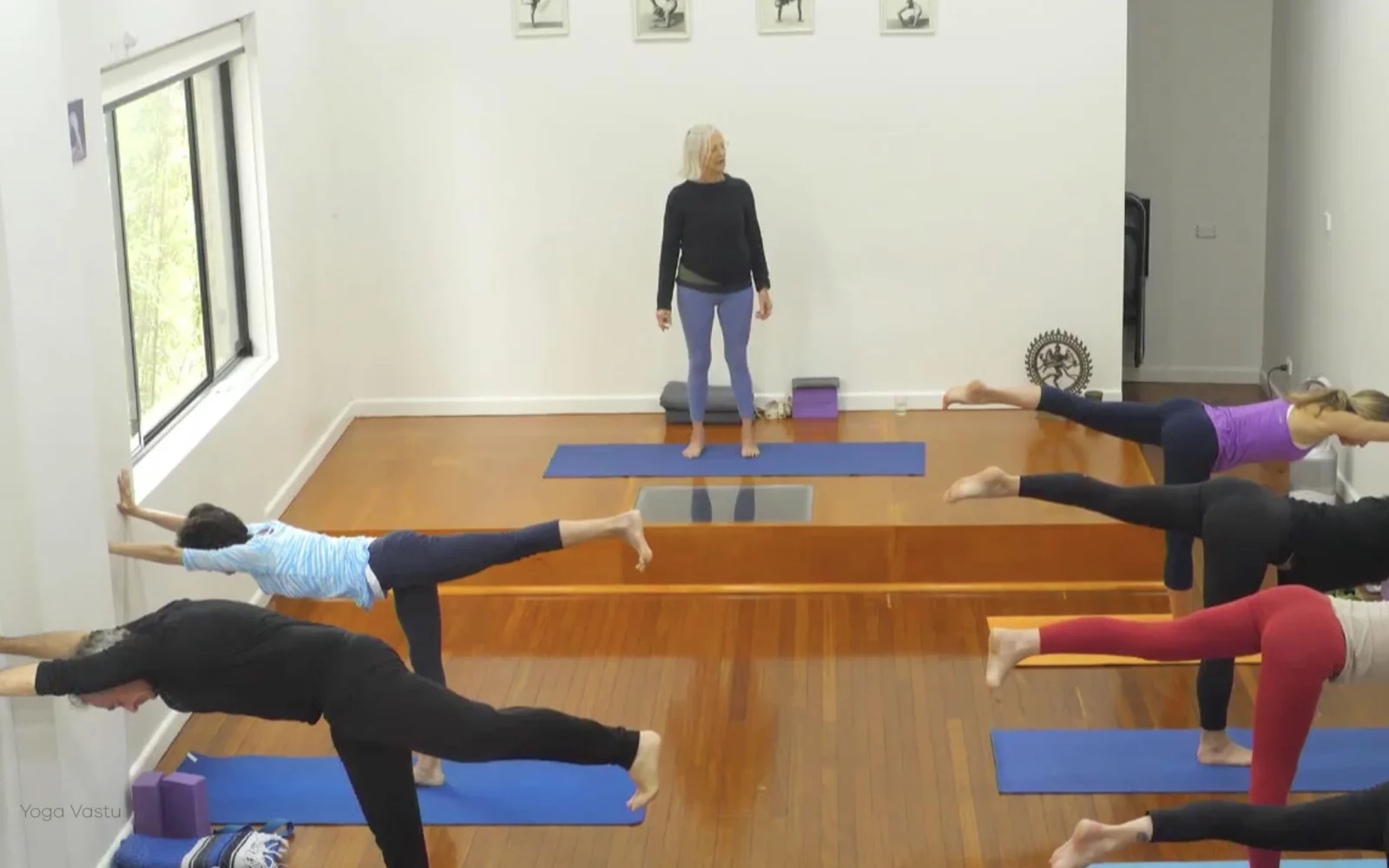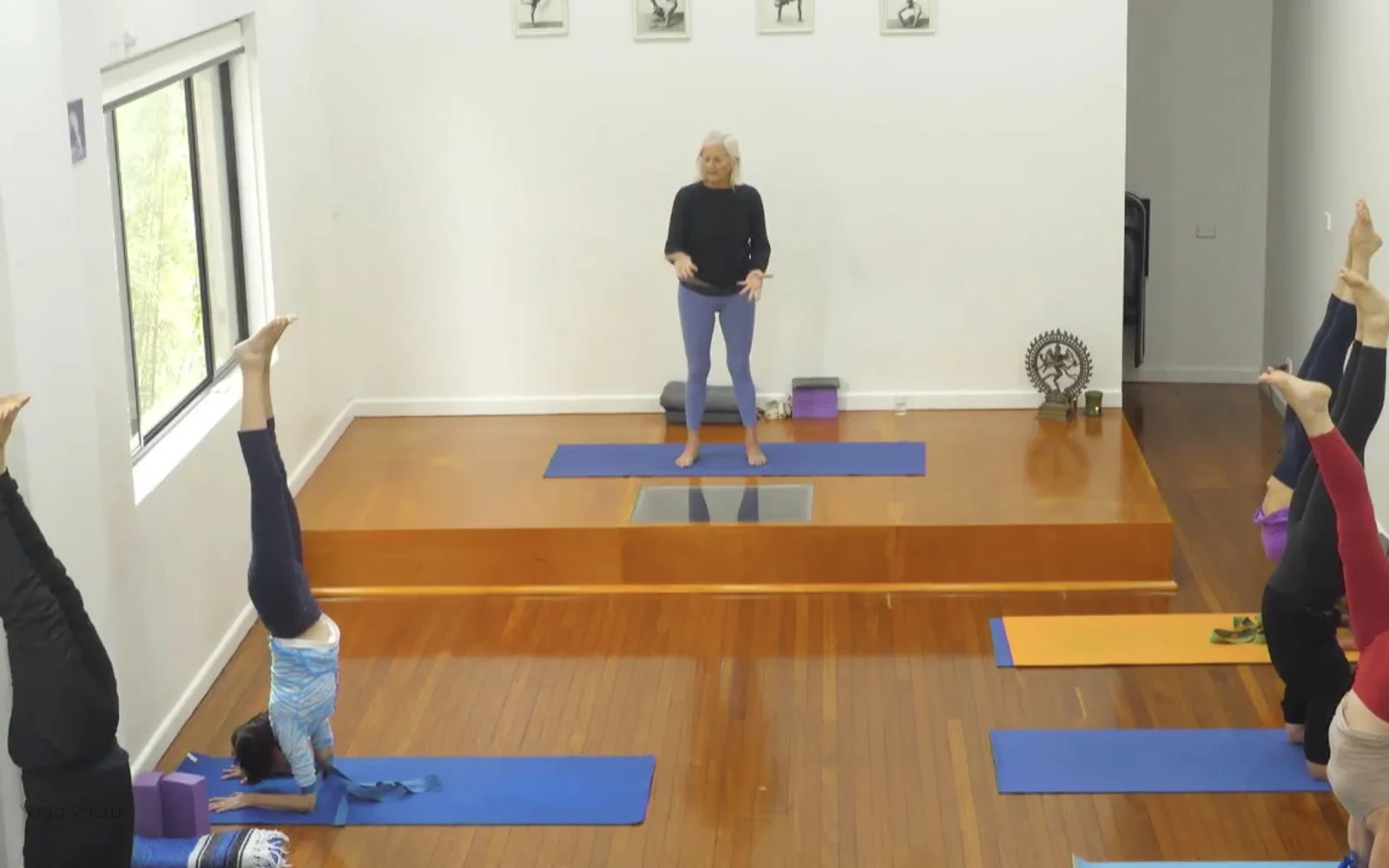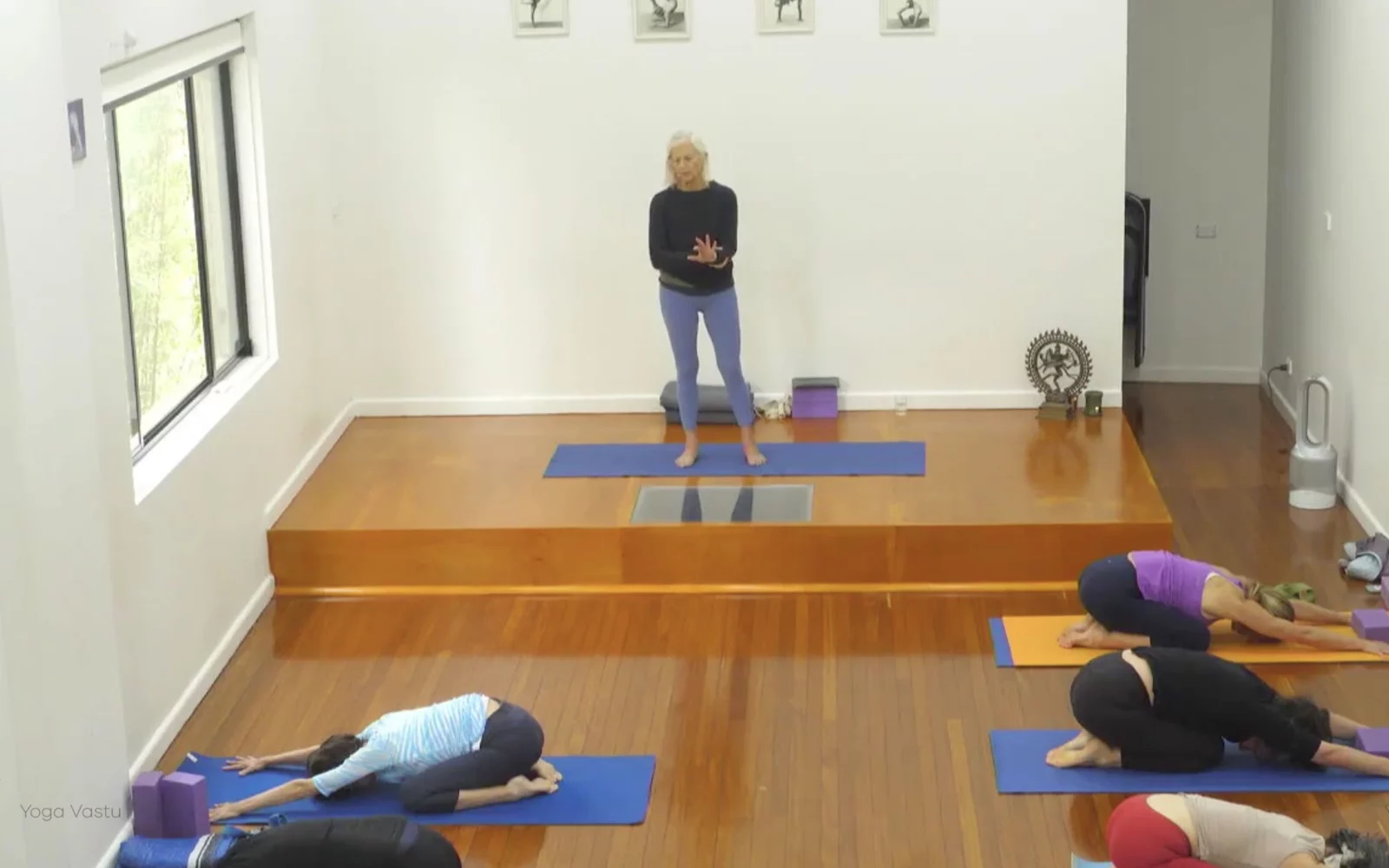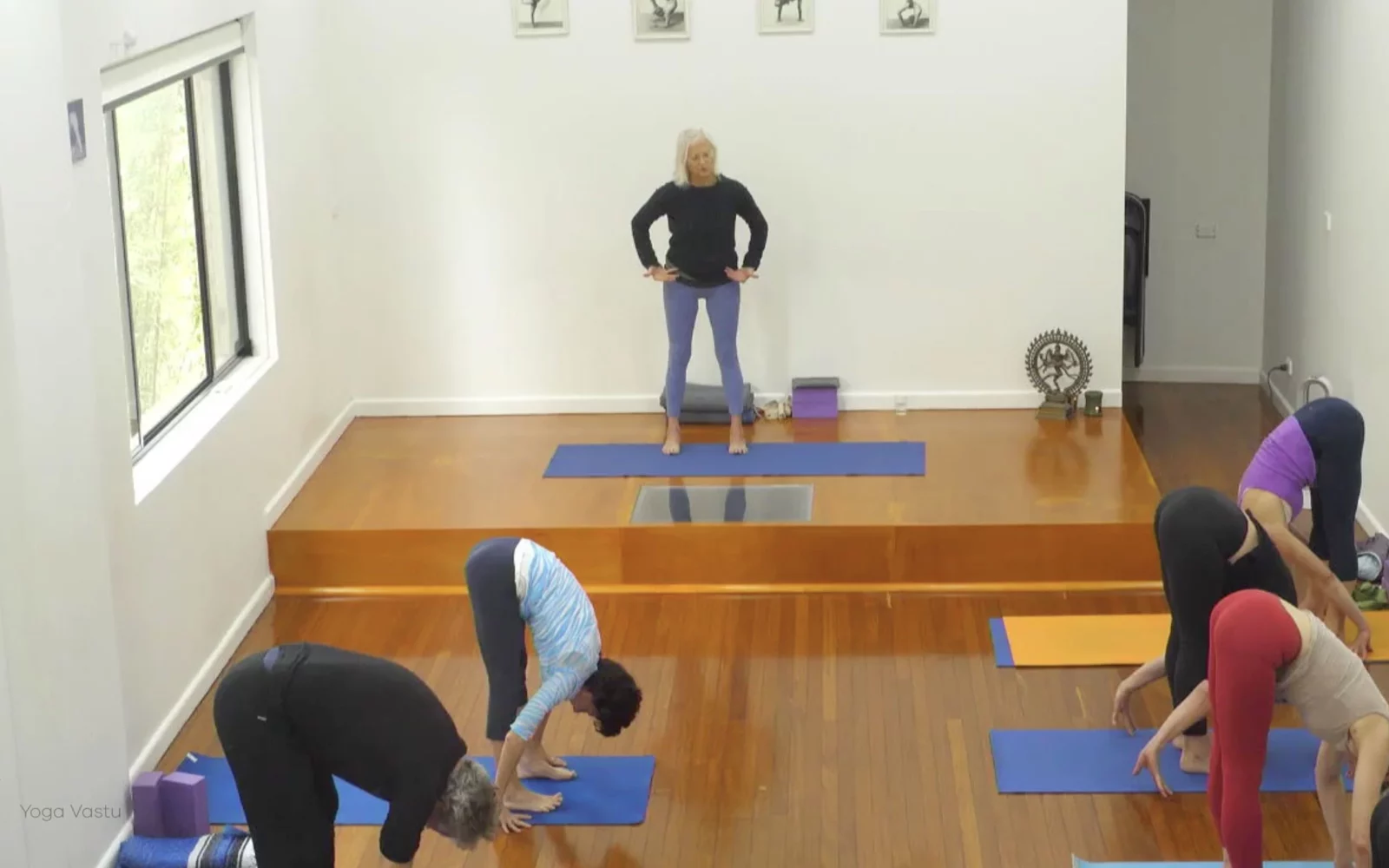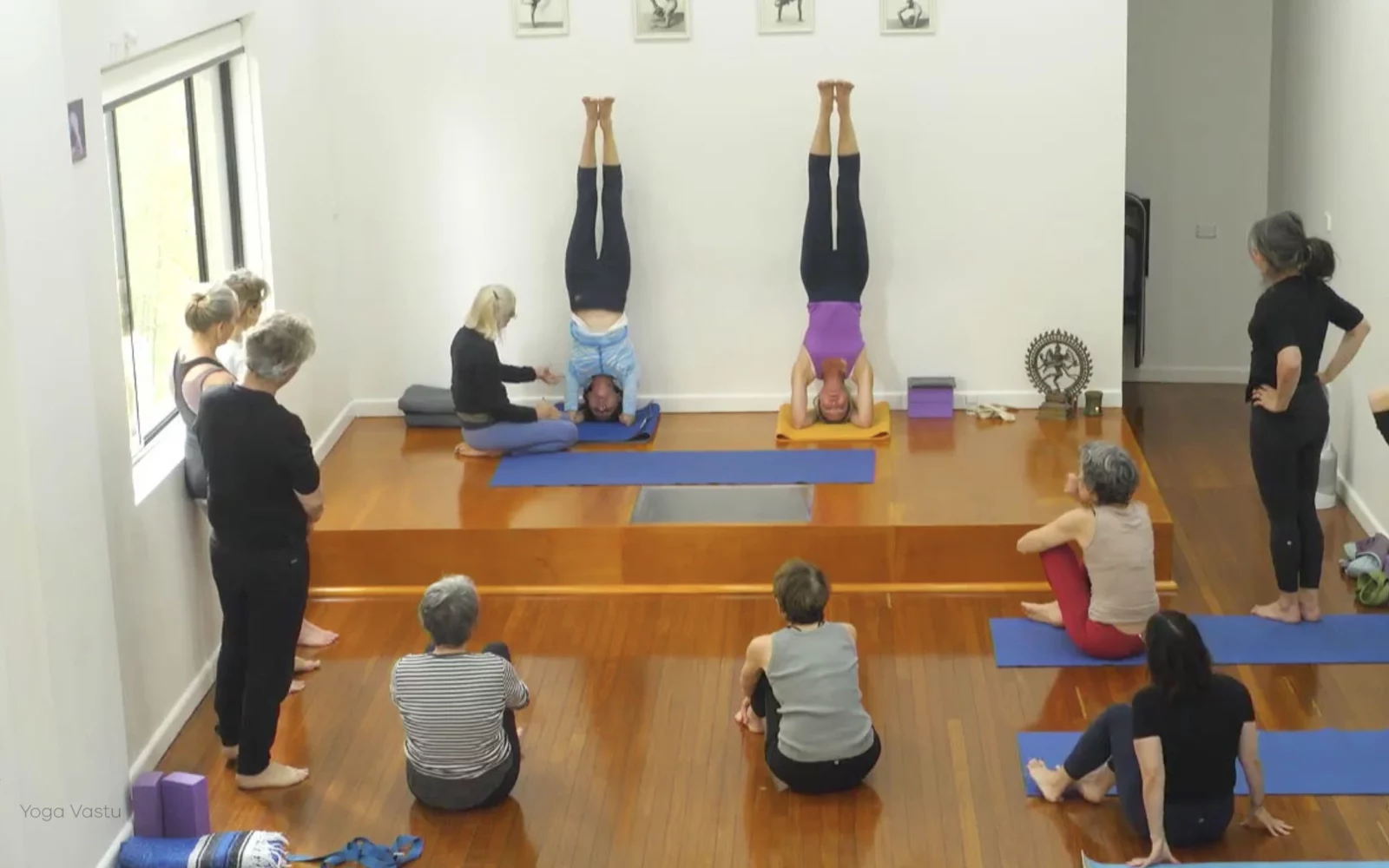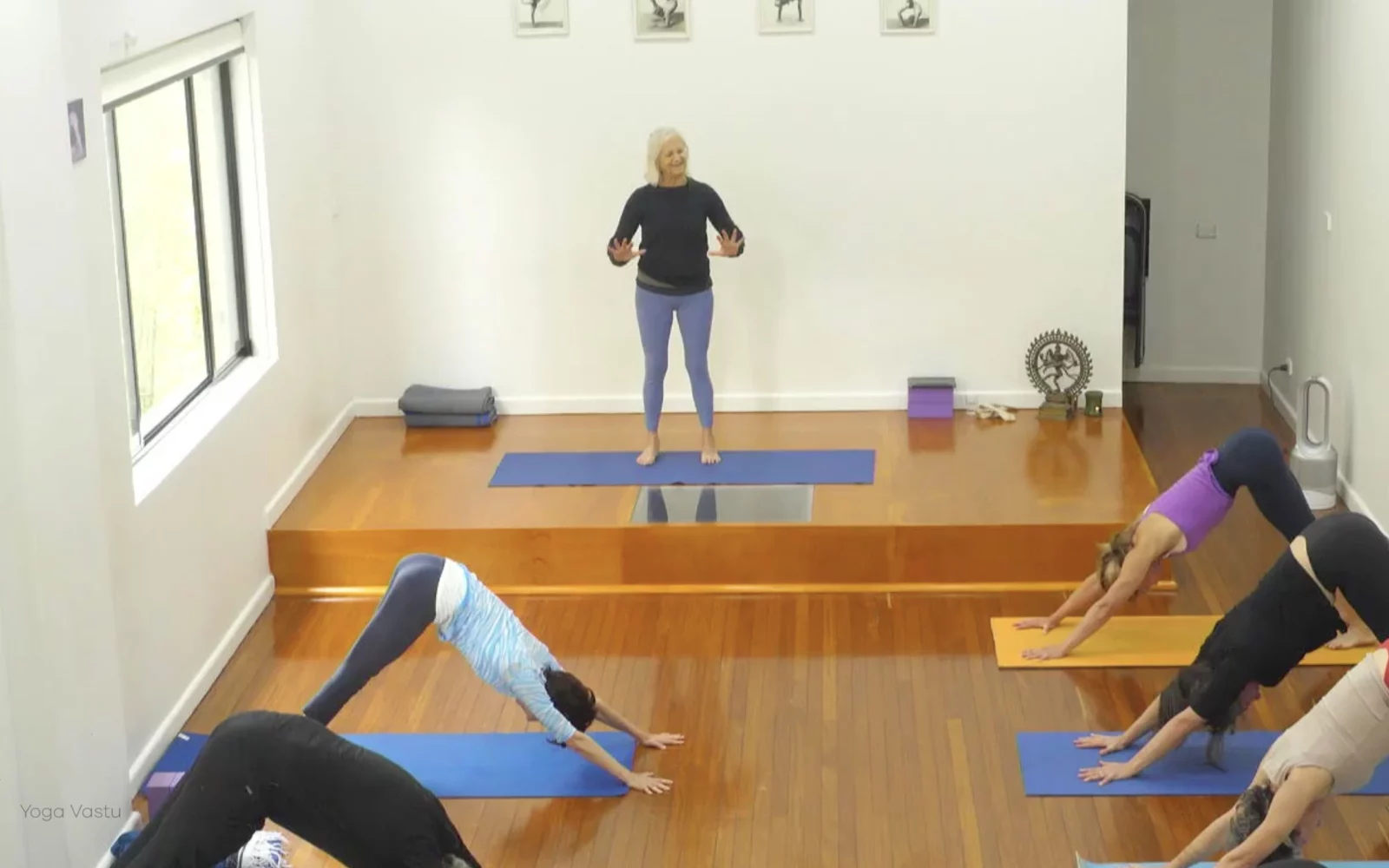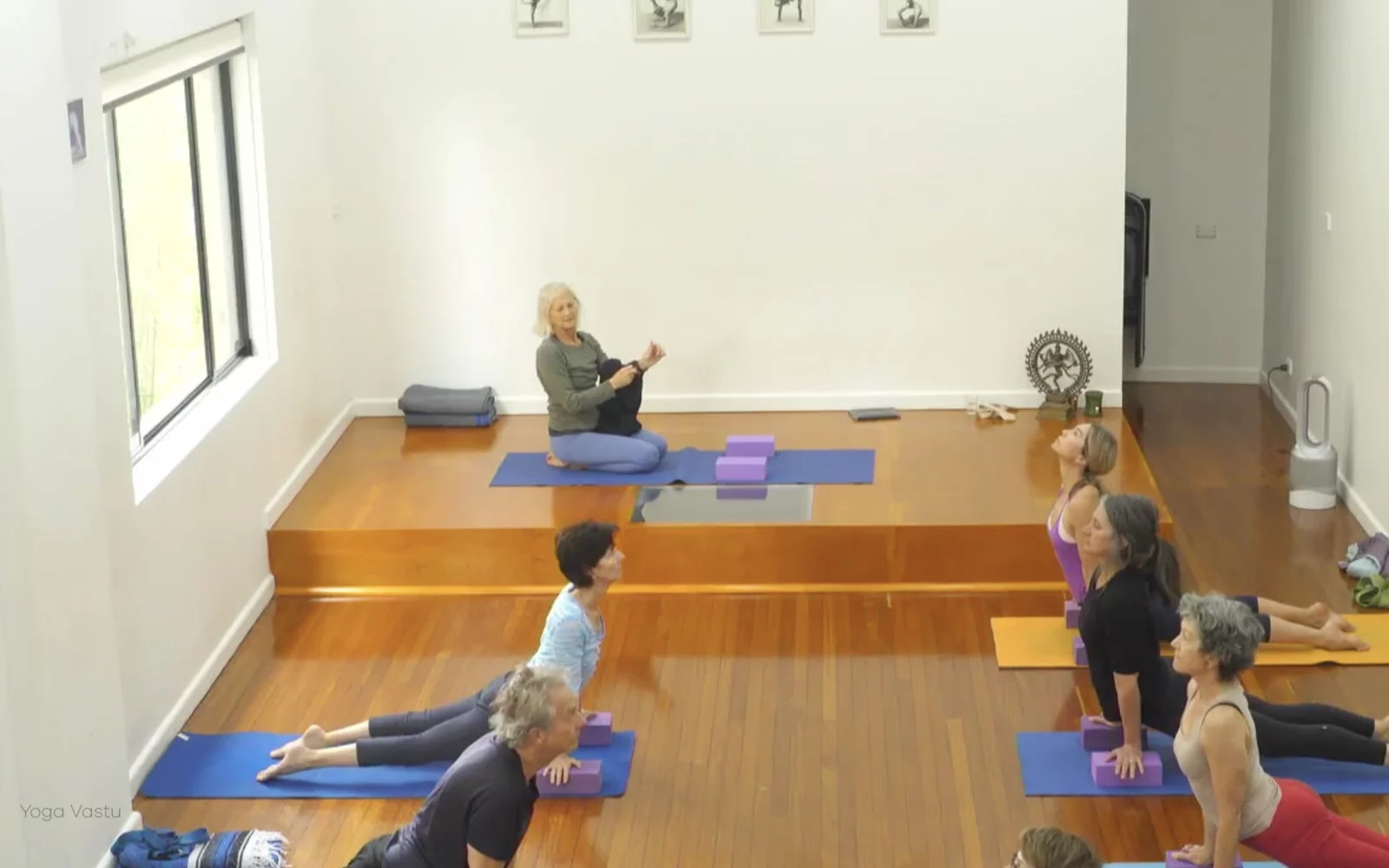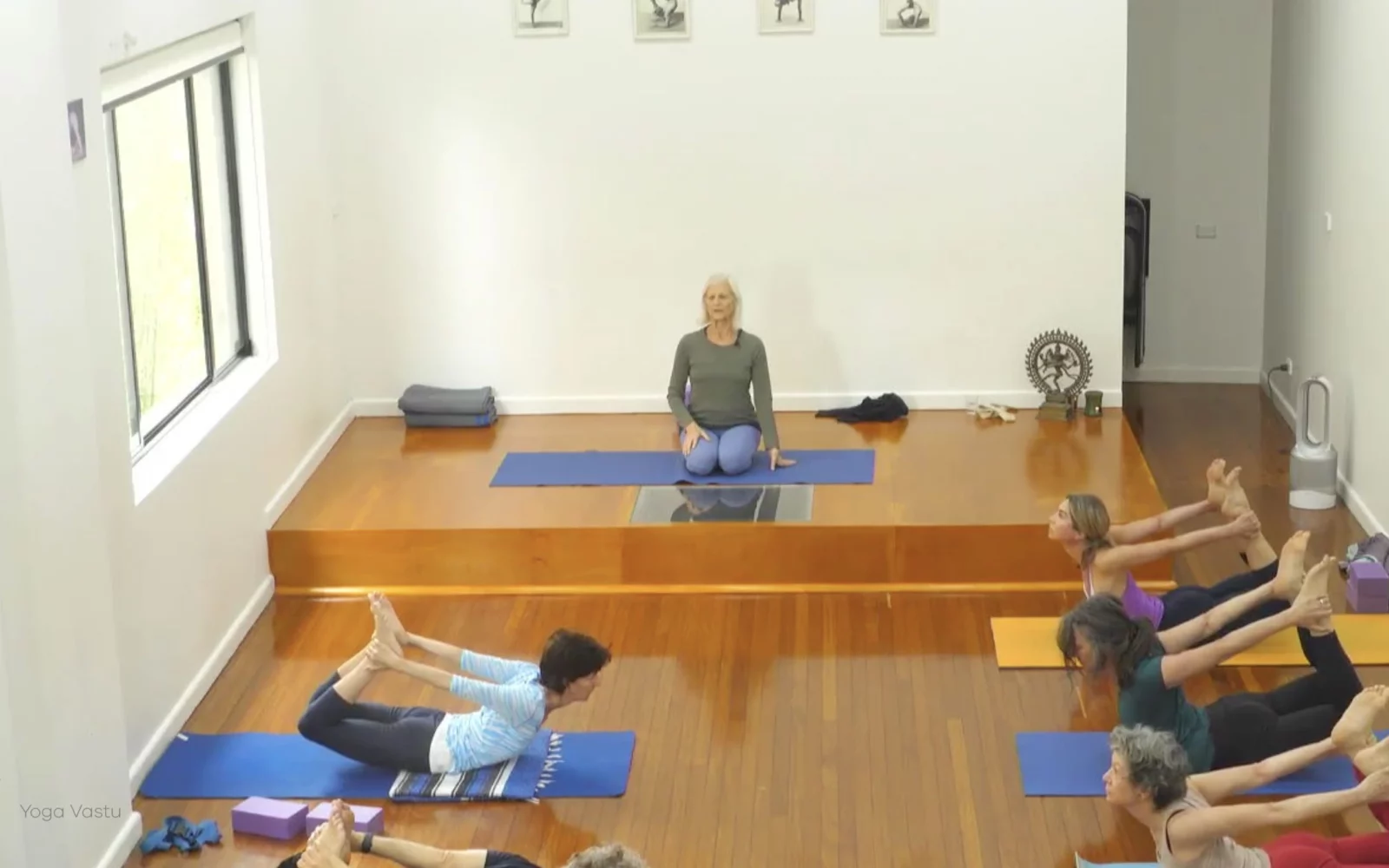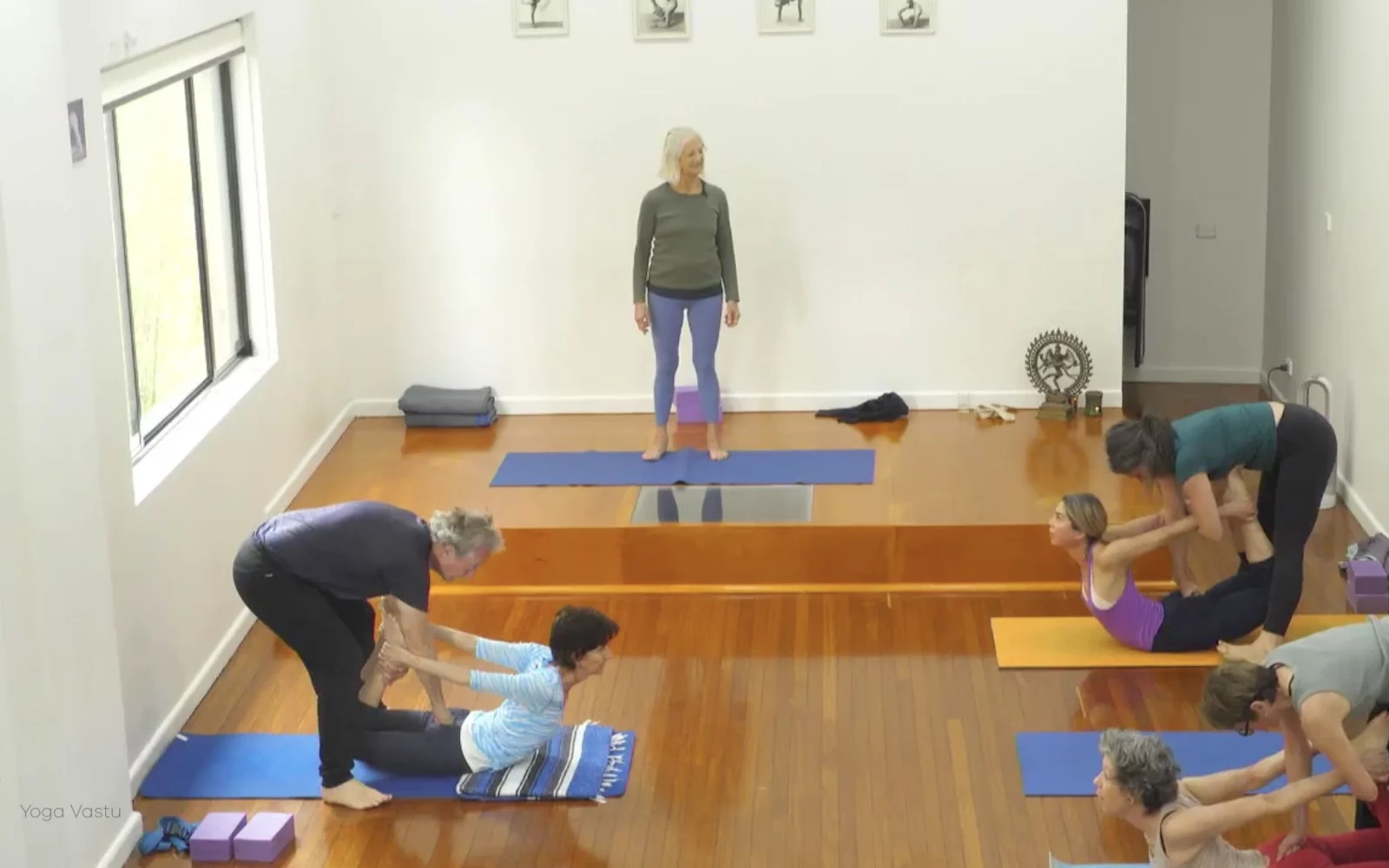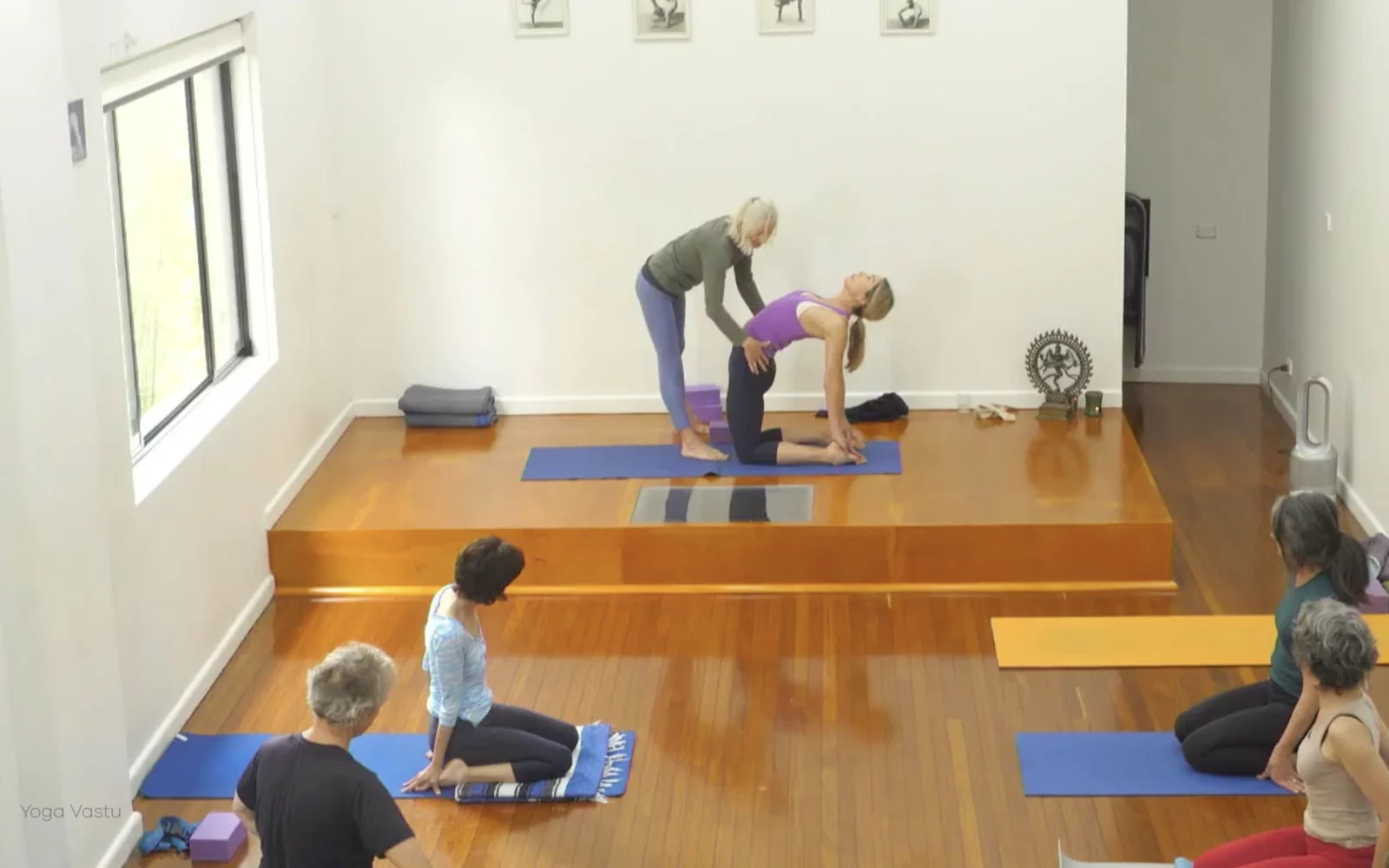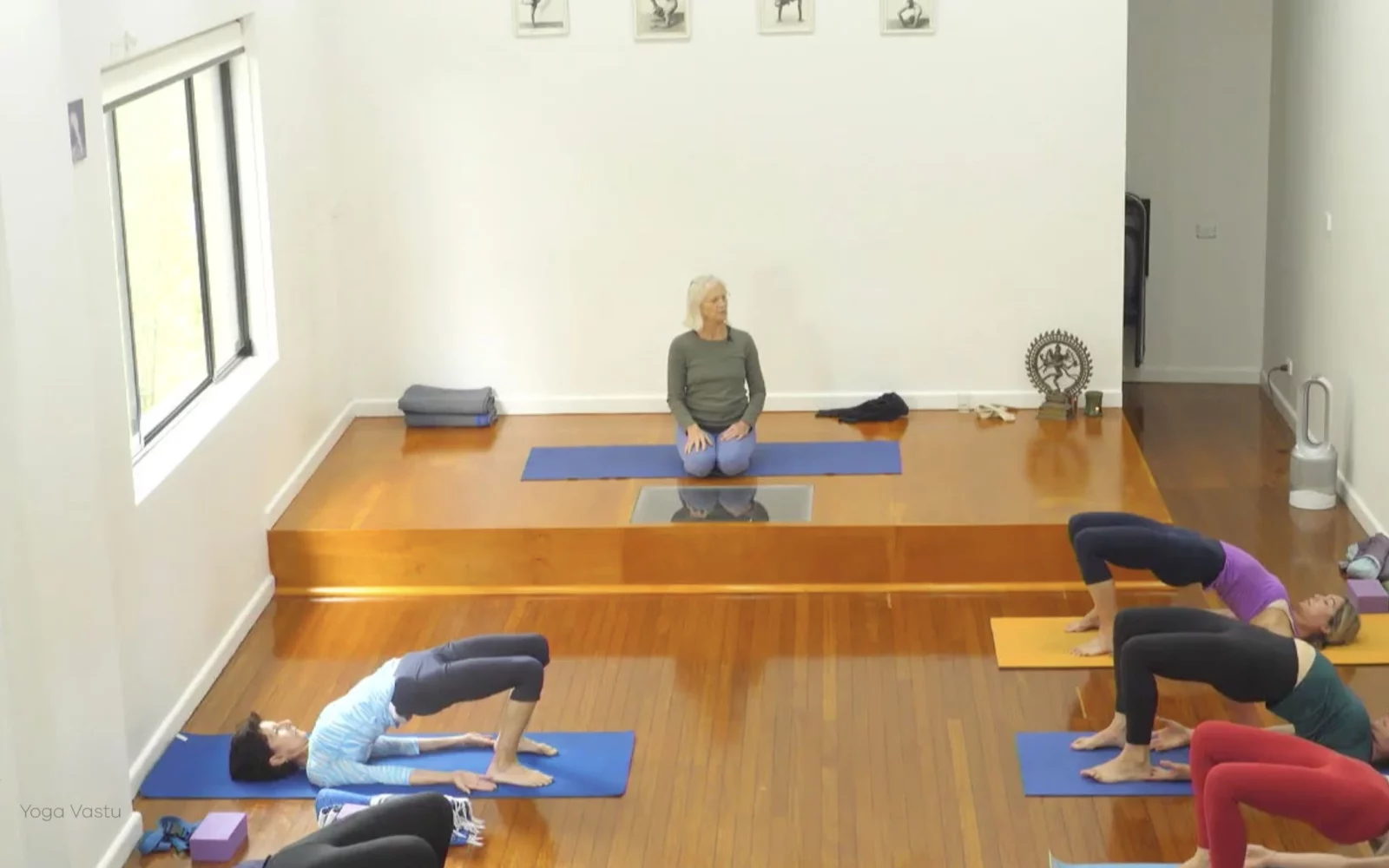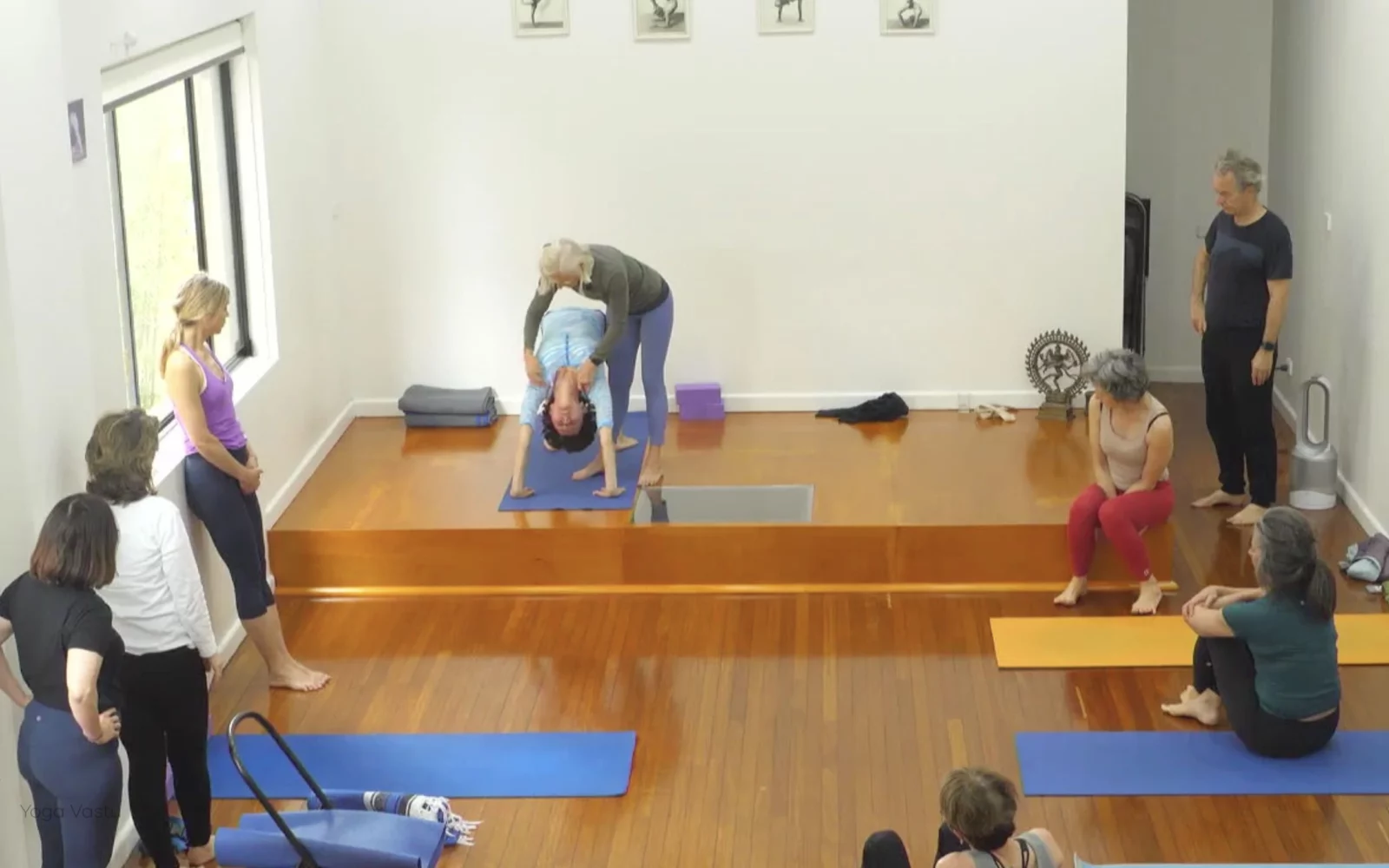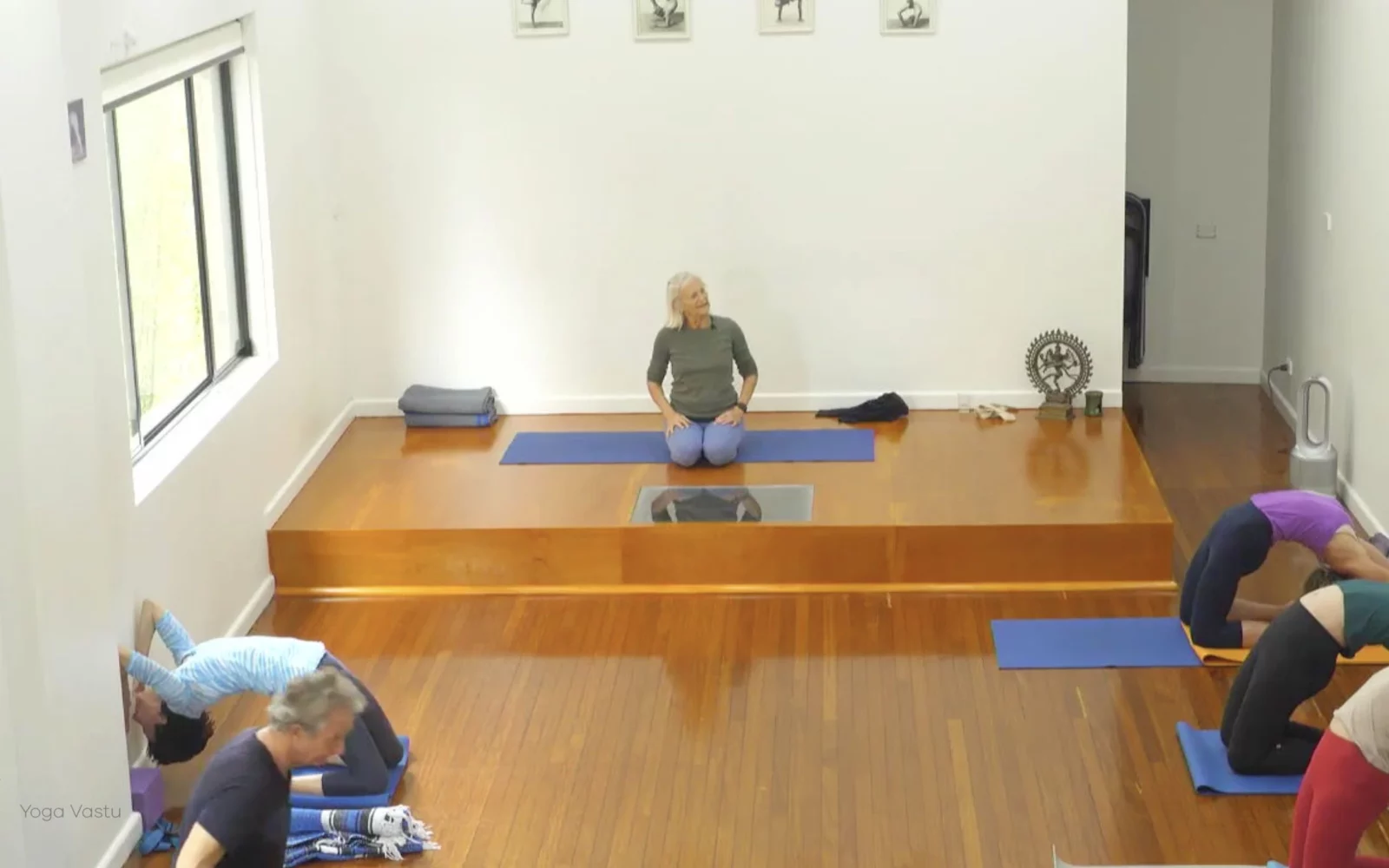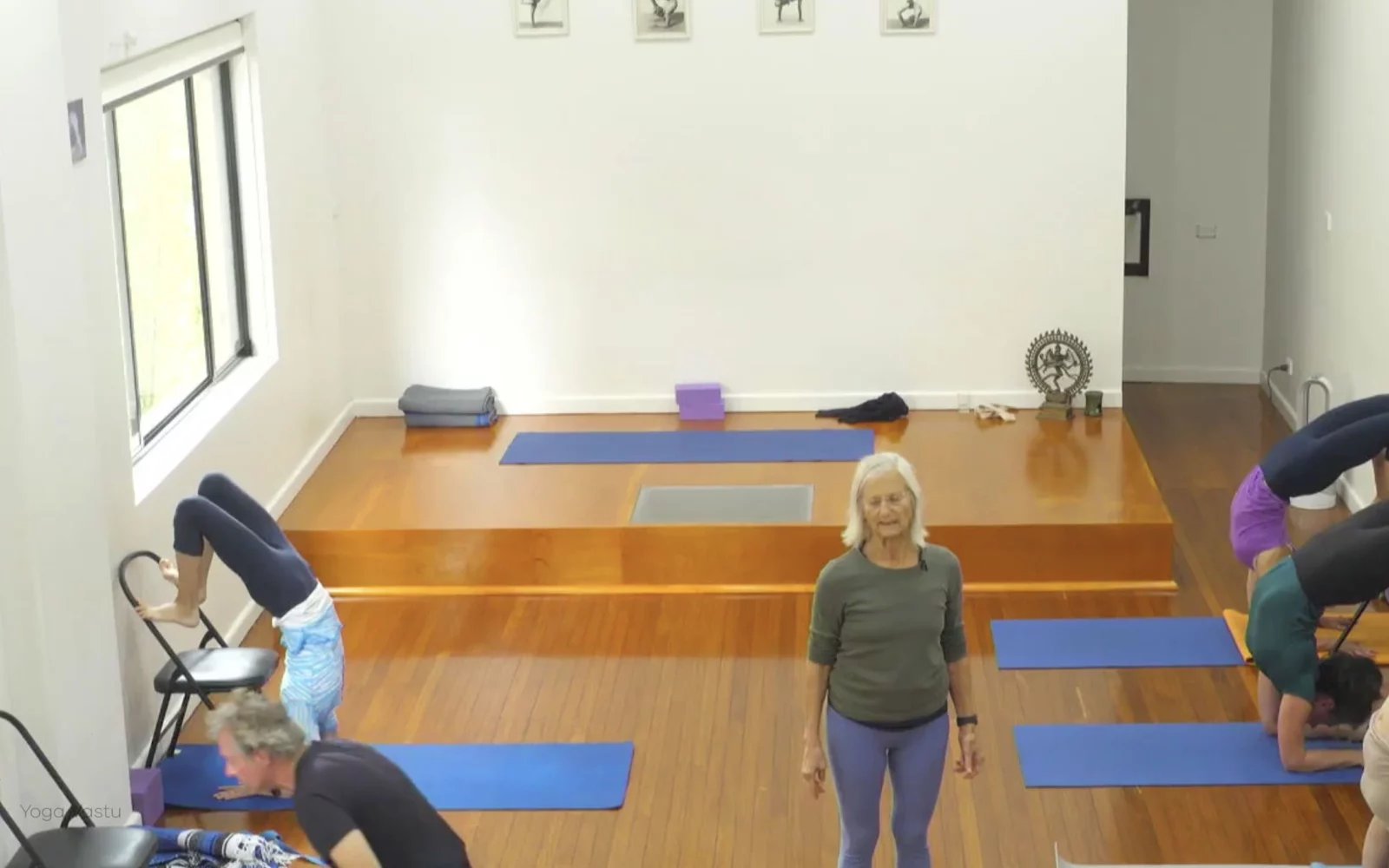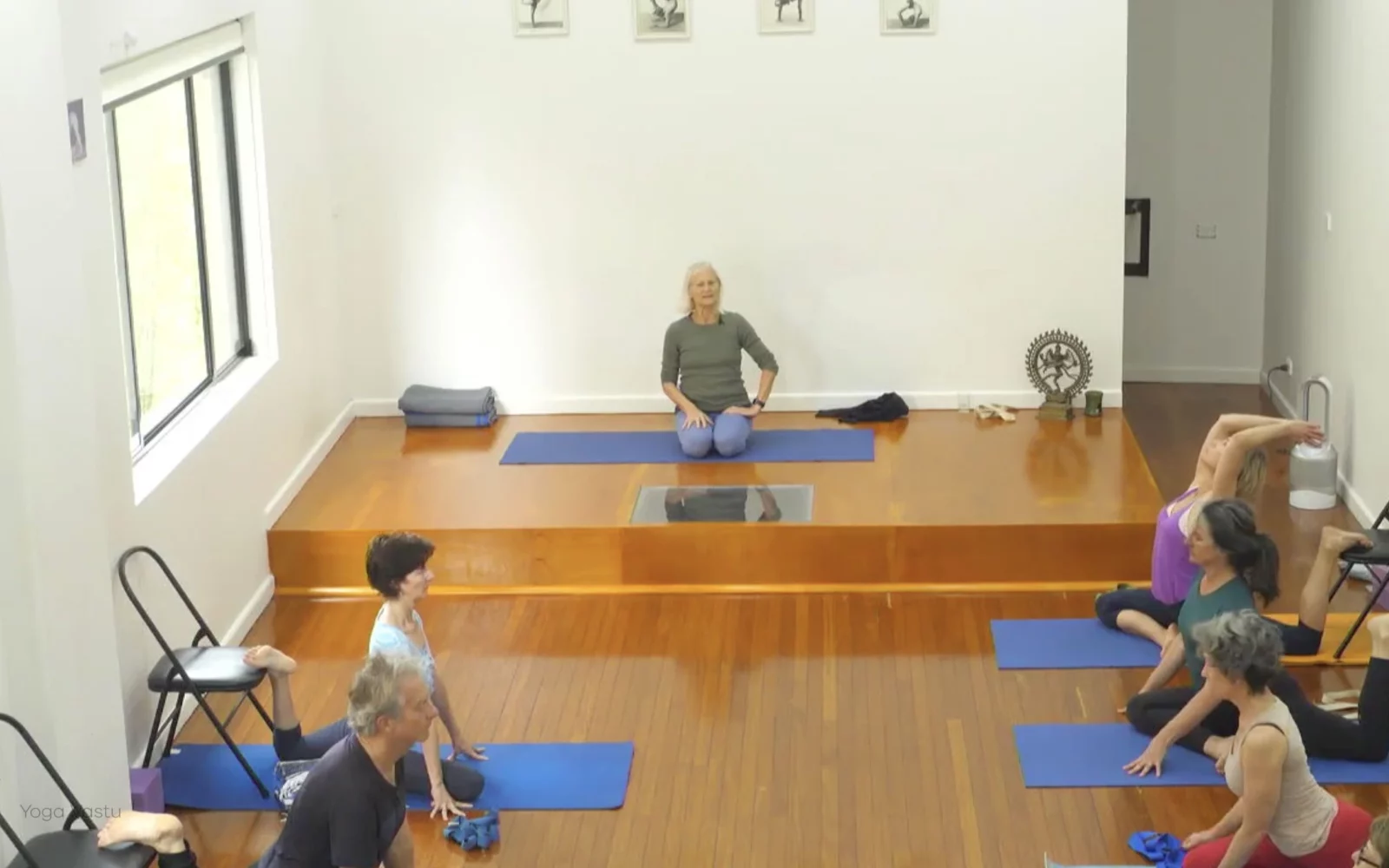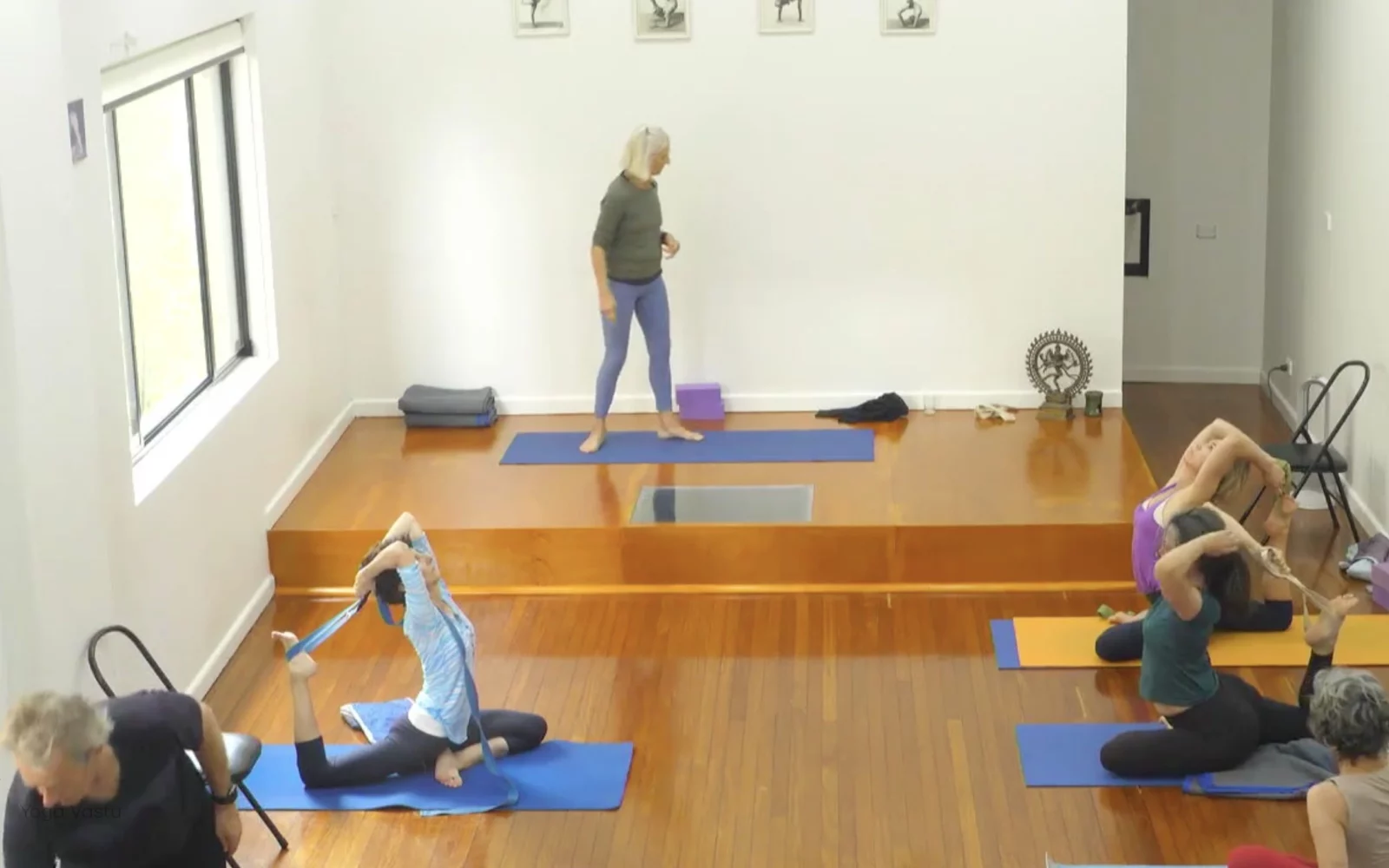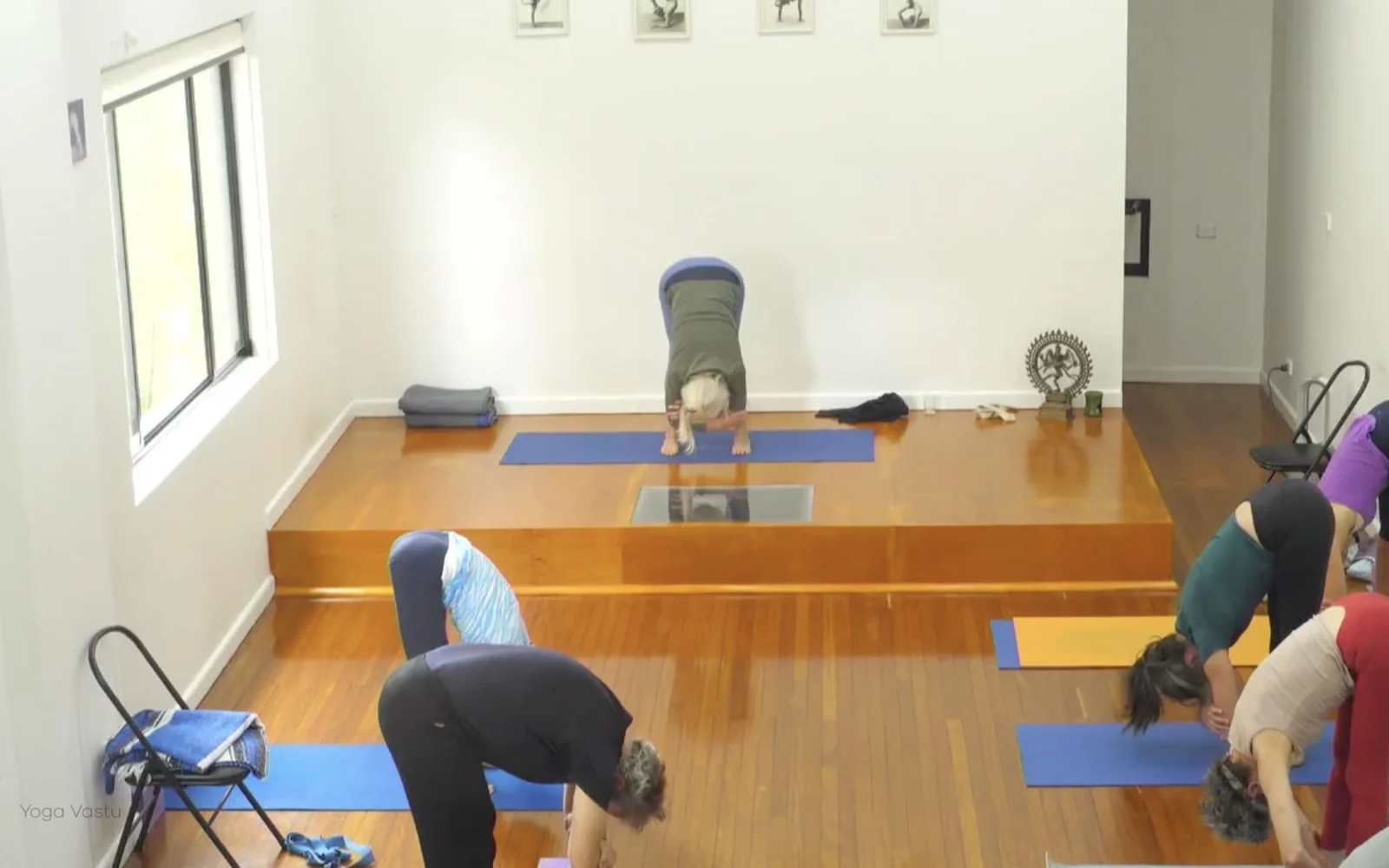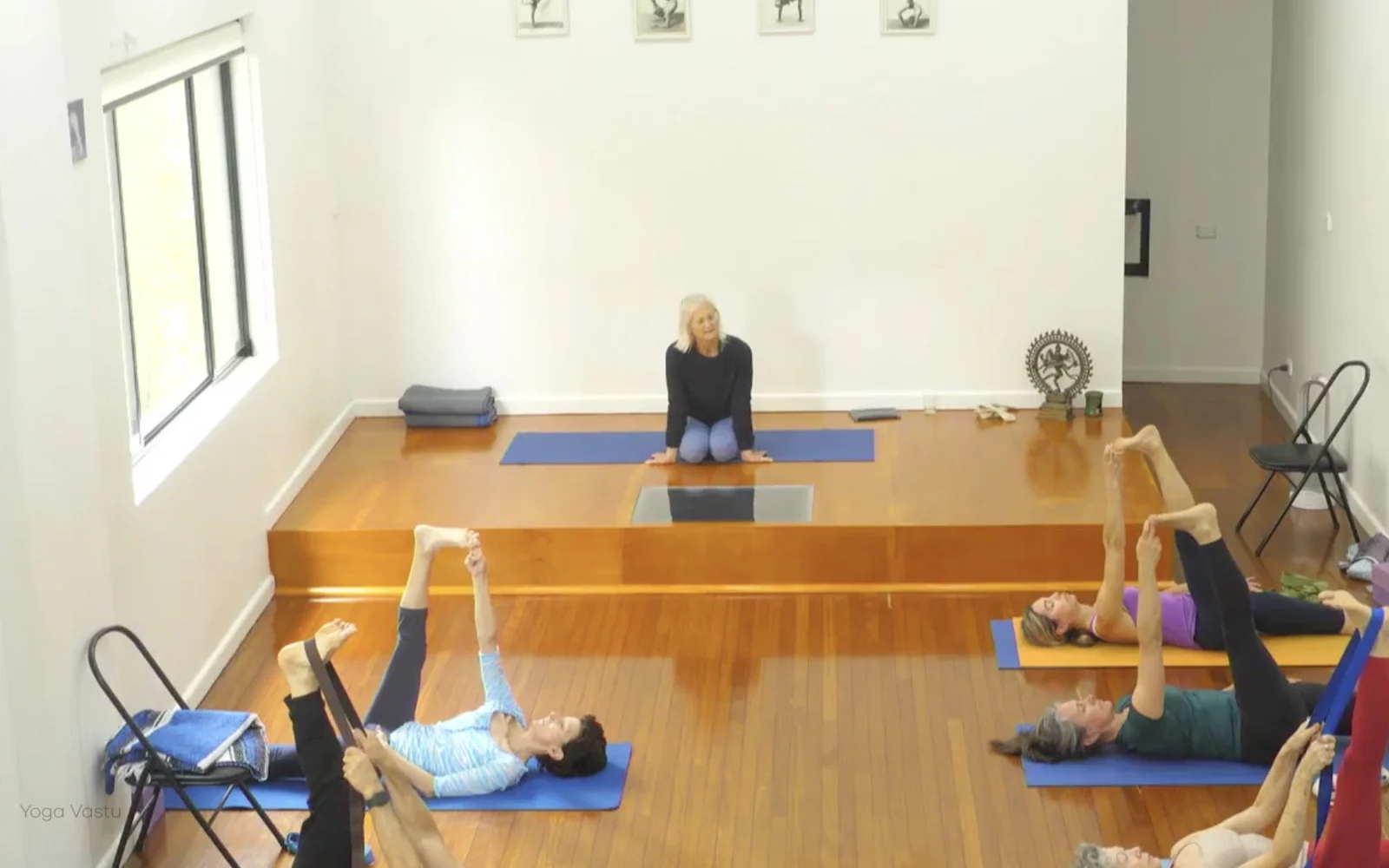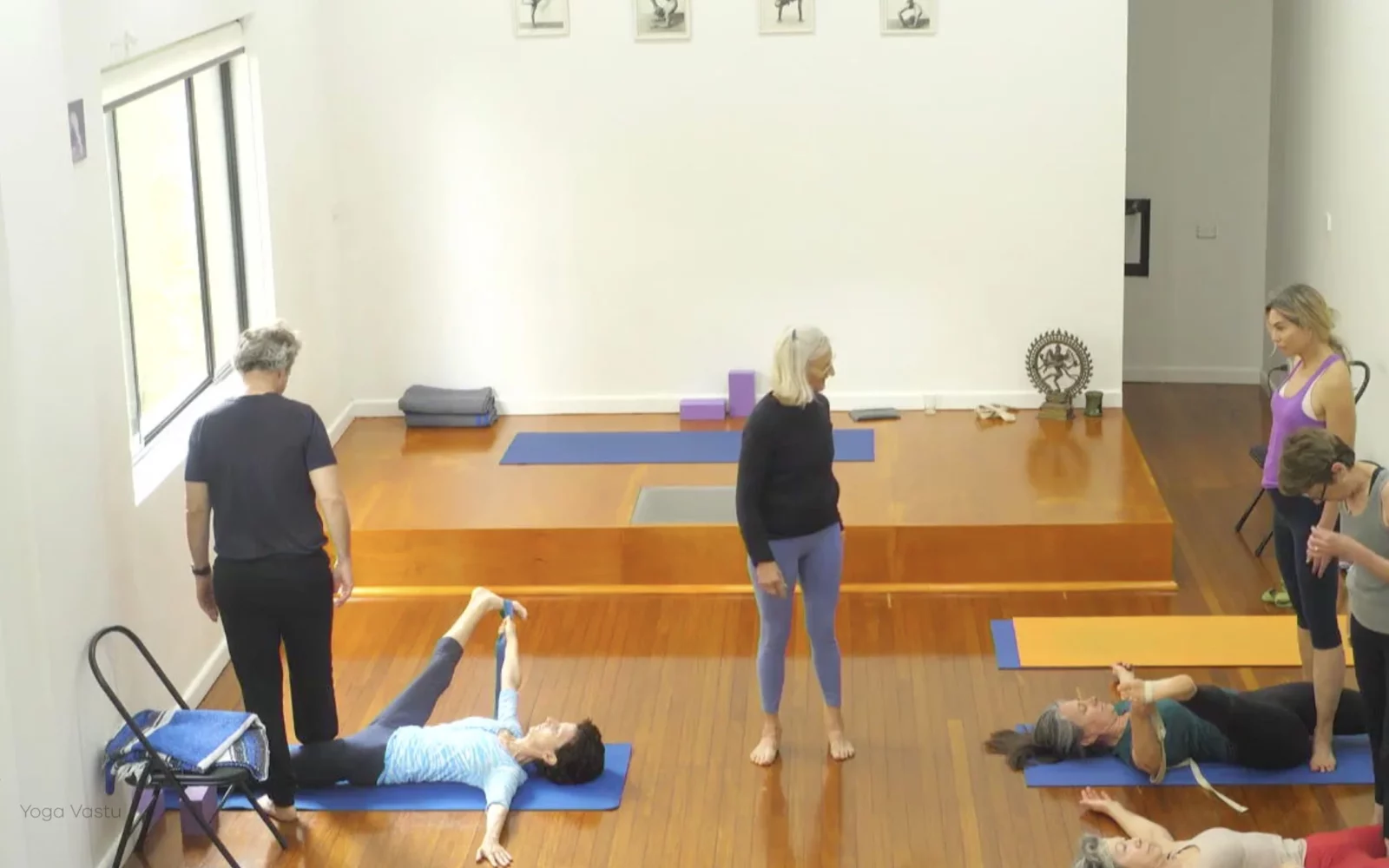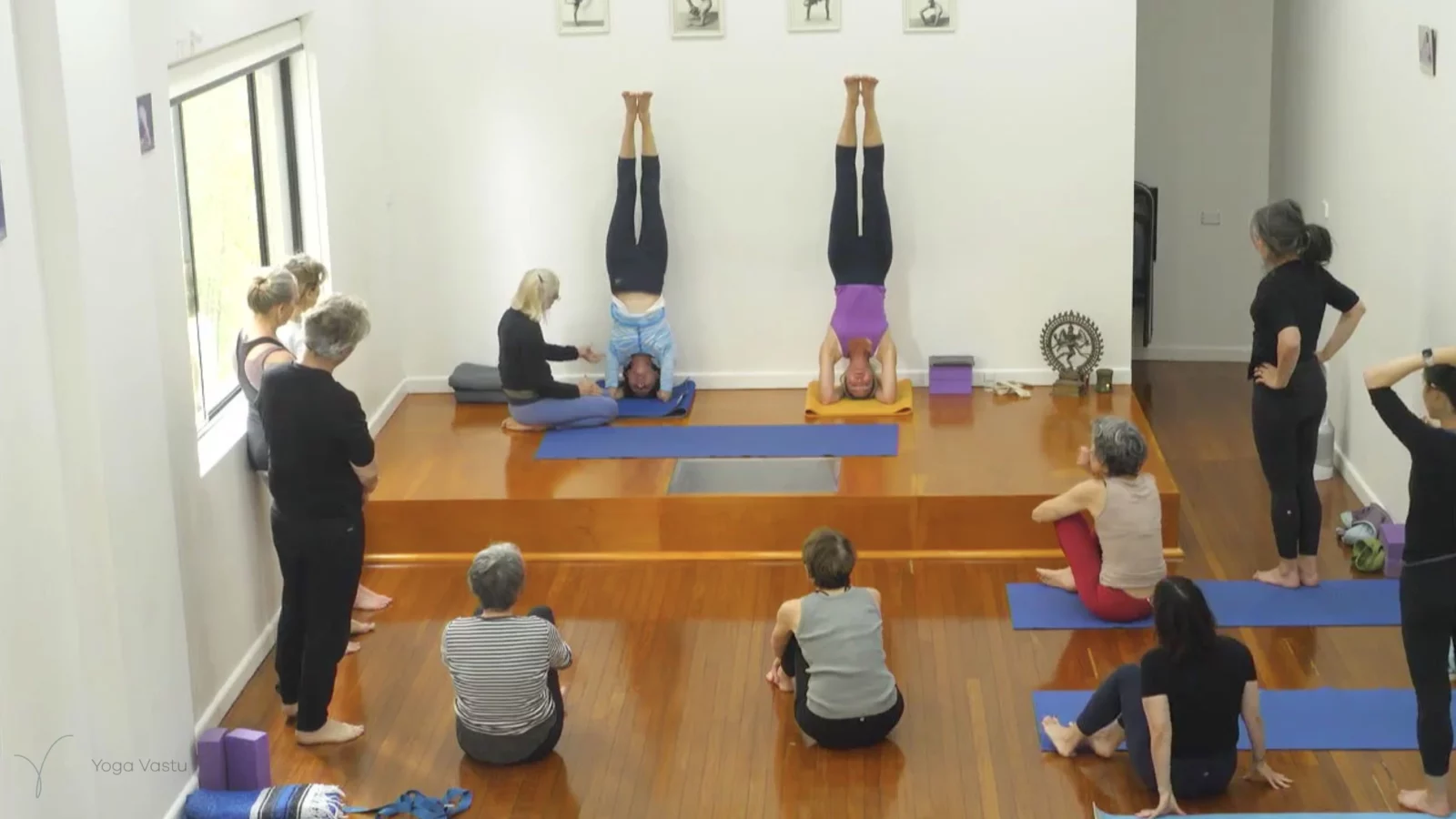
In the first half of this class, we will be taking an in-depth look at inversions such as Pincha Mayurasana and Sirsasana. Then, we will go through a wide range of backbends, including some of the more challenging ones like Vrishikasana (Scorpion Pose).
From start to finish, we will make a point of paying attention to our attention: where does it automatically go each time we go into a new pose? what happens to it if we repeat a pose? does it start to wander or does it just go somewhere different? can we redirect it at will? do we know where to direct it? We will be exploring all this in an attempt to locate our center and thus get the most out of each pose.
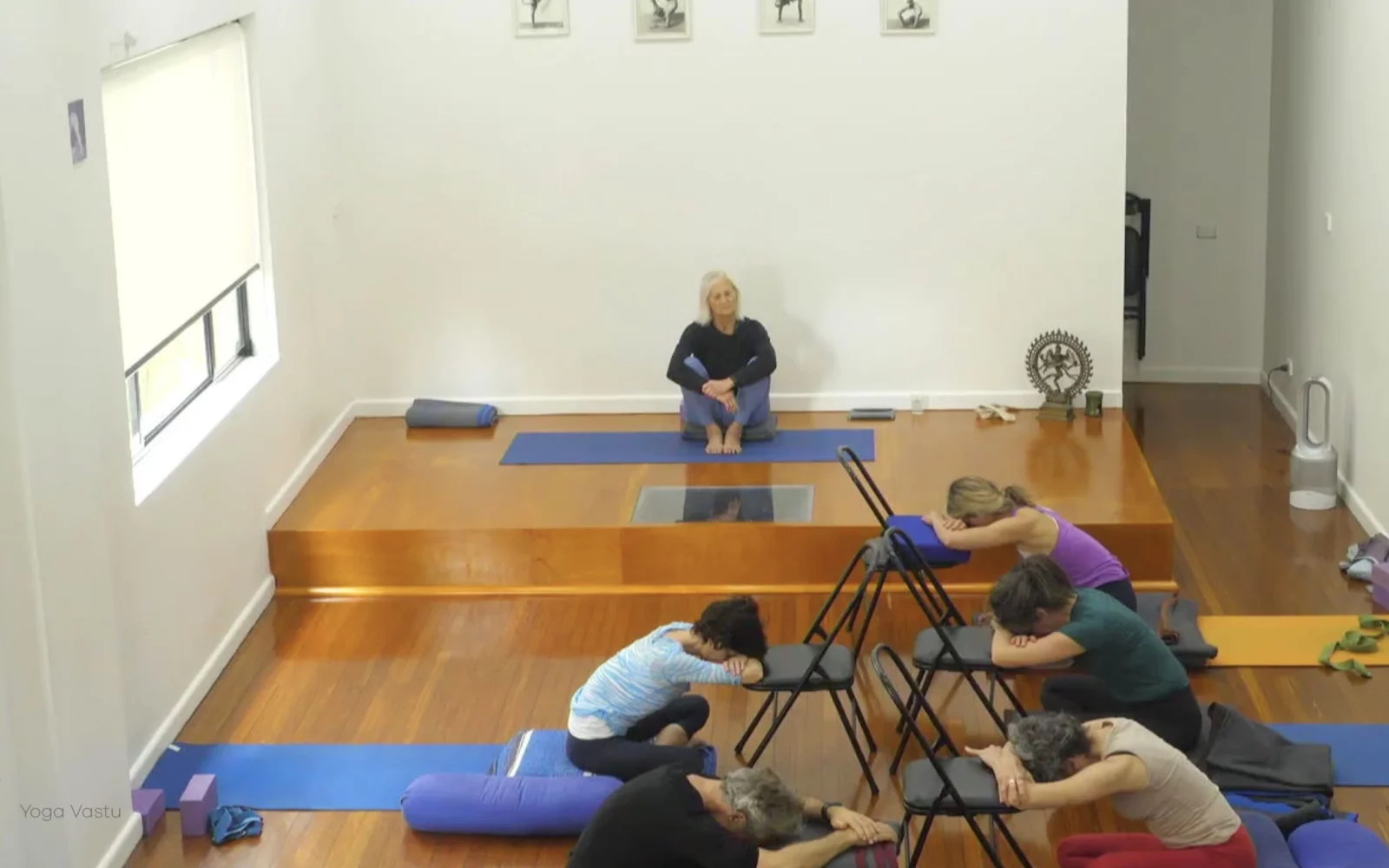
We begin with the usual Supta Virasana to Virasana Forward transition.
Then, sit up for the invocation. As you settle into Simple Cross Legs, balance out the toes, inner-outer thing, and outer buttock crease.
Stand up and fold forward into Uttanasana. Notice the tension start to melt away as you let gravity pull you down through the top of your head.
Then, walk your feet back into Adho Mukha Svanasana. In every pose in this session, notice where your attention goes first. Then, try redirecting it: use your attention as a scanner to go over the body methodically. Move your hips back into Virasana Forward, then shift back into Adho Mukha Svanasana. Does it feel different the second time you do it? This is another thing to focus on during this session: how does the feeling of doing a pose change with every repetition? Think about what the change feels like, where it’s coming from, what it’s dictated by.
Stand up in Utthita Hasta Padangusthasana 1 with the arms up in Urdhva Hastasana. Then, shift into Virabhadrasana 3 with the arms stretched forward and hands pressed against the wall.
Now comes the usual inversion sequence: Adho Mukha Vrksasana, coming down into Uttanasana to rebalance; Pincha Mayurasana, coming down into Virasana Forward, then standing up and folding forward in Uttanasana. After recovering a little in Uttanasana, we resume the inversion sequence: Pincha Mayurasana again to review it and see how it will feel second time round; take a few breaths in Virasana Forward; go up into Sirsasana, then Eka Pada Sirsasana, then come down into Virasana Forward.
Now we’re transitioning into the backbend part of the session. As “warmup,” we’ll go through a few iteration of the Adho Mukha Svanasana to Urdhva Mukha Svanasana transition. Repeat 3 times. With each repetition notice what happens in the outer upper arm. For the final Urdhva Mukha Svanasana in this sequence, add some blocks under the palms of your hands. See what changes this elevation brings.
Come down. Go into Dhanurasana. Then, Ustrasana with a block between the legs, then without. What difference does the block make?
Lie down, then lift your hips up in Setu Bandha Sarvangasana. Then, do Kapotasana with the breastbone against the wall so you can keep track of your dimensions. In advanced poses like this, ones that we tend to have less practice doing compared to the more basic ones, it can sometimes be the case that we lose a sense of our limits and coordinates. The same is true for poses like Vrishikasana, coming next, which this time we’ll do with the feet on a chair. Props act as a point of contact for our body so that we can keep track of where our limbs are in relation to us. Eventually, if you pay attention, it might become possible for you to perform the pose without props, remaining fully aware of each part of your body.
Coming out of Vrishikasana, go into Eka Pada Rajakapotasana 1. You might be able to go deeper into Eka Pada Rajakapotasana 2 with or without the help of a chair or belt. Try out the different variations to see which feels most accessible.
Then, to release, stand up and fold forward into Uttanasana with the arms locked over the head. Let gravity pull you down and decompress your spine.
Adho Mukha Svanasana into Virasana Forward. Repeat two times.
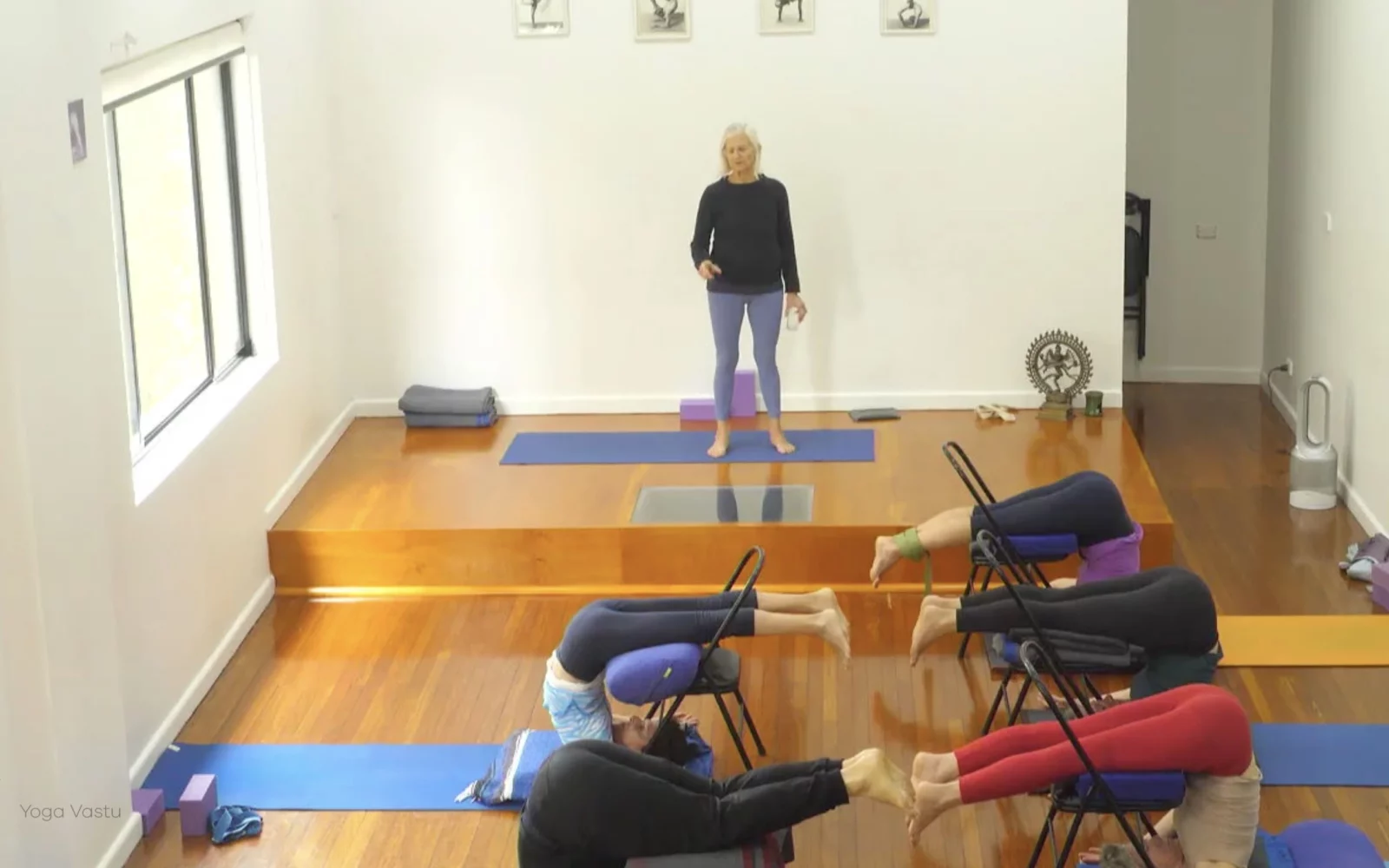
Lie down in Supta Padangusthasana 1 and 2. Then, swing your hips over your head into Ardha Halasana with the legs on a chair.
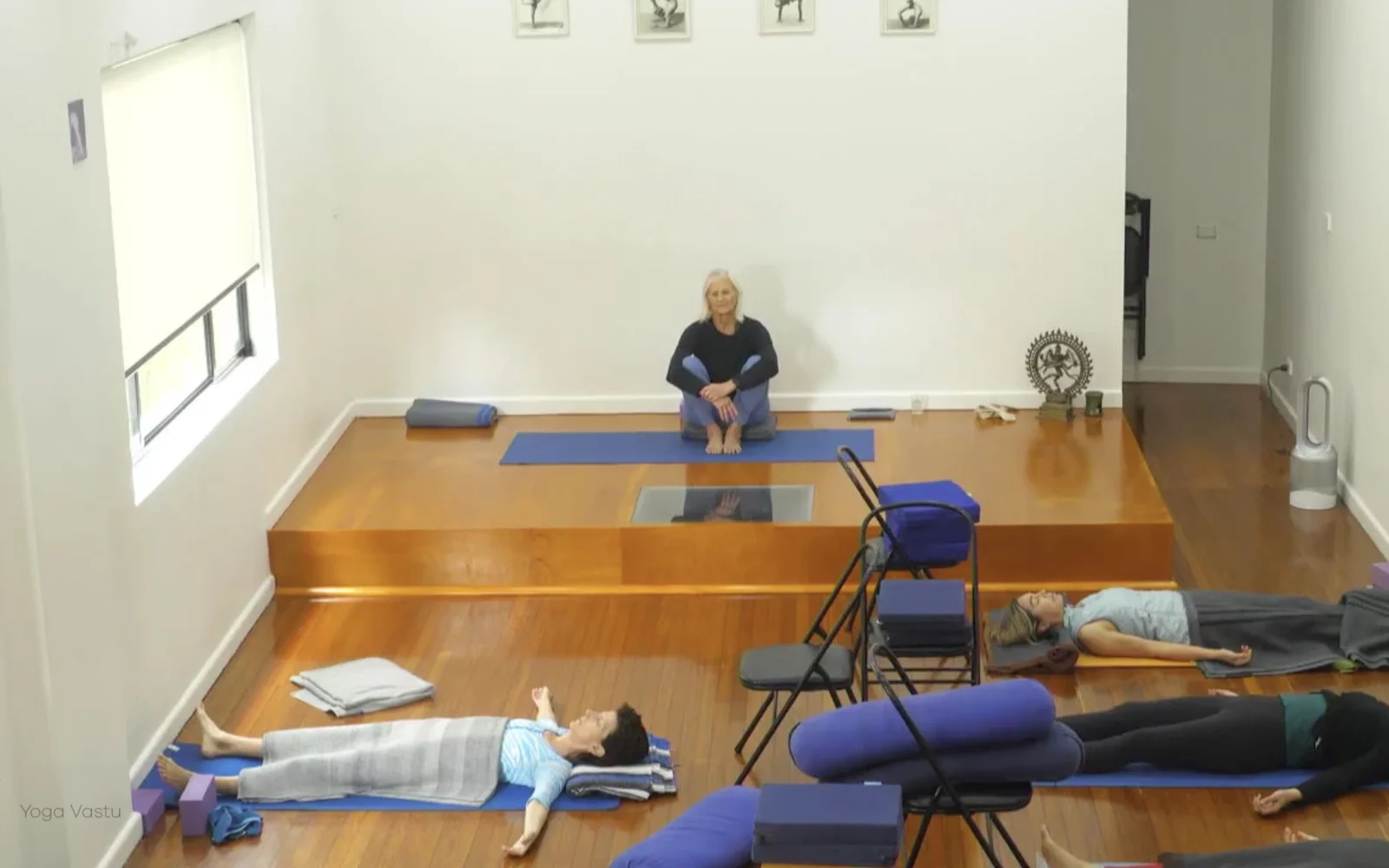
Final meditation in Savasana.
Video stills from this sequence