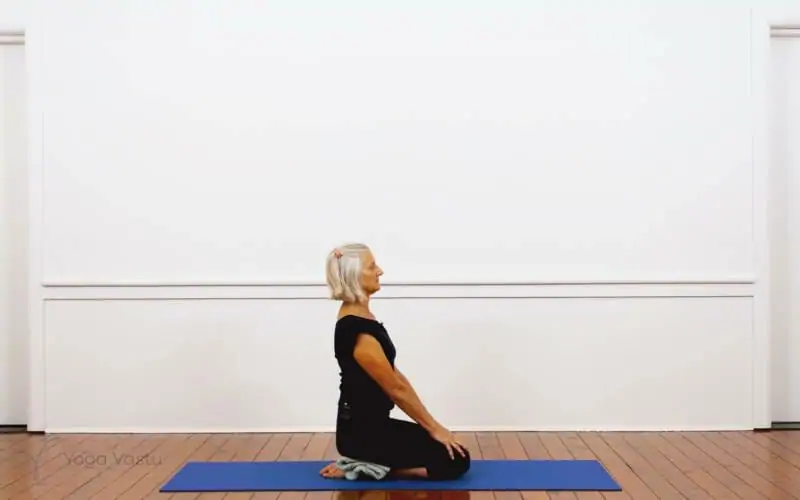
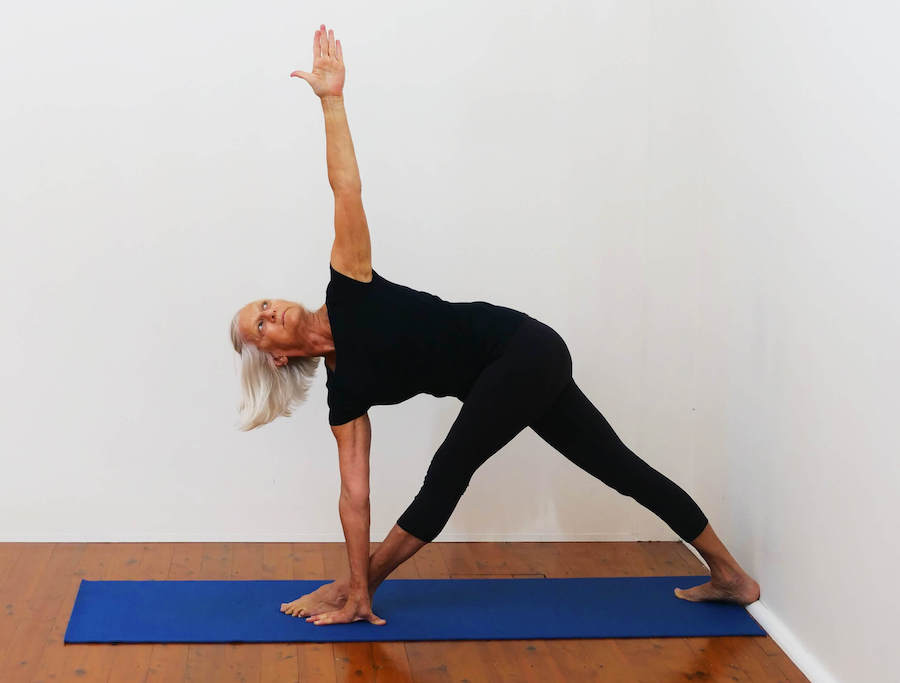
How to do it
You need one to three firmly folded blankets. Height under the buttocks is what makes this pose work, so do not skip it.
- Fold the blankets into a firm, even stack and sit on the front half of it, so the pelvis can tip slightly forward.
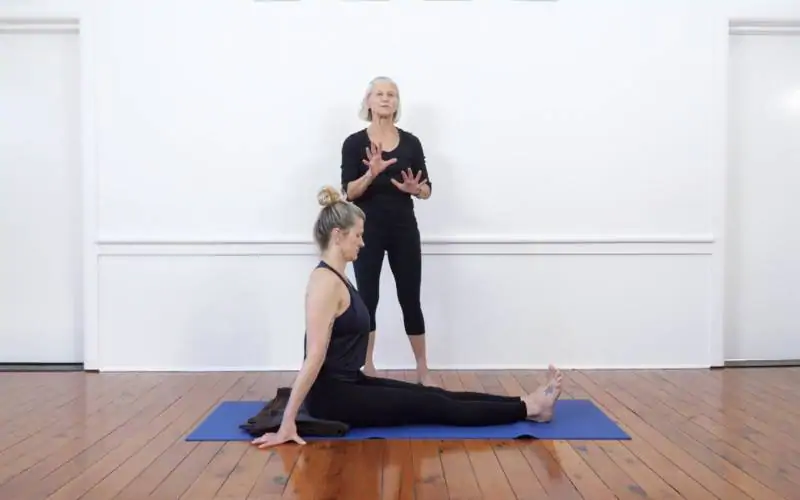
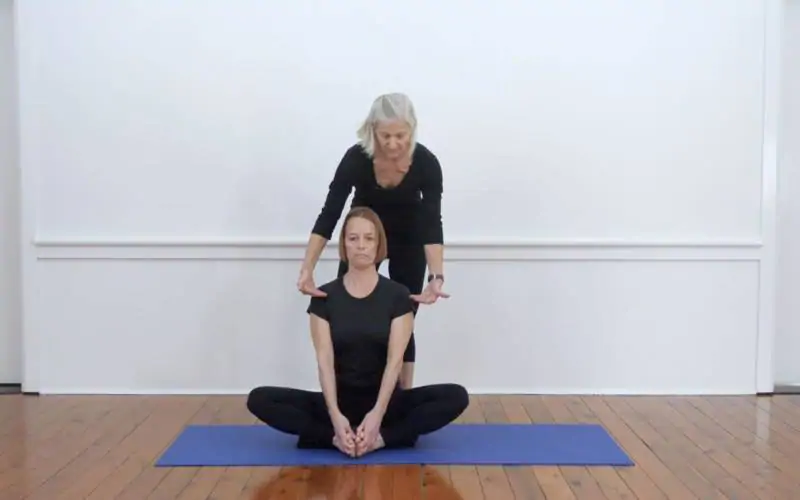
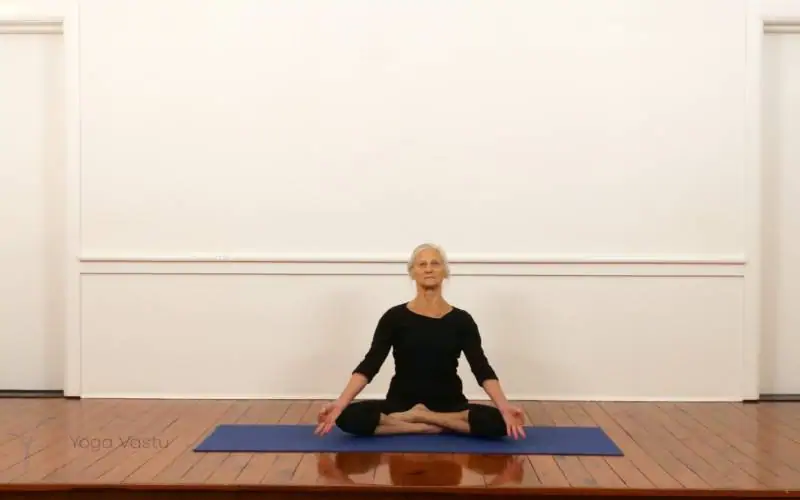
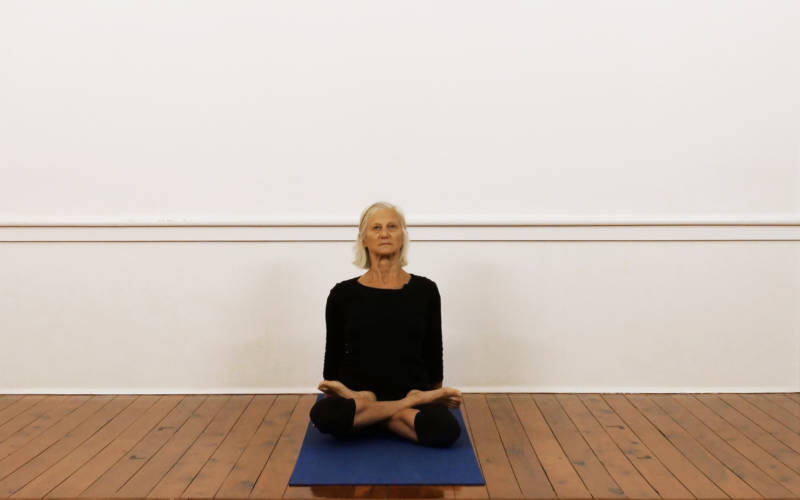
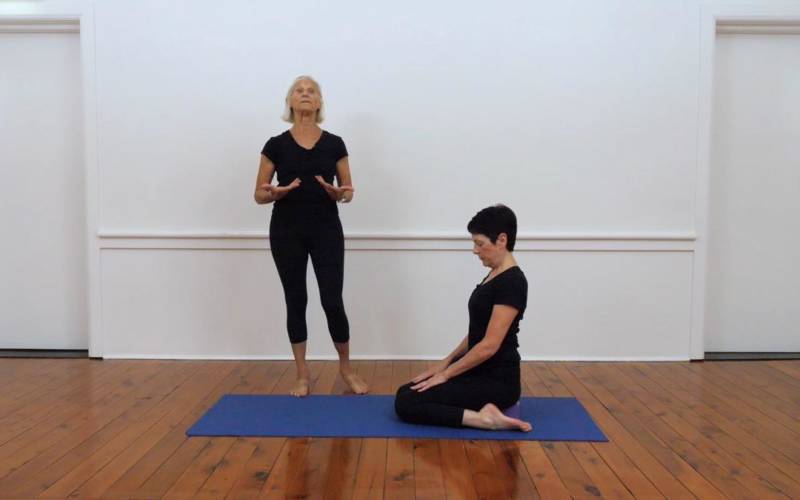
- Start in Dandasana with the legs straight. Bend the right knee and bring the right foot in under the left knee. Bend the left knee and bring the left foot in under the right knee.
- The shins should cross at their centre, not at the ankles, and each foot should rest under the opposite knee. The outer edges of the feet rest on the floor and the feet are relaxed.
- Check that the knees are level with or lower than the hips. If they are higher, add height under the buttocks.
- Place your fingertips on the blanket beside the hips and press down to lift the spine. Then rest the hands on the knees or thighs, or keep the fingertips down if that helps you stay lifted.
- Bring the shoulders back and down, broaden the collarbones and keep the head level, with the chin neither lifted nor tucked.
- Stay for a few minutes, breathing normally. Halfway through, uncross the legs, stretch them out and cross them the other way, with the left shin in front.
Always change the cross. Most people have a favourite side, and sitting only one way makes the hips uneven over time.
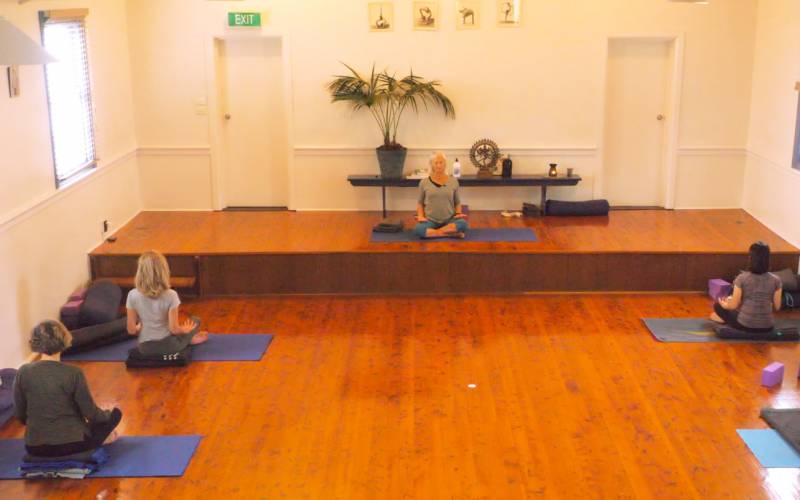
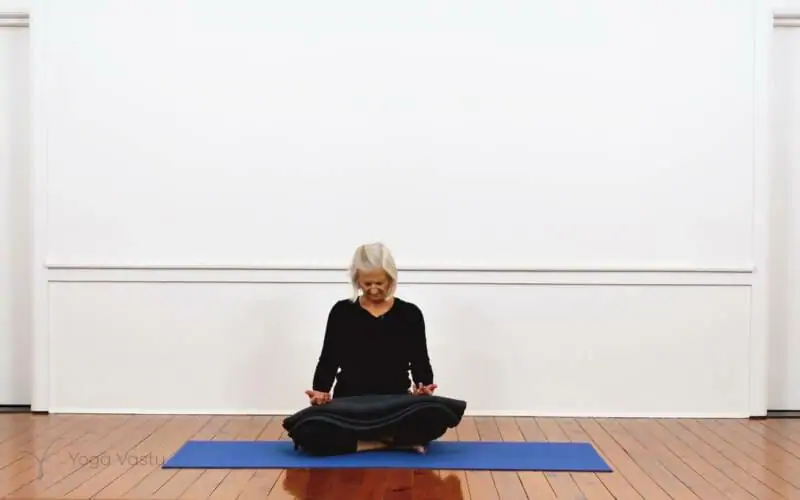
In our restorative and pranayama classes, Swastikasana is the usual seat for breathing practices. The photo shows it used for alternate-nostril breathing, with folded blankets resting across the thighs.
Key actions
- Sitting bones – feel both sitting bones evenly on the blanket. If you lean towards the side of the front shin, shift back to the centre.
- Pelvis and lower back – let the pelvis rise forward from the back of the blanket so the lower back moves in. Do not over-arch by pushing the belly forward.
- Sides of the trunk – lift the sides of the waist and the side ribs evenly from the hips.
- Back ribs and chest – draw the back ribs in so the chest opens, and keep the collarbones broad.
- Head and face – keep the head over the pelvis, the throat soft and the eyes quiet. For pranayama the head may be lowered towards the chest, as your teacher instructs.
- Legs – let the thighs release down from the hips. The legs should feel quiet rather than held.
Props and variations
- Blankets – the main prop. Stiff hips need more height. When the knees drop below the hips without effort, you have enough.
- Wall – sit with your back near a wall and a block behind the lower back if you cannot hold the spine up for long. Use it to learn the lift, then come away from it.
- Blocks under the knees – if one knee floats high or the hips ache, support the knees so the legs can rest.
- Blanket across the thighs – a folded blanket laid across the thighs, as in the photo, can help the legs settle during longer pranayama.
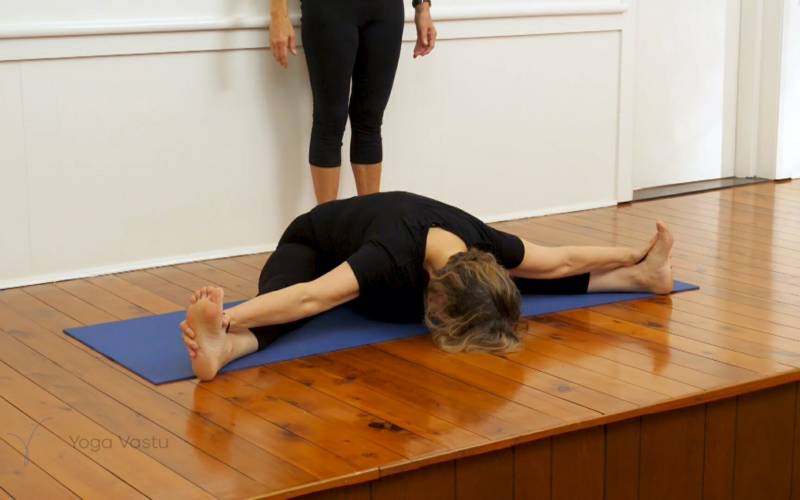
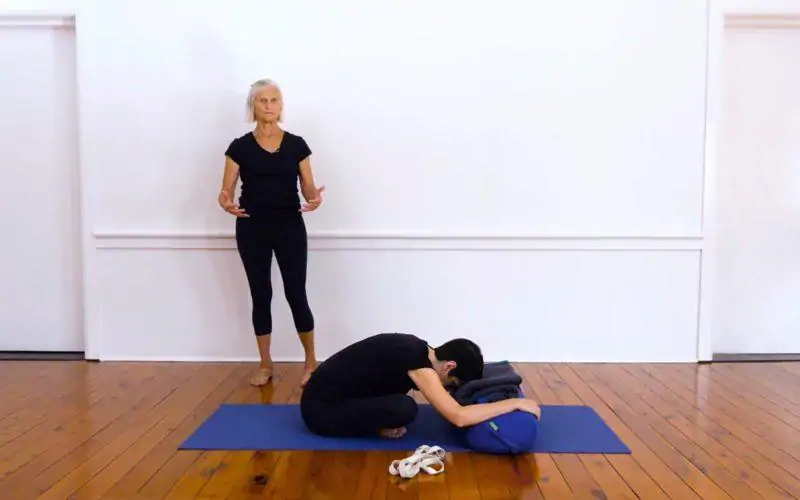
- Adho Mukha Swastikasana – fold forward from the hips over the crossed legs, resting the forehead on a bolster or blankets. Yoga Vastu lists this as Adho Mukha Sukhasana.
- Twist – turn the trunk with one hand on the opposite knee and the other behind you.
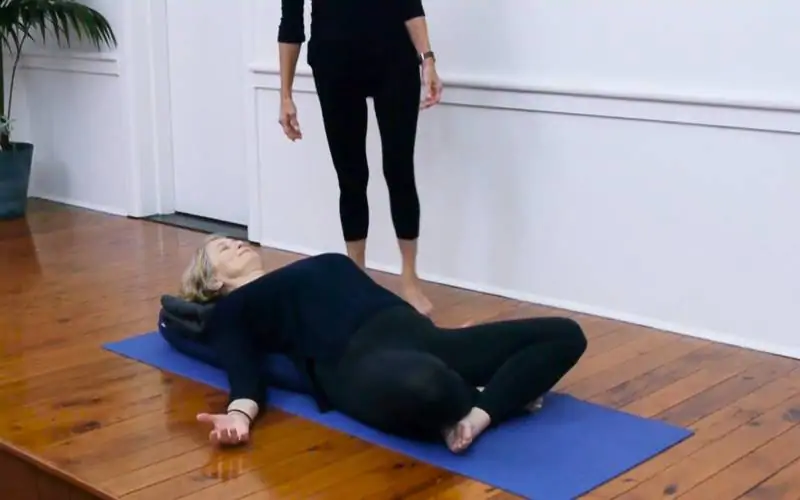
- Supta Swastikasana – lie back over a bolster with the legs crossed, a restful alternative when Supta Virasana is too much for the knees.
- Parvatasana – interlock the fingers, turn the palms out and stretch the arms overhead while sitting in Swastikasana.
A note on the name: older texts such as the Hatha Yoga Pradipika describe Swastikasana with each foot tucked between the opposite calf and thigh. In Iyengar classes the name is used for the simple crossed-leg seat described here.
Cautions
Swastikasana suits most students. Adjust it in these cases.
- Knees – if a knee hurts, add height under the buttocks and support the knee with a block. Do not press the knees down with the hands. After knee injury or surgery, ask a teacher before sitting cross-legged for long.
- Hips and sacroiliac joint – sit higher and keep the time short at first. Change the cross often.
- Lower back – if the back aches, sit higher or use a wall. A rounded, sagging back is a sign you need more support.
- Numb legs or feet – uncross, stretch the legs out in Dandasana, and change the cross.
- Pregnancy – the pose is usually comfortable in pregnancy. Sit higher and let the knees go wider to make room for the abdomen.
Benefits
Swastikasana gives you a steady, comfortable seat for pranayama and for quiet sitting. Once the support is right, you can stop fidgeting with the legs and attend to the breath.
Sitting with the spine lifted teaches you how to hold your posture in ordinary life as well. The pose also keeps the hips, knees and ankles moving gently. Many students find that a few minutes of upright sitting at the start or end of practice helps them settle.
Common questions
What is the difference between Swastikasana and Siddhasana?
In Swastikasana the shins simply cross, with each foot resting under the opposite knee. In Siddhasana the heels are placed one above the other at the centre of the pelvis, one against the perineum and one against the pubic bone. Siddhasana asks more of the hips, knees and ankles.
What is the difference between Swastikasana and Padmasana?
Padmasana (lotus pose) places each foot on top of the opposite thigh, which needs a lot of rotation in the hips and is hard on the knees if forced. Swastikasana keeps the feet on the floor under the knees, so it is the seat most students use for pranayama.
What does swastikasana mean?
Svastika is a Sanskrit word for an auspicious sign, a symbol of well-being in Indian tradition. Swastikasana means auspicious pose, and the name refers to the crossed legs.
How long should you sit in Swastikasana?
As long as you can keep the spine lifted without strain. Start with a few minutes, change the cross of the legs halfway, and build up as the hips and back allow.
Why do I need to sit on a blanket?
If the hips are stiff, sitting on the floor tips the pelvis back and the lower back rounds. A folded blanket raises the pelvis so the knees can drop below the hips and the spine can lift.
About the teacher
Pixie Lillas: Pixie Lillas first went to the Ramamani Iyengar Memorial Yoga Institute in Pune, India in 1977. She co-founded the Balmain Iyengar Yoga Studio in 1980 and has been director and principal teacher there ever since.