In this standing pose session, we are going to apply the knowledge that we have acquired through years of practice to go back to basics and experience them in a more profound and nuanced way.
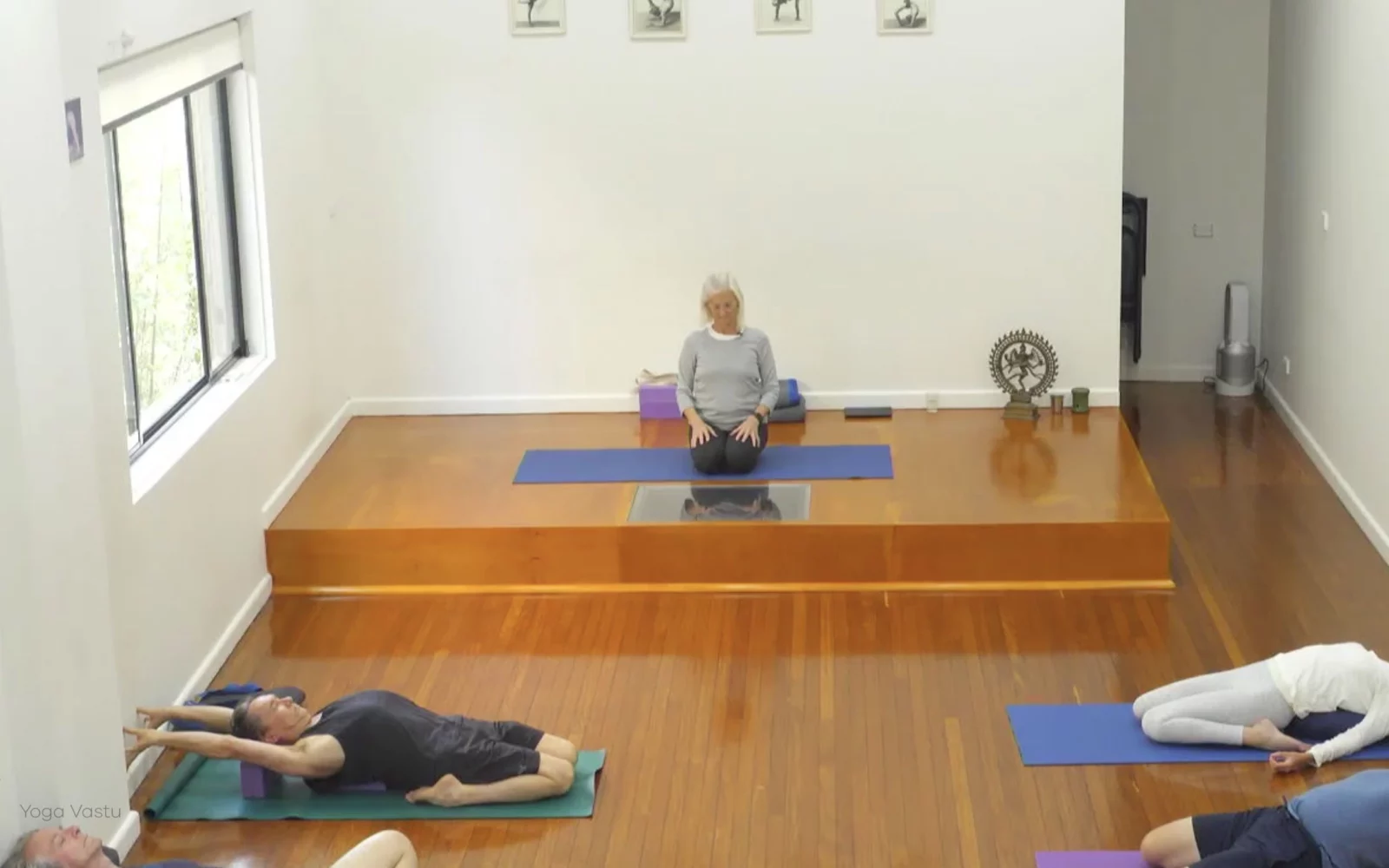
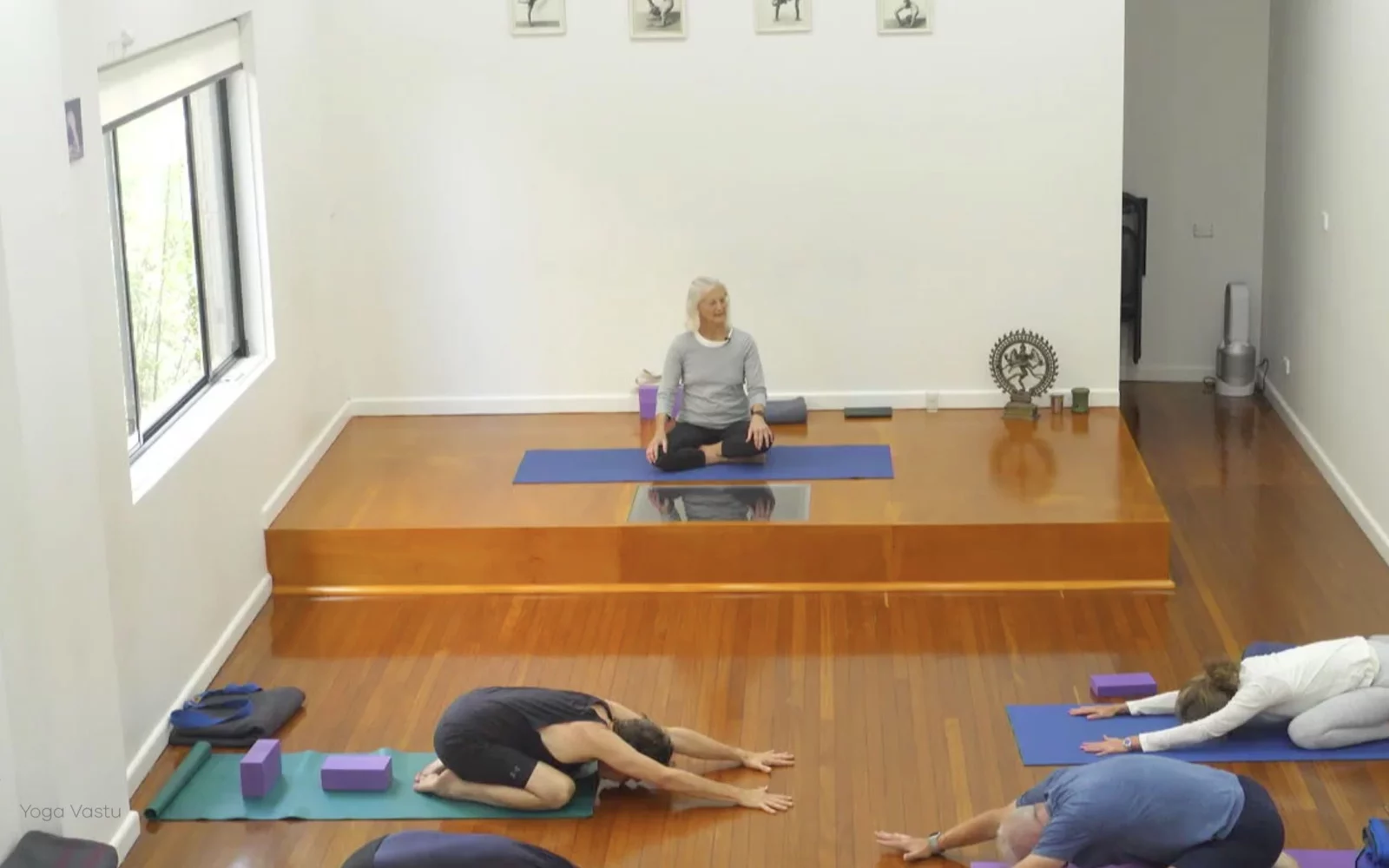
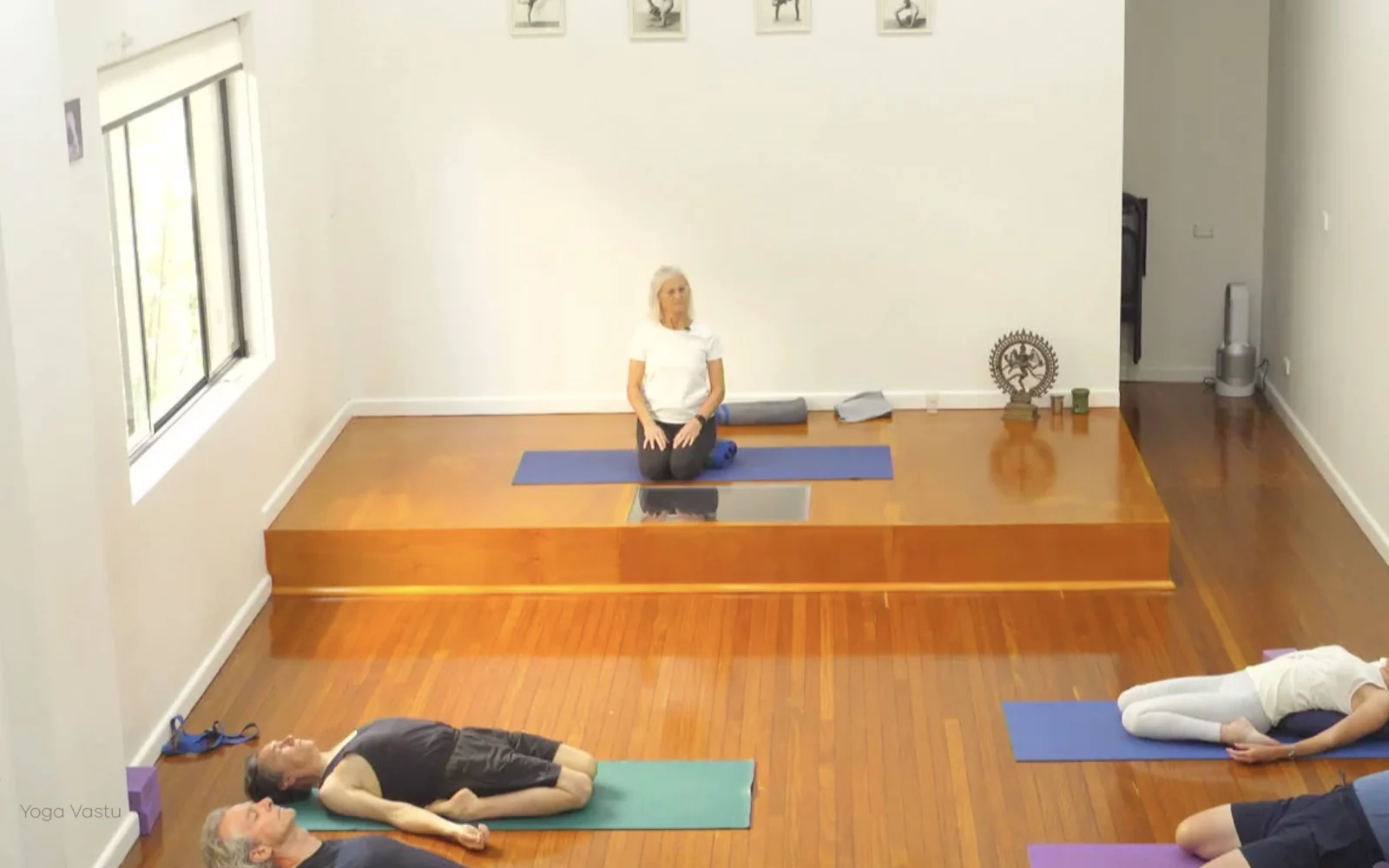
We begin in Supta Virasana to bring life into our legs, then rise up and glide into Virasana Forward.
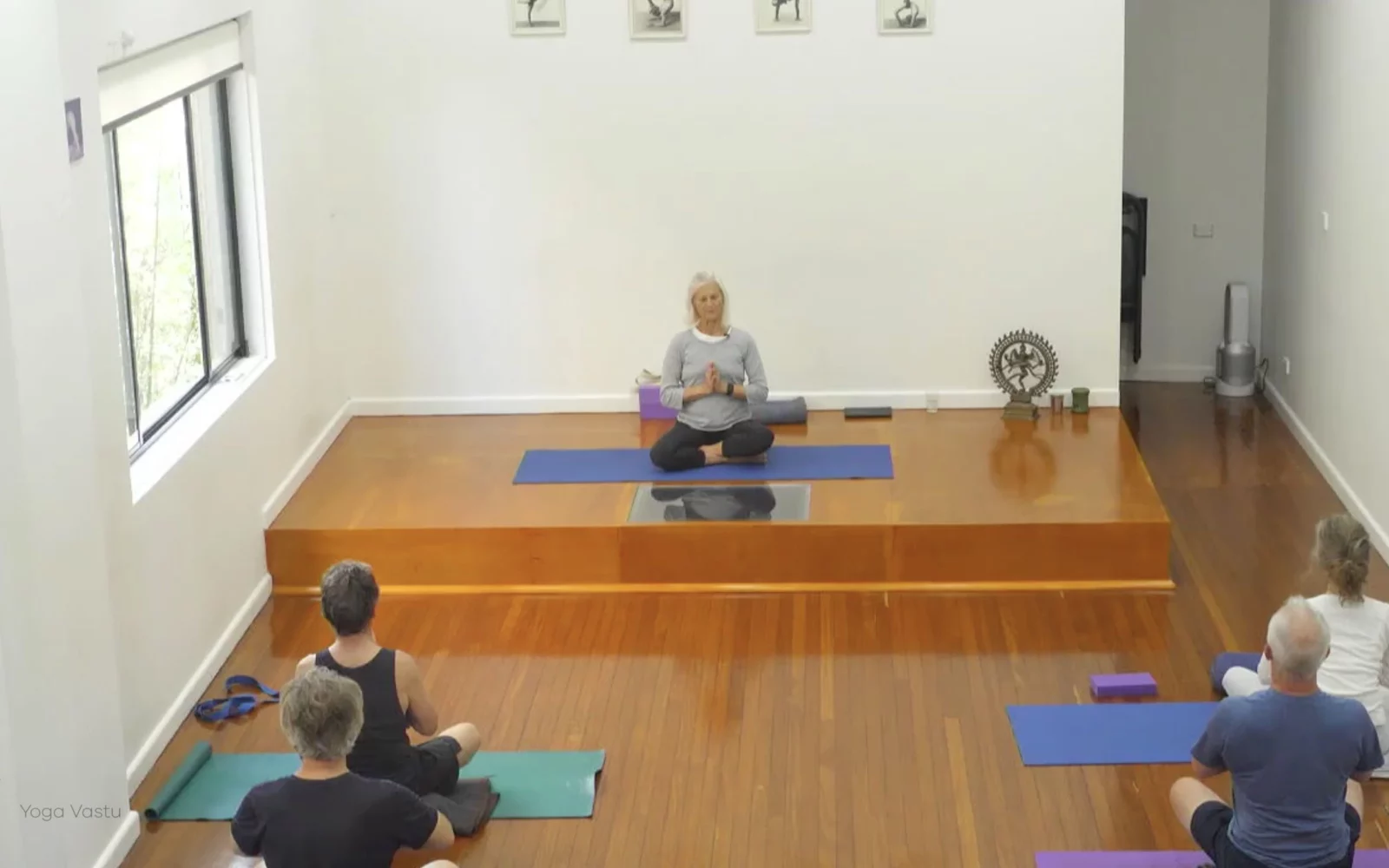
As we sit through the invocation, we get a chance to mentally prepare ourselves for the practice ahead. Today we’ll be focusing on the basics. When one has been doing something for a long time, it’s normal for actions to become automatic and, as that happens, old habits can begin to creep in. As we draw our attention today to the foundational principles and actions of Iyengar yoga, we can become aware of what we have allowed to slip away, what we might have taken granted for so long that it no longer is or feels right.
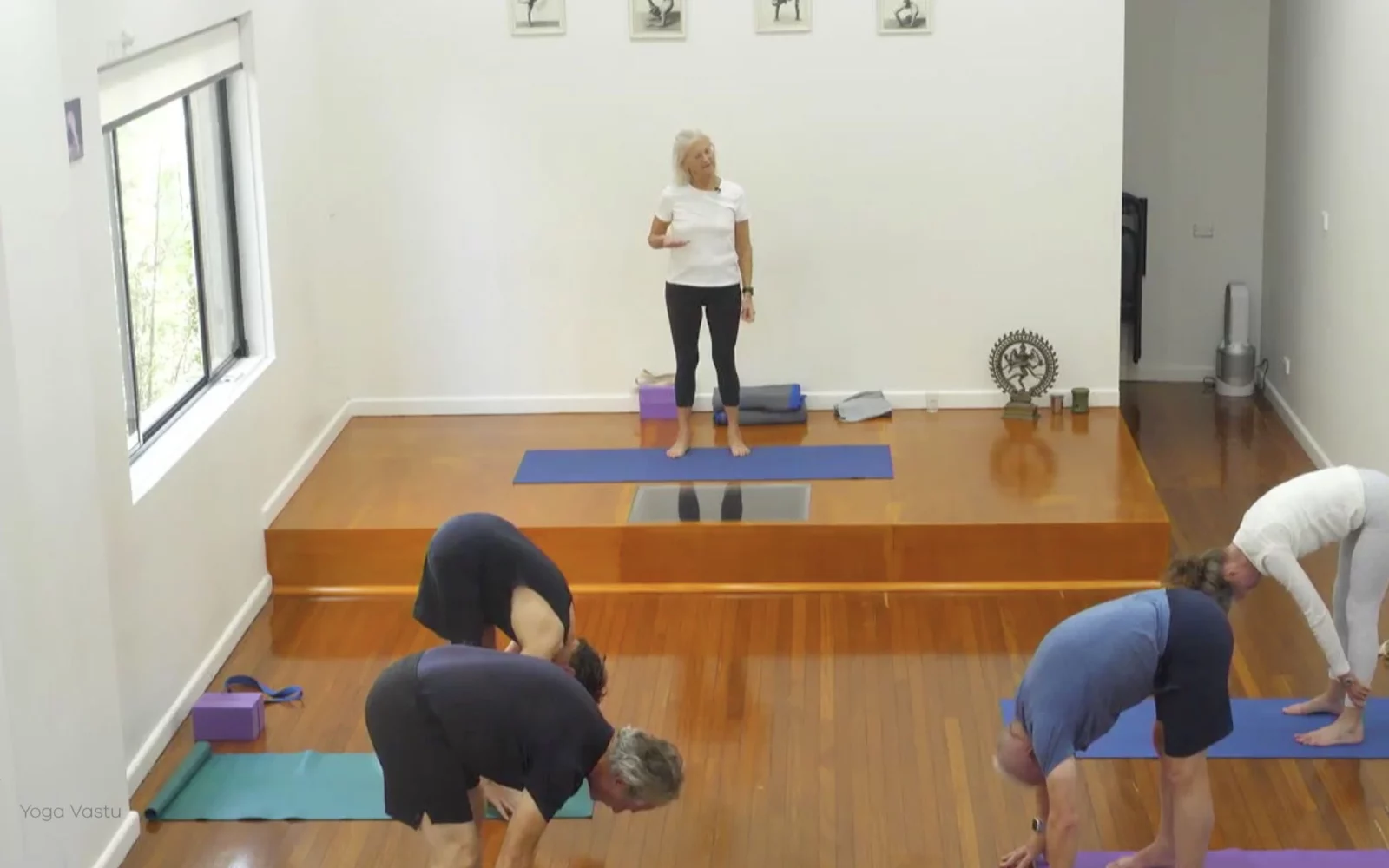
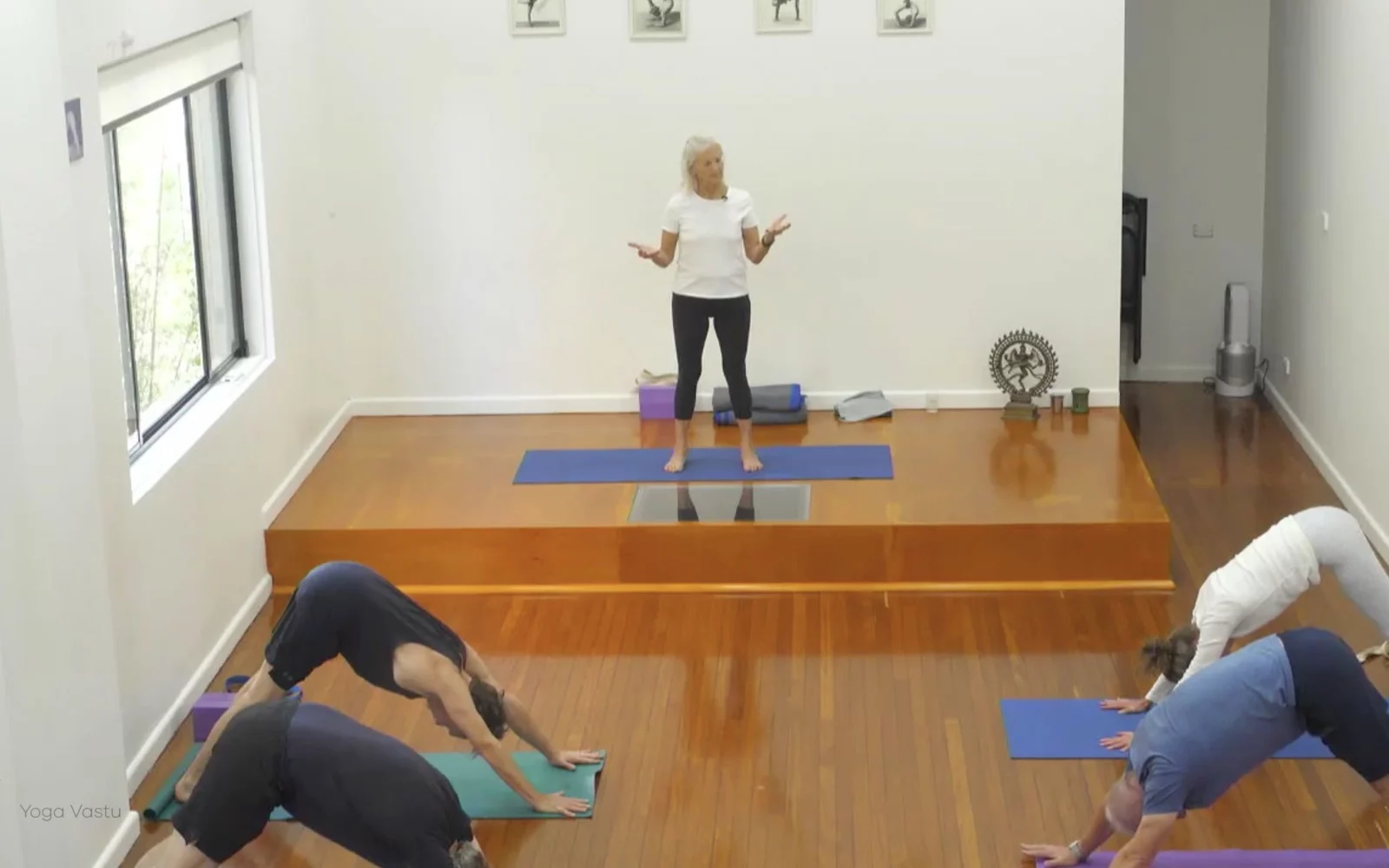
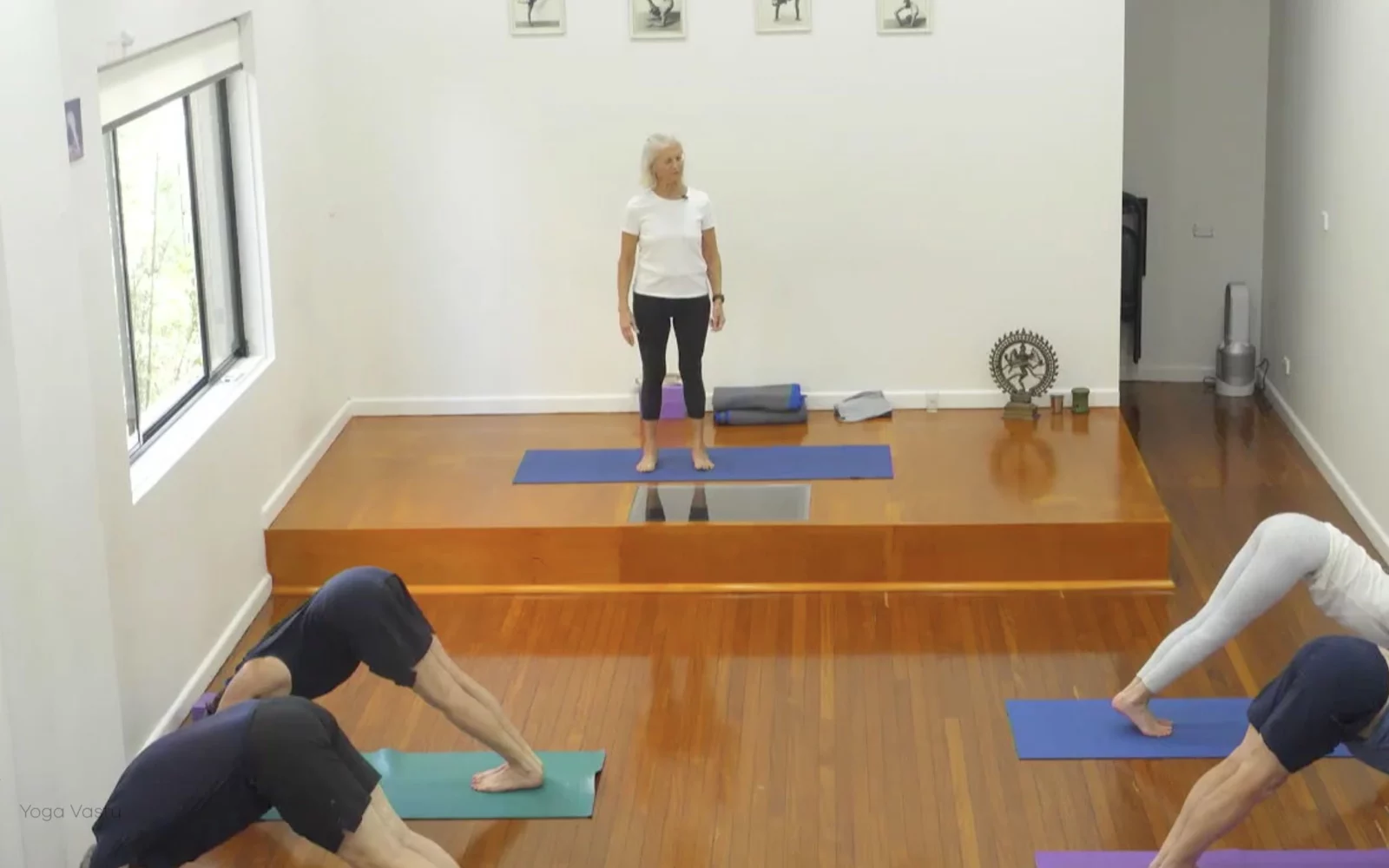
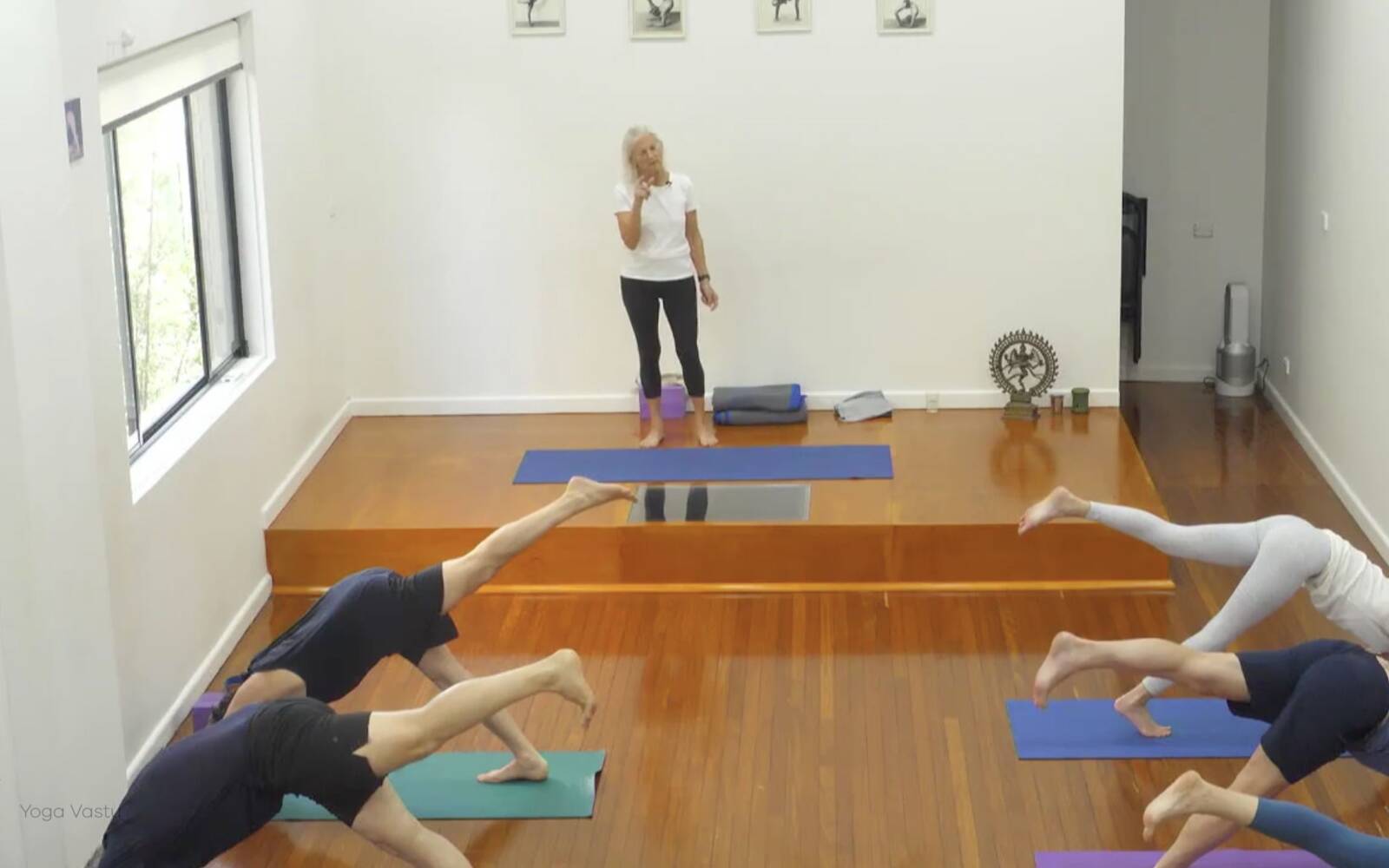
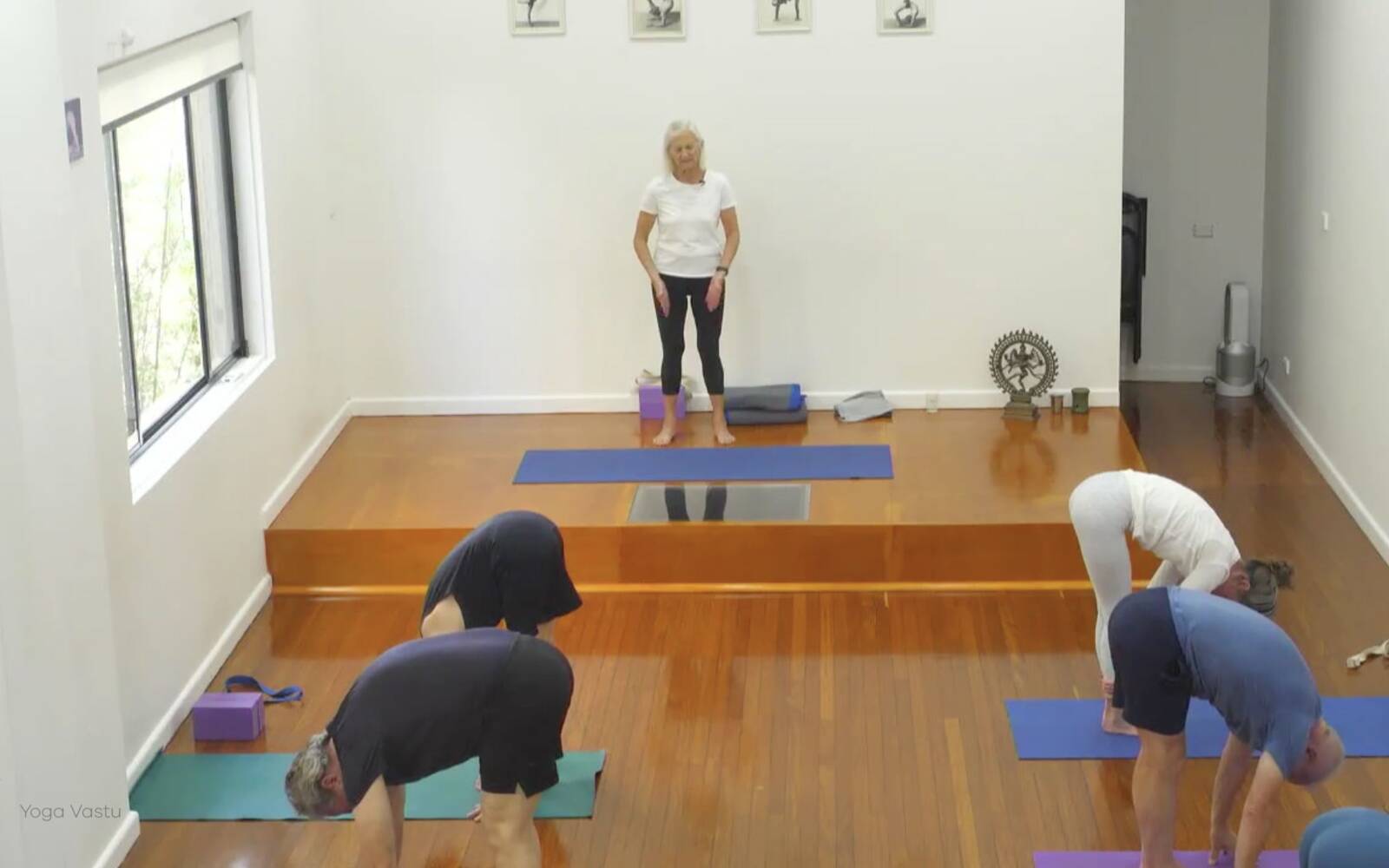
After the invocation, we come up for the warmup. First, we fold into Uttanasana. From there, we walk out into Adho Mukha Svanasana with the heels down. We go forward into Virasana Forward and then lift up into Adho Mukha Svanasana again, only this time with our feet together. See what consequences that small change brings. Now, lift one leg up behind you, while retaining alignment. Change legs. We finish this part by stepping back into Uttanasana.
Now, the inversions. We will do Adho Mukha Vrksasana to the wall to warm up the shoulders and bring energy to the whole body. We walk into it, lift ourselves up one leg at a time. Then, we consolidate the warmup by doing Pincha Mayurasana, to the wall or balancing freely.
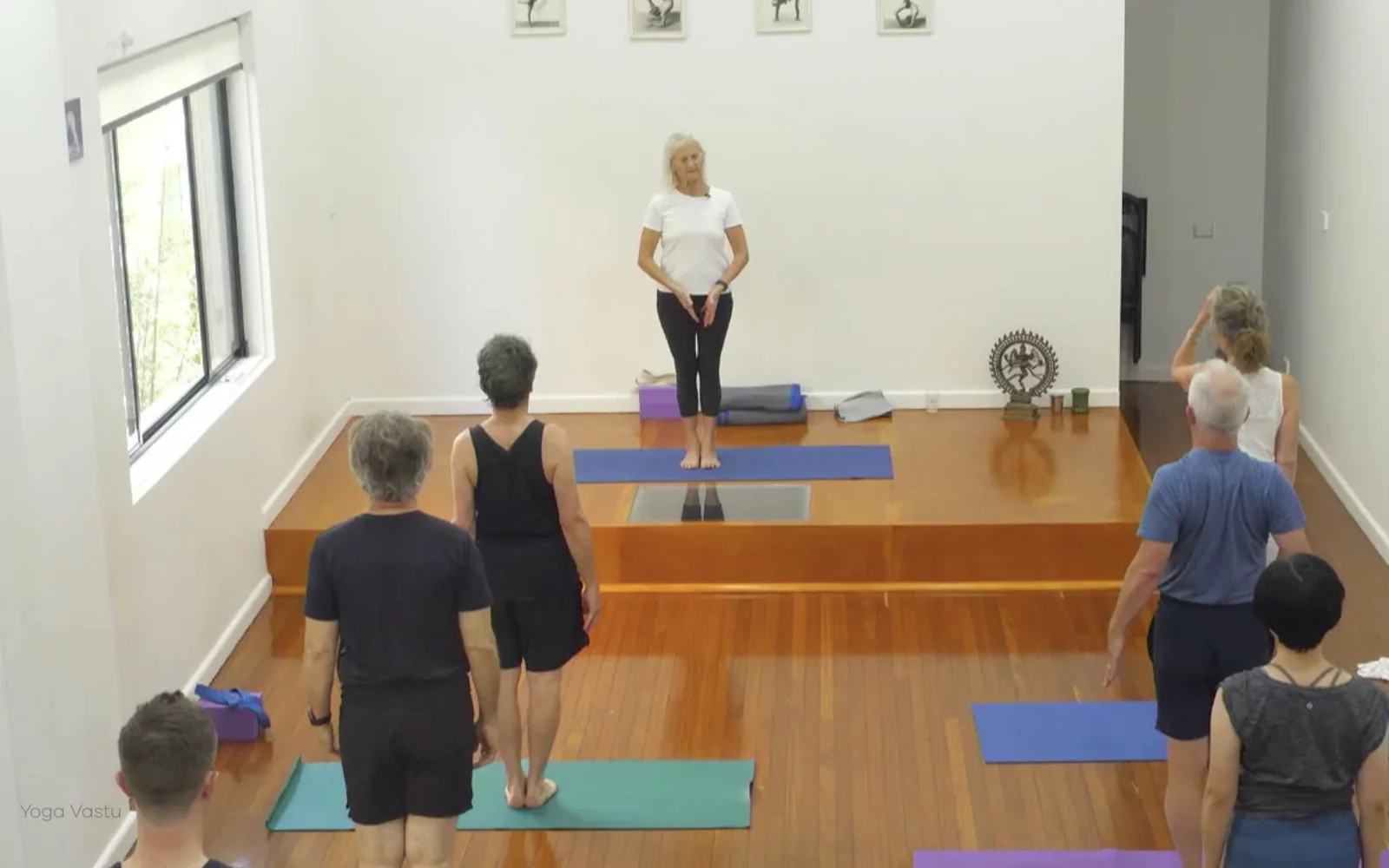
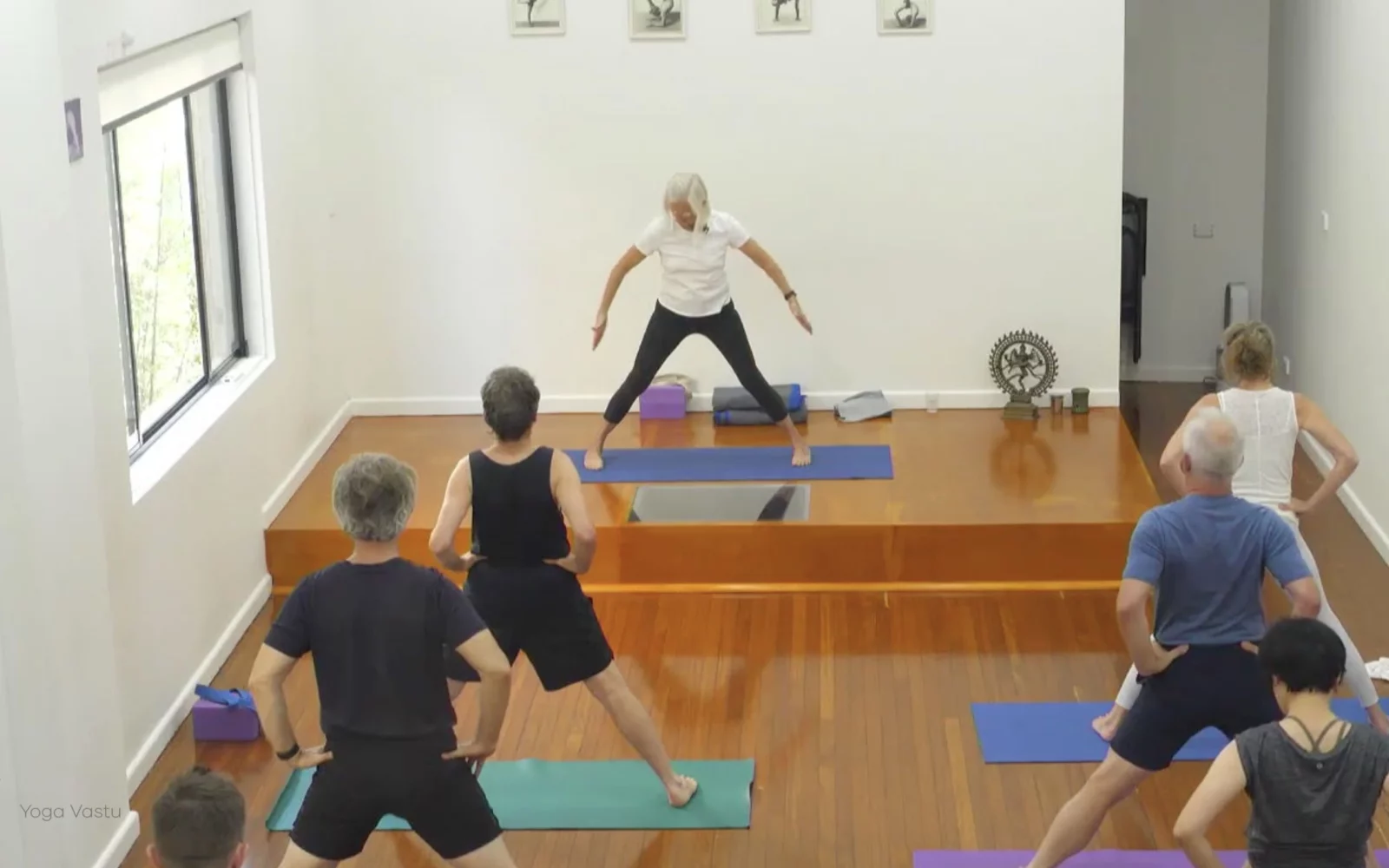
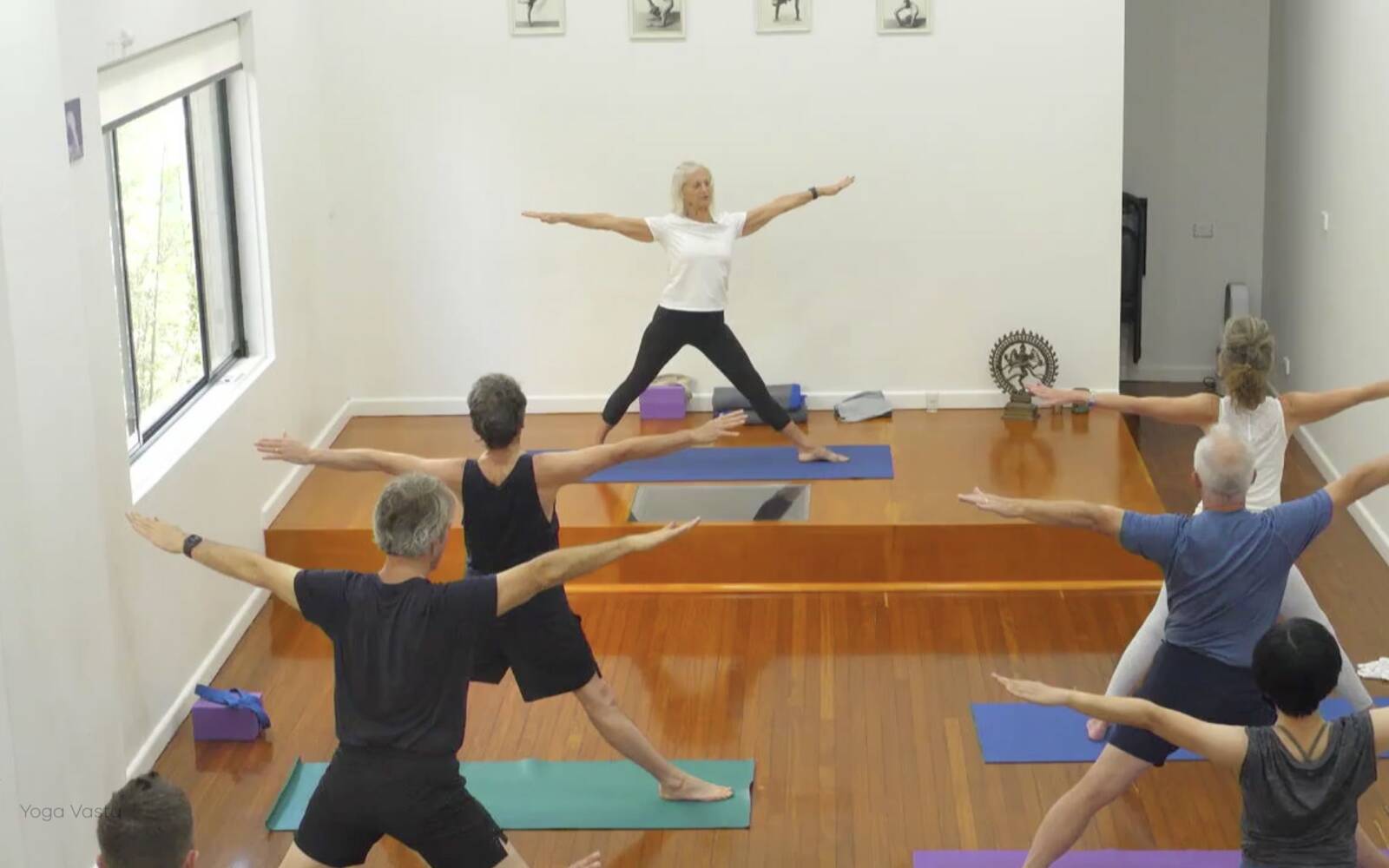
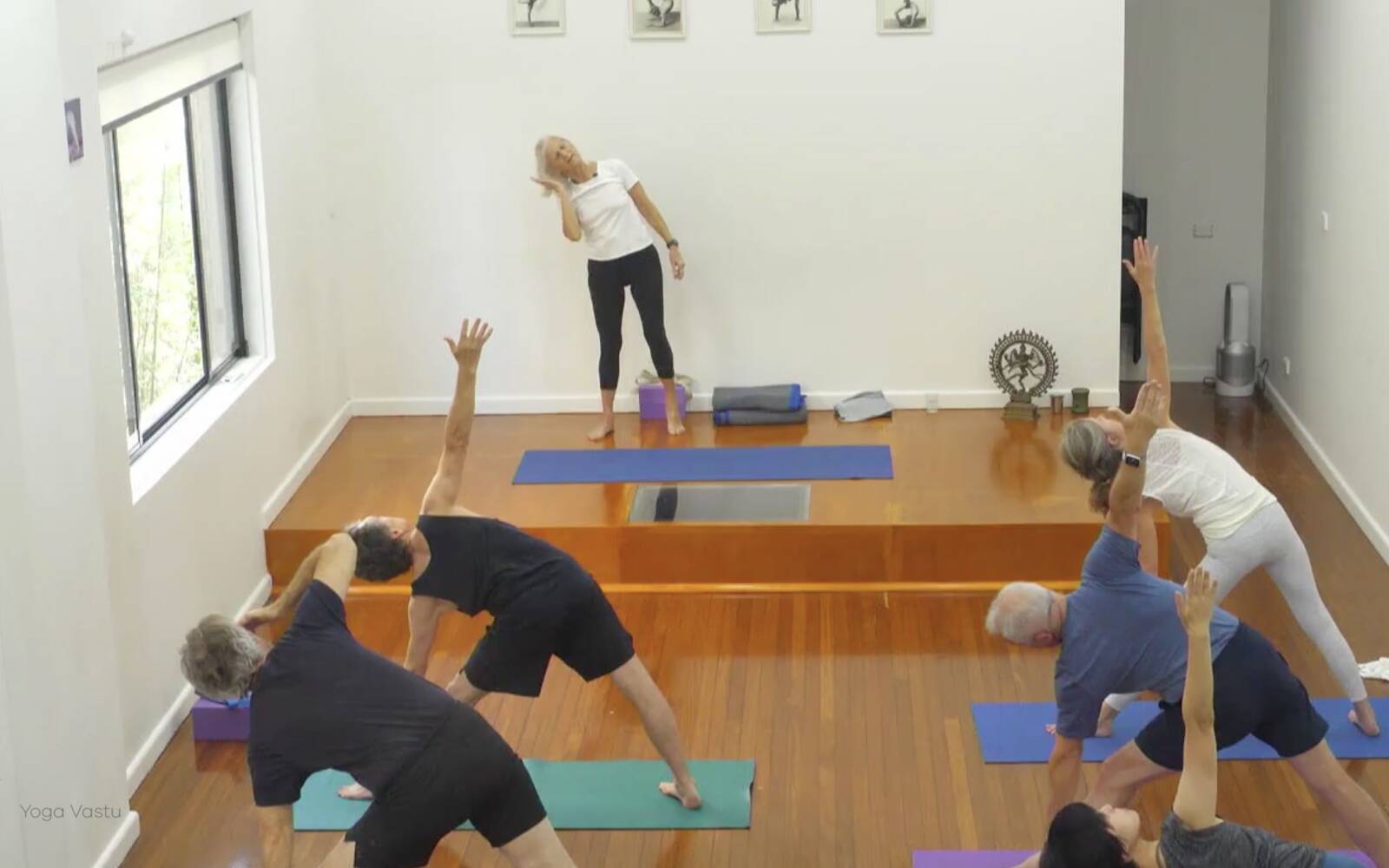
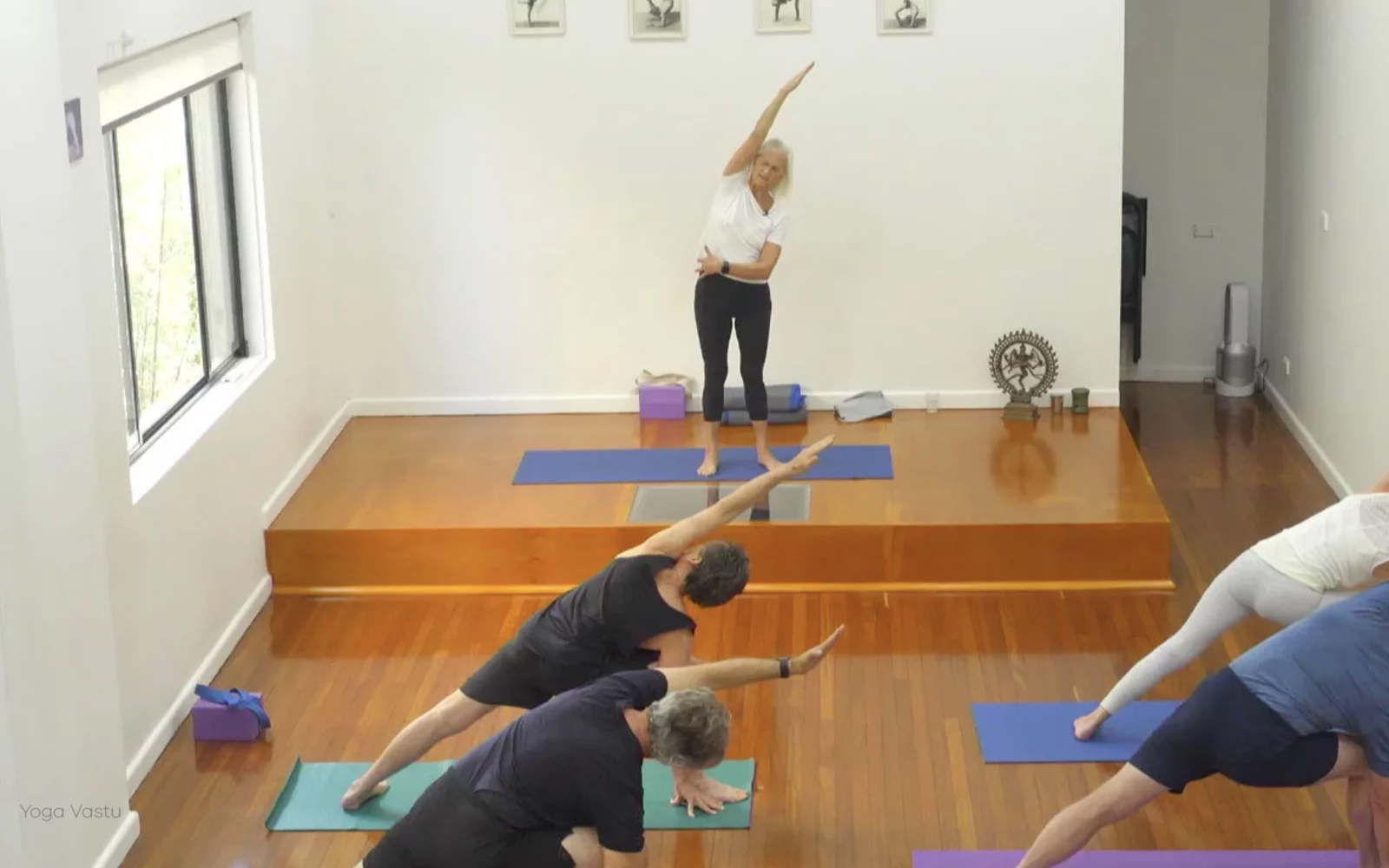
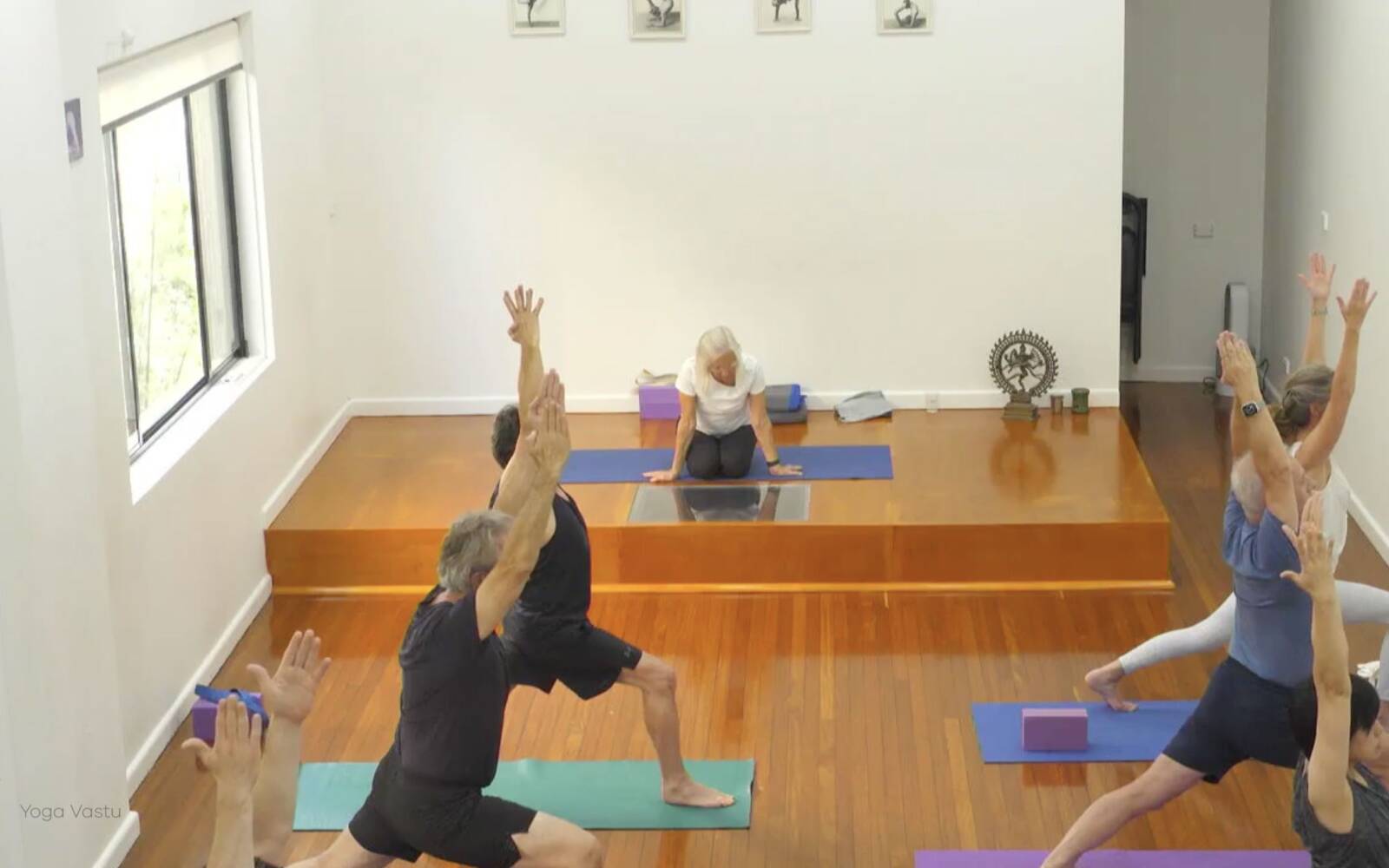
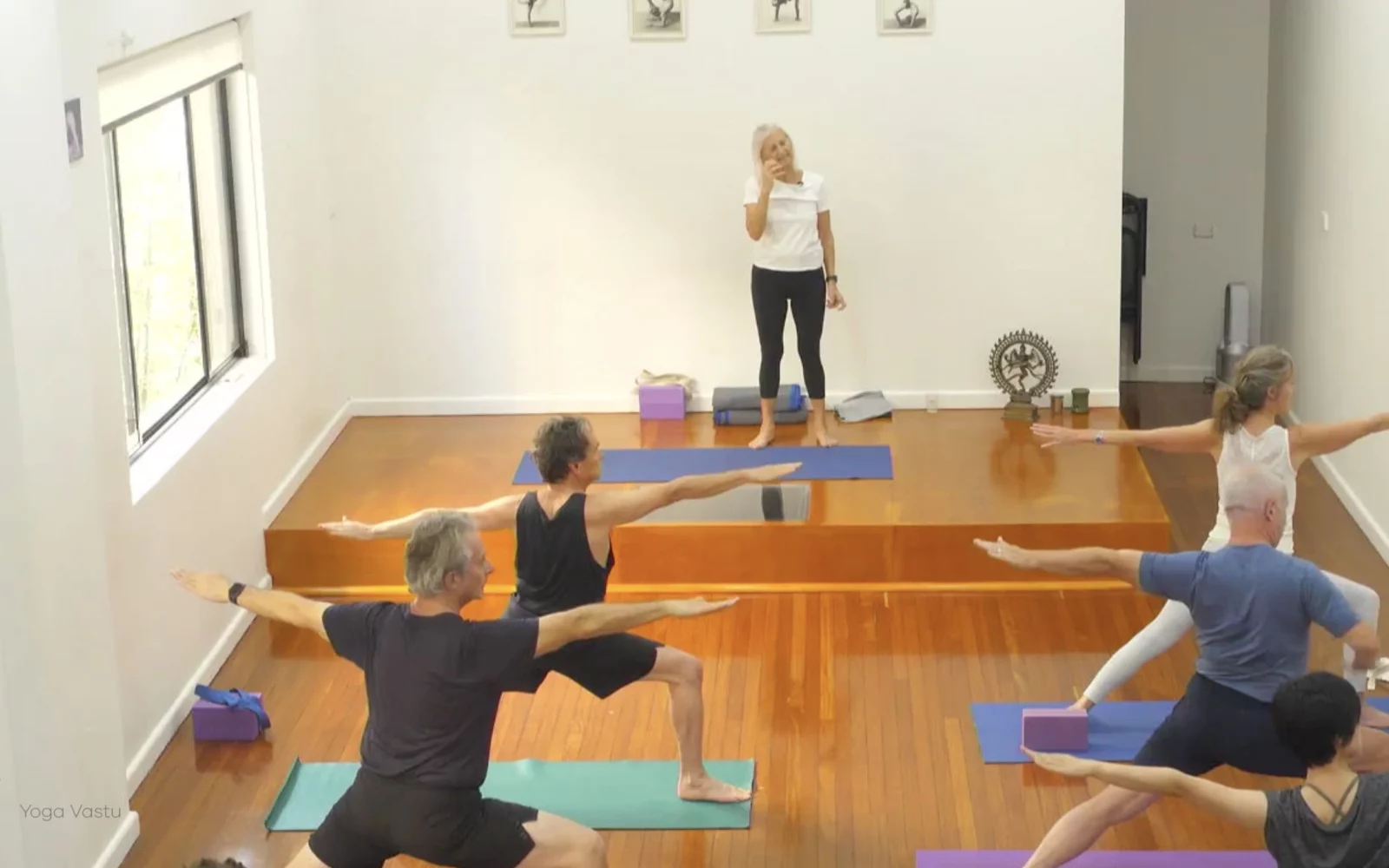
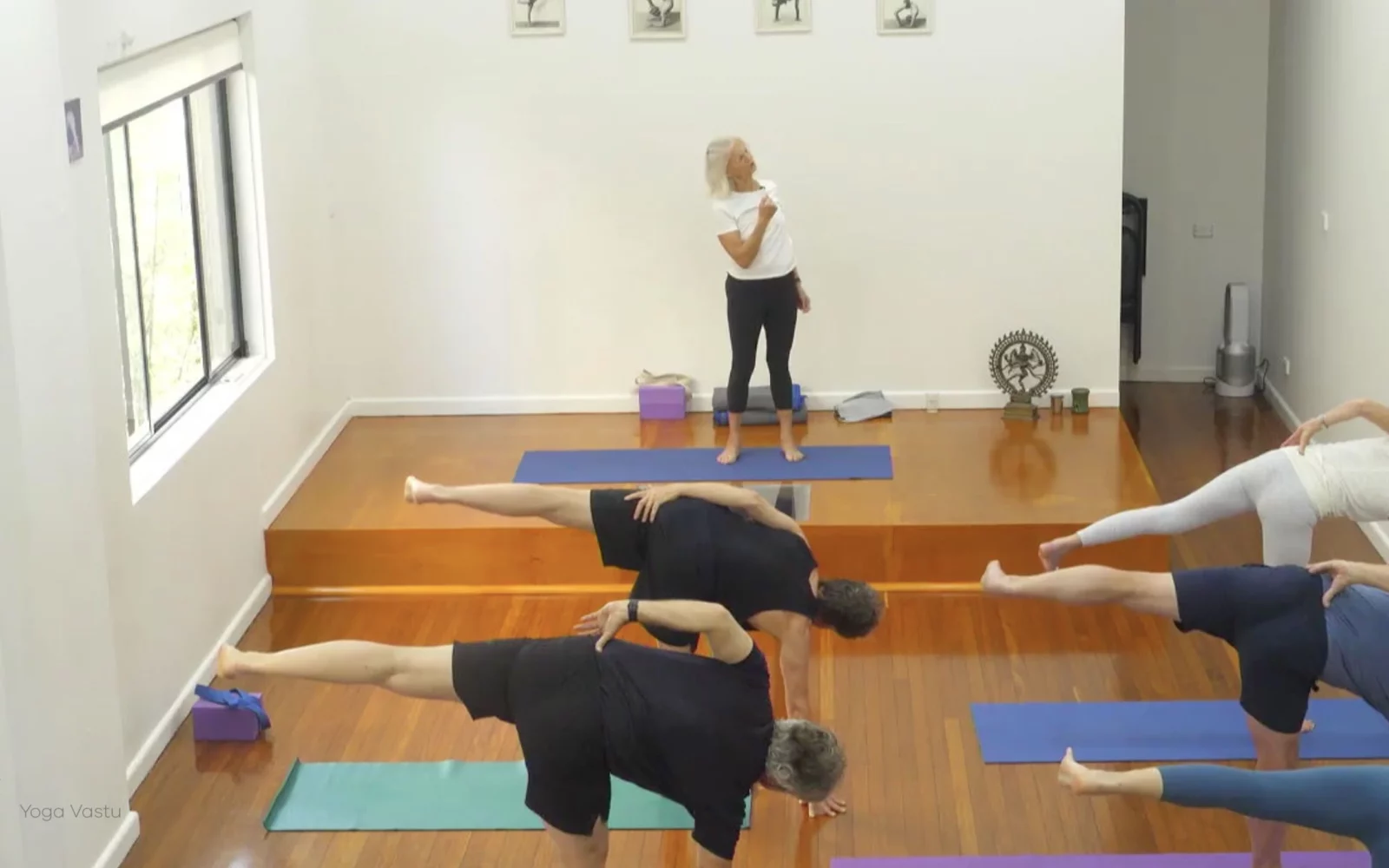
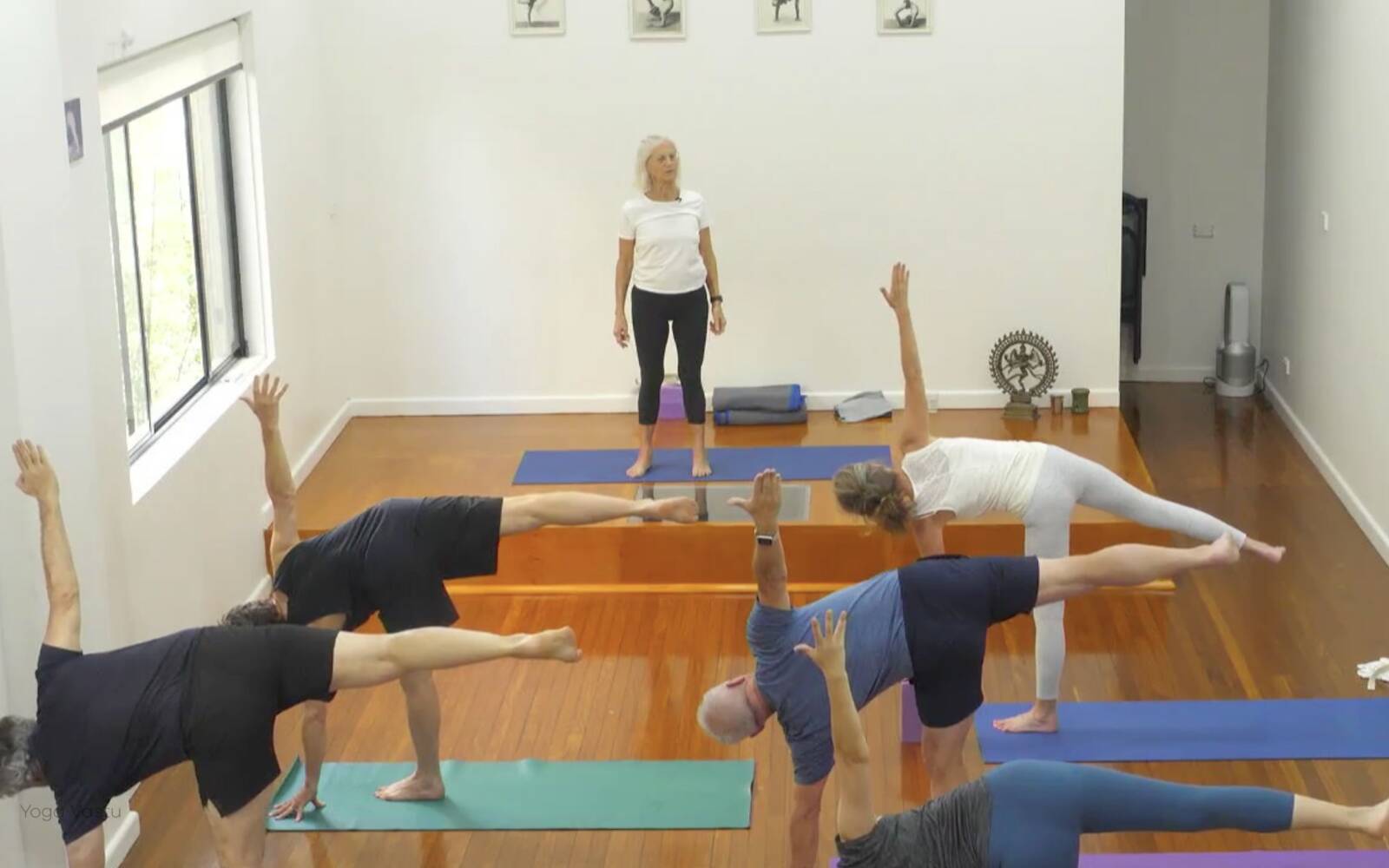
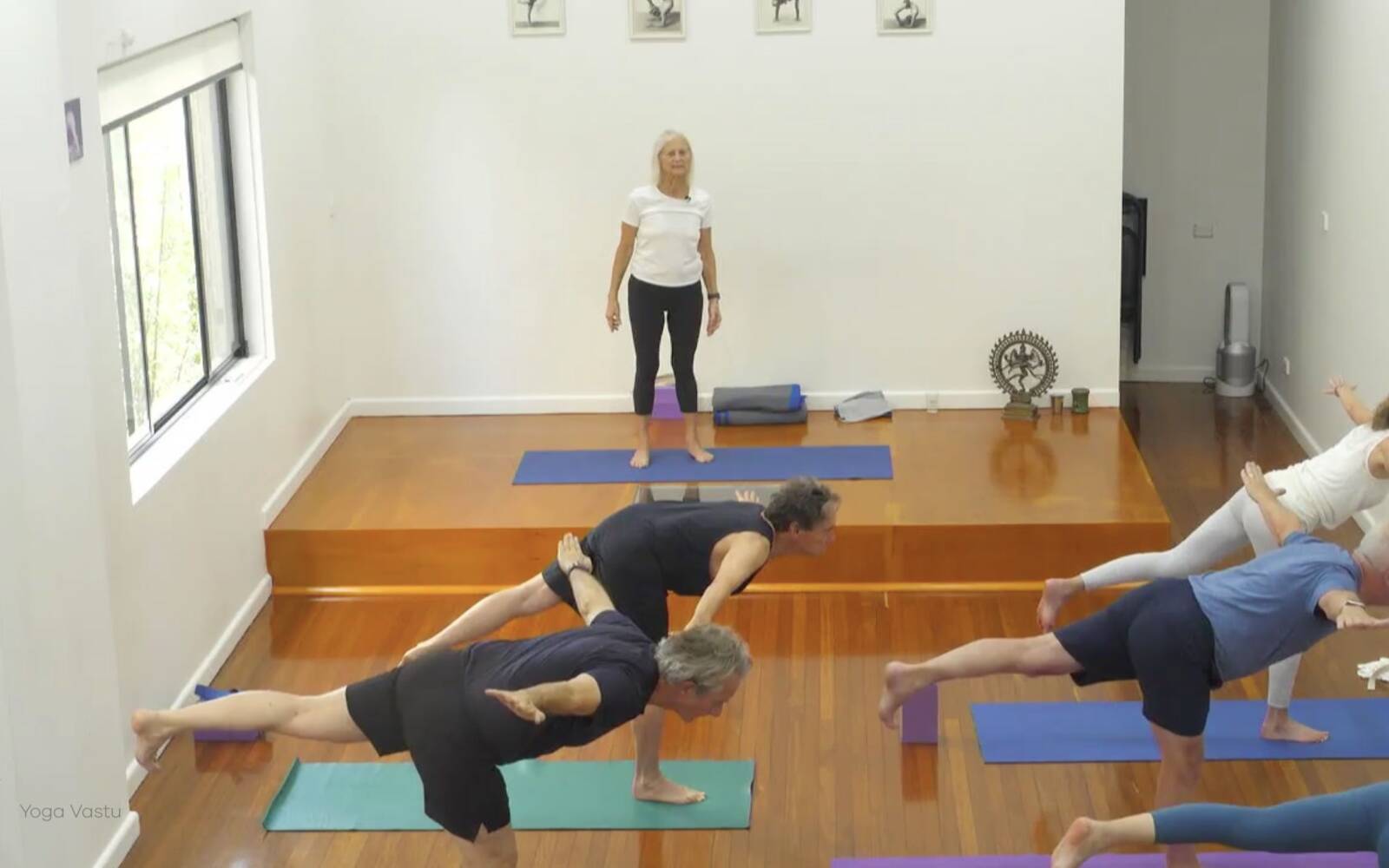
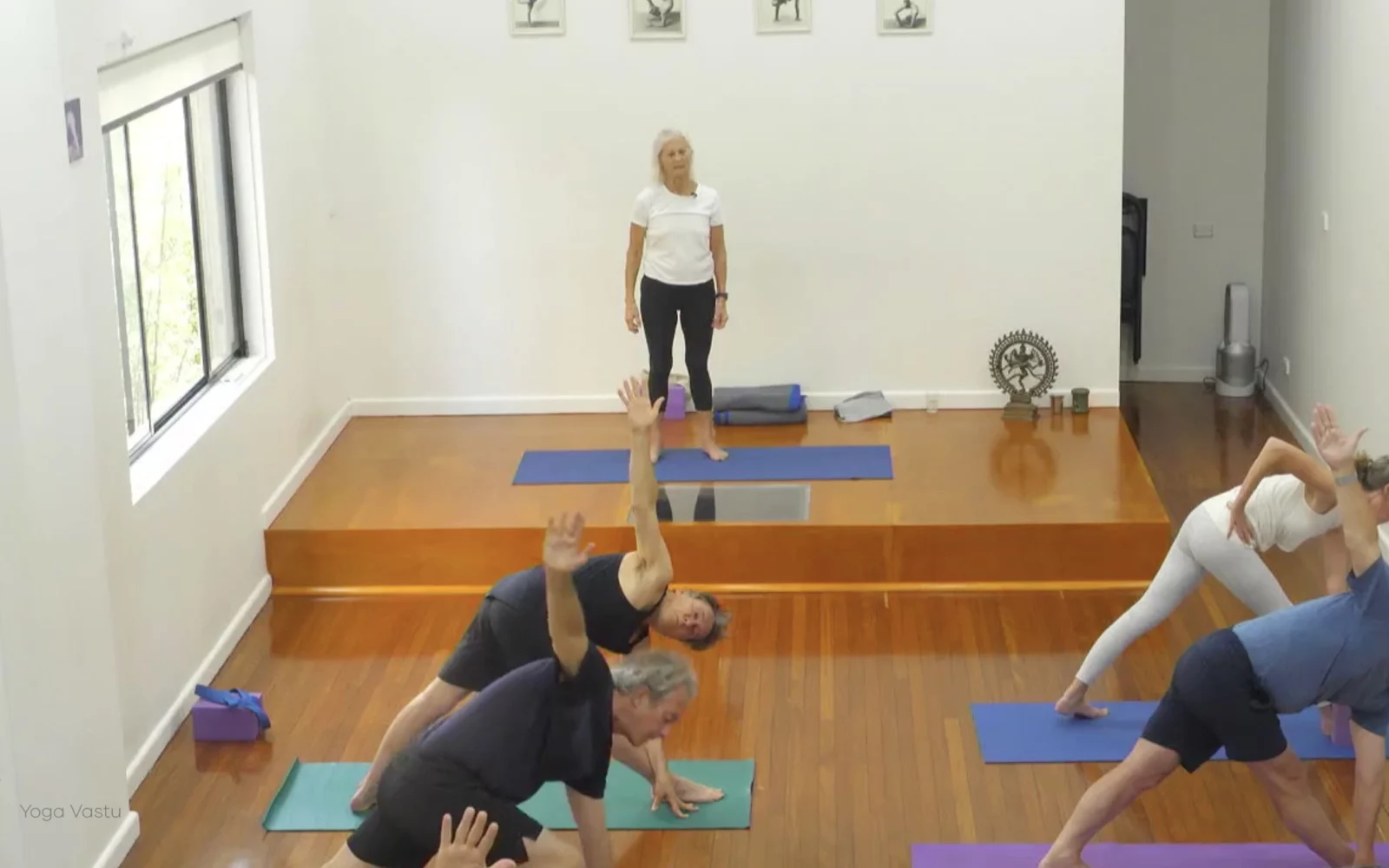
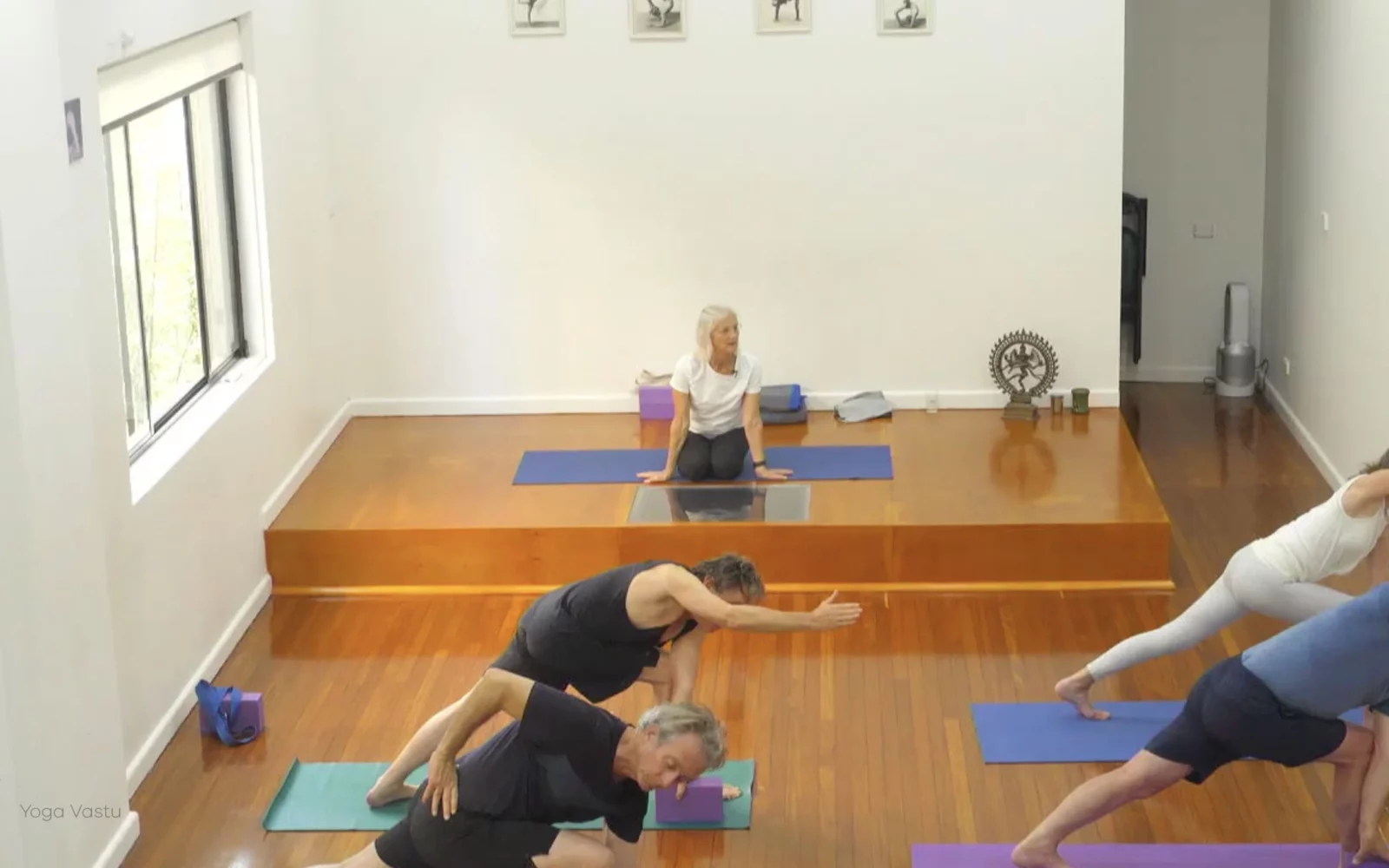
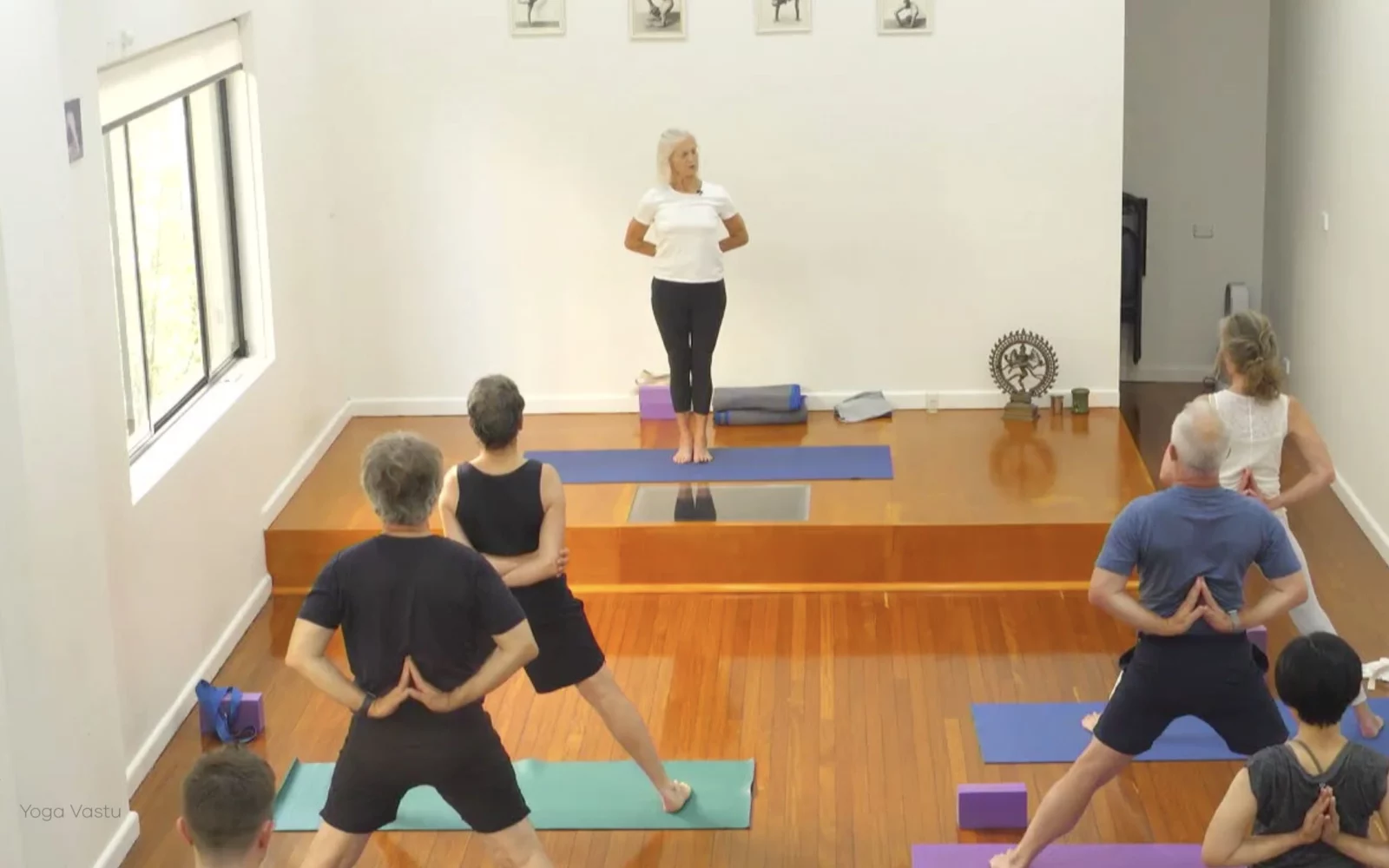
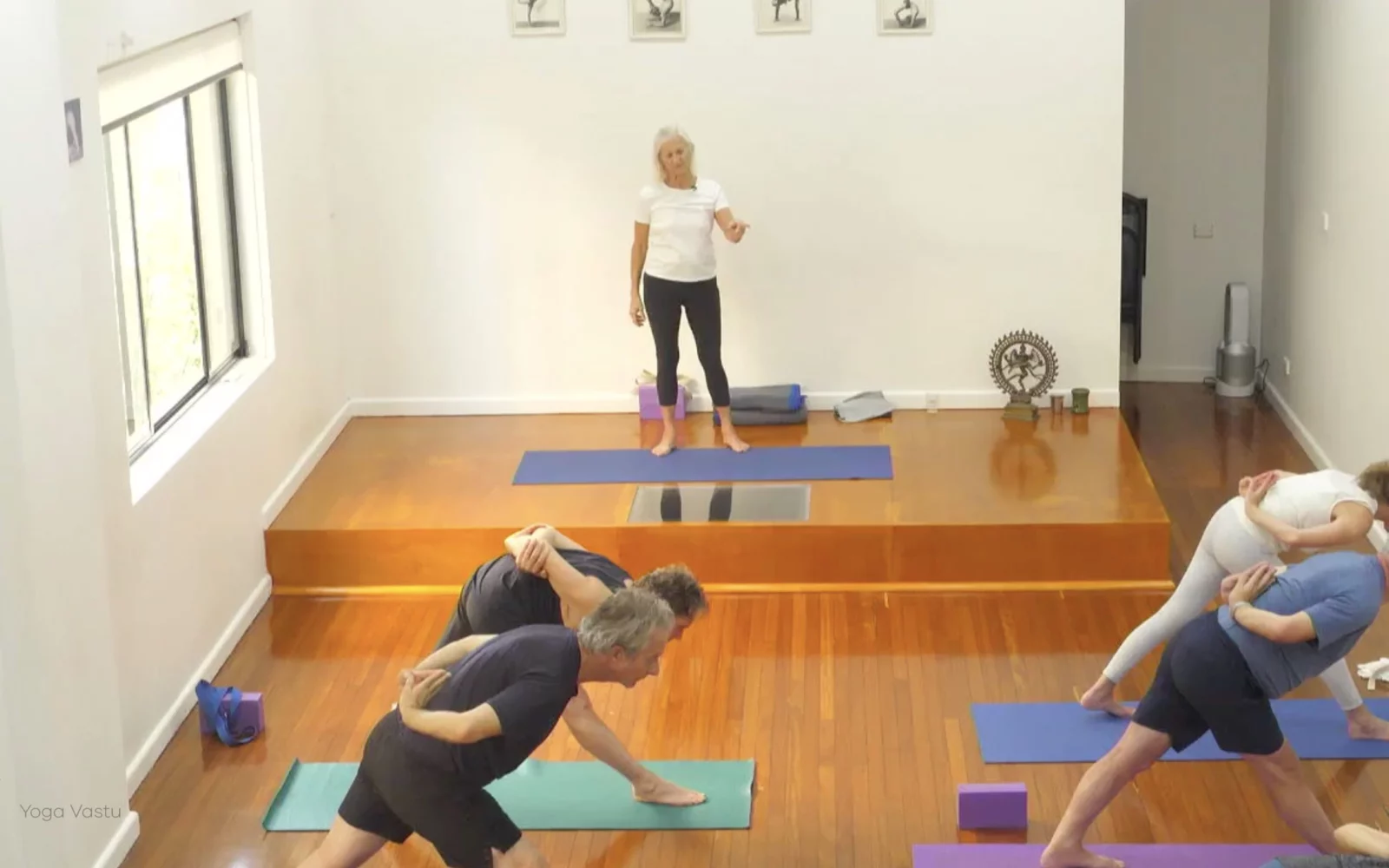
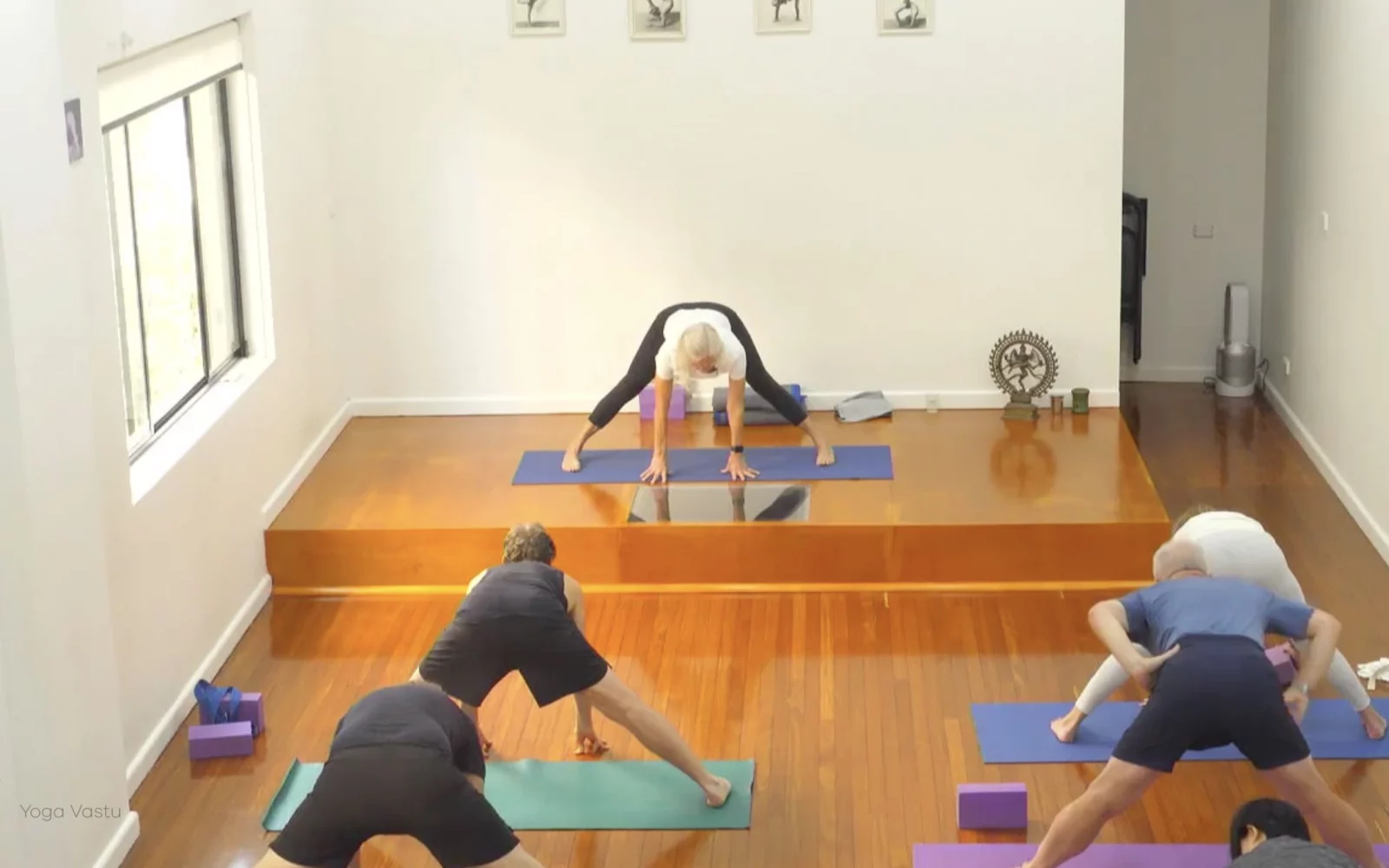
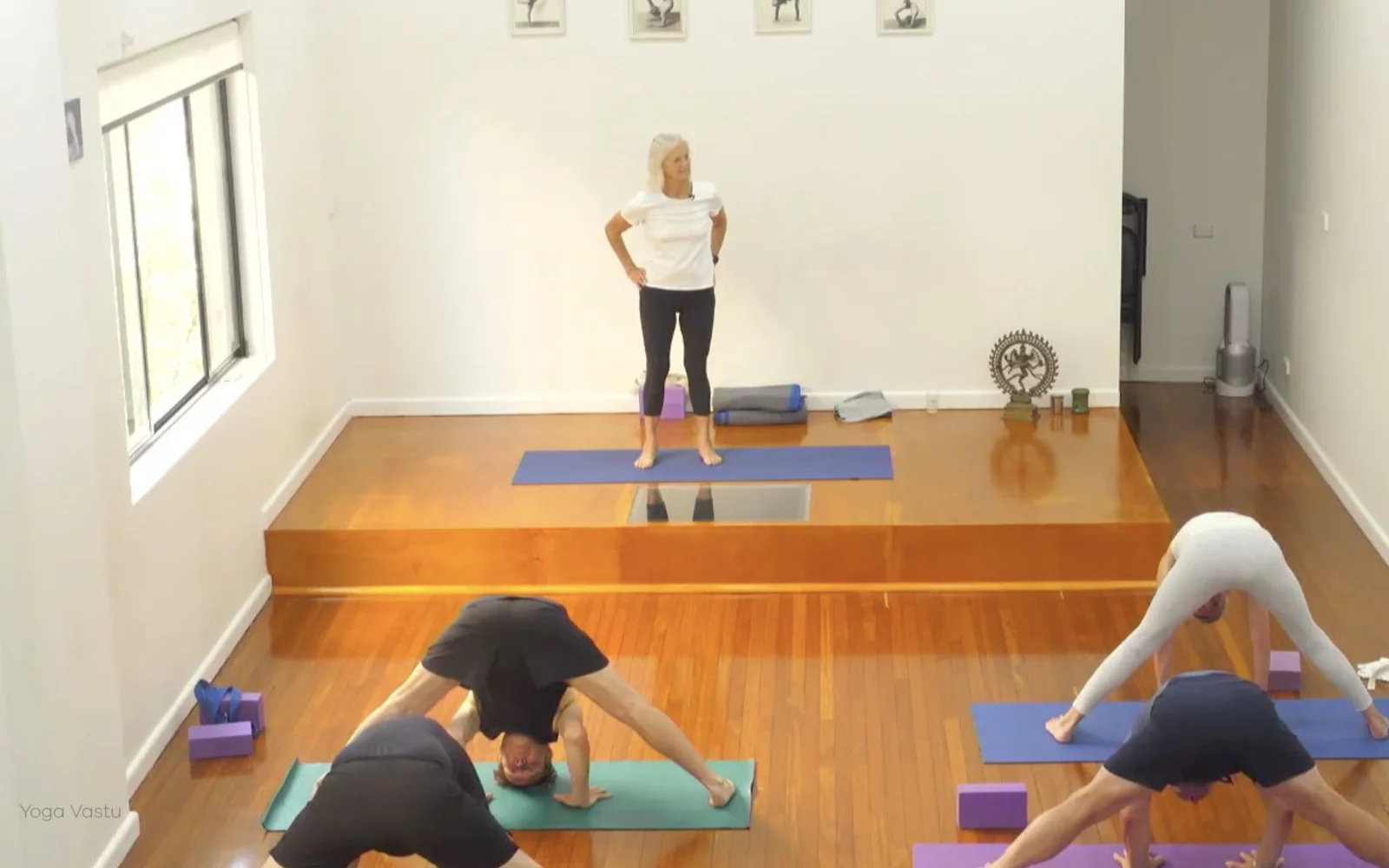
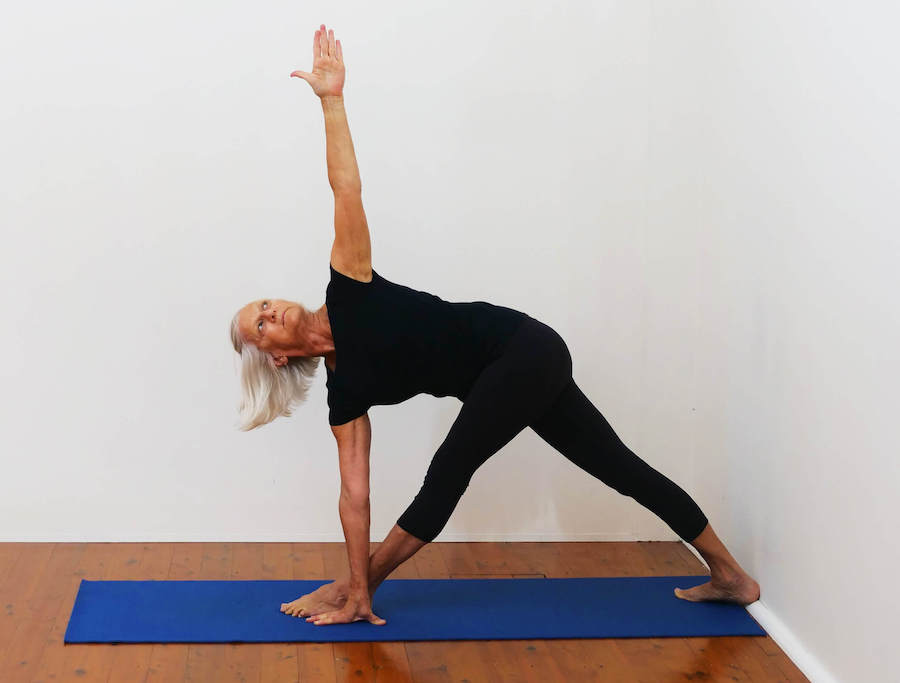
Now comes the main section of the class: the standing poses. In today’s class, we will use Tadasana as the neutral pose, the pose to return to between poses. The transition between poses will be marked by a repeated action: from Tadasana, where we take a moment to rebalance ourselves, we jump out into Prasarita Padottanasana, and from there we go into another standing pose before going back into Prasarita Padottanasana and jumping our feet together into Tadasana. In this standing pose sequence, we will cycle through Utthita Trikonasana, Utthira Parsvakonasana, Virabhadrasana 1, Virabhadrasana 2, Uttanasana (to take a break before moving on to more advanced standing poses), Ardha Chandrasana, Virabhadrasana 3, and then Parivritta Trikonasana. We will repeat the latter several times, swinging ourselves up and out of it into standing and then swinging back down, noticing how our range of motion increases with every repetition. Then, we’ll swing over to the other side and repeat the same actions there. We swing ourselves back up, jump into Tadasana and align our feet. We stay here for a moment and observe: we make sure our weight is equally distributed and everything is aligned. Now we jump out again and move into Parivritta Parsvakonasana. Back to Tadasana. We put our hands behind our backs in Paschima Namaskar (reverse prayer), jump our feet out, and go into Virabhadrasana 3 but with our hands in reverse prayer. We end this sequence by lifting ourself back up and gradually lowering ourselves all the way into Prasarita Padottanasana. We stand up for a final Tadasana, taking a moment to settle down and observe the changes.
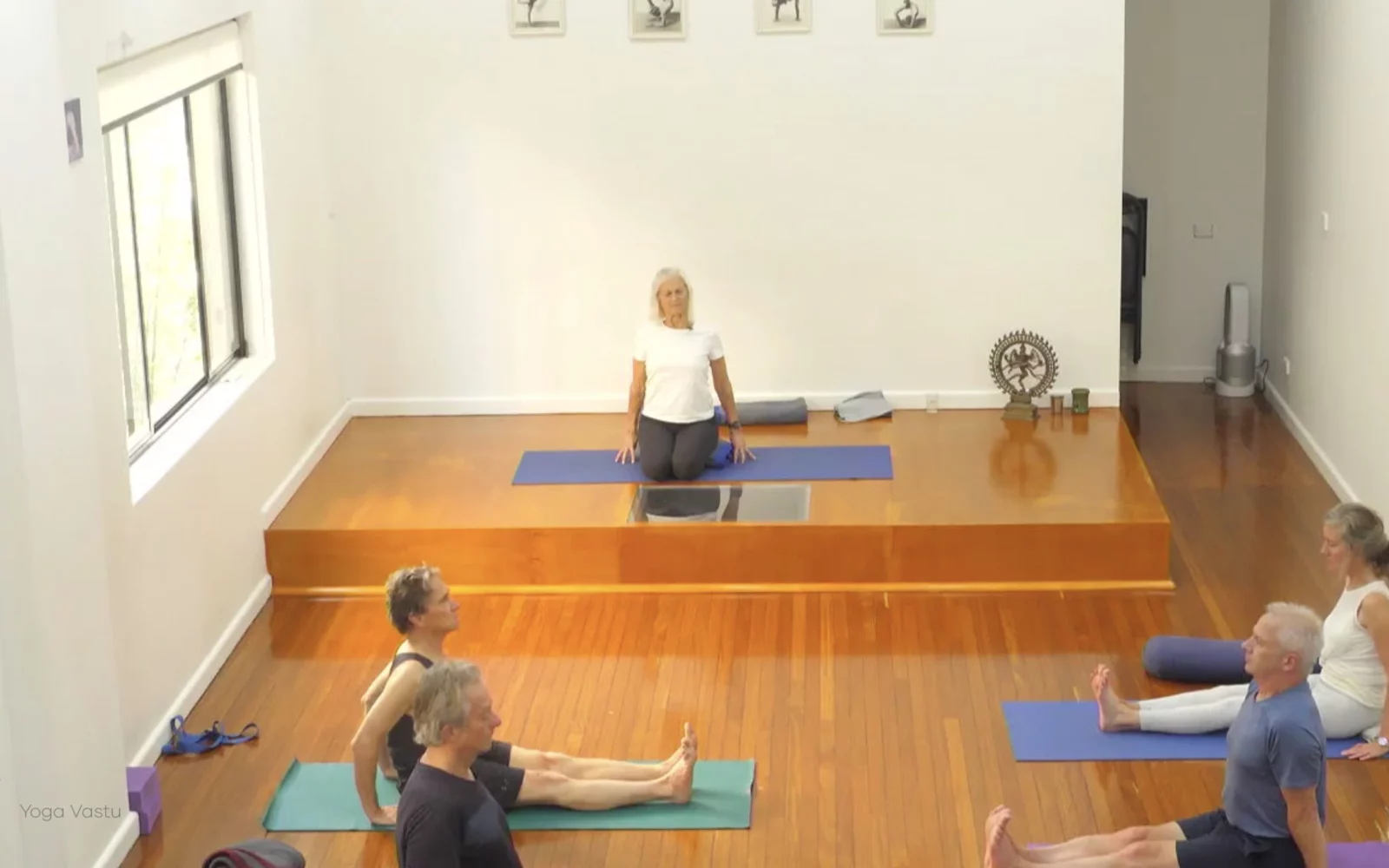
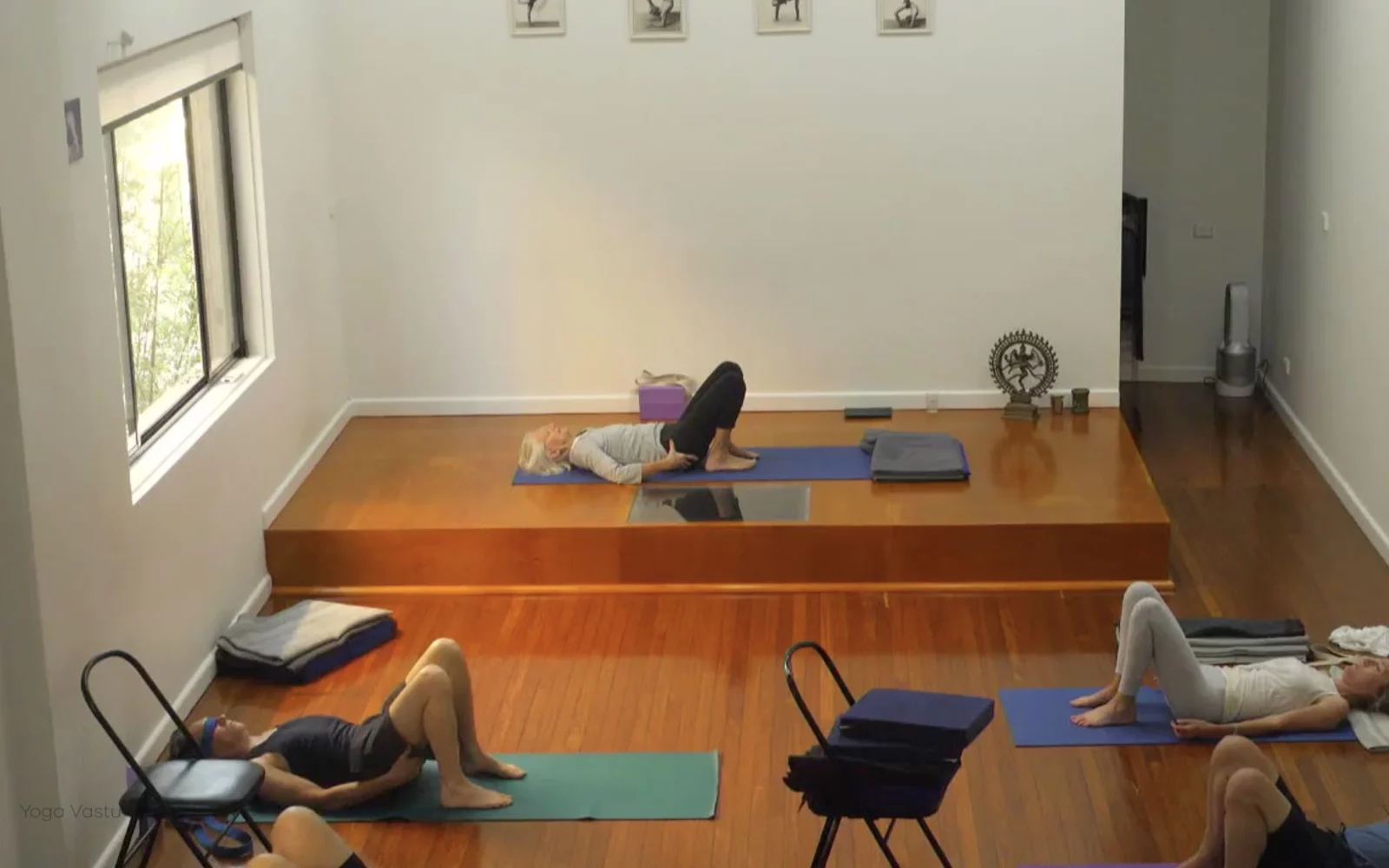
We now lie down into Supta Virasana to release our leg muscles after this vigorous standing pose session. Come up and glide forward into Virasana Forward. Now, we sit up in Dandasana to release the legs and hips and groin.
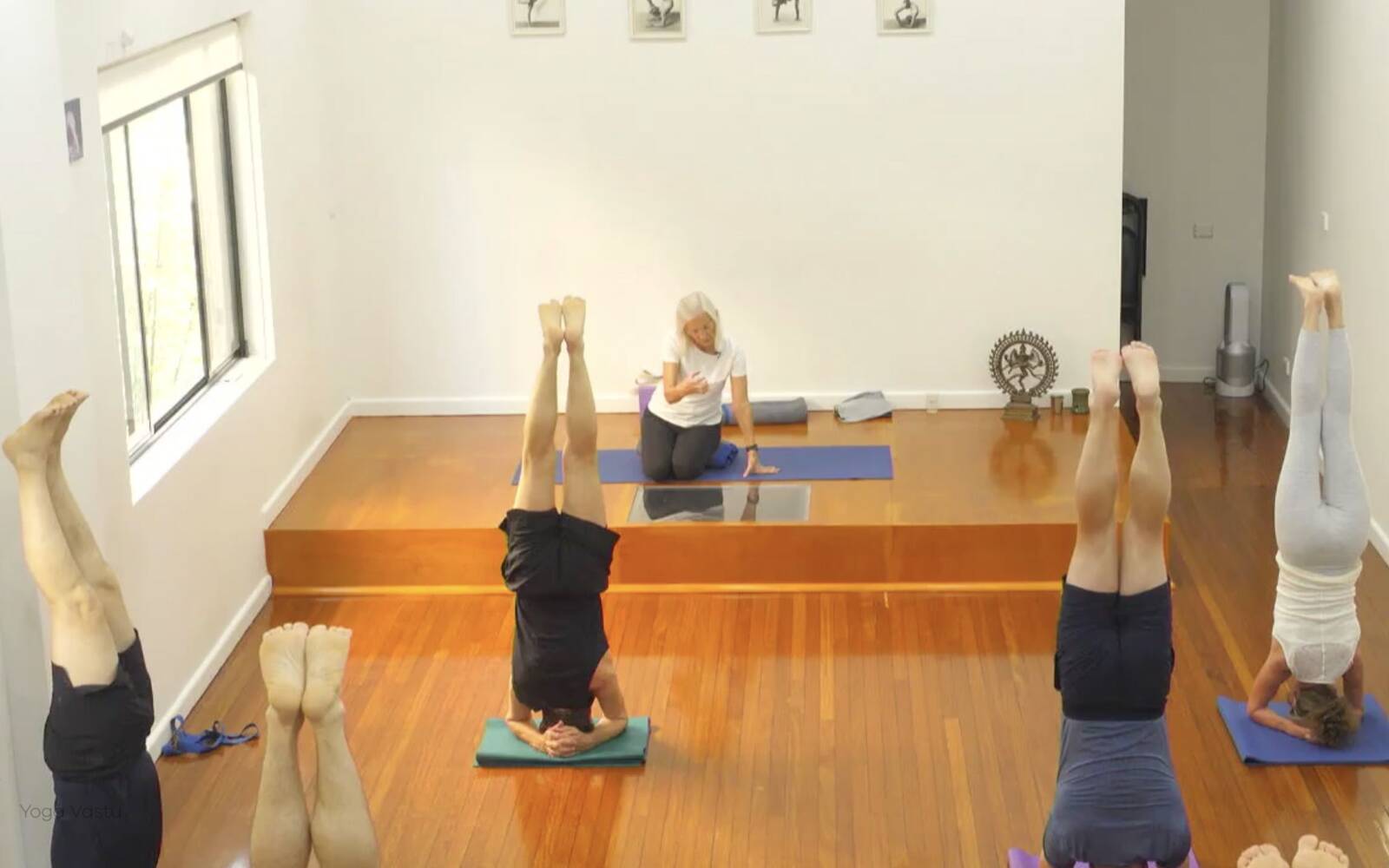
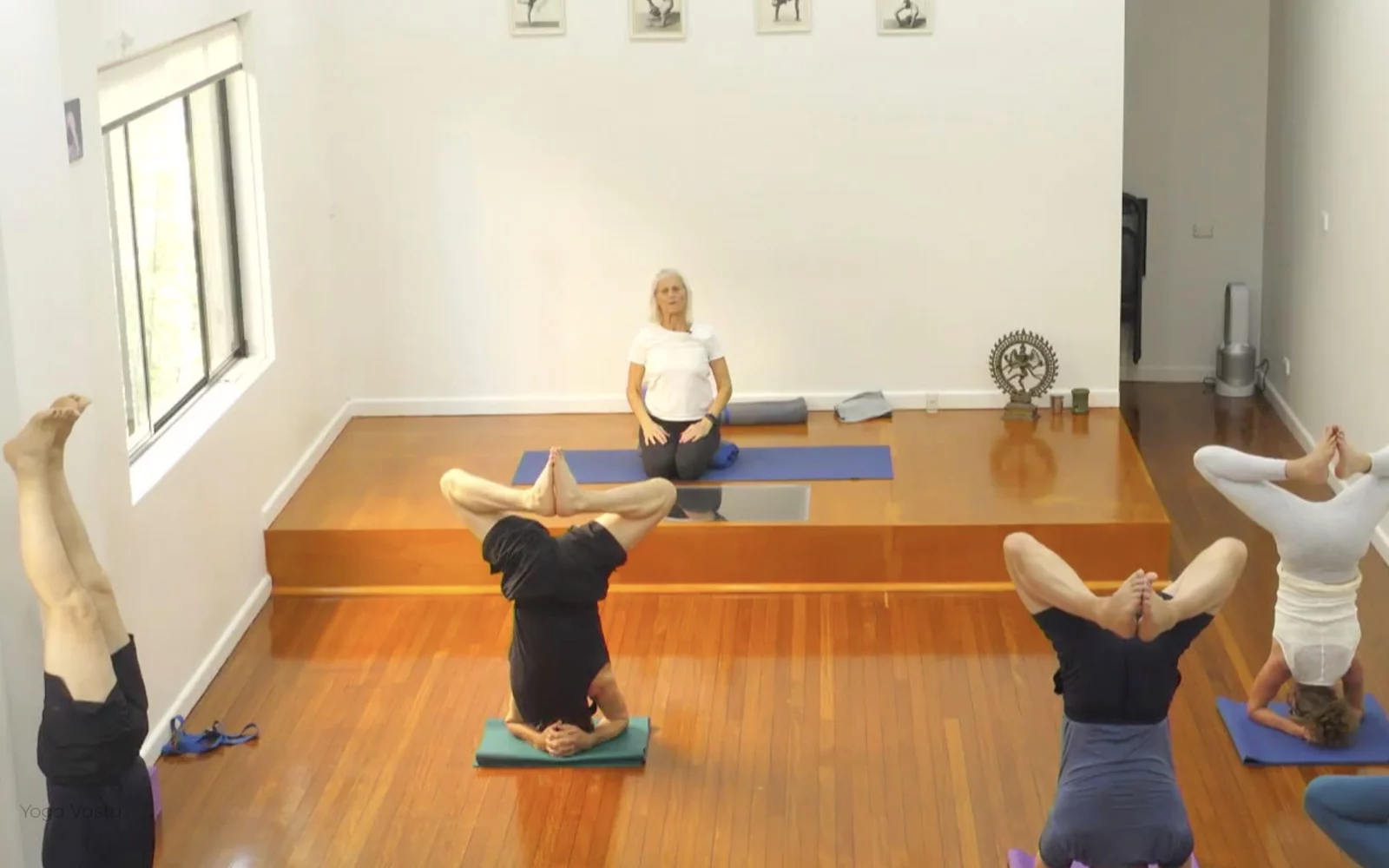
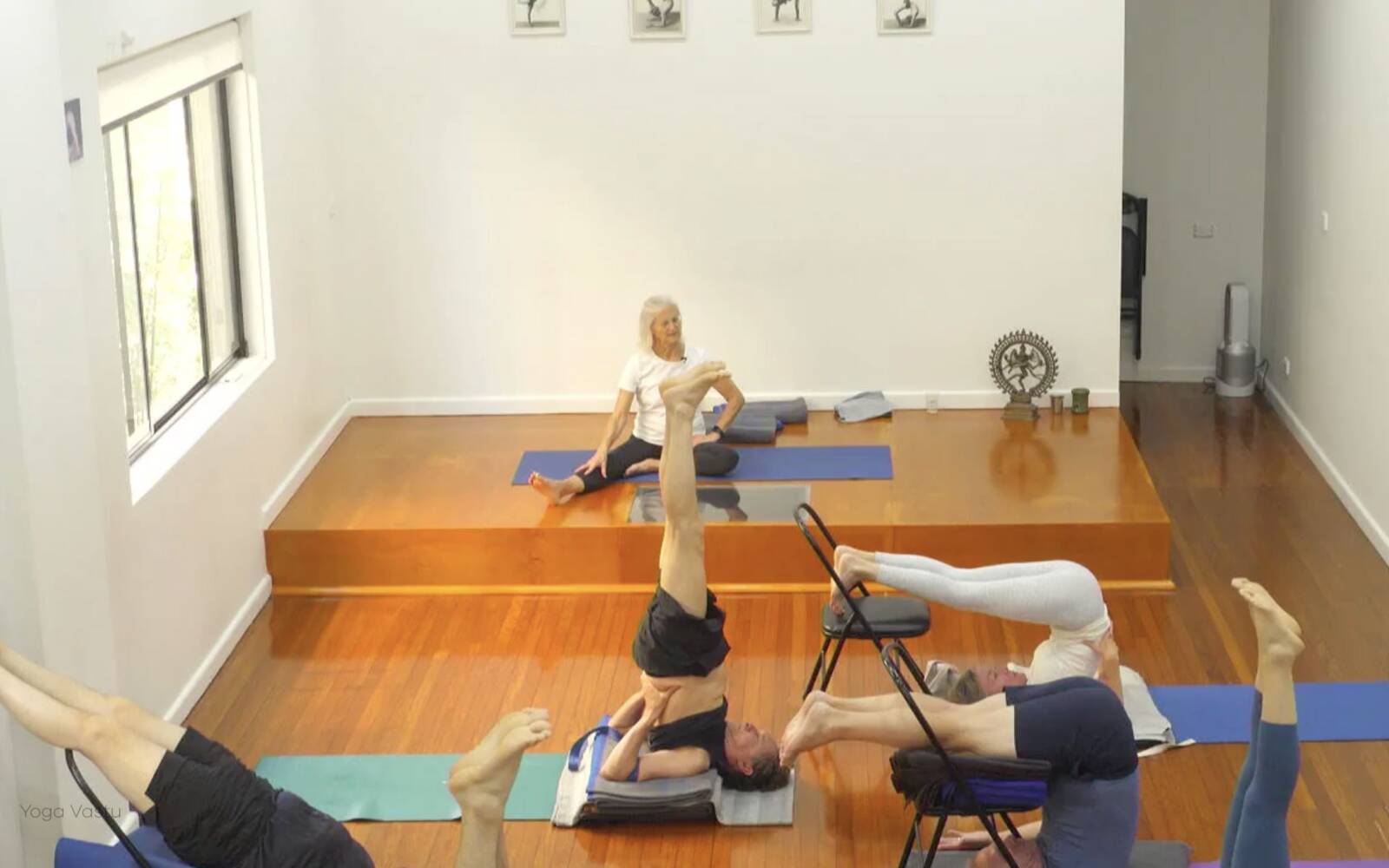
We come up into Sirsasana as a final test of what we have achieved in this class: the more alive the legs are, the freer and more expanded one’s Sirsasana feels. We go through several variations of Sirsasana: single-legged, full, and Baddha Konasana in Sirsasana. With the latter, pay attention to the pressure that the feet exert on each other and make sure it’s equal. Even it out if need be. We slowly come down into Virasana Forward.
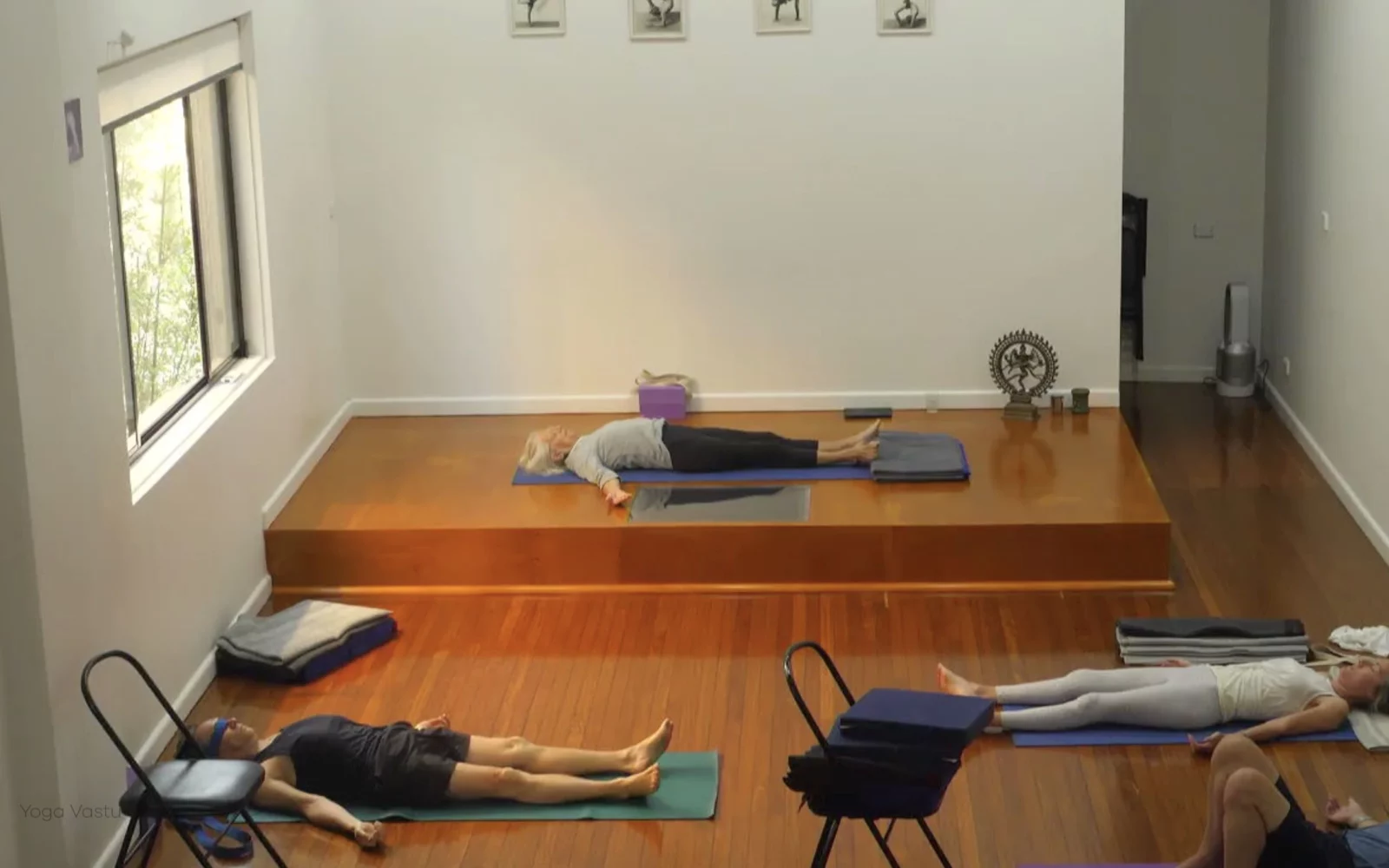
And now for the final cooldown. First, we go up into Sarvangasana or Ardha Halasana if that’s too much. After this we move down into full Halasana, then Karna Pidasana, followed by a final relaxation in Savasana.
Video stills from this sequence