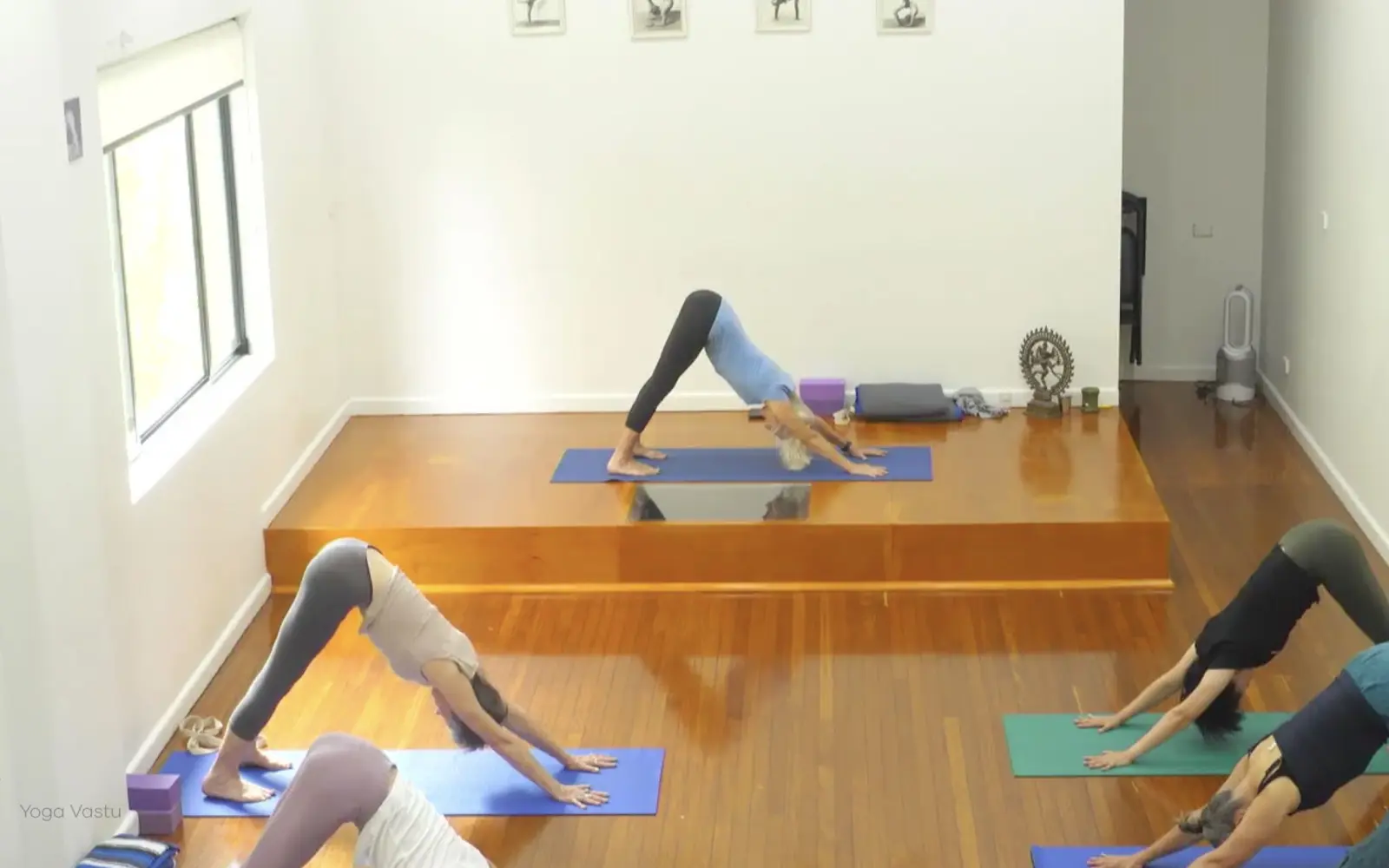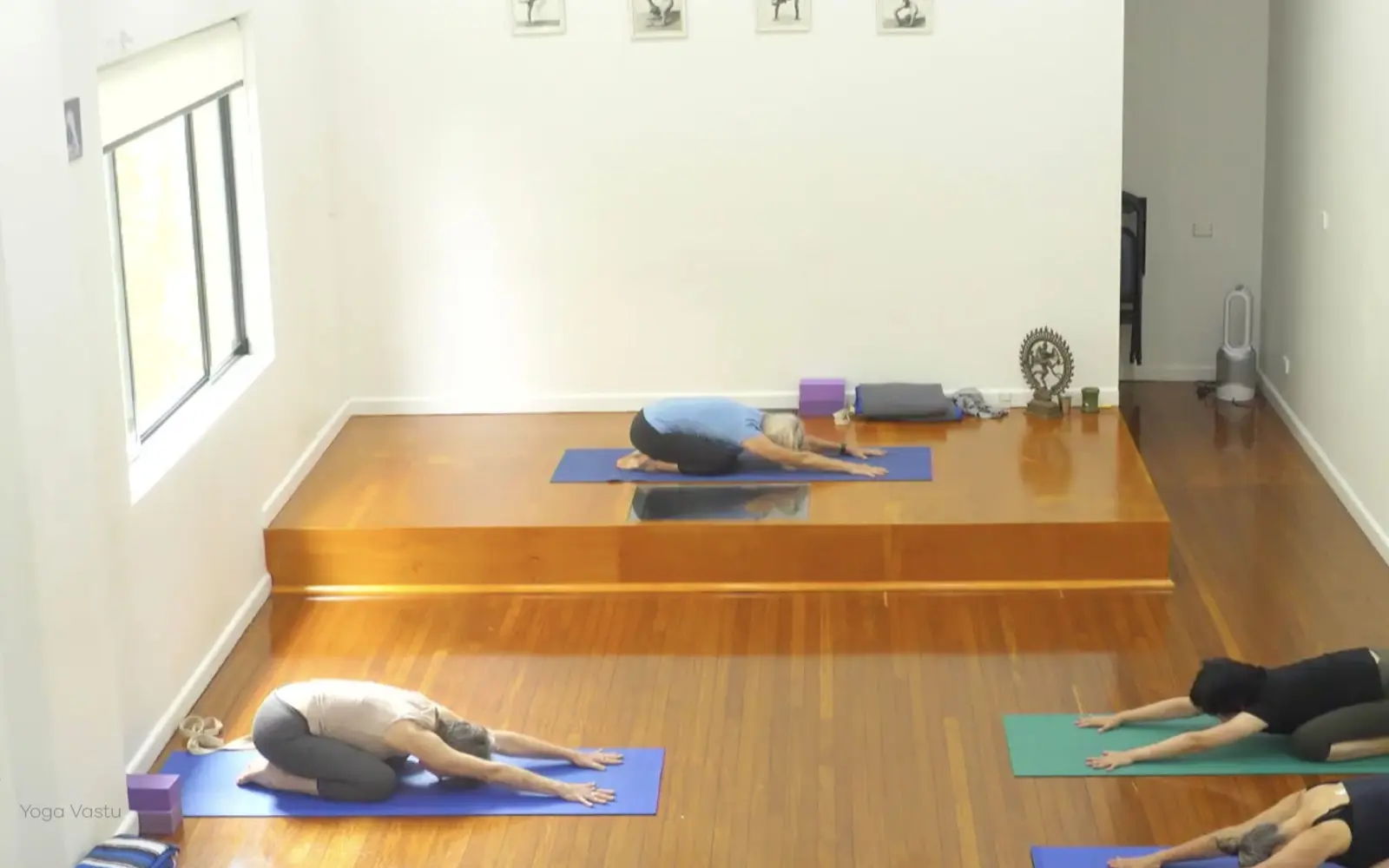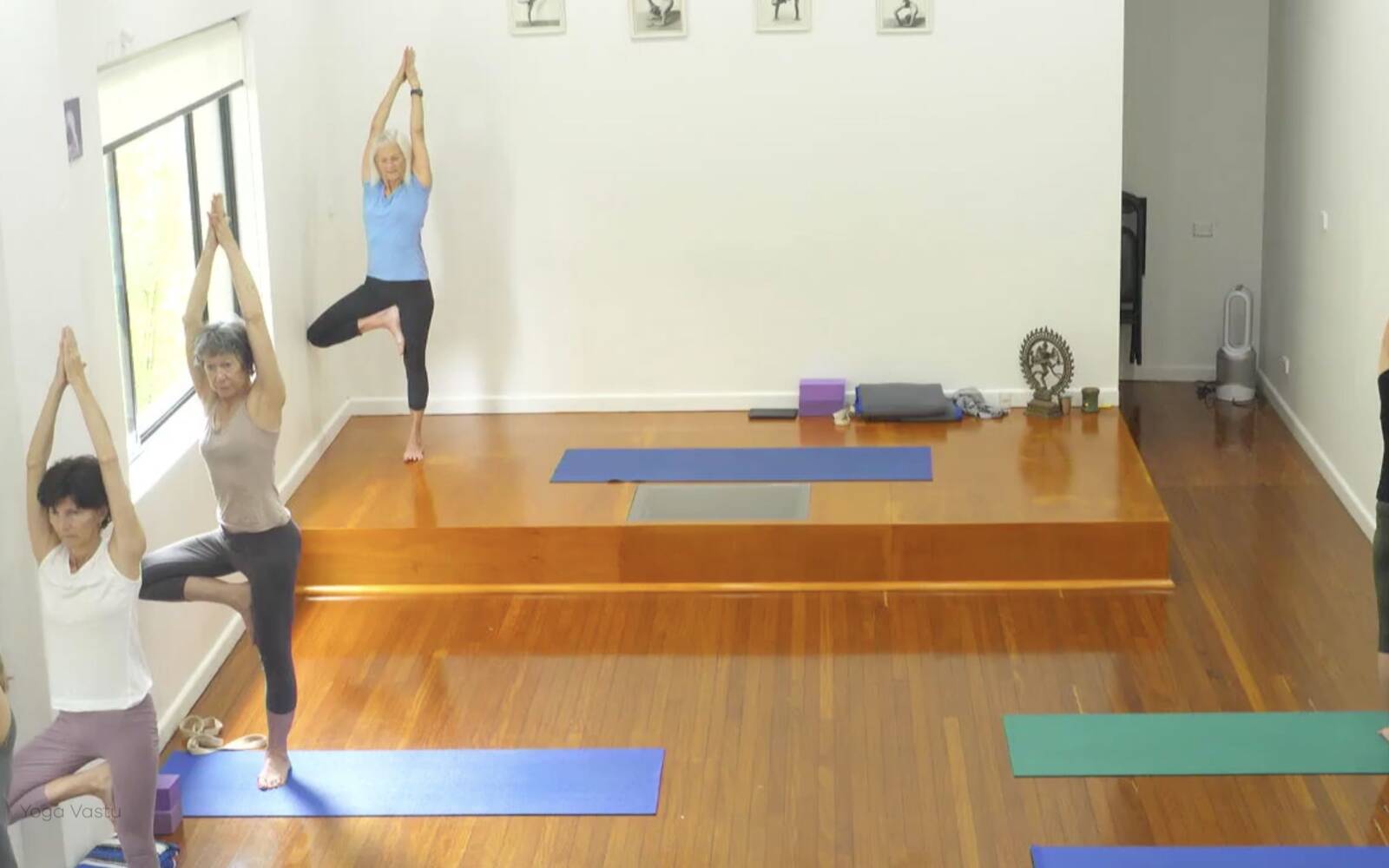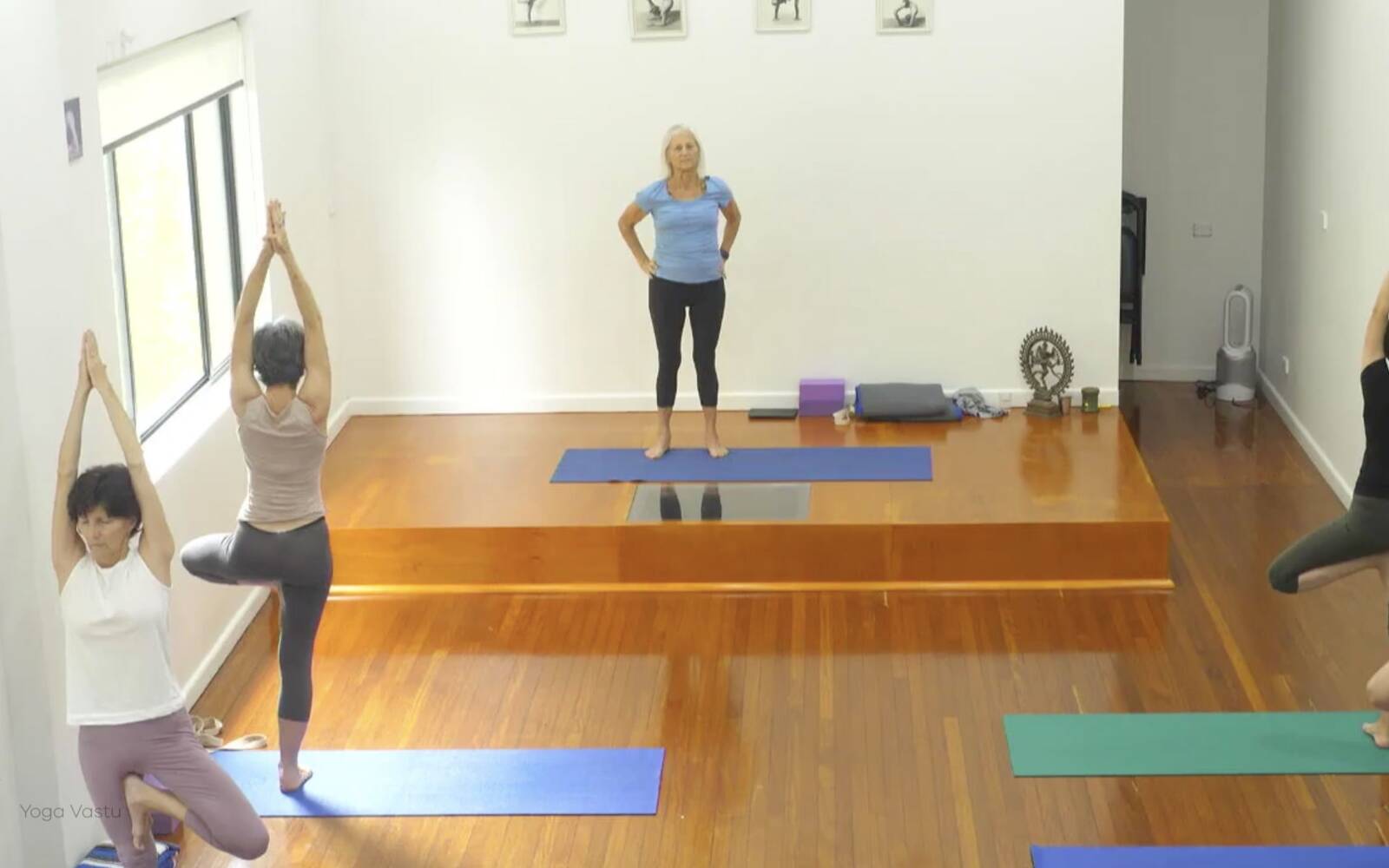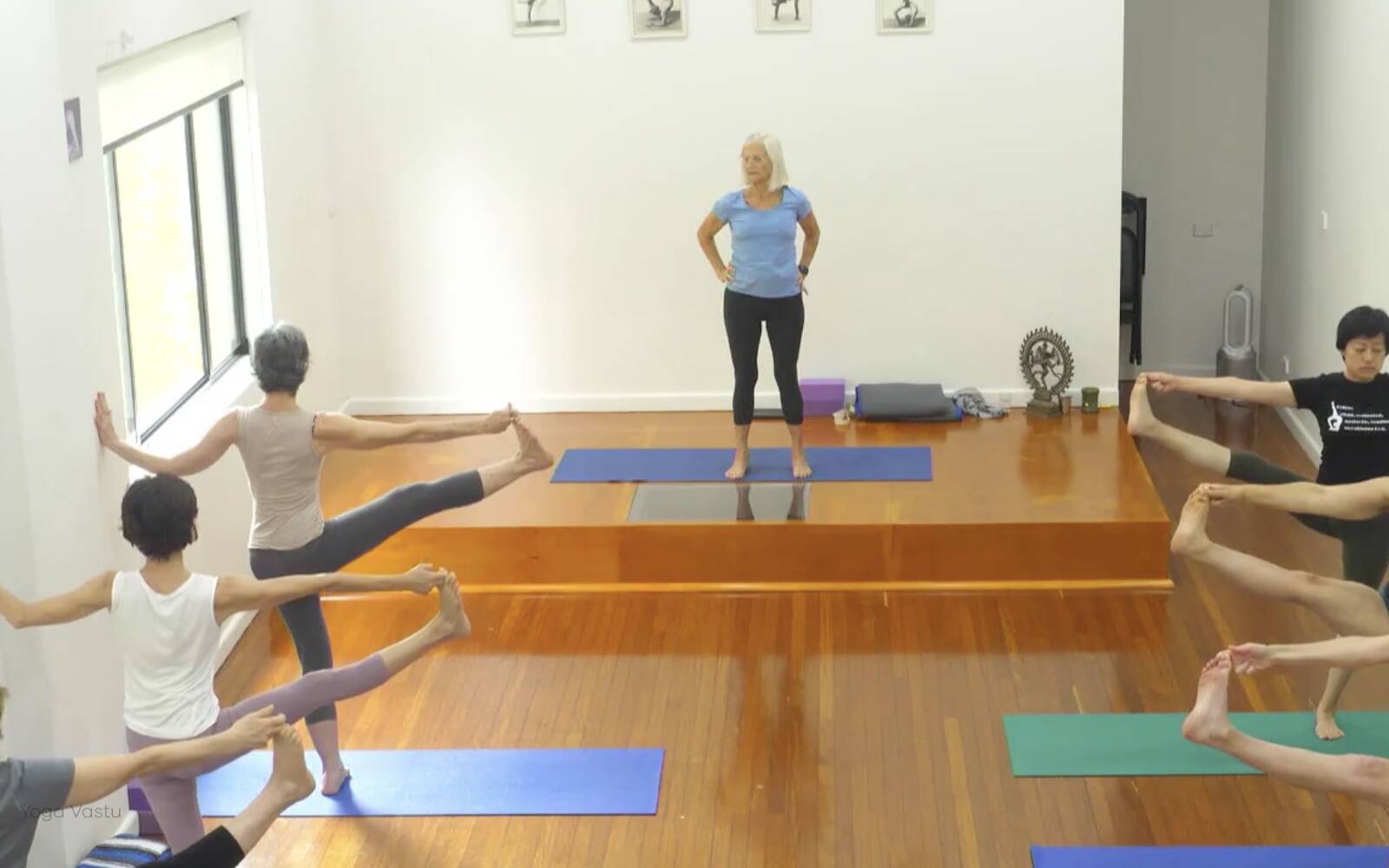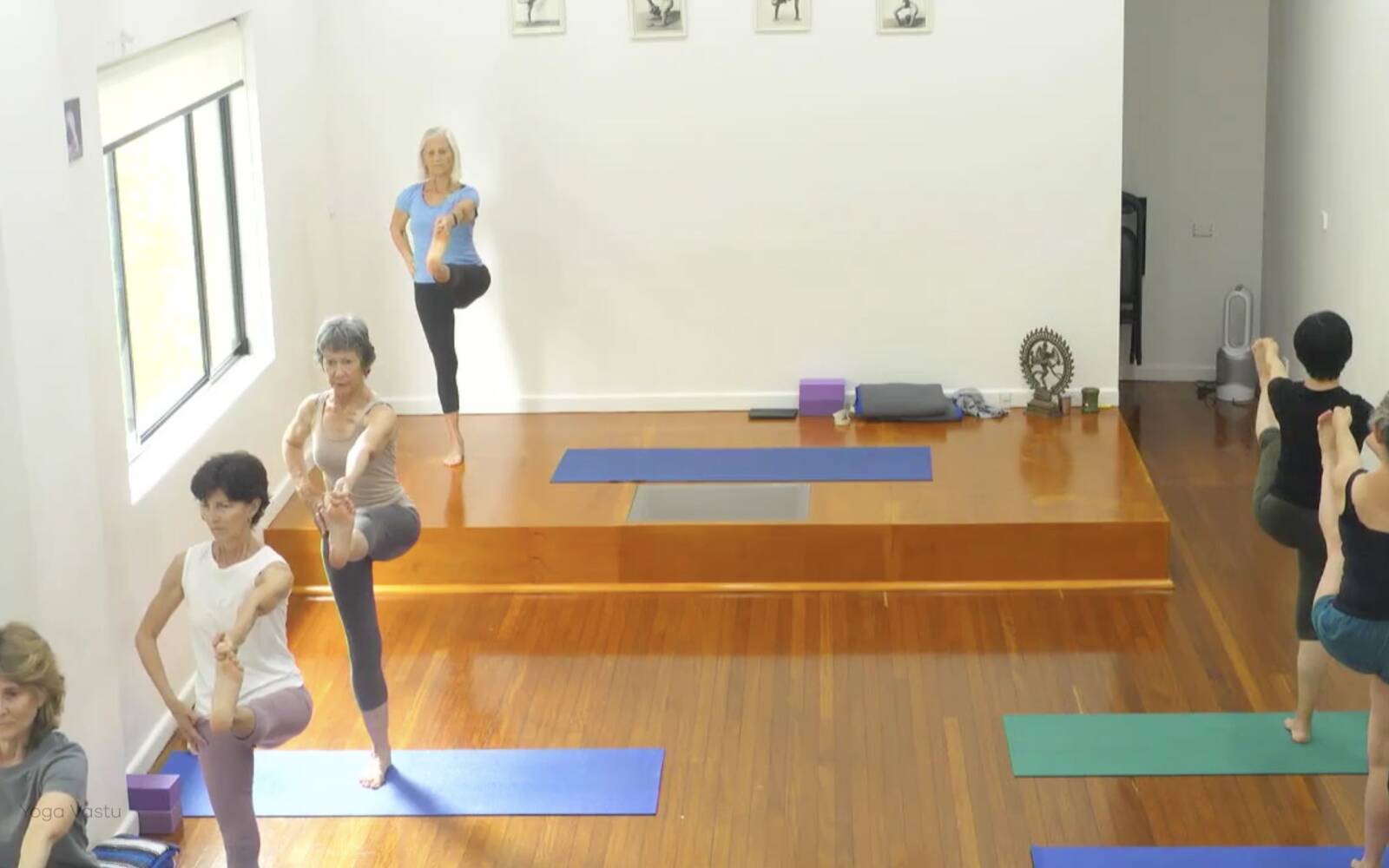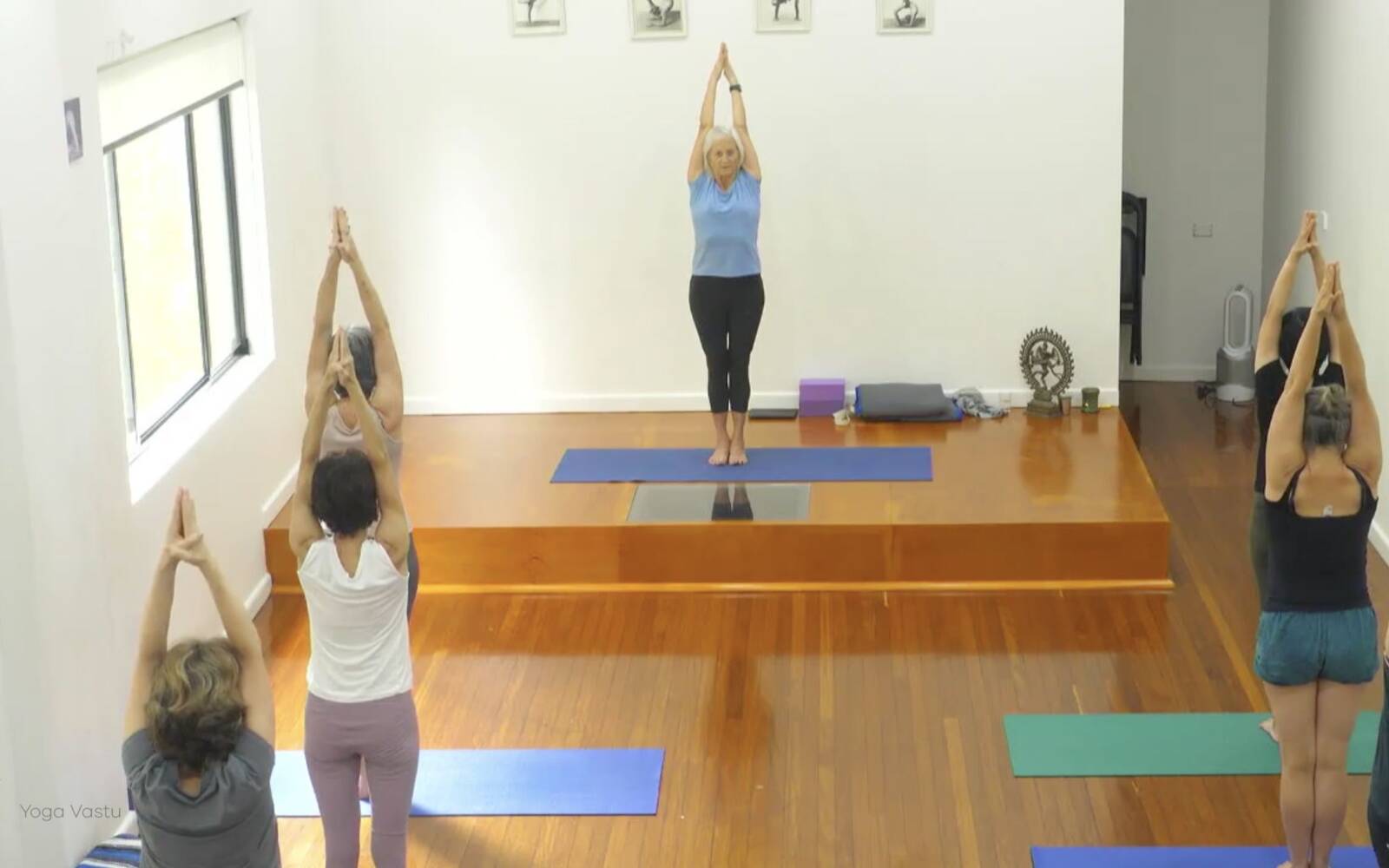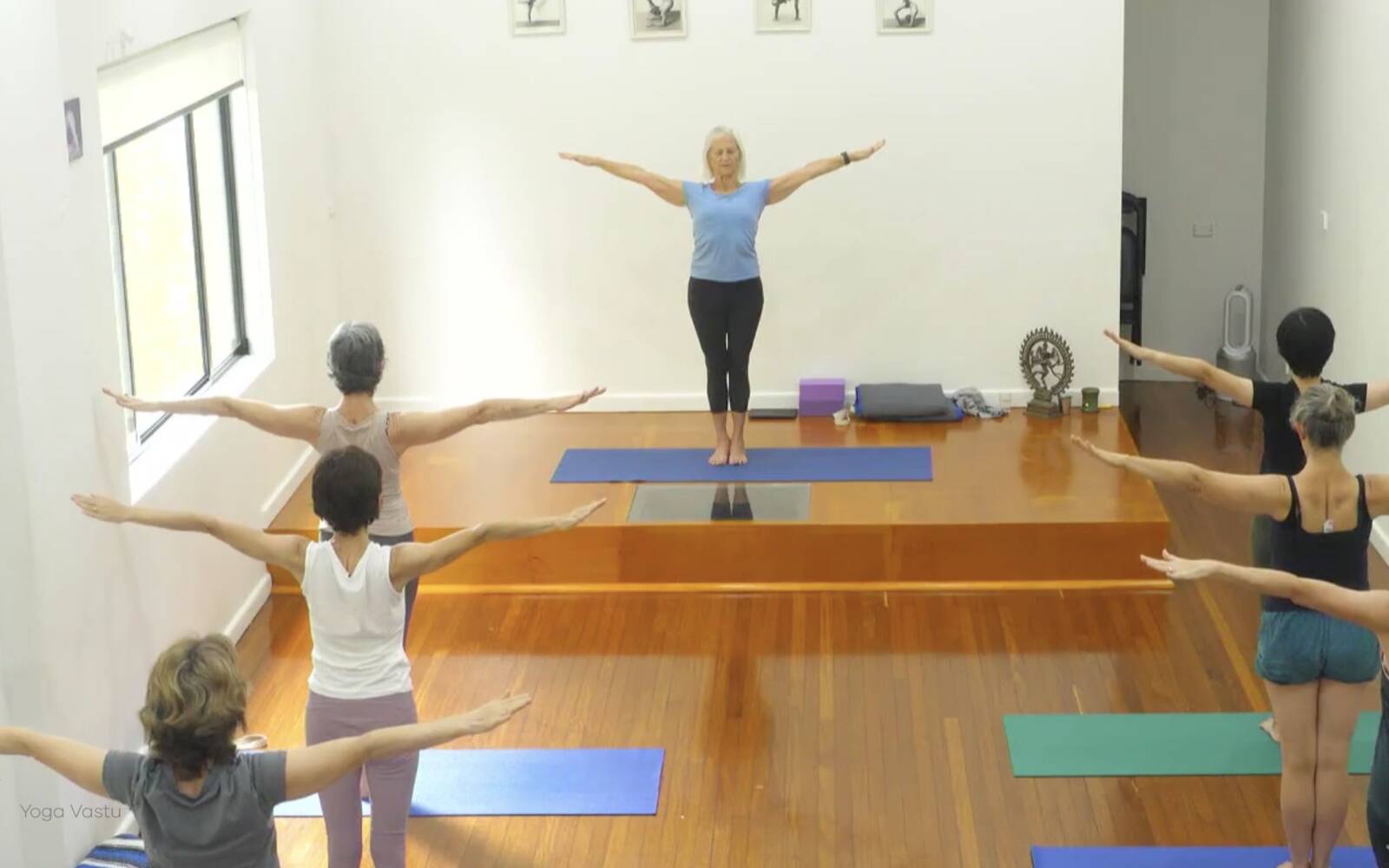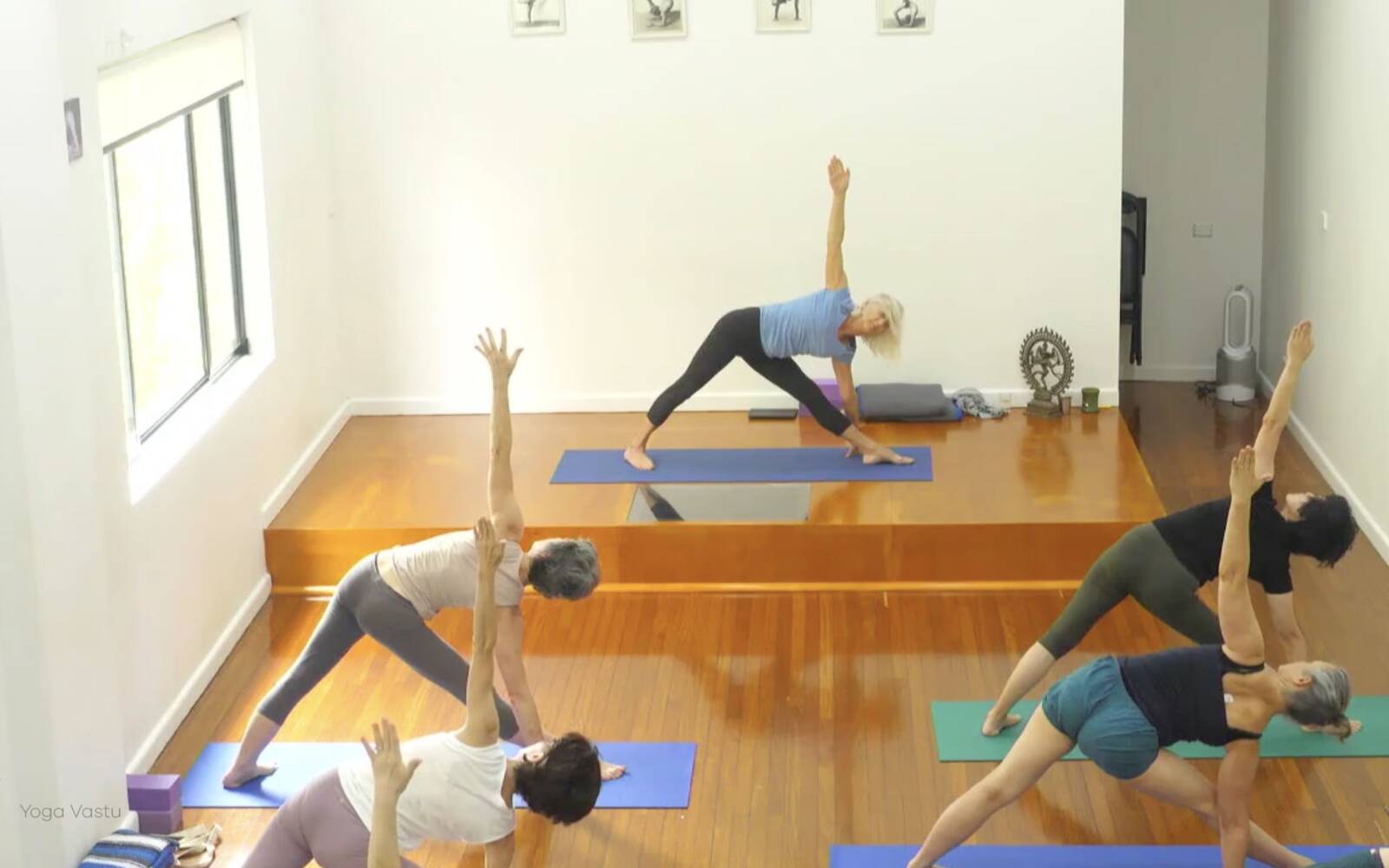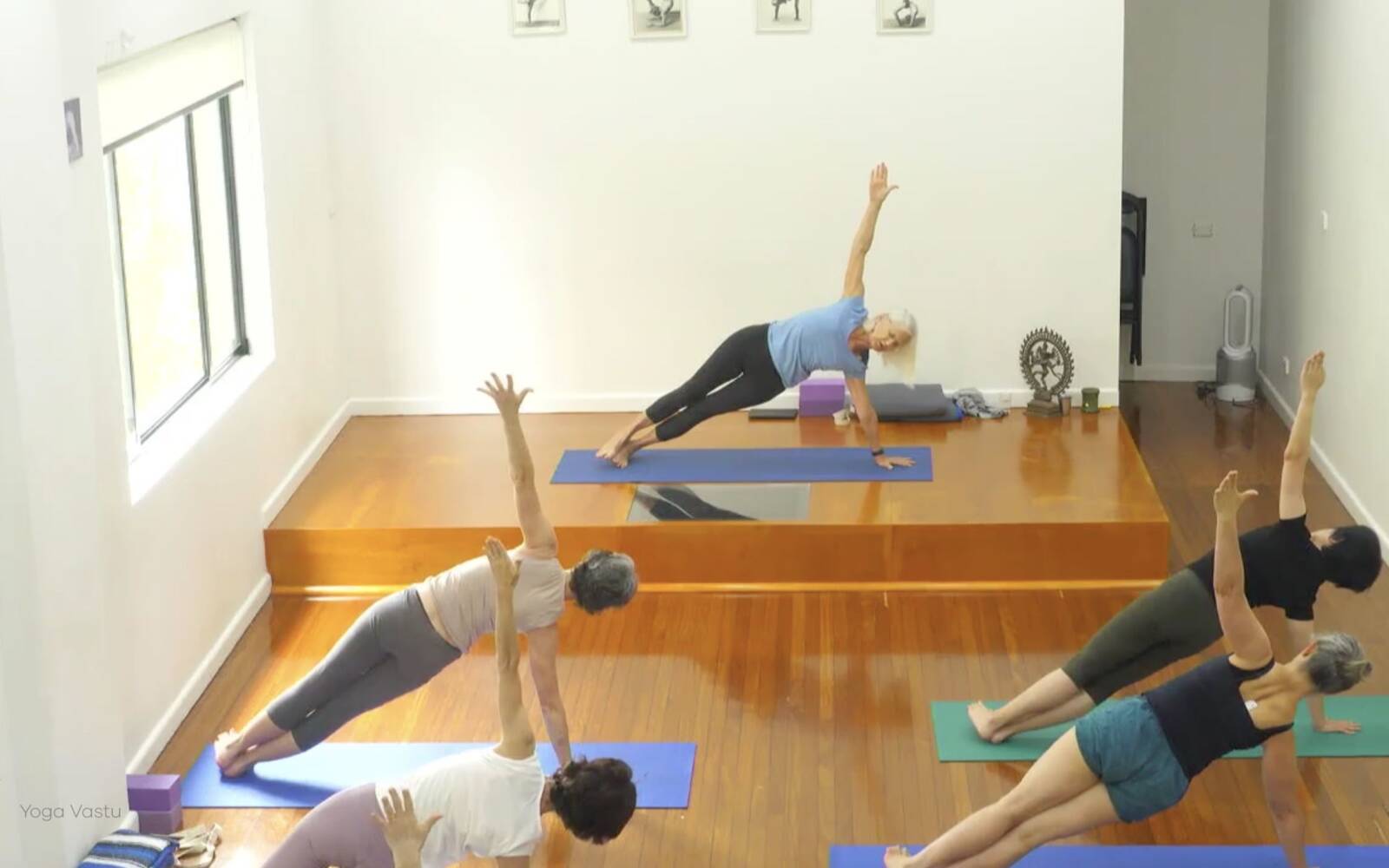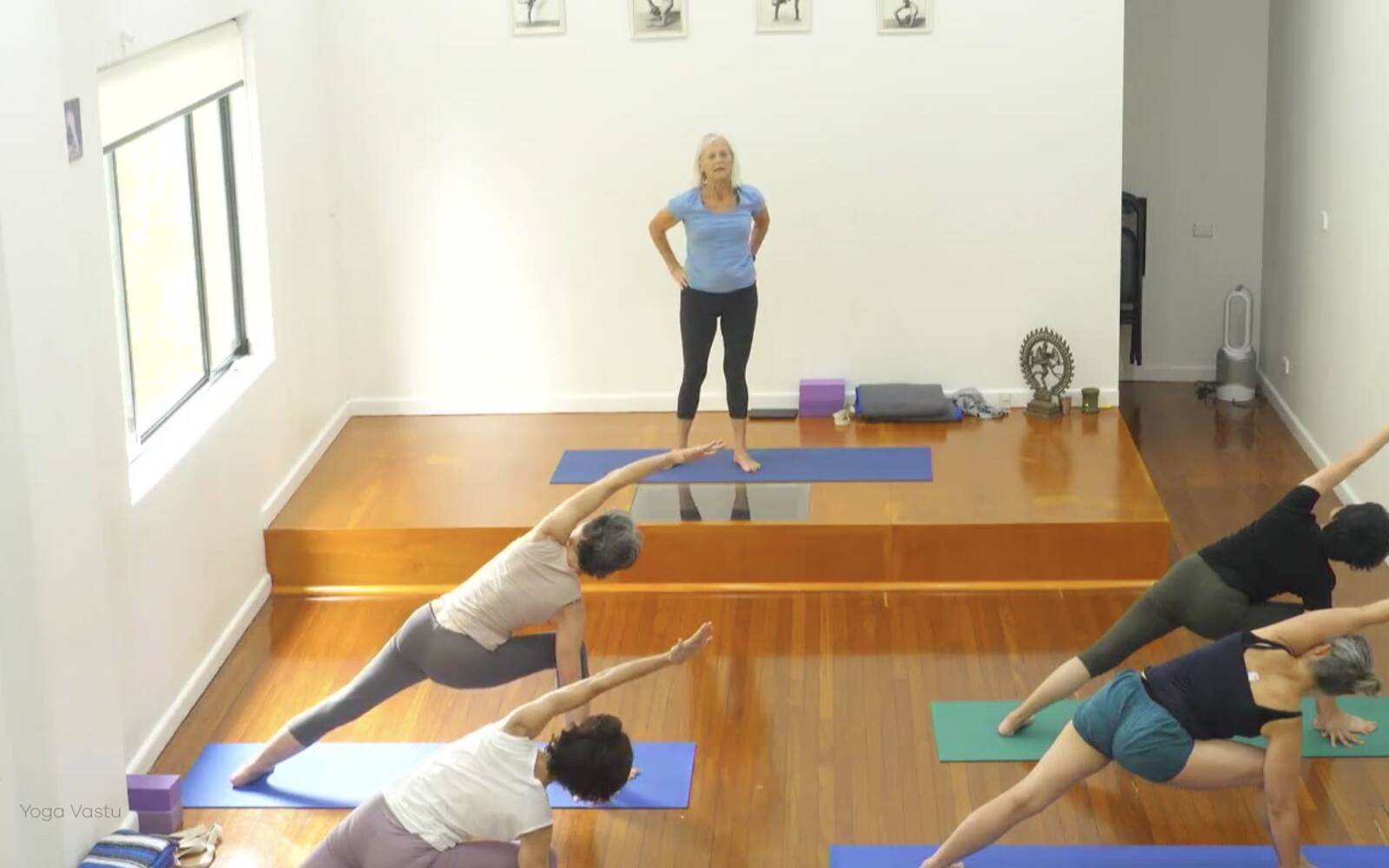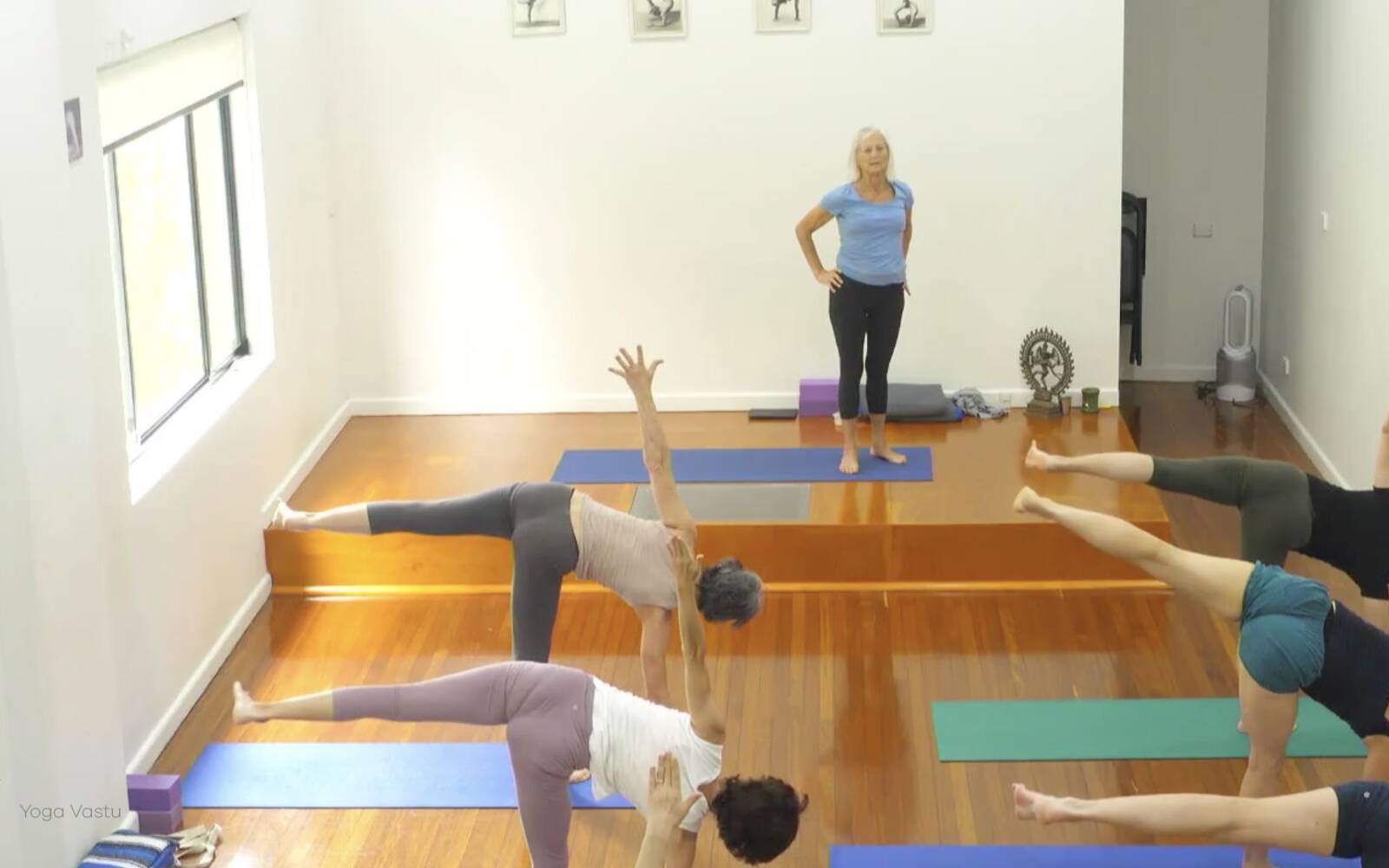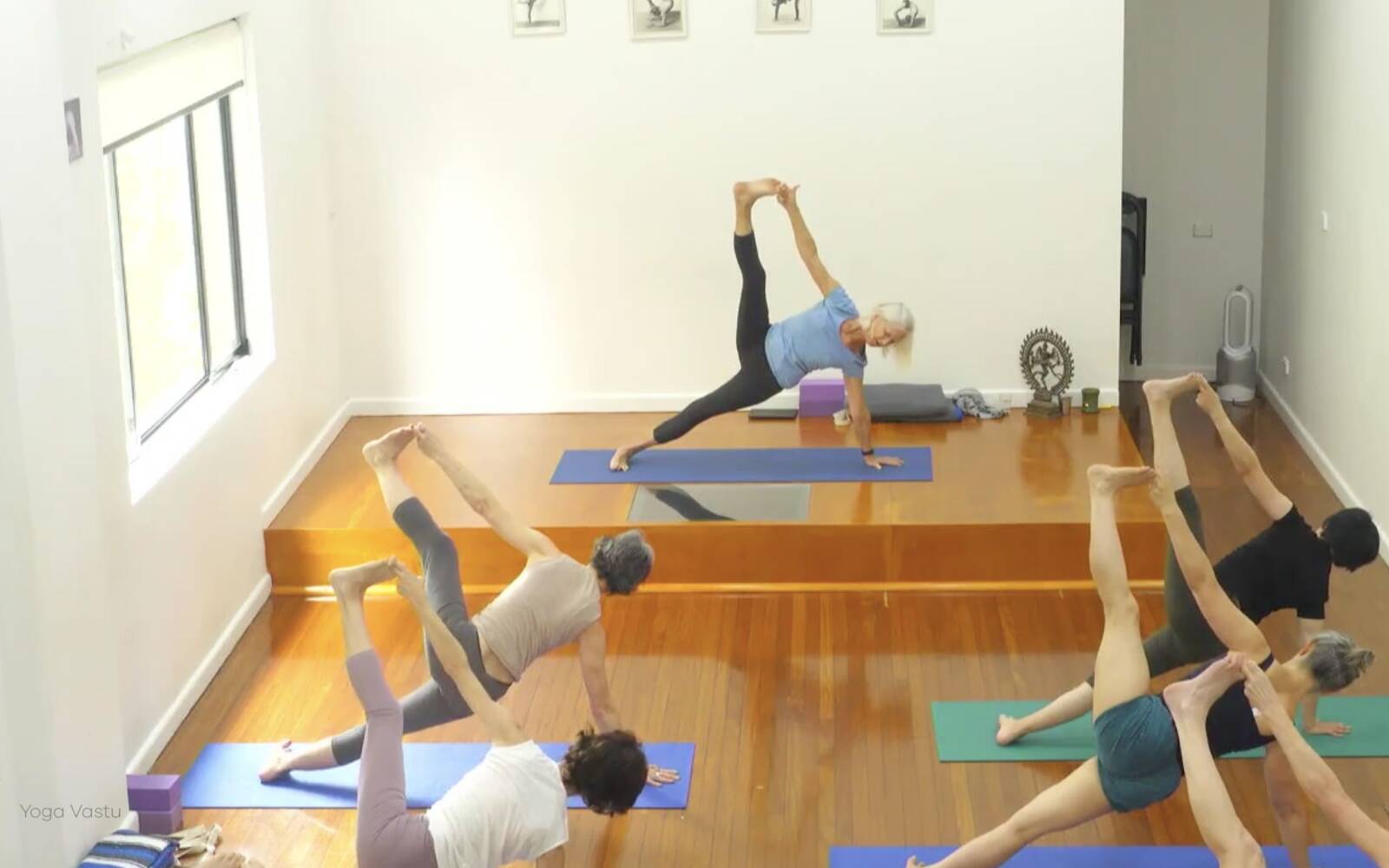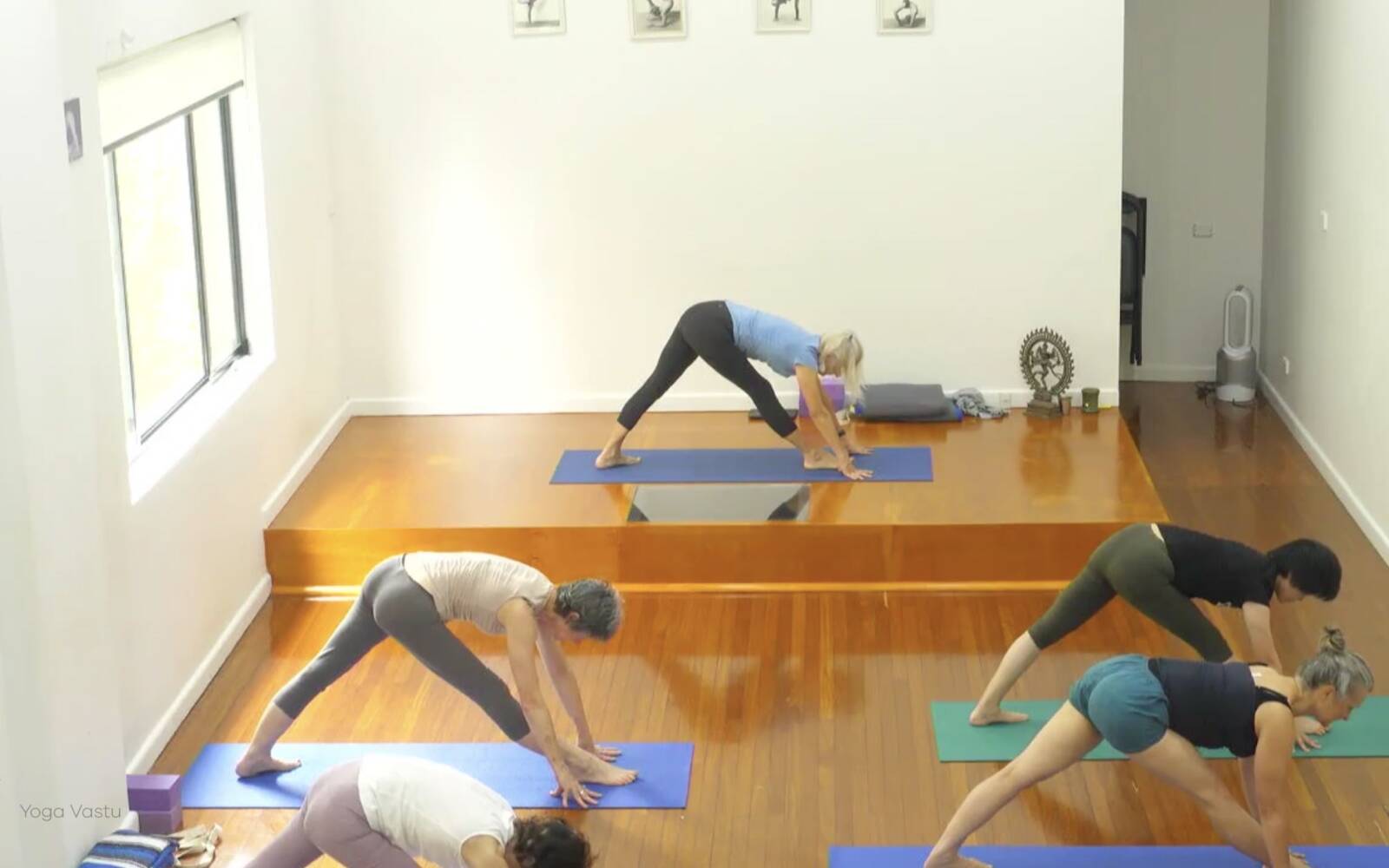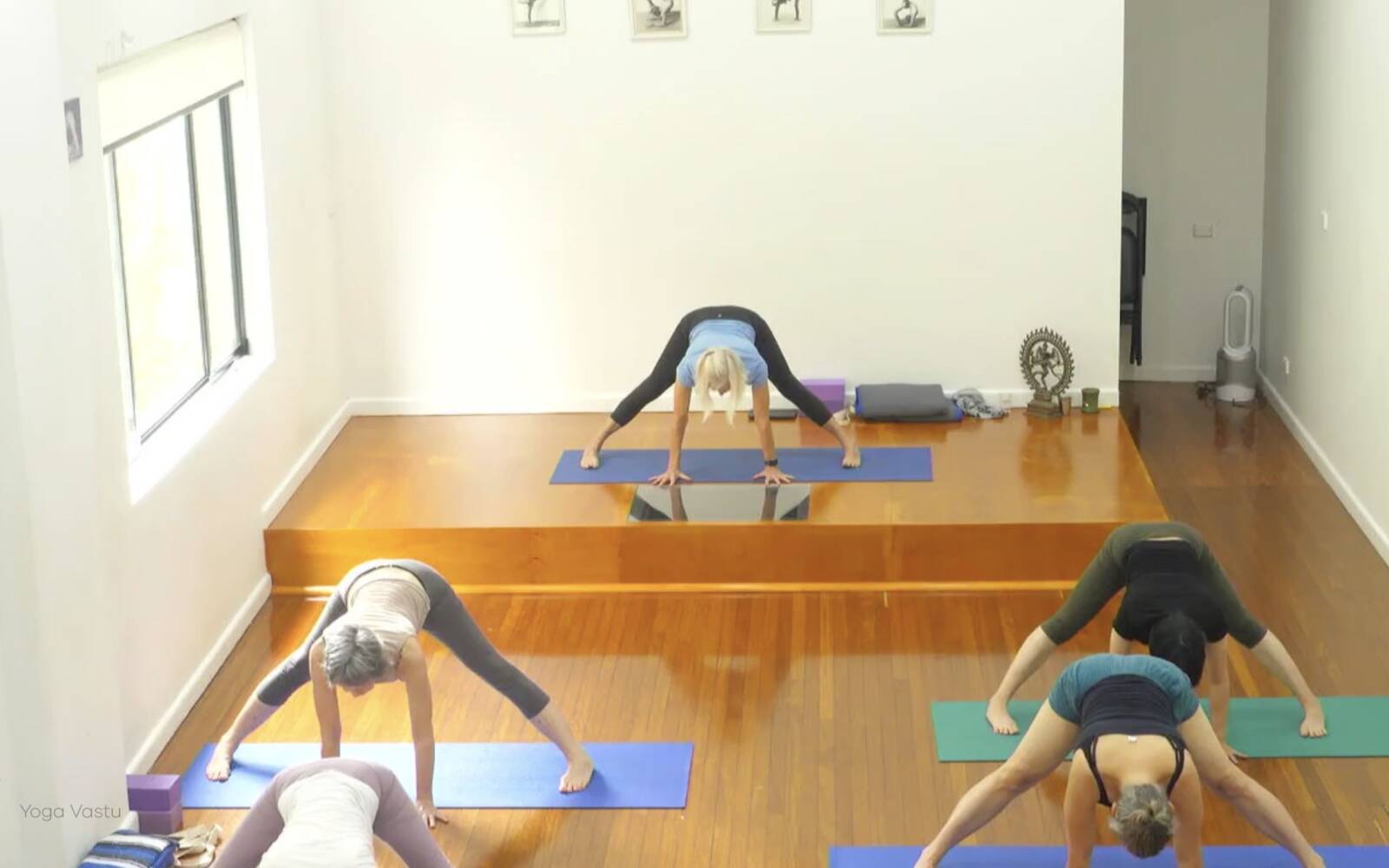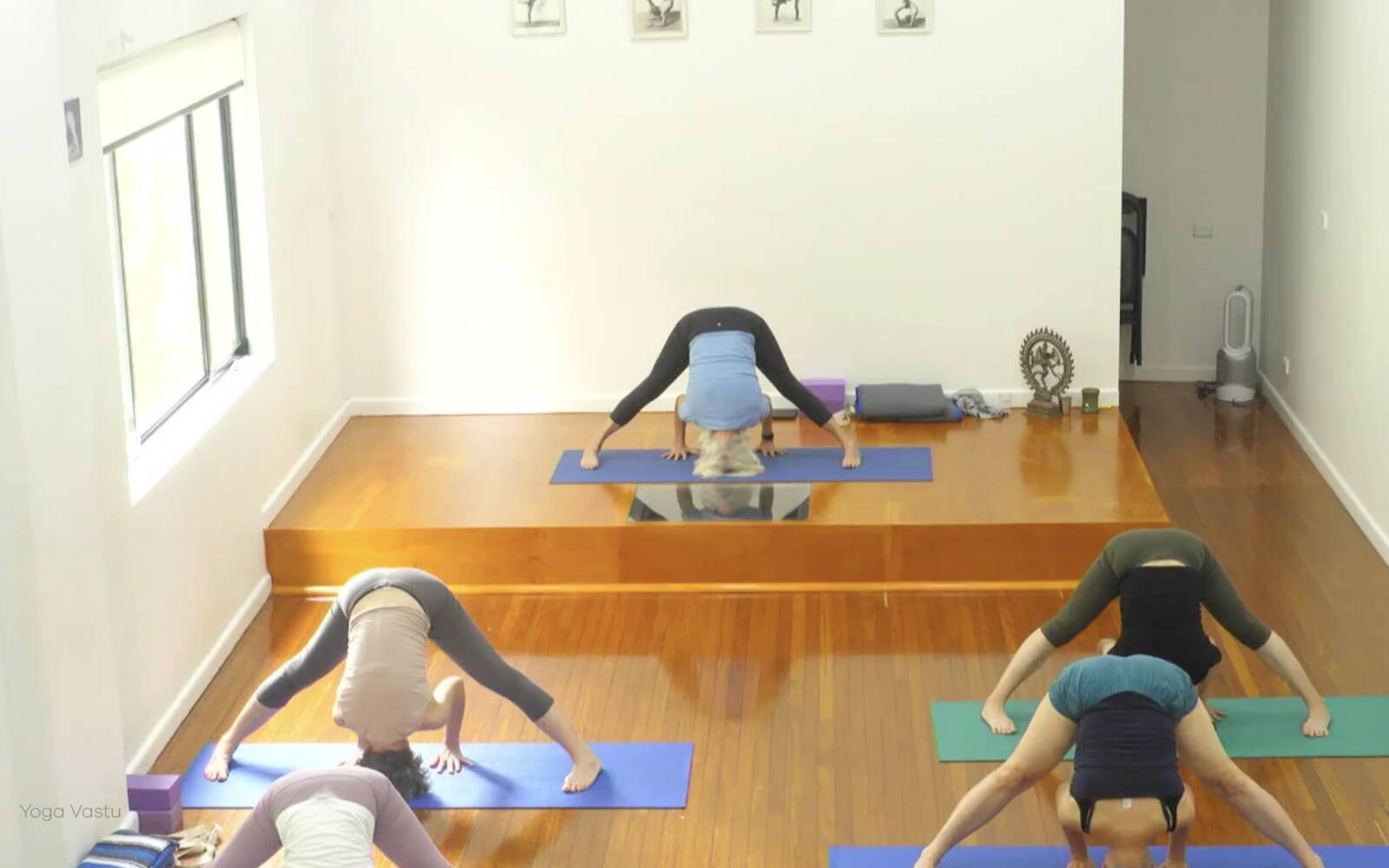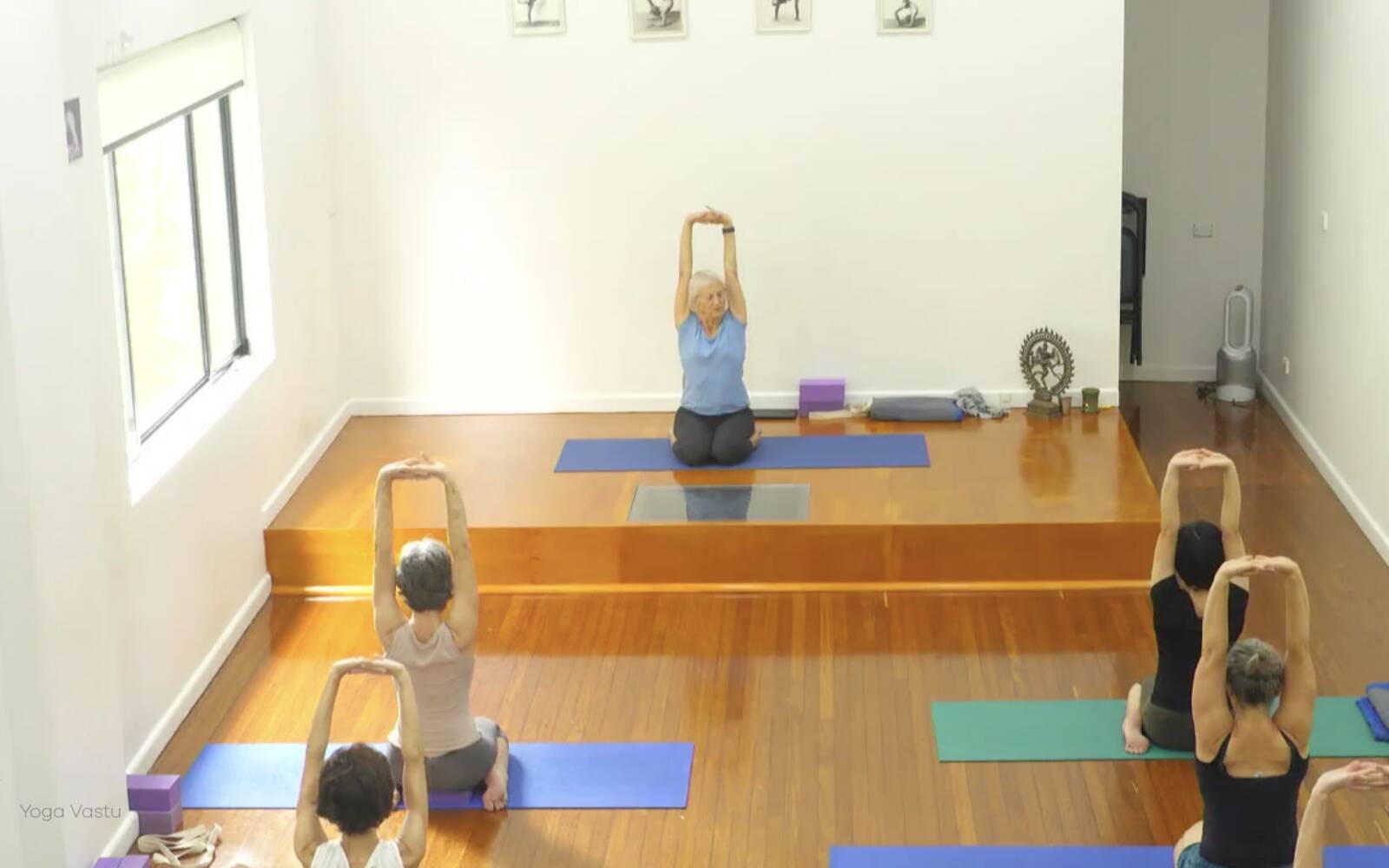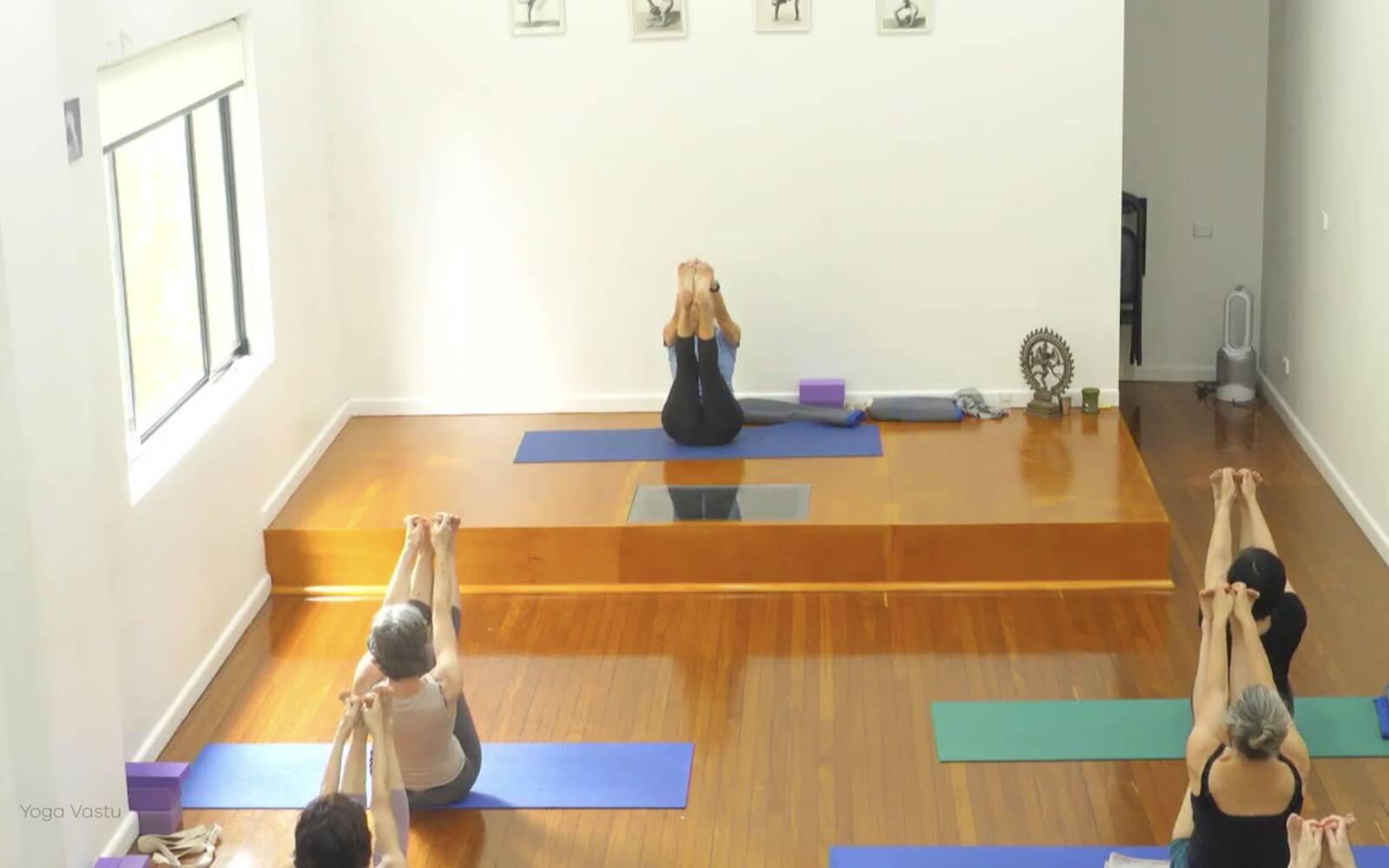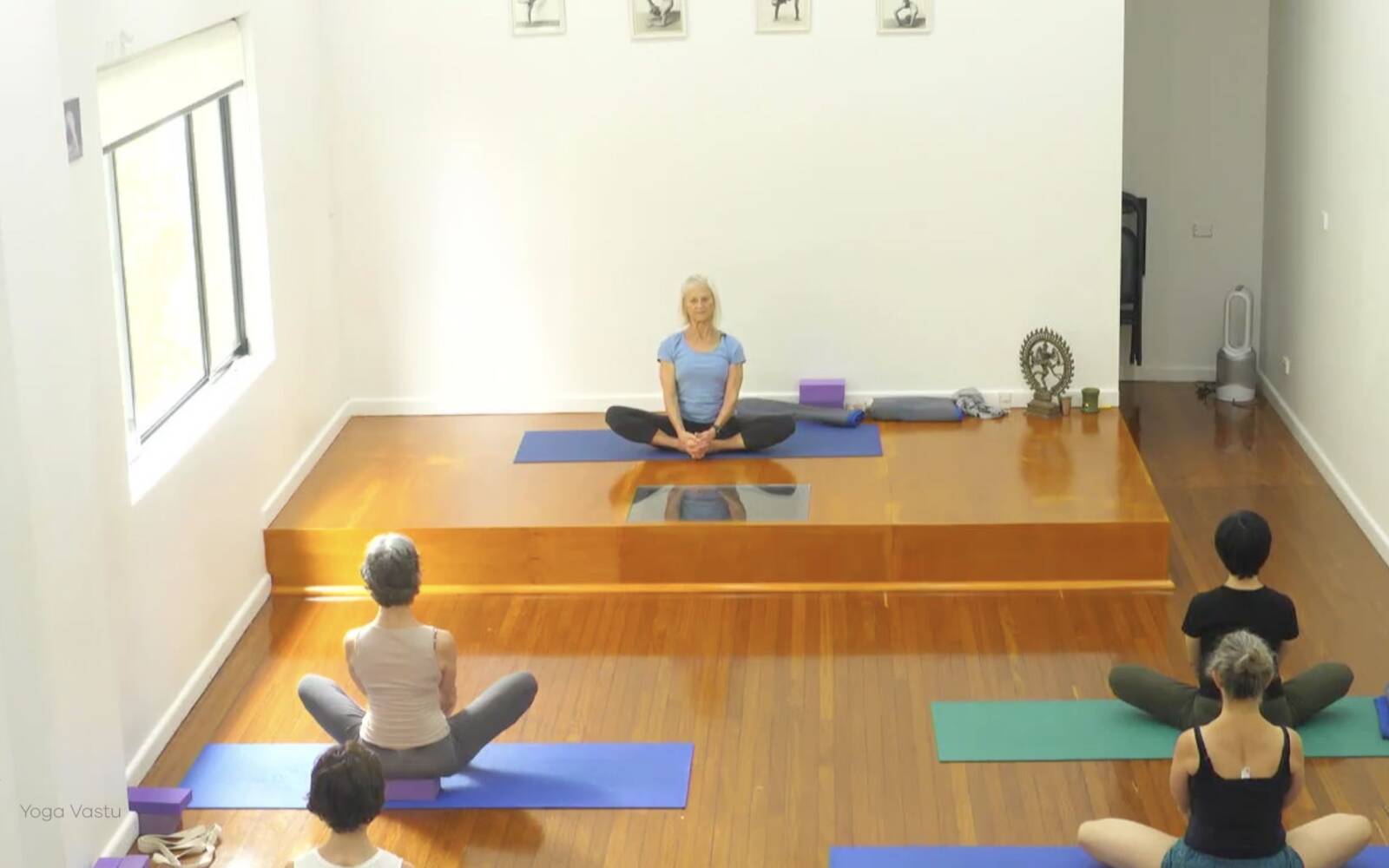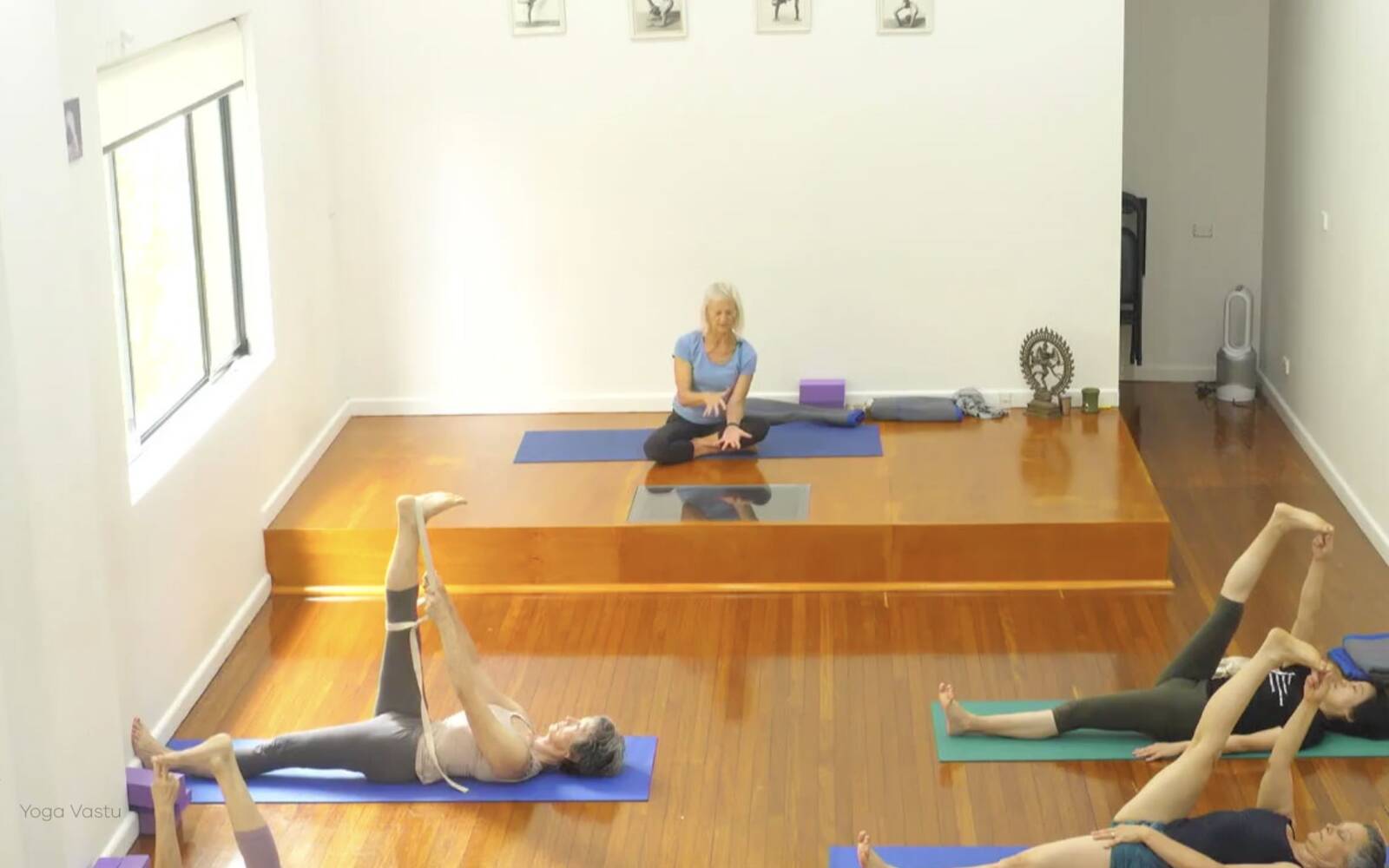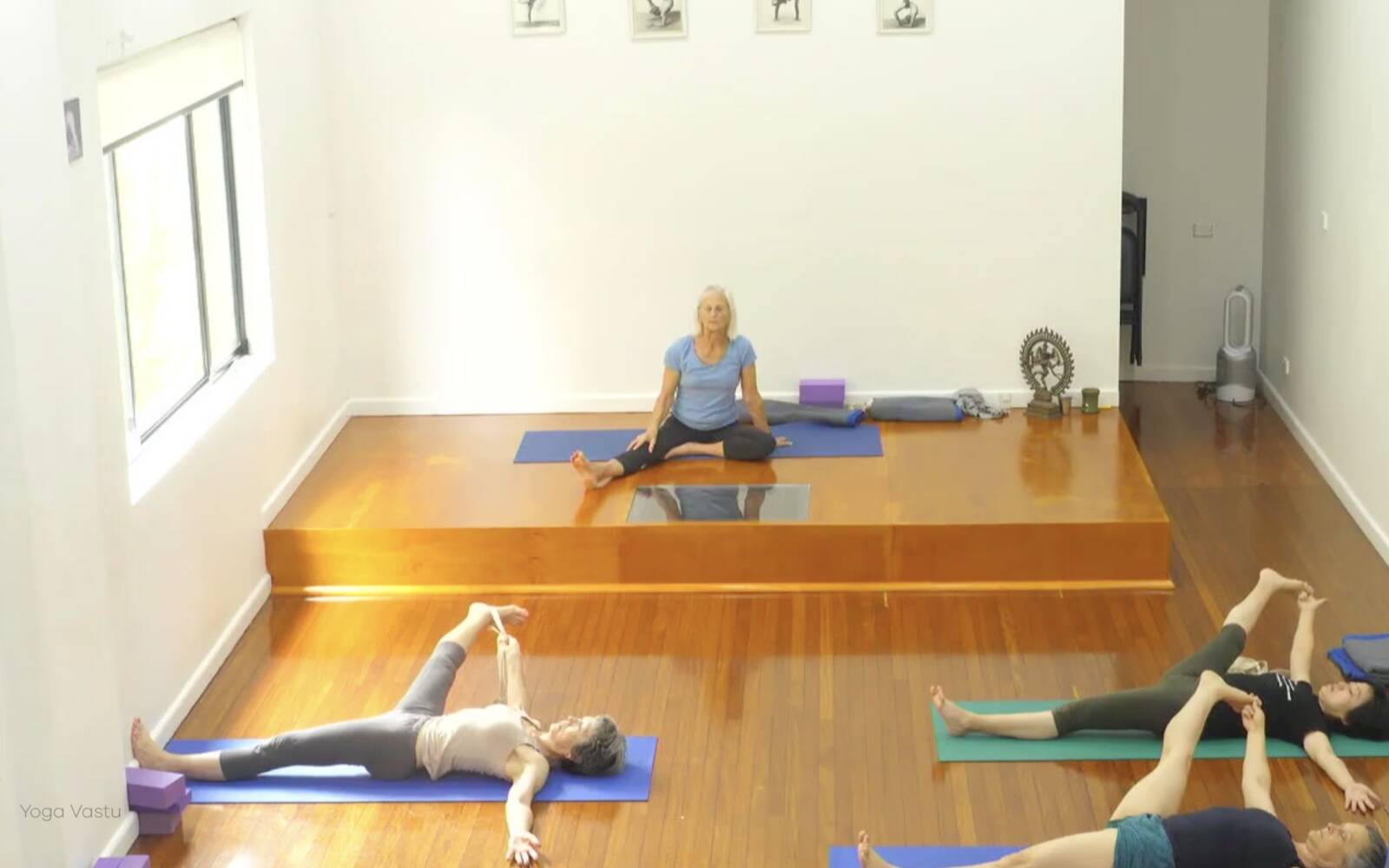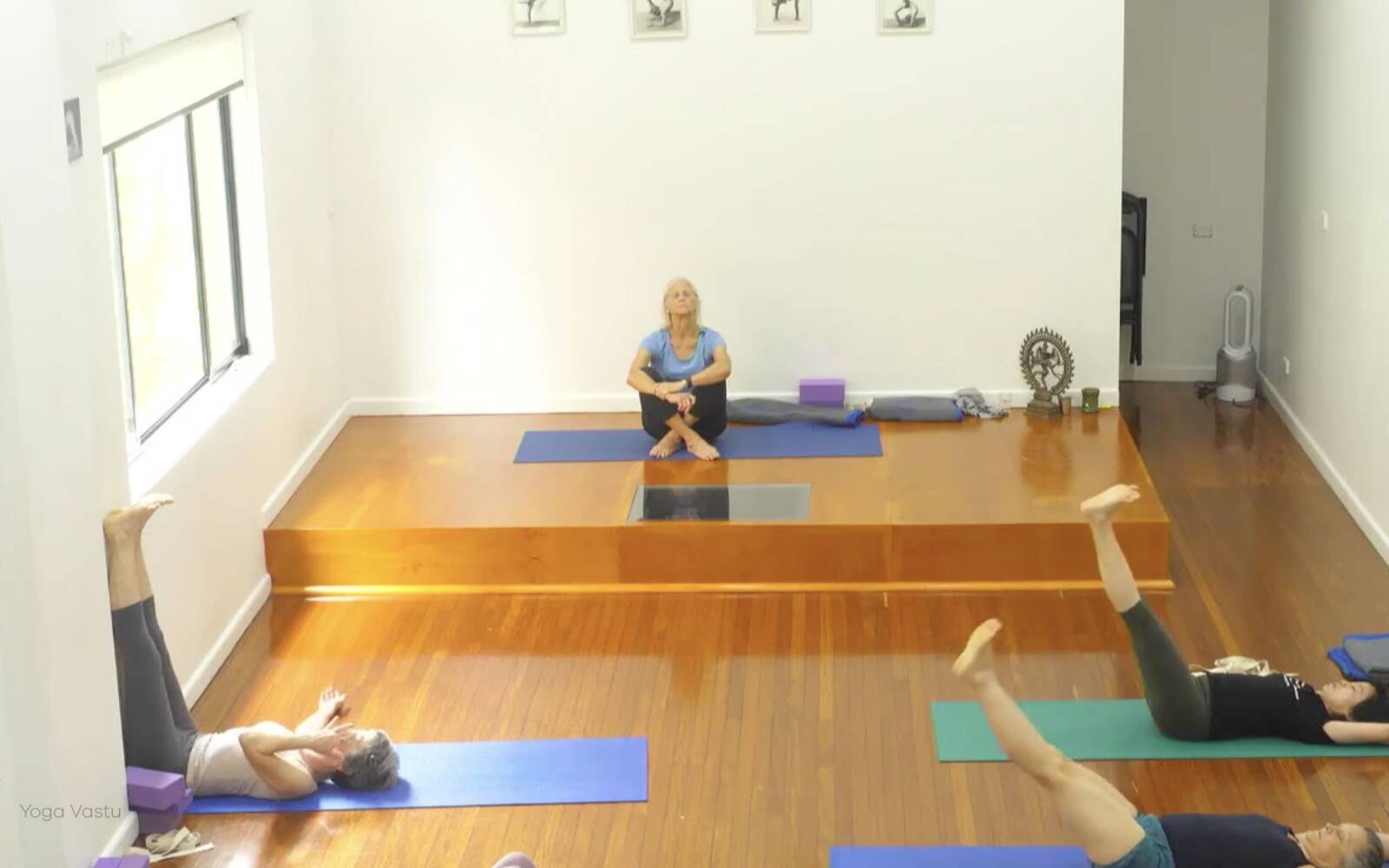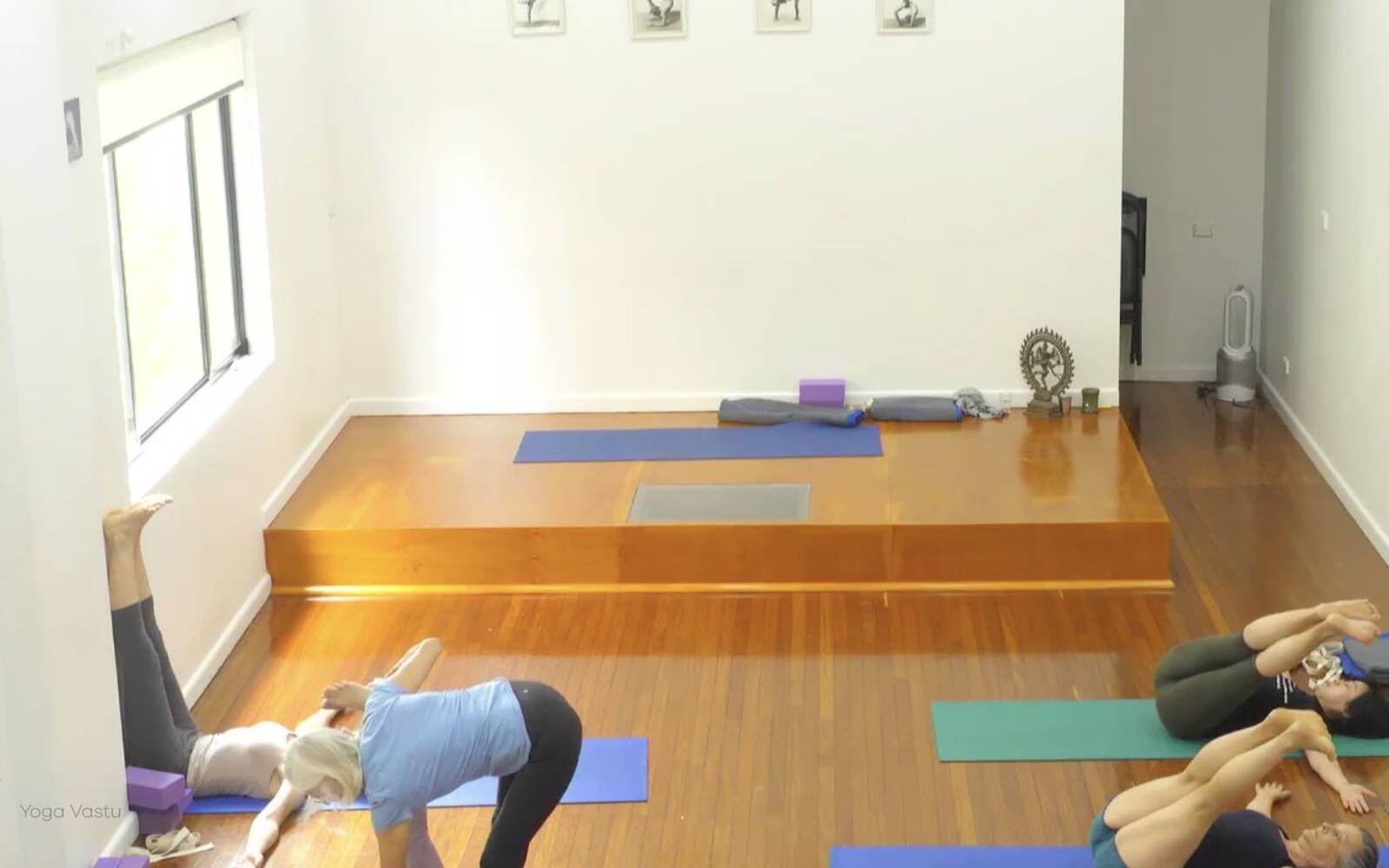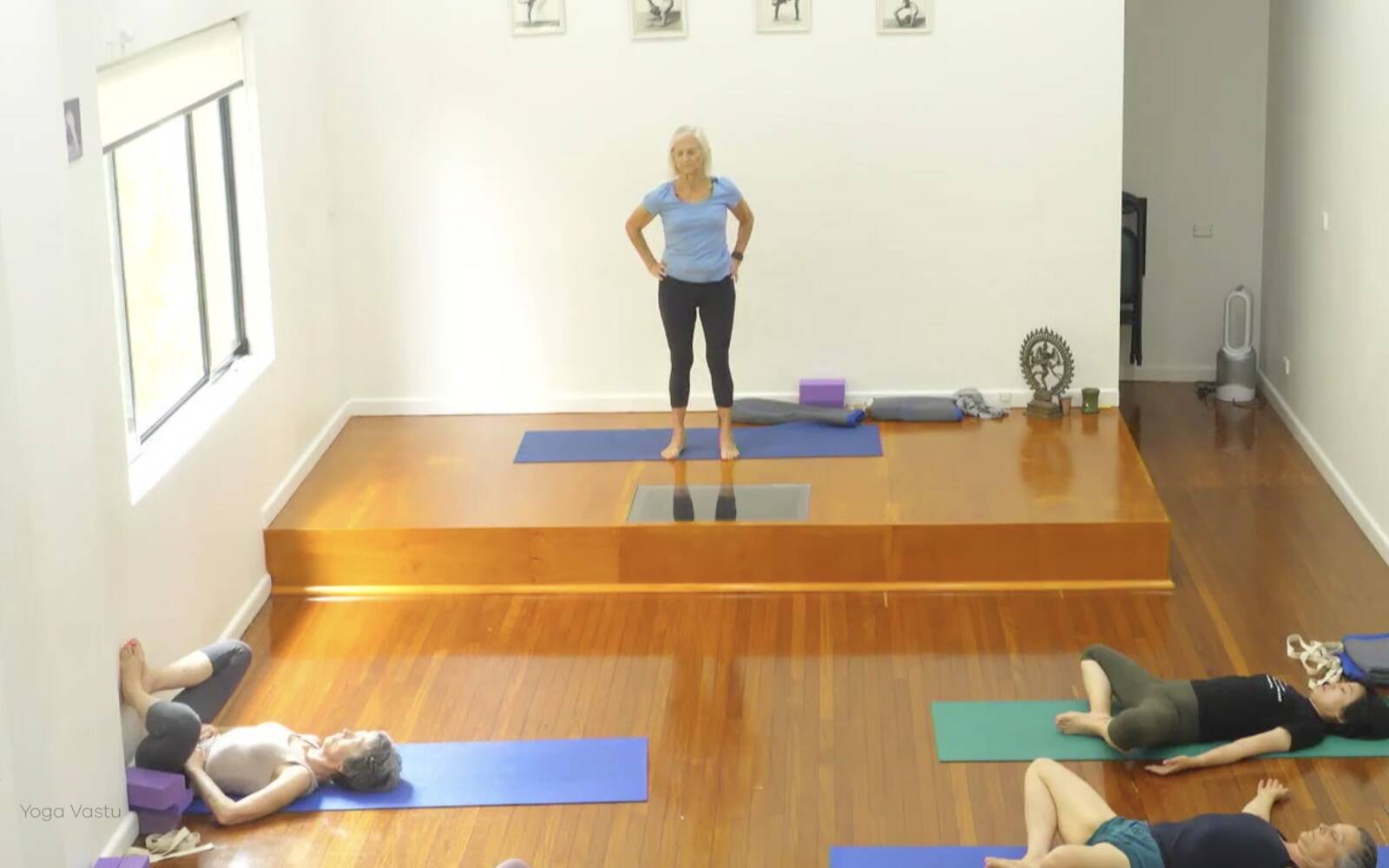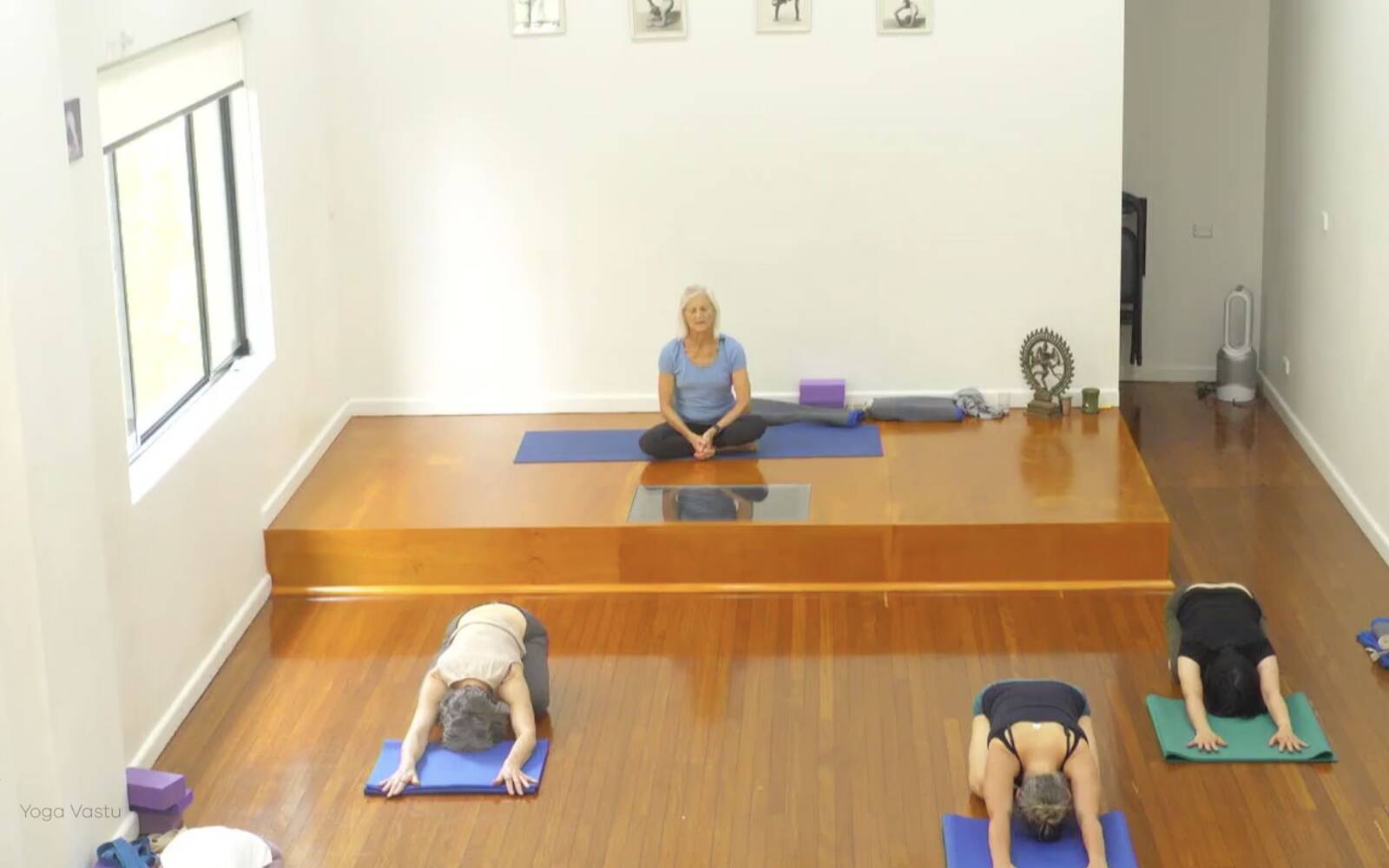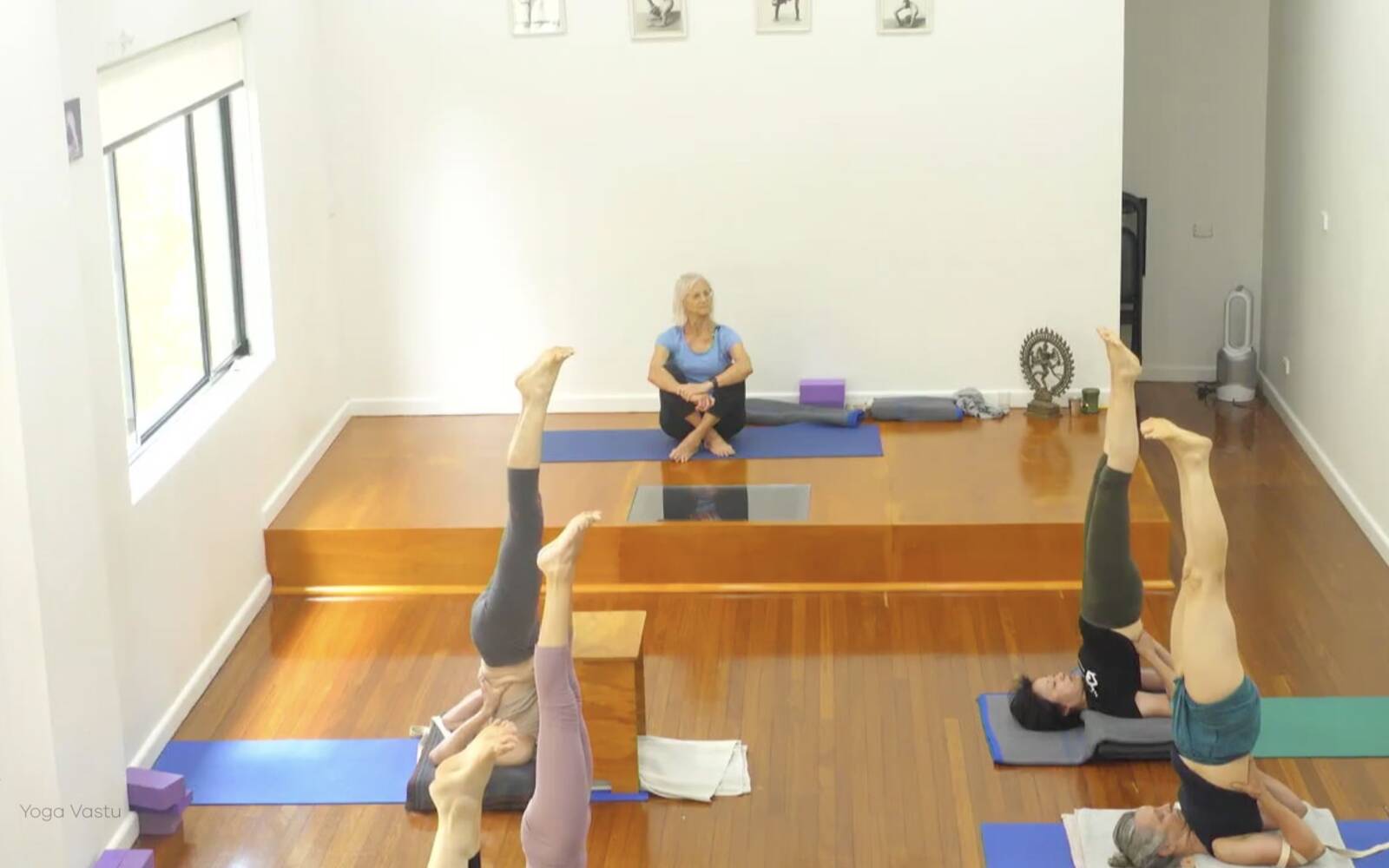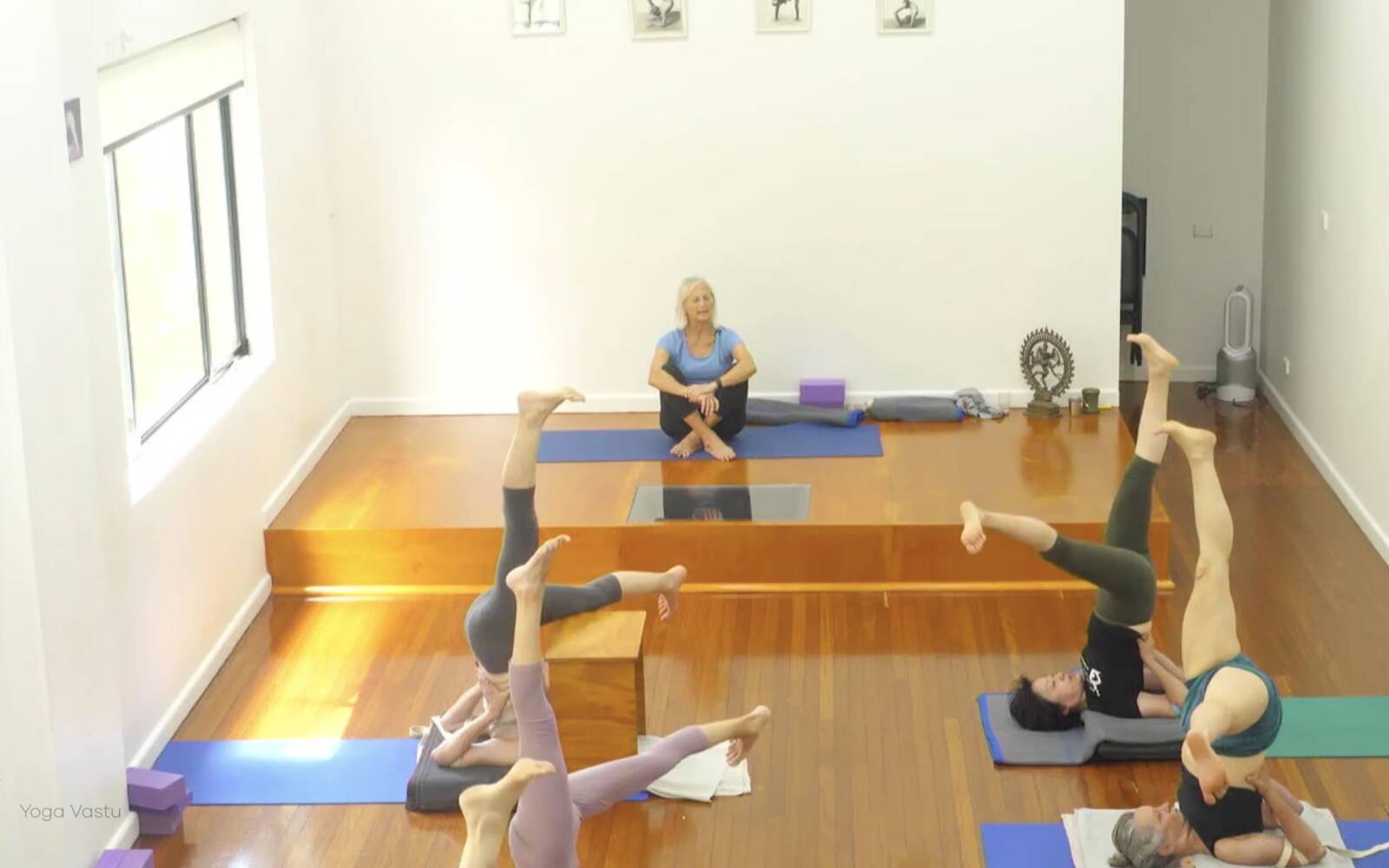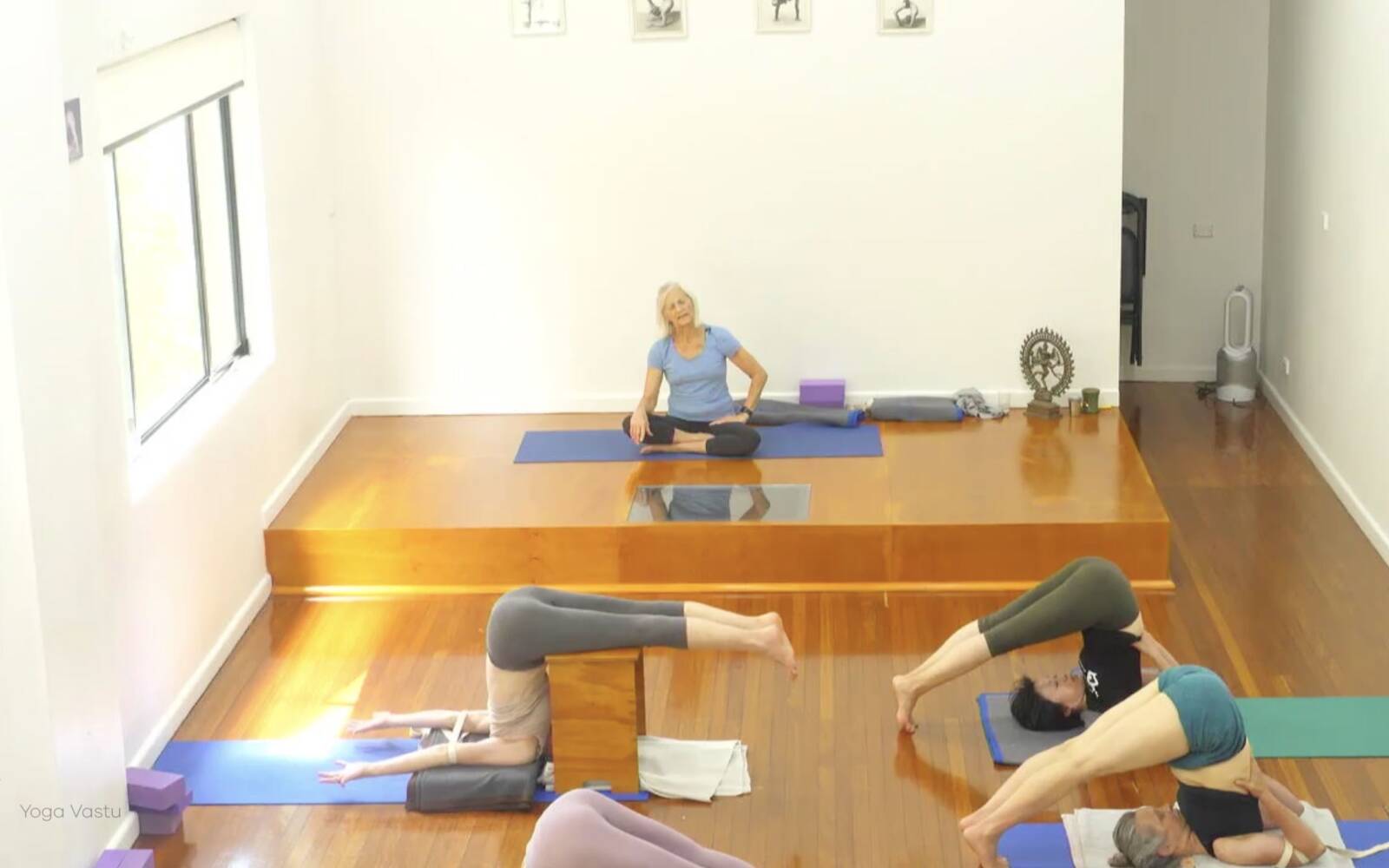
In the first half of this fast-paced miscellaneous class we aim to see how the collarbone work we’ve been doing applies to balancing standing poses like Vrksasana and Utthita Hasta Padangusthasana 1 and 2. In the second half we will go through some abdominal strengthening poses, a lot of which are also built around balancing.
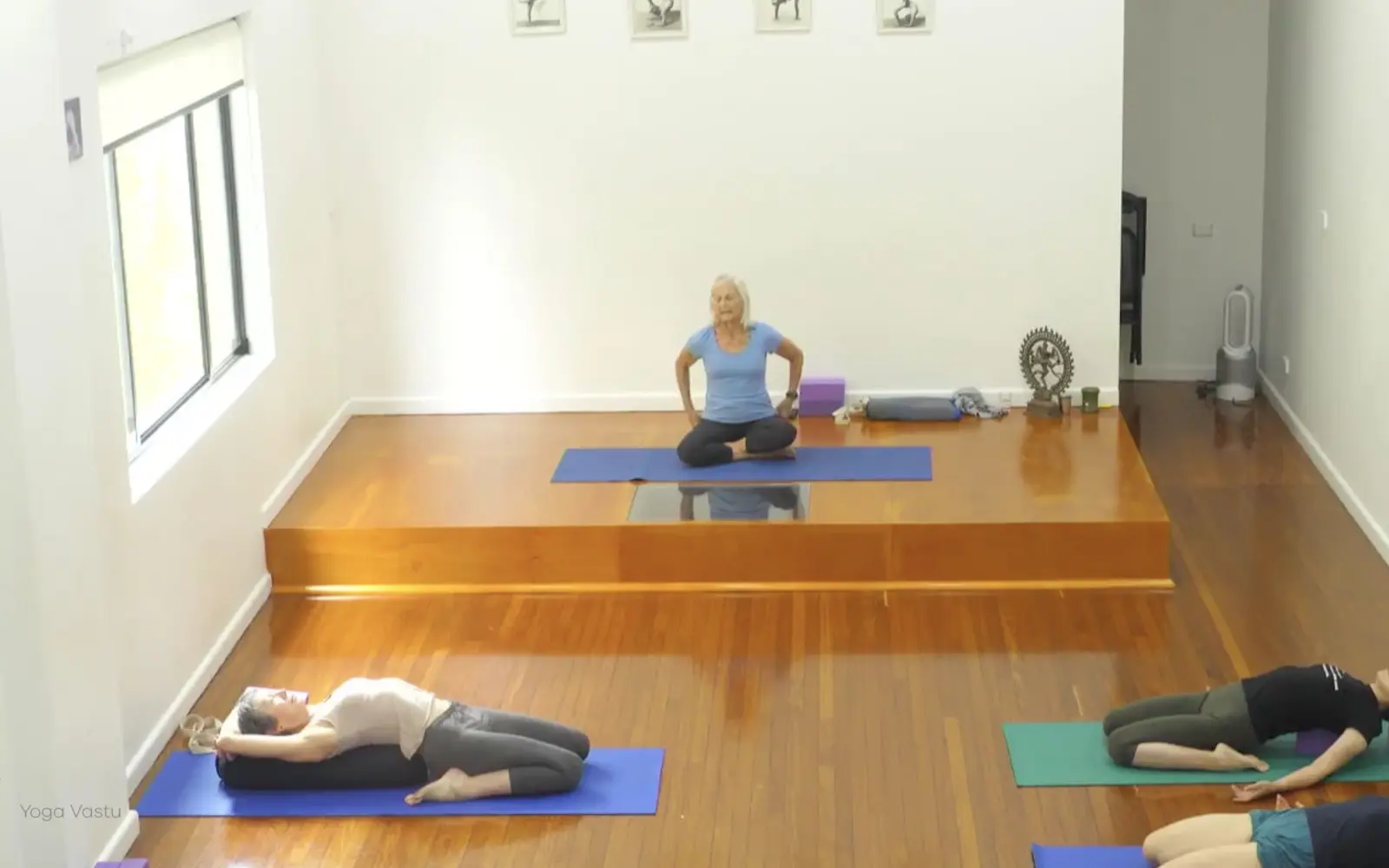
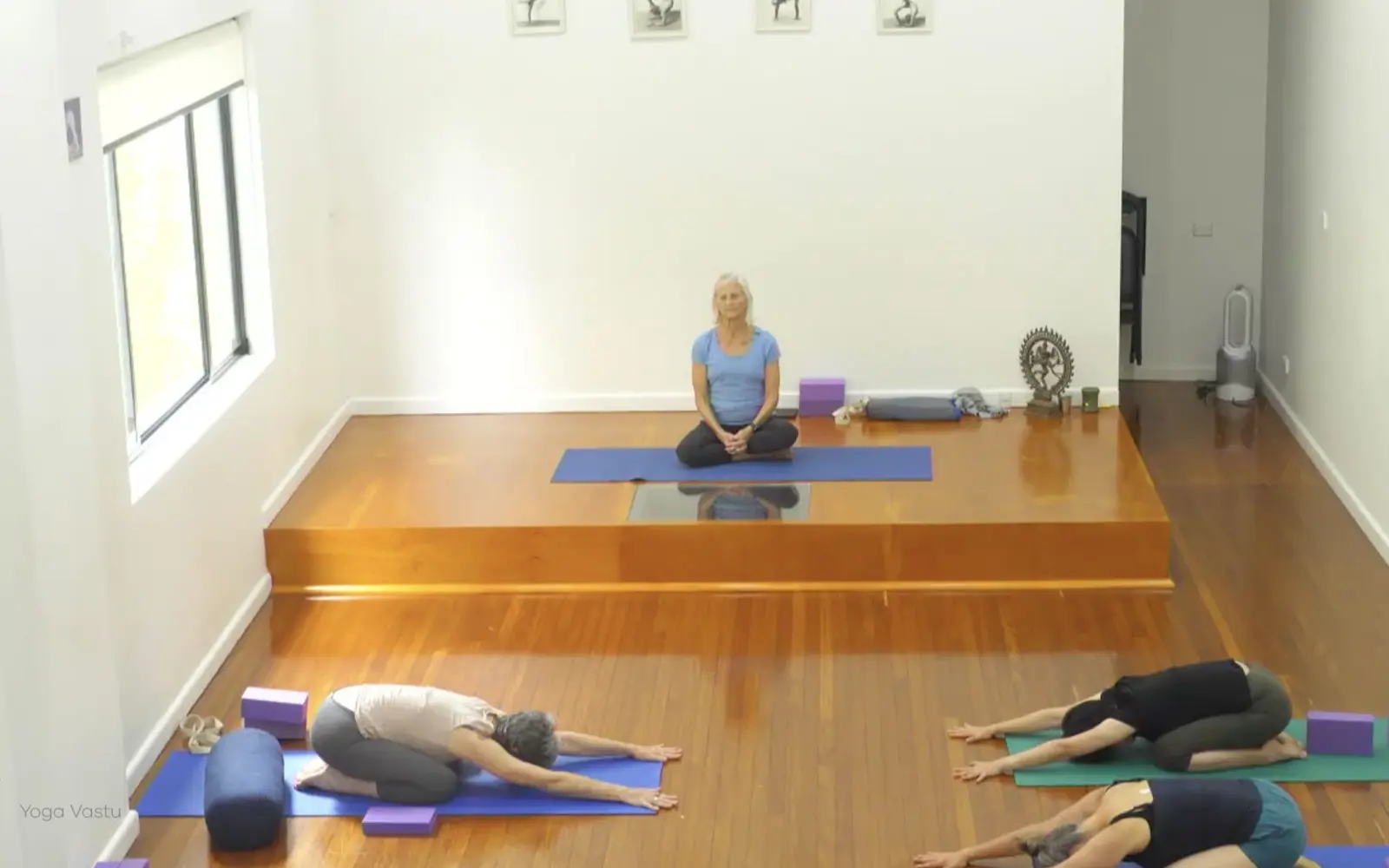
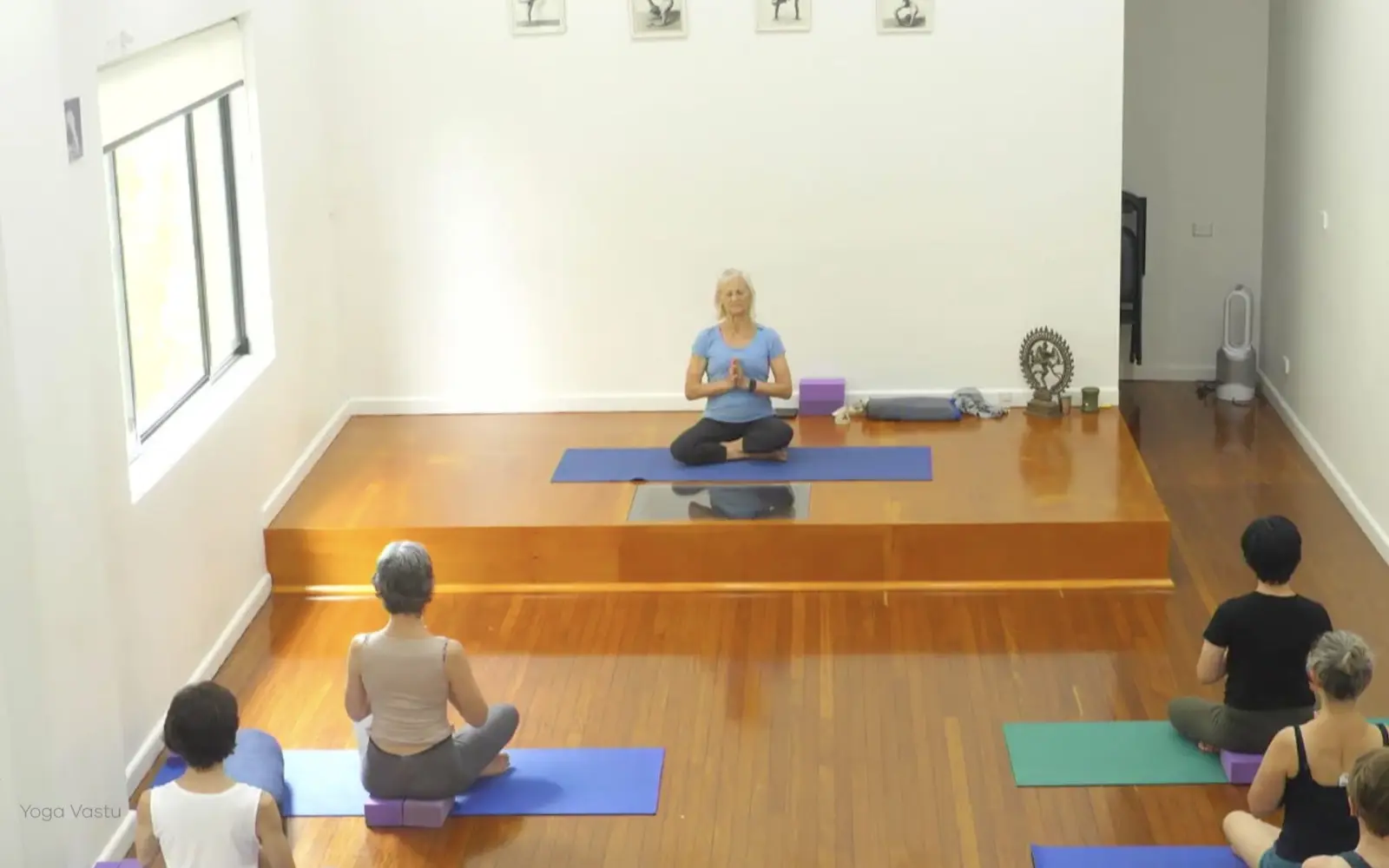
Begin as usual in Supta Virasana, shifting into Virasana Forward, then sitting up for the invocation.
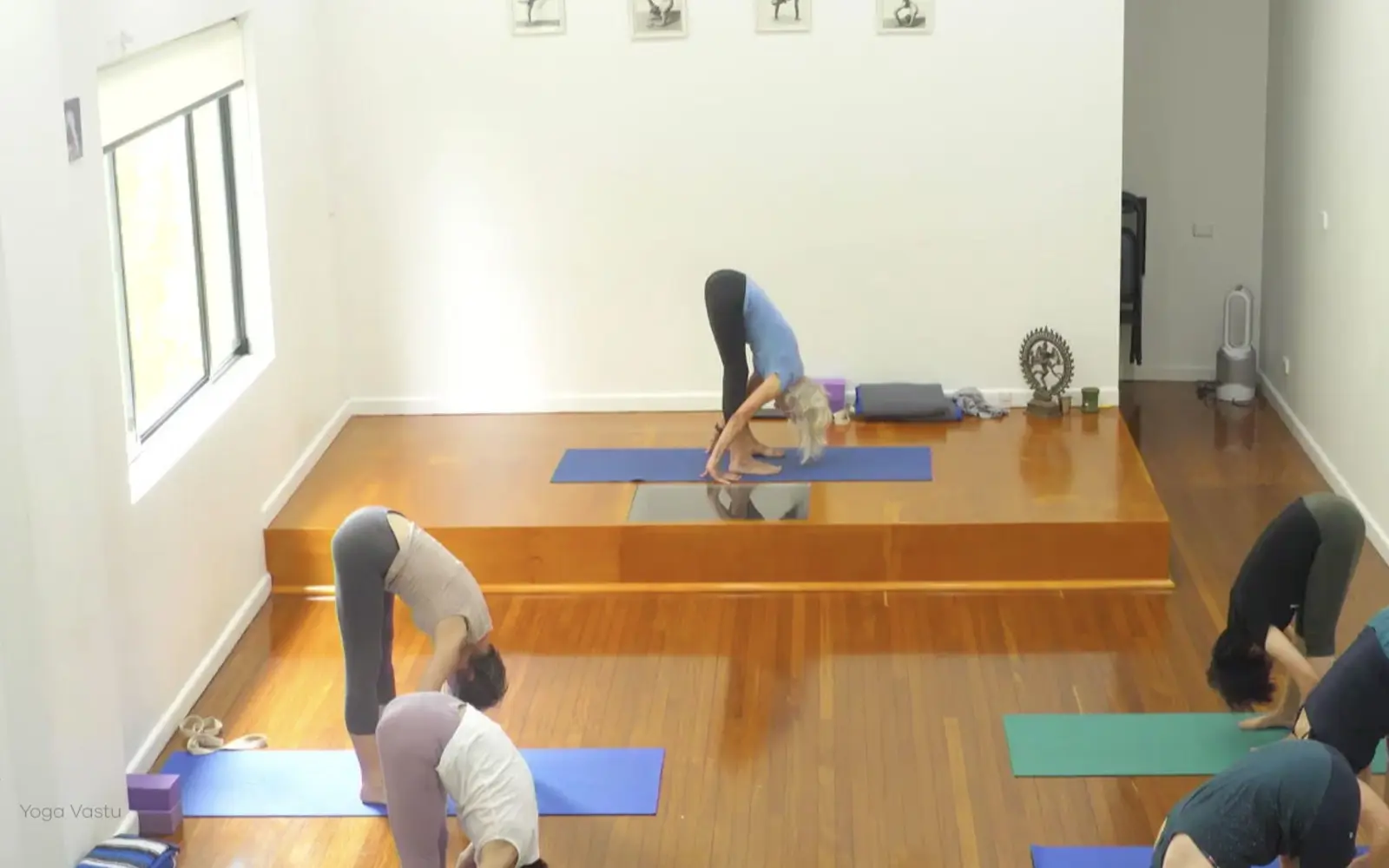
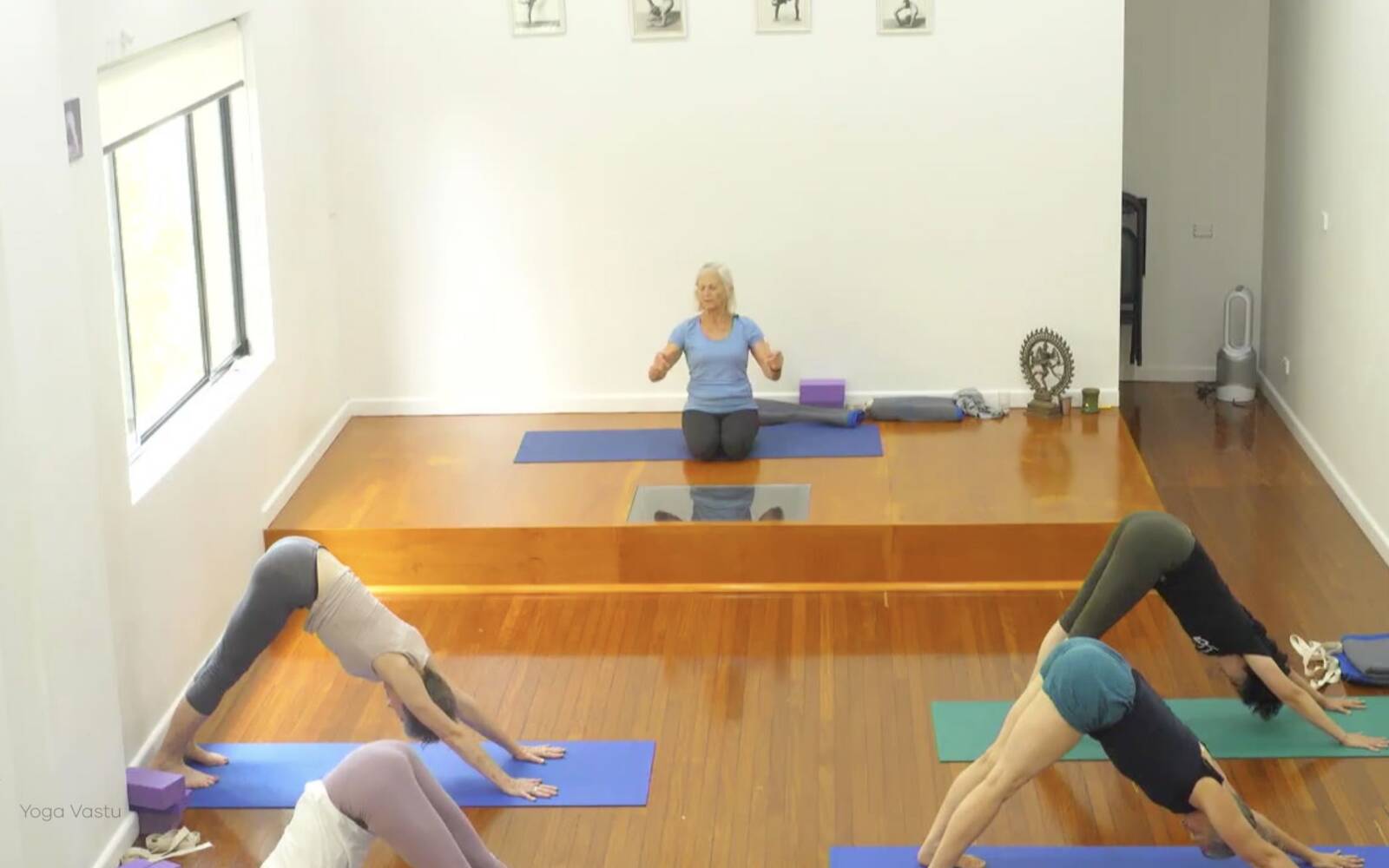
Come up to standing. Fold forward into Uttanasana, then walk your feet or hands out into Adho Mukha Svanasana, glide back into Virasana Forward and into Adho Mukha Svanasana again.
Stand up. Bend your knee out to the side, bring your foot up to your inner groin: Vrksasana. Do it first with the knee against the wall so you can better pay attention to the subtler actions involved in this pose. Bring your arms up into Urdhva Namaskarasana. Then repeat Vrksasana with your arms up but this time without wall support.
Now come up for Utthita Hasta Padangusthasana 2 but with the hand to the foot and in free-balance. Bring your leg forward into Utthita Hasta Padangusthasana 1, then bring it out to the side for the second variation again.
Bring your foot down, stand in Tadasana. Raise your arms up in Urdhva Namaskarasana, then bring them down a bit so they’re stretched out to the sides and parallel to the floor. Feel the collarbones spread.
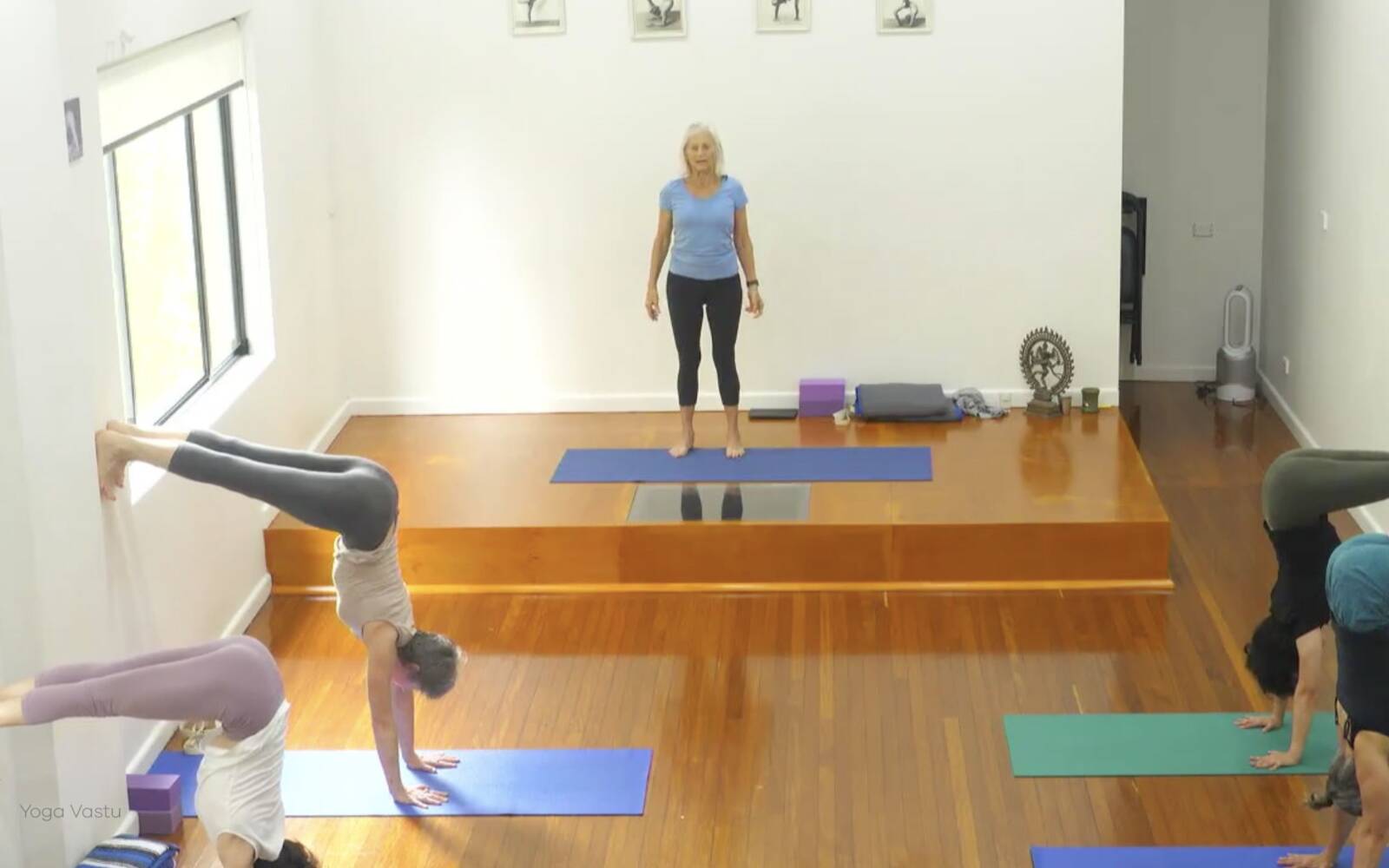
Now, come up to the wall for Half Adho Mukha Vrksasana. Then, practice going up into Full Adho Mukha Vrksasana but without wall support. Make a few attempts. With each one, focus on the collarbones. Focus on the shoulders. Then, try free-balancing in Pincha Mayurasana as well.
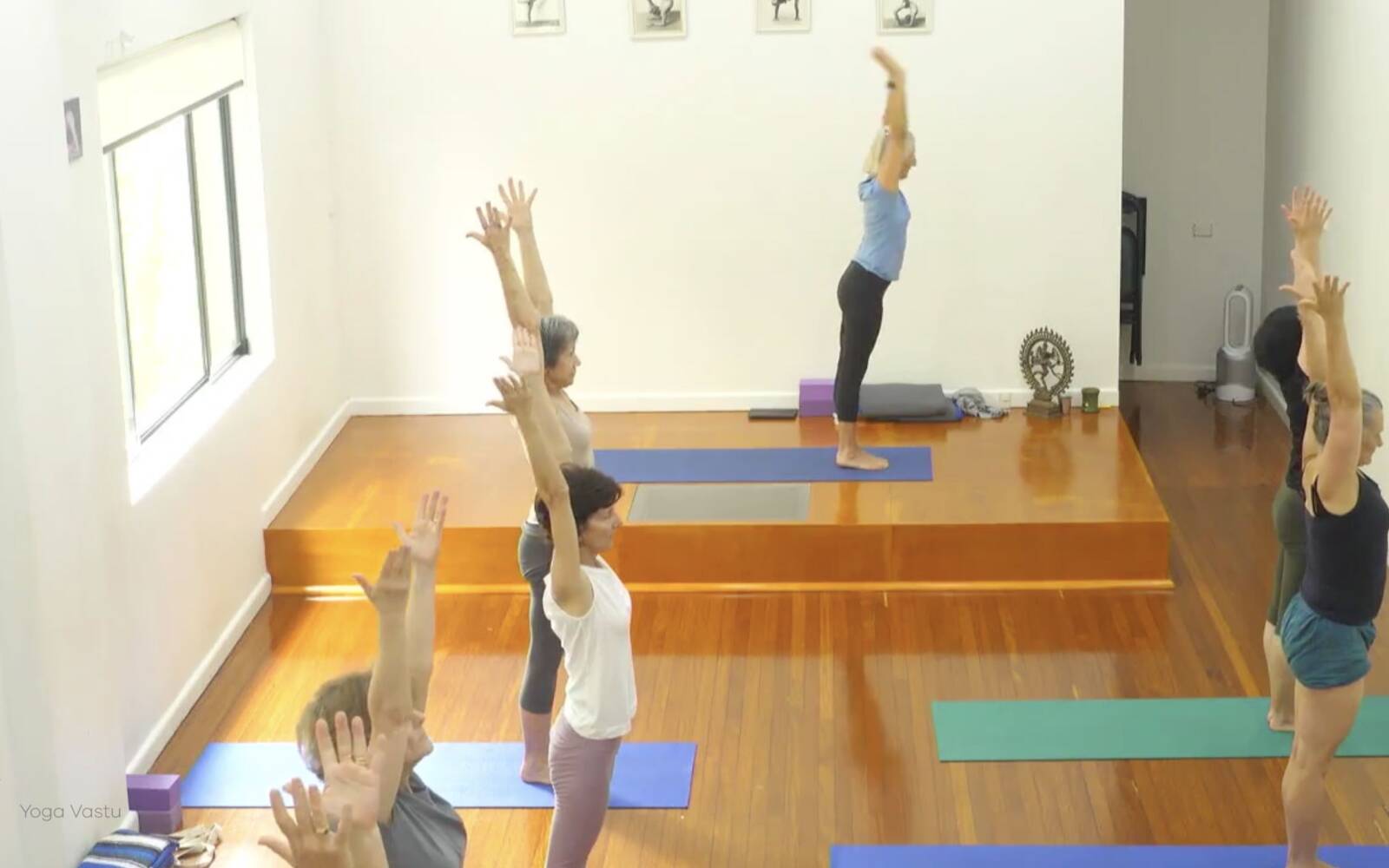
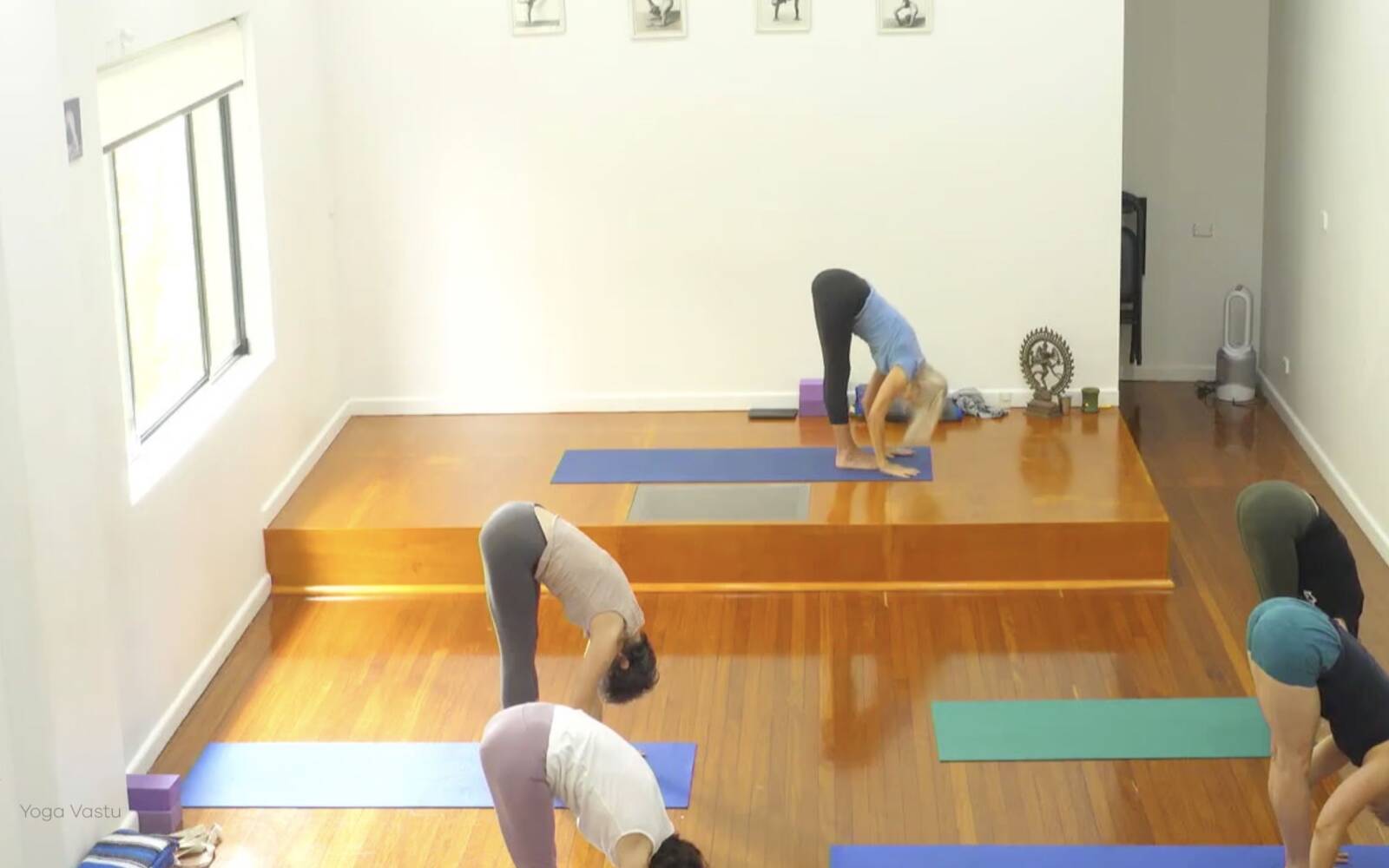
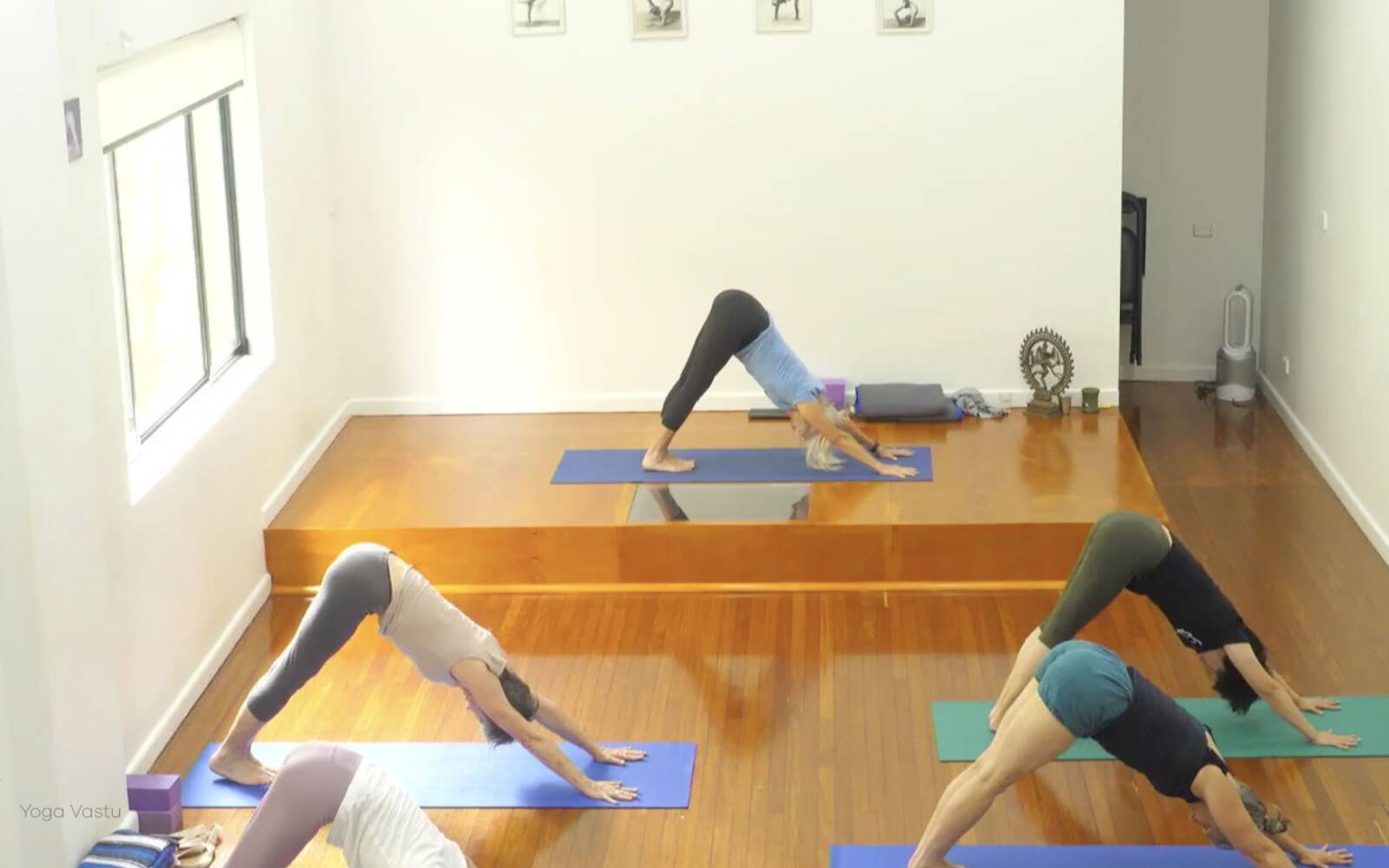
Before we begin with the standing pose session, we will go through a mini sun salutation to begin: Tadasana, arms in Urdhva Hastasana, Uttanasana, Adho Mukha Svanasana, Uttanasana. Instead of coming up into Tadasana at the end here, shift back into Adho Mukha Svanasana.
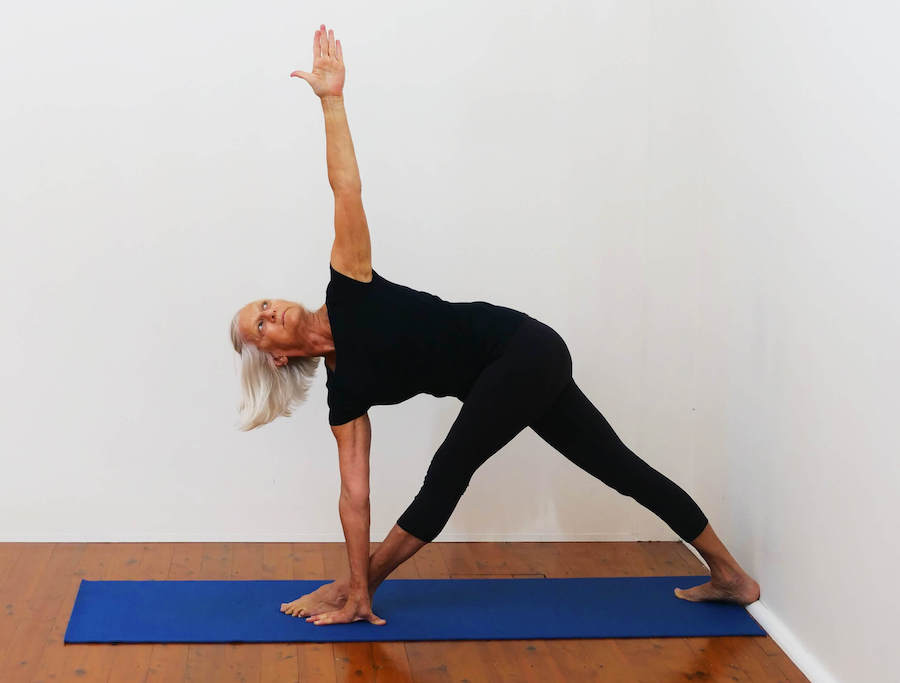
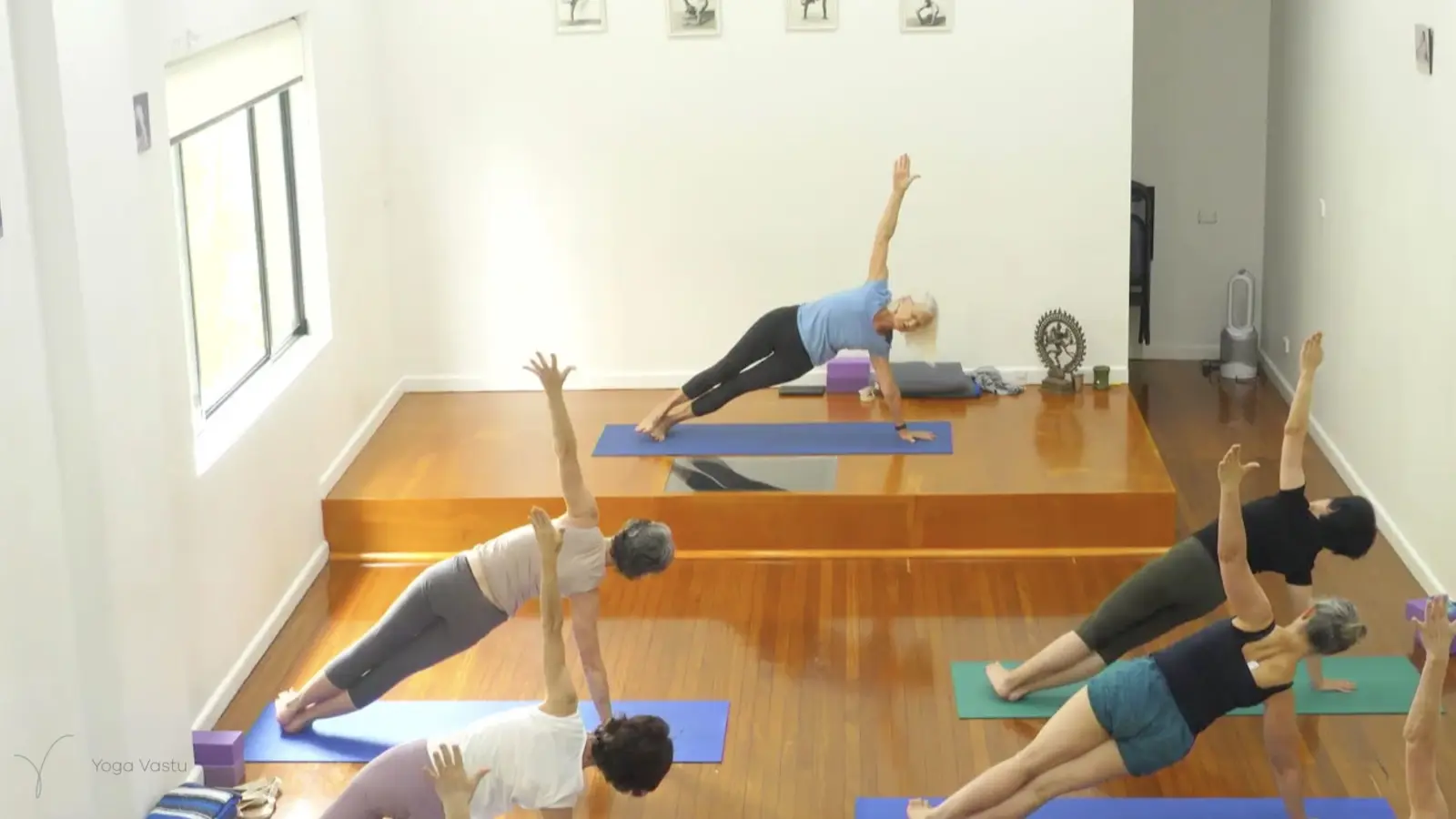
We’ll be using Adho Mukha Svanasana as the neutral space we return to after every pose for the sequence that follows. From here, go into Utthita Trikonasana. Back to Adho Mukha Svanasana, then into Vasisthasana. Back to neutral, then into Utthita Parsvakonasana. Back to neutral, then to Utthita Trikonasana again. From there, shift directly into Ardha Chandrasana. Back to neutral, then Vasisthasana 2. Back to neutral, then Parsvottanasana, then shift directly into Prasarita Padottanasana, and come back into Adho Mukha Svanasana one last time before completing the mini sun salutation that we started earlier: from Adho Mukha Svanasana, step forward into Uttanasana and stand up, bring your arms up into Urdhva Hastasana.
Now, sit down in Parvatasana in Virasana. Then, stretch your legs out in Dandasana. Come up into Ubhaya Padangusthasana. Come down and sit in Baddha Konasana.
The next part of the session will be dedicated to some abdominal strengthening exercises. The main exercise will be Jathara Parivartanasana, a dynamic pose that involves lying down and taking your bent legs over to the side, then using your core muscles to bring them over to the center and then to the other side, all the while making sure you’re maintaining length in your spine and your abdominal muscles engaged.
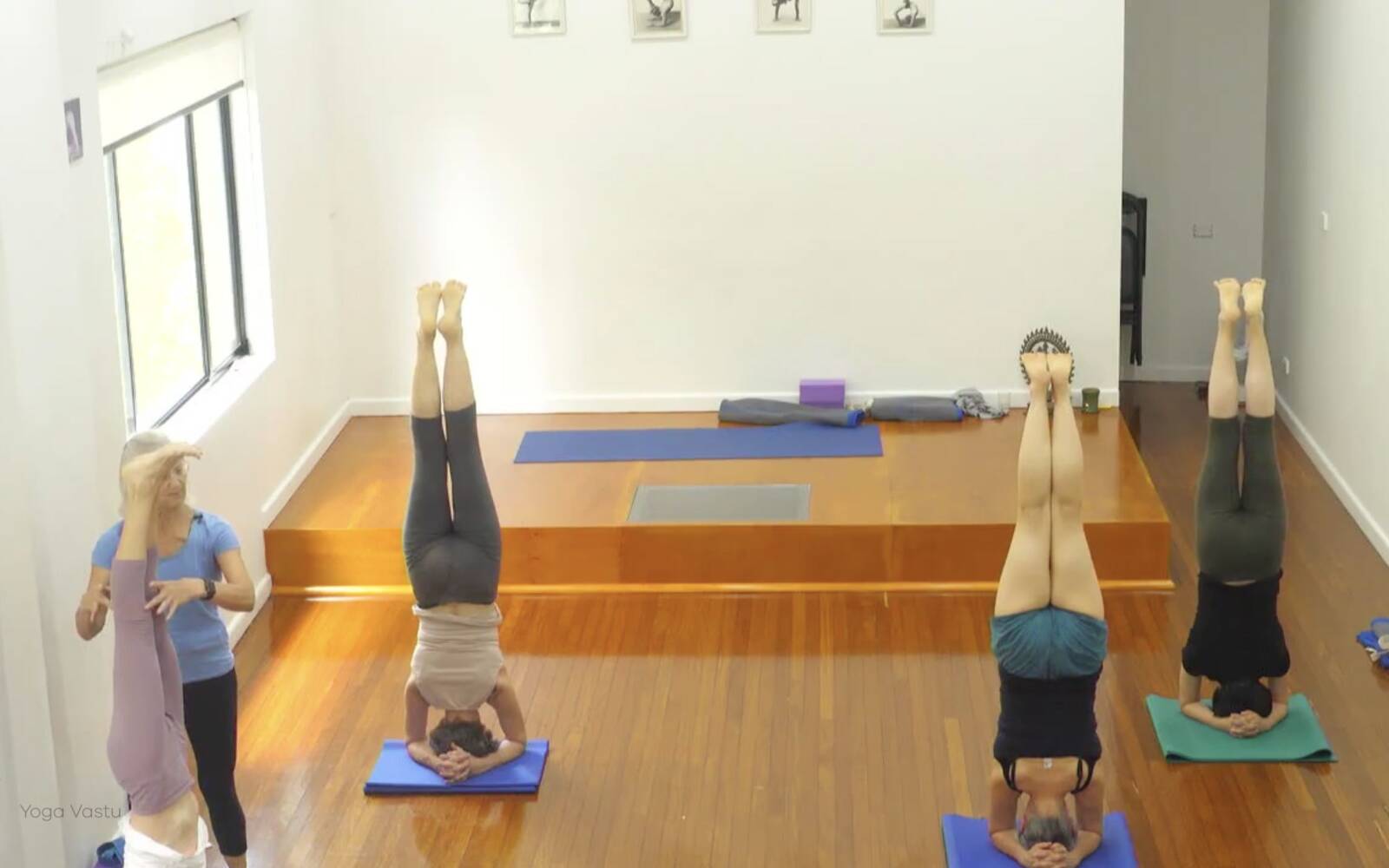
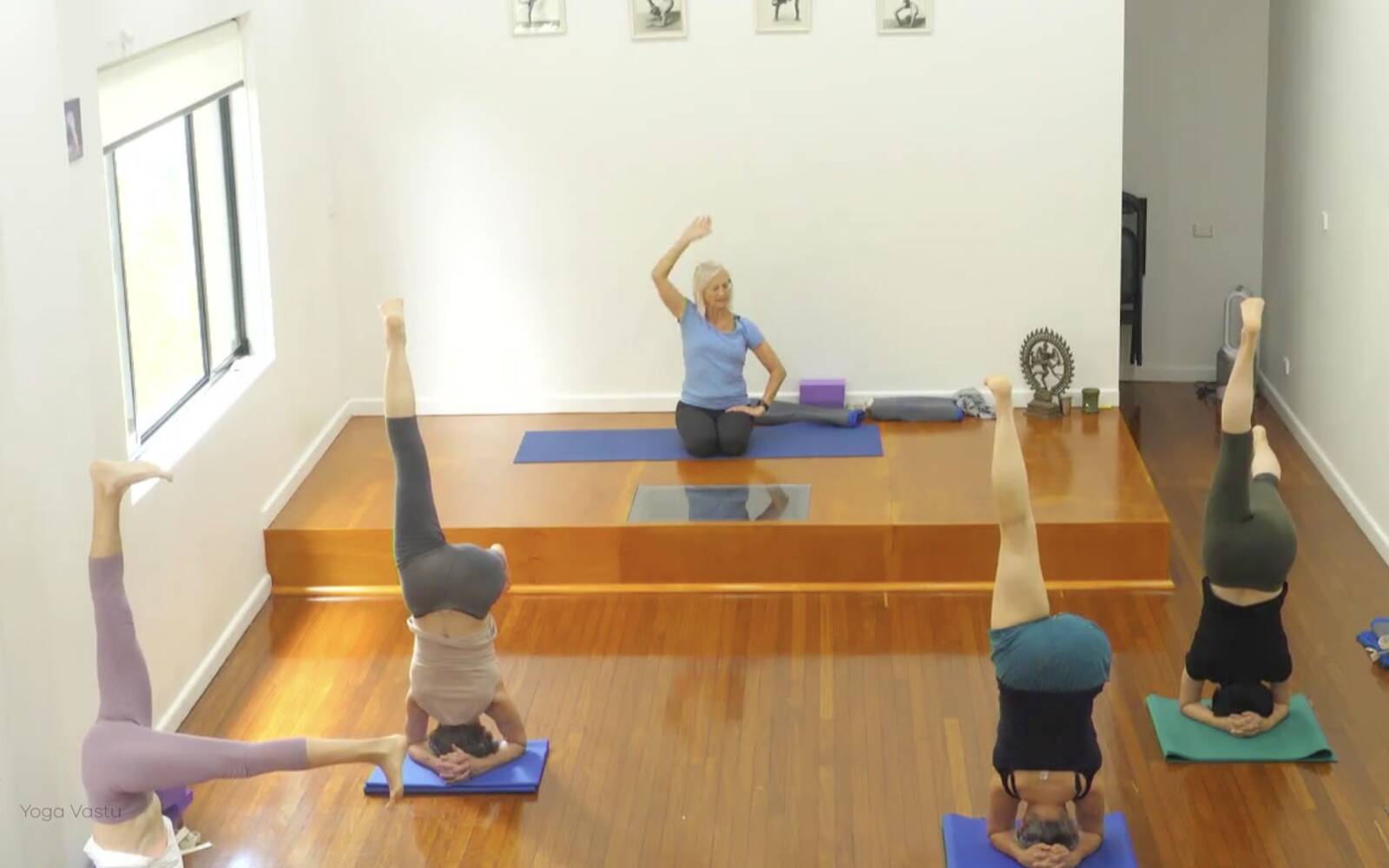
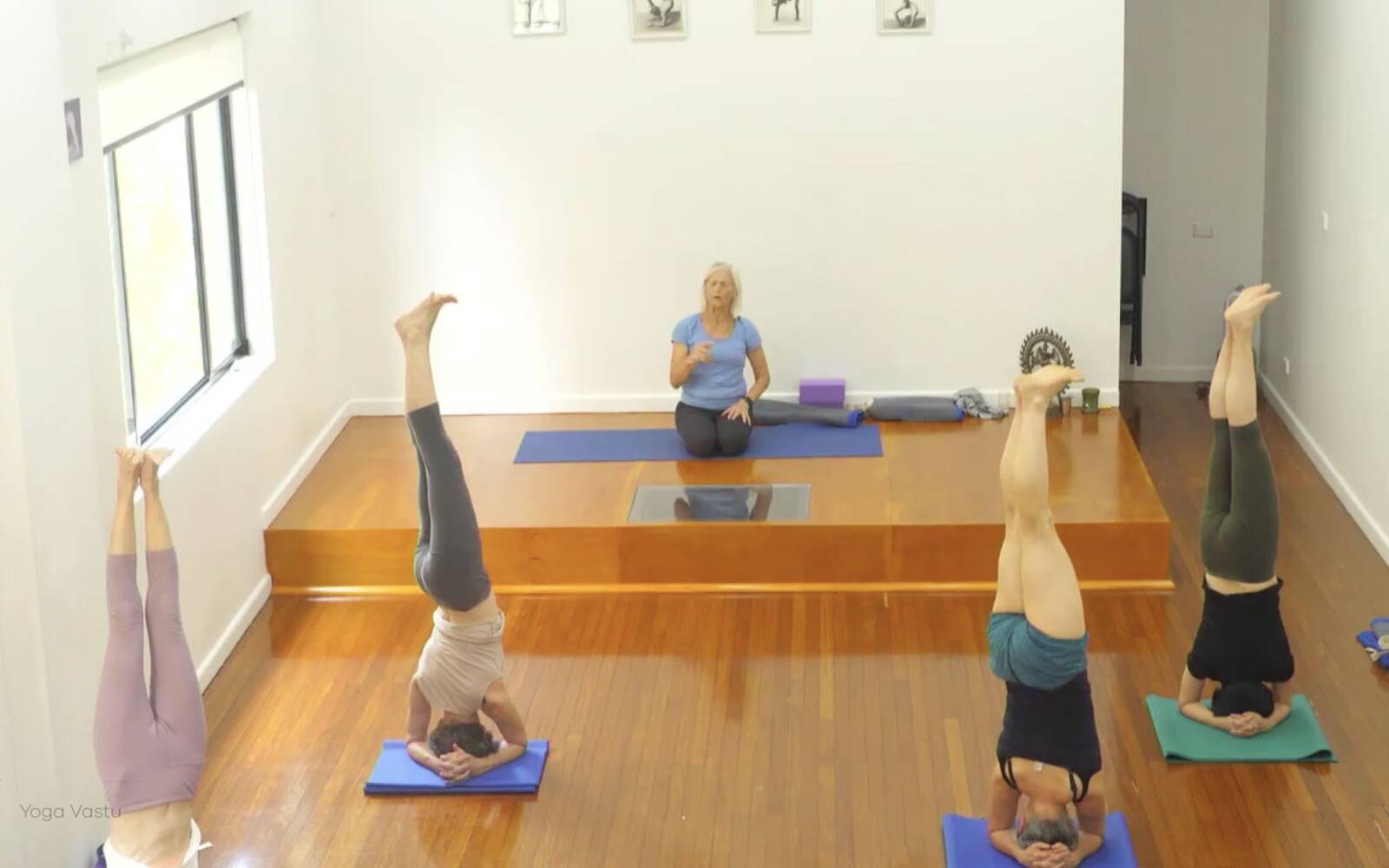
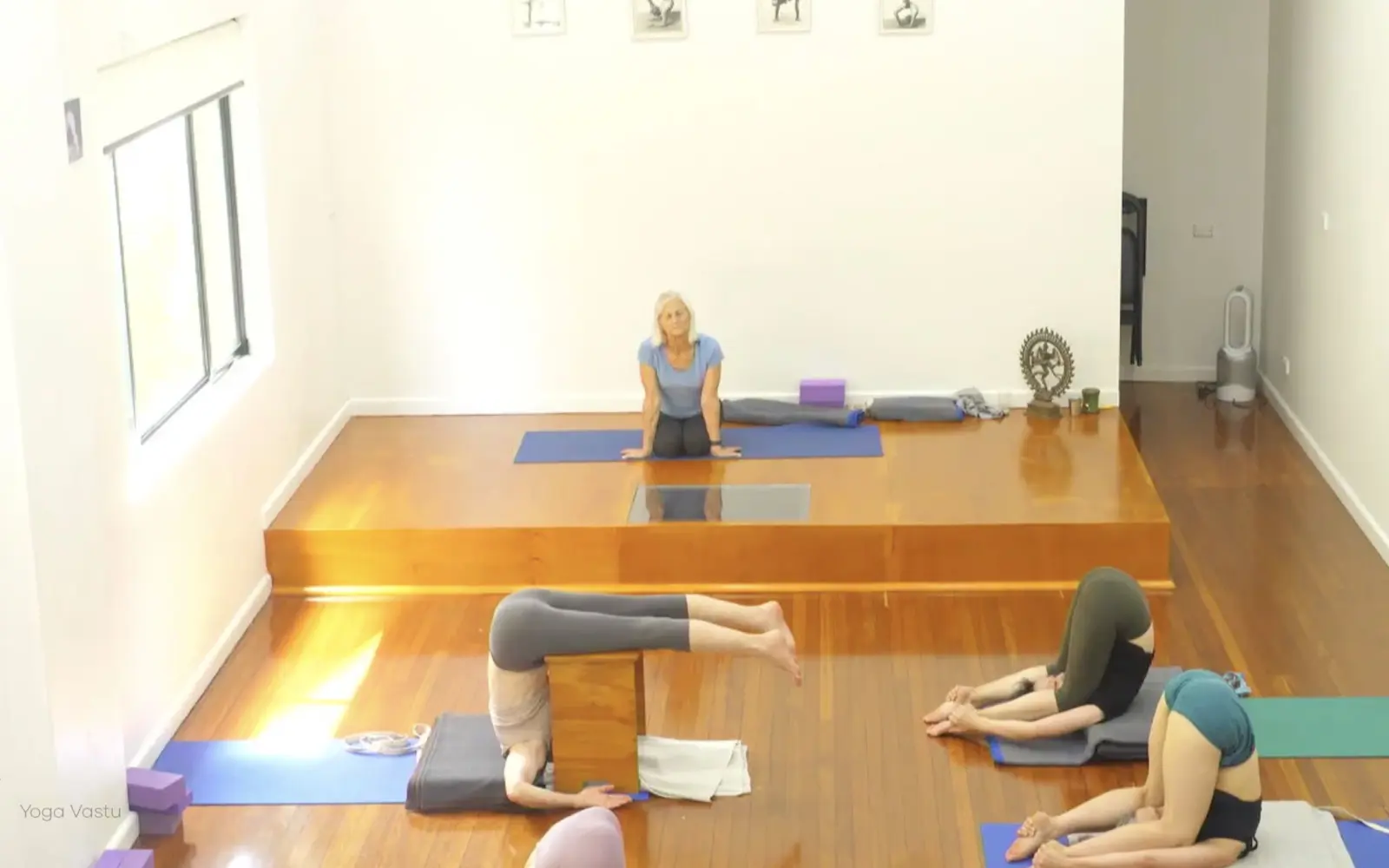
Then, come up into Sirsasana and several variations: Eka Pada Sirsasana, Baddha Konasana in Sirsasana, and Parsva Eka Pada Sirsasana. Release that in Virasana Forward.
Get a chair. Roll over into Ardha Halasana. Then, bring your legs up in Sarvangasana. Parsva Eka Pada Sarvangasana. Come back down into Ardha Halasana or full Halasana, then bring your knees to your ears: Karna Pidasana.
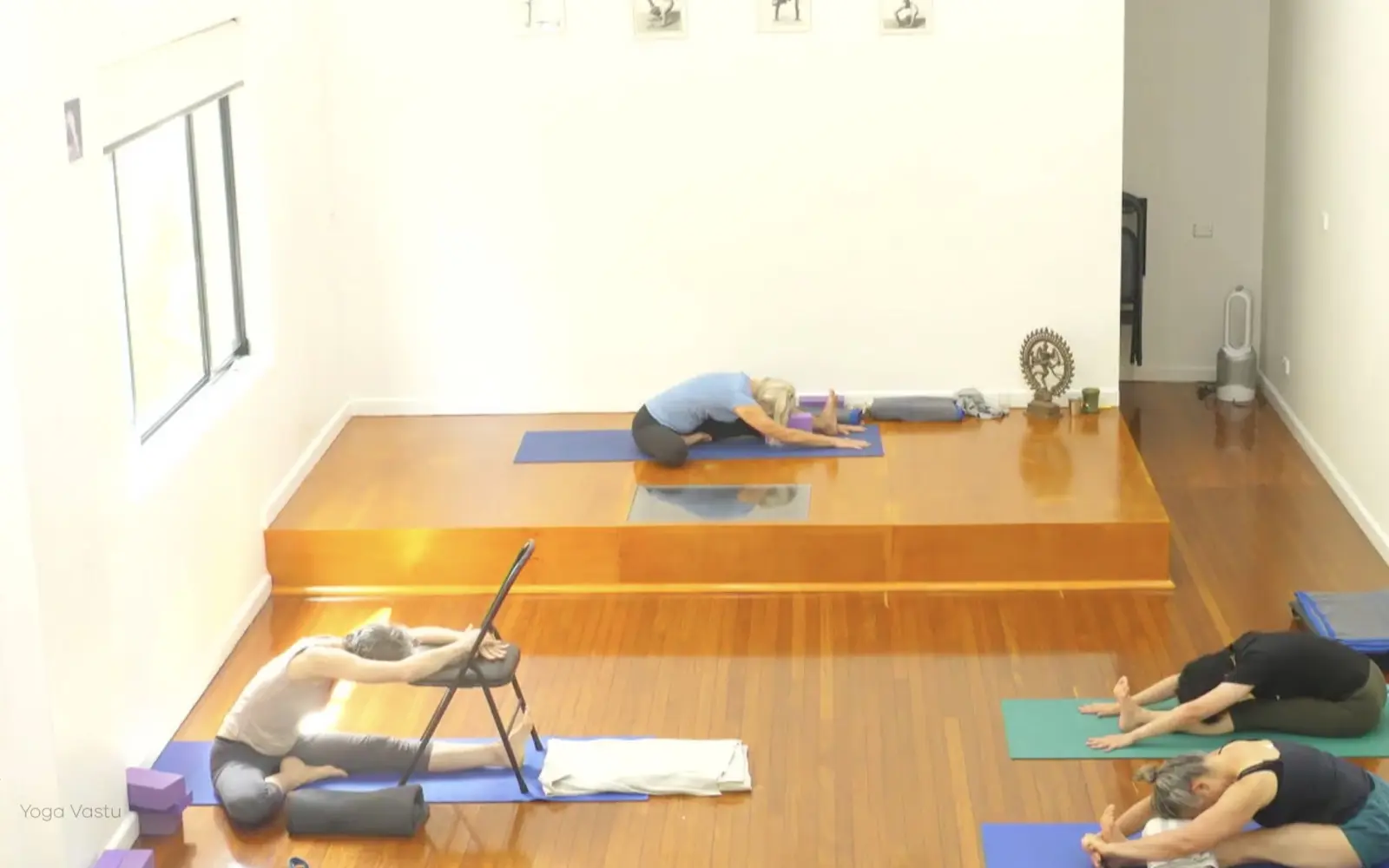
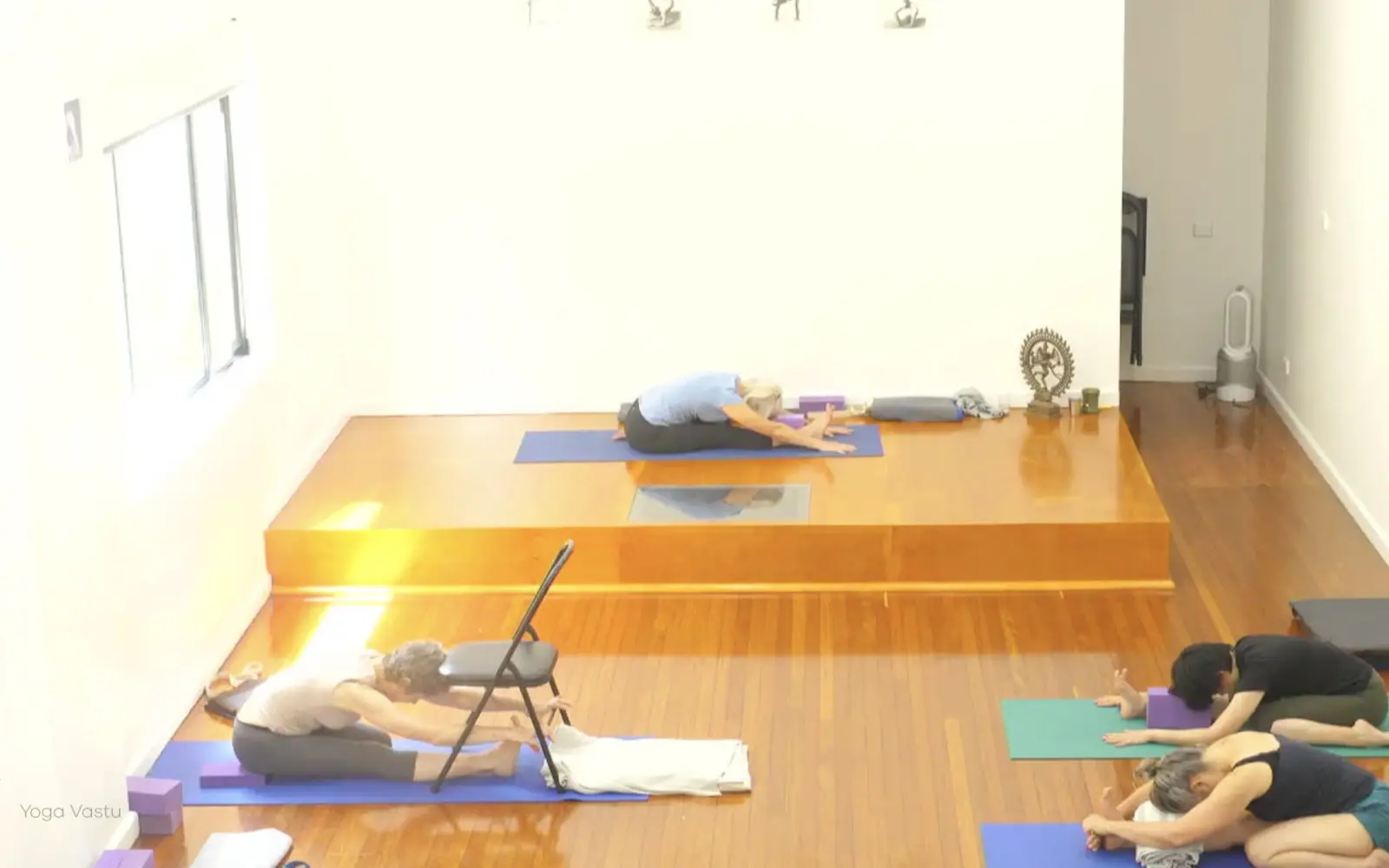
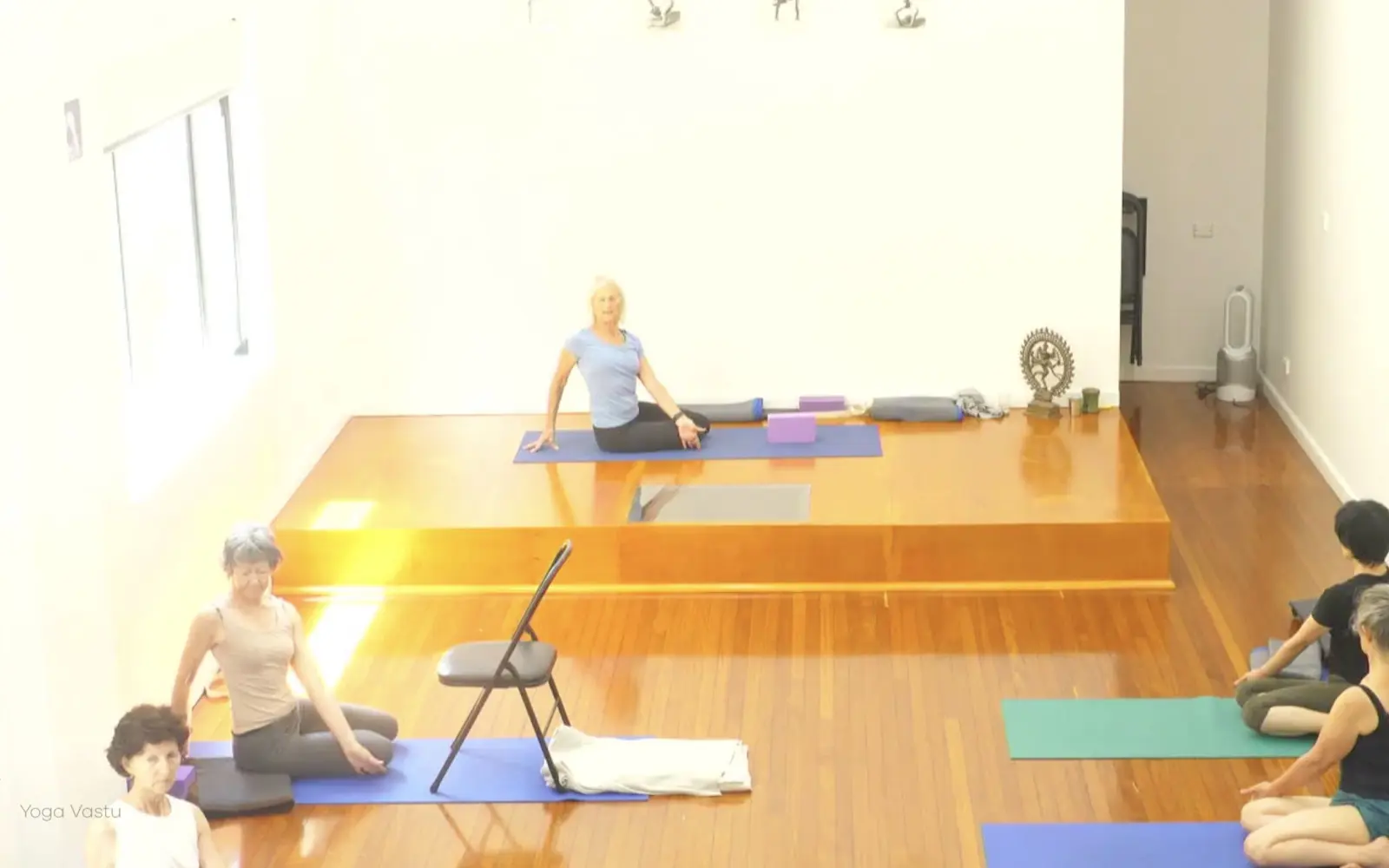
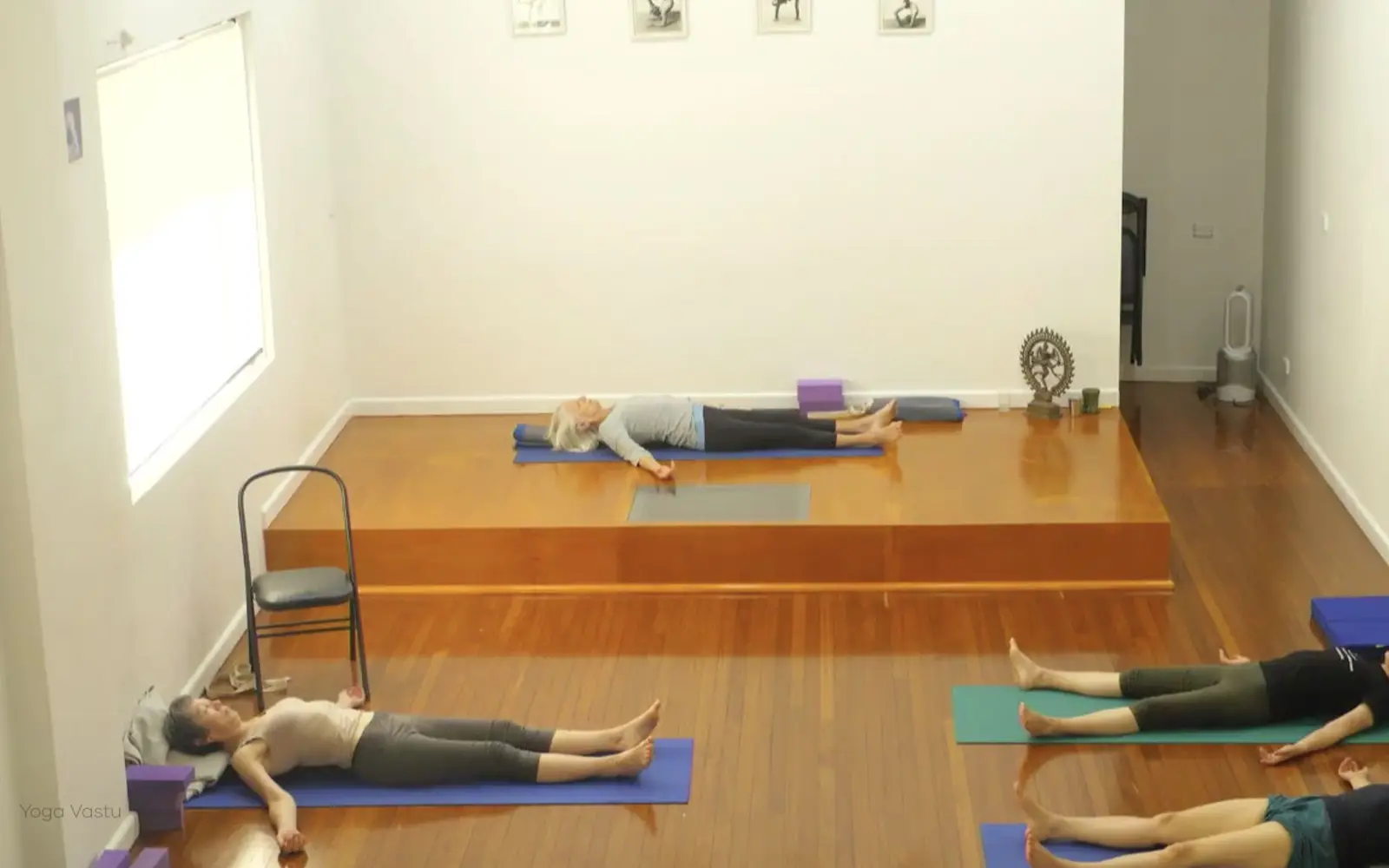
We will finish with some seated forward bends and a seated twist: Janu Sirsasana followed by Triang Mukha Eka Pada Paschimottanasana and then Bharadvajasana. Final meditation in Savasana.
Video stills from this sequence