How to do it
You need a bolster, a belt and a folded blanket. Have two blocks or rolled blankets nearby in case your thighs need support.
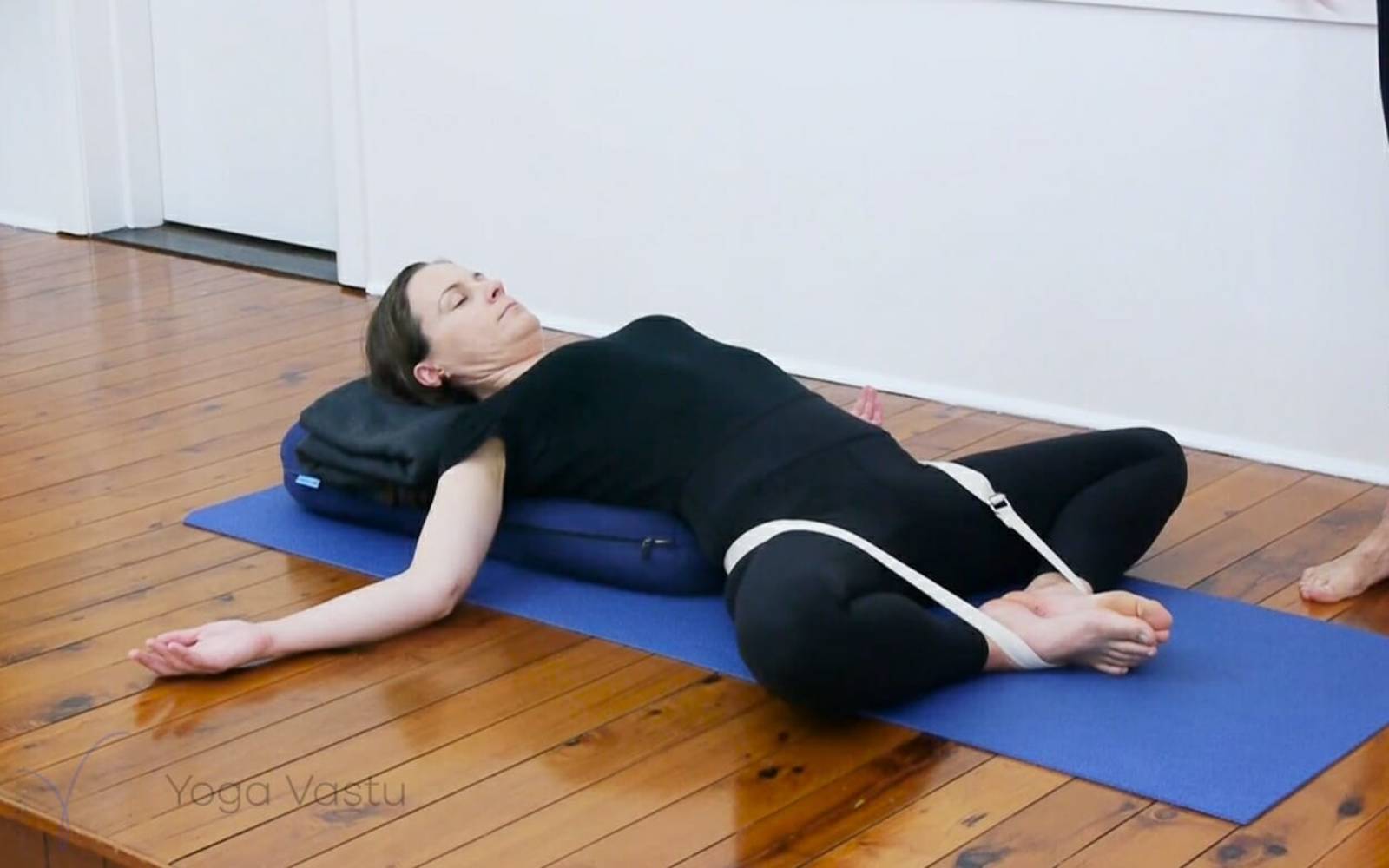
- Place the bolster lengthwise on your mat and put a folded blanket on the far end for your head.
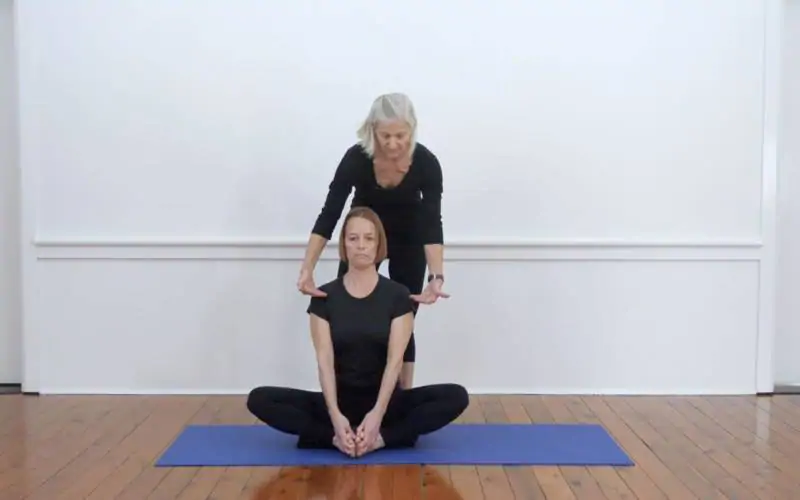
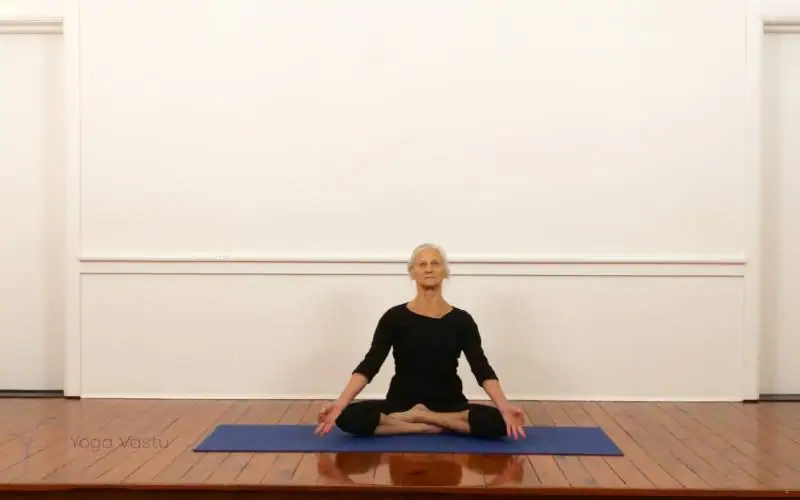
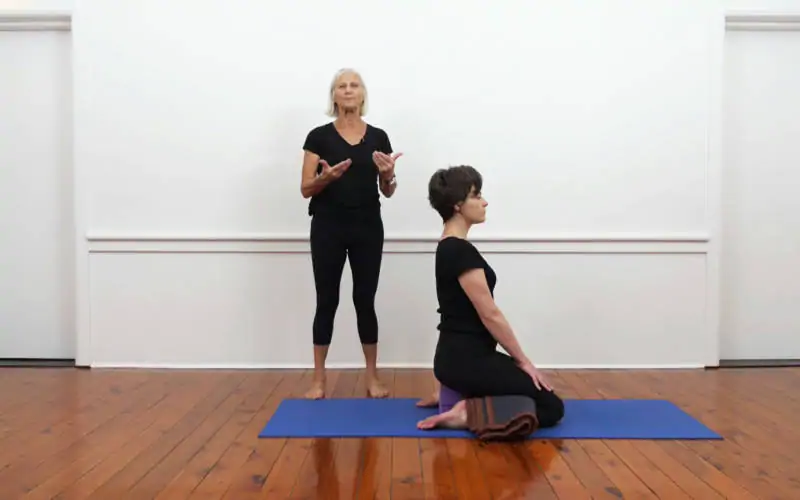
- Sit with your back to the near end of the bolster, buttocks touching it. Bend your knees, bring the soles of your feet together and draw the heels in towards the pelvis. This is Baddha Konasana.
- Pass the belt around your back so that it sits across the sacrum, the flat bone at the back of the pelvis. Bring it forward over the inner thighs, close to the groins, and loop it under the outer edges of your feet. Buckle it near the groin where you can reach it.
- Tighten the belt until the heels stay close to the pelvis. It should hold the legs, not pull the knees down.
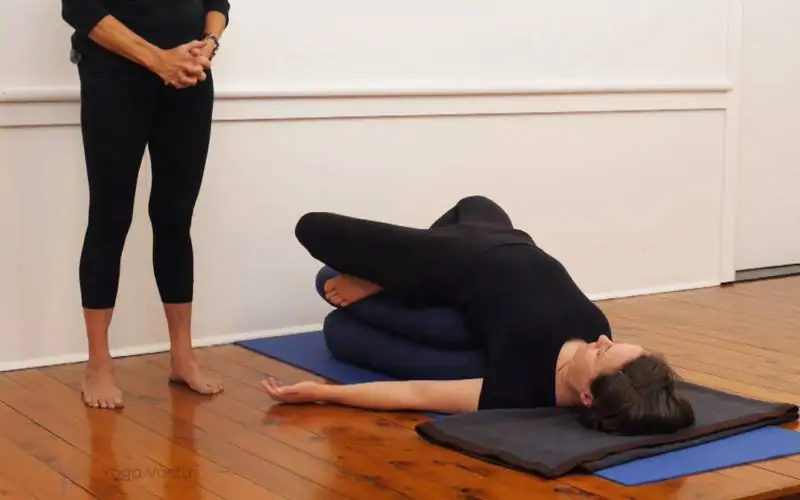
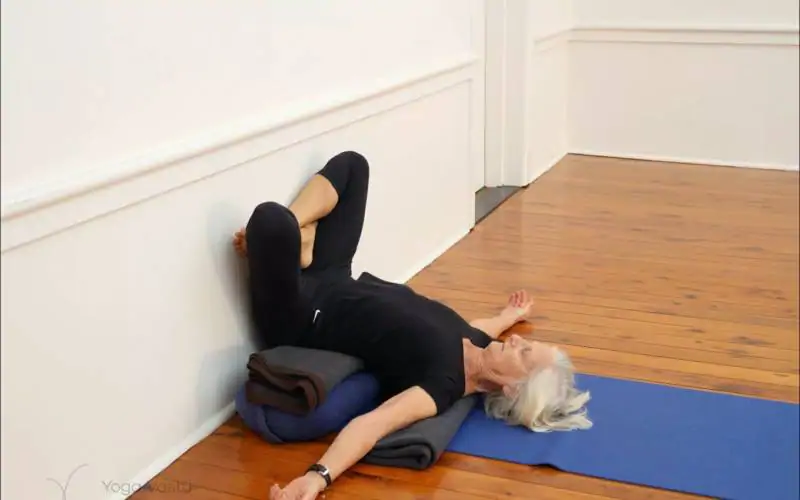
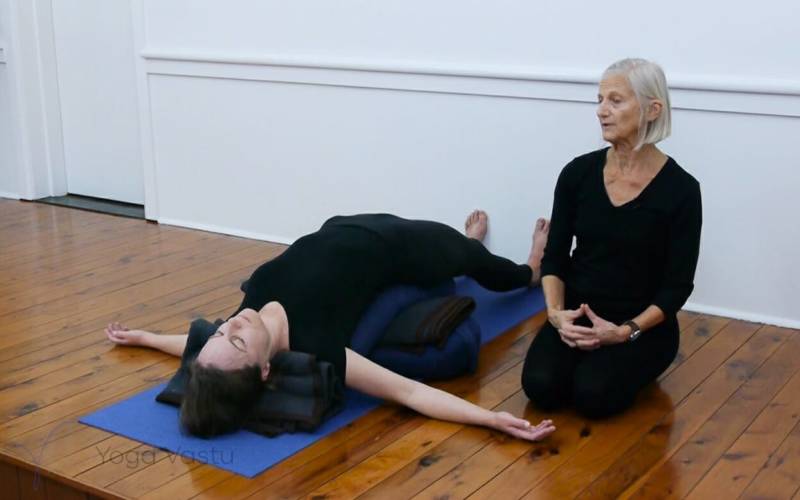
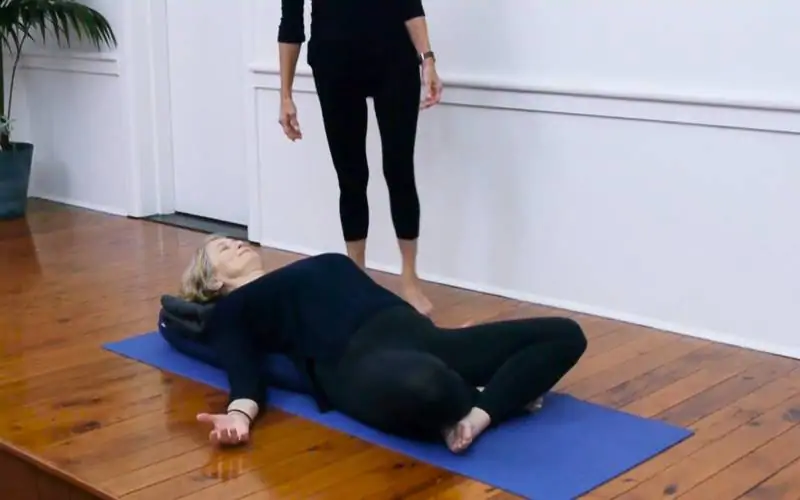
- Lean back onto your elbows, then lower your back onto the bolster. The bolster should support the spine from the lower back to the back of the head, with the head on the blanket so the forehead is a little higher than the chin.
- Lift your hips slightly and move the buttocks towards the heels, then lower them. This lengthens the lower back.
- If the knees are high or you feel pulling in the inner groins or knees, slide a block or rolled blanket under each outer thigh.
- Rest your arms out to the sides, palms up, a little away from the body.
- Stay for five to ten minutes. Breathe normally and let the abdomen soften.
- To come out, loosen the belt and slip it off the feet. Use your hands to bring the knees together, roll onto one side and rest there for a few breaths before you push yourself up to sitting.
I often begin restorative and pranayama classes in this pose, because it lets students arrive and settle before the work starts. It suits the end of a class too, especially after backbends or standing poses.
Key actions
Supta Baddha Konasana looks passive, but the setup decides whether you can rest in it.
- Chest – let the chest open over the bolster with the collarbones broad. Notice the area of the back just below the shoulder blades and let it rest into the support, so the chest lifts from there and the shoulders do not strain.
- Pelvis – keep the buttocks moving towards the heels and the tailbone lengthening. If the lower back arches away from the bolster, it will start to pinch.
- Groins and thighs – let the inner thighs lengthen out from the groins towards the knees. Do not press the knees down. Gravity and time open the hips more than effort does.
- Abdomen – keep it soft and broad so the breath can move freely.
- Face and eyes – let the eyes close and rest down, and relax the jaw and the skin of the forehead.
Props and variations
The props are the method here. Changing their height changes the pose.
- Bolster – placed lengthwise, it is the standard support. If the lower back pinches or the chest feels flat, raise the head end with a folded blanket under the bolster.
- Blankets – a folded blanket under the head keeps the chin lower than the forehead. A second blanket laid along the bolster gives more height for stiff backs.
- Belt – holds the feet near the pelvis. Without it the feet slide away and the legs start to work.
- Blocks or rolled blankets under the thighs – use them when the knees are high or the inner knees or groins complain. The legs should feel held, with no strain.
- On the floor – experienced students can lie flat on the floor with only the belt. This gives a stronger stretch in the groins and less lift in the chest.
- Crossed bolsters – in longer restorative sessions, two bolsters can be crossed under the back, which lifts the chest further. Learn this setup in class.
Supta Baddha Konasana is the reclining form of Baddha Konasana (bound angle pose). It sits well alongside Supta Virasana and Supta Swastikasana in a restorative sequence.
Cautions
Most students can practise this pose with the right support. Take care in these situations.
- Knees and groins – if you feel pain in the knees or a strong pull in the groins, support the thighs higher or loosen the belt. After a knee or groin injury, keep the thighs well supported.
- Lower back – if the lower back pinches, move the buttocks further towards the heels or raise the support under your back.
- Hips – after hip surgery, follow your surgeon’s guidance on how far the hips can turn out, and support the thighs high.
- Pregnancy – the supported pose is often used in pregnancy with the head and chest raised higher on the bolster. Practise it with a teacher who knows you are pregnant.
- Dizziness – if you feel light-headed when you come up, roll to the side first and sit up slowly.
Benefits
Supta Baddha Konasana gives the body a rest in a shape that keeps the chest open and the abdomen soft. Students often find their breathing becomes slower and fuller after a few minutes.
It releases the hips and inner groins gently, without the effort the seated pose asks for. It is a useful place to recover after standing poses or backbends, and a quiet way to begin pranayama.
Iyengar teachers often recommend it during menstruation, and many students find it eases abdominal discomfort. It also suits tired days, when a supported pose does more good than a strong practice.
Common questions
How do you do supta baddha konasana with a strap?
Sit with the soles of the feet together and pass the belt around the back of your pelvis at the sacrum. Bring it forward over the inner thighs and loop it under the outer edges of the feet, then tighten it until the heels stay close to the pelvis without the knees being pulled down. Then lie back over the bolster.
What is supta baddha konasana good for?
It rests the body, opens the chest so breathing is easier, and lets the hips and groins release with little effort. Iyengar teachers often give it at the start of a restorative practice, after a demanding class, or during menstruation.
How long should you stay in supta baddha konasana?
Five to ten minutes is usual. In a restorative sequence you can stay longer if the knees, groins and lower back stay comfortable.
Can you practise supta baddha konasana during menstruation?
Yes. It is one of the poses the Iyengar method recommends during menstruation, and many students find it eases abdominal discomfort. Use enough support under the back and thighs that you can rest completely.
What does supta baddha konasana mean?
Supta means reclining, baddha means bound and kona means angle. The feet are bound together and the legs form an angle, with the body lying back.
About the teacher
Pixie Lillas: Pixie Lillas first went to the Ramamani Iyengar Memorial Yoga Institute in Pune, India in 1977. She co-founded the Balmain Iyengar Yoga Studio in 1980 and has been director and principal teacher there ever since.